admin
admin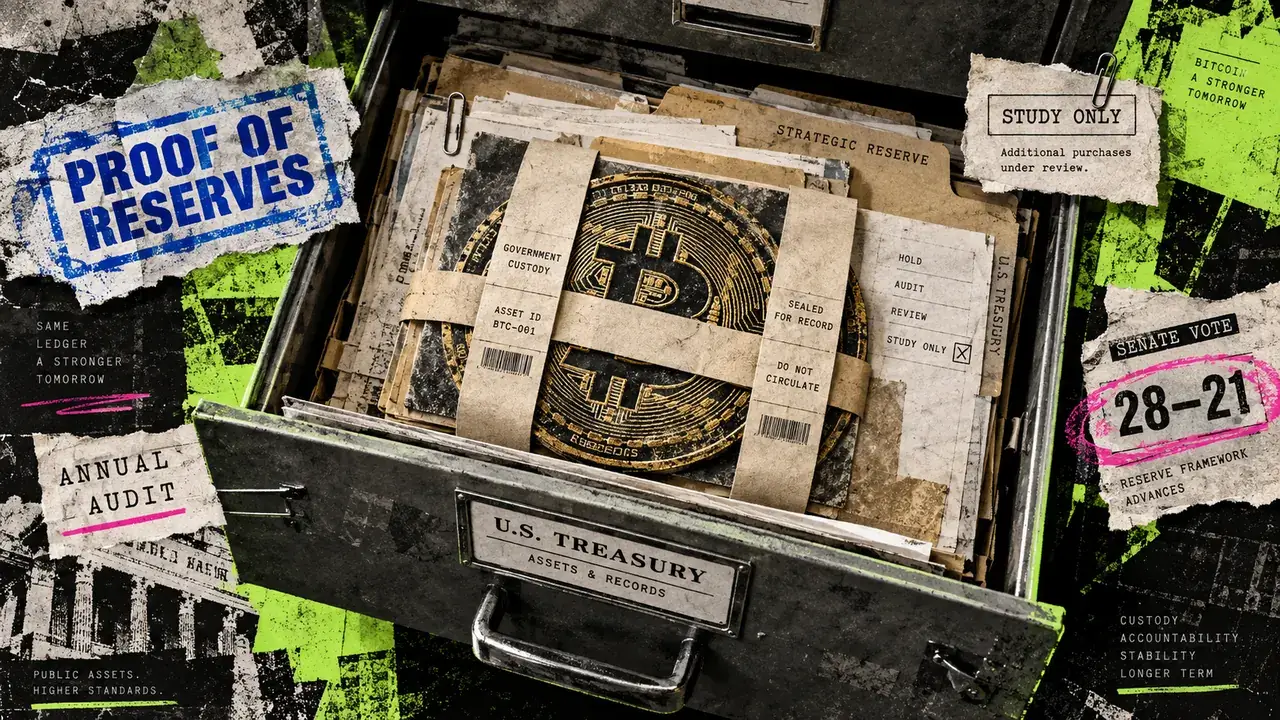
The House Financial Services Committee has taken a significant step towards formalizing the United States’ approach to digital assets by advancing legislation that would establish a federal Bitcoin reserve. On September 16, 2026, the committee approved H.R. 8957, the American Reserve Modernization Act of 2026 (ARMA), by a vote of 28-21. This landmark bill proposes a framework for holding and managing government-owned Bitcoin, mandating a stringent 20-year holding period for assets placed in the reserve and requiring annual independently audited reporting. While the measure has cleared a crucial committee hurdle, it still requires further legislative action to become law.
The ARMA builds upon existing executive policy, notably President Donald Trump’s Executive Order issued on March 6, 2025. This order directed the establishment of a Strategic Bitcoin Reserve and a separate digital asset stockpile, imposing restrictions on the disposal of these assets except under specific legal exceptions. It also tasked the Treasury and Commerce Departments with developing budget-neutral strategies for acquiring such assets. The current legislative push, sponsored by Representative Nicholas Begich of Alaska, aims to codify these initiatives into statute, establishing both a Strategic Bitcoin Reserve and a Digital Asset Stockpile under the purview of the Treasury Department. The immediate focus of ARMA is on the custody and accounting of assets already owned by the federal government, with provisions for studying further Bitcoin acquisition.
The committee’s approval followed a markup session where a substitute amendment, introduced by Representative Bryan Steil, was adopted by voice vote. An amendment proposed by Representative Maxine Waters was rejected by a vote of 21-28, underscoring the bipartisan nature of the debate surrounding digital asset policy. This vote on September 16 occurred just one day after CryptoSlate previewed the crucial bipartisan test the legislation was set to face.
A 20-Year Holding Period and Rigorous Treasury Custody
The adopted substitute amendment to H.R. 8957 outlines a clear process for integrating qualifying federal Bitcoin holdings into the proposed reserve. Other qualifying digital assets will be placed in a separate, designated stockpile. Crucially, the legislation excludes assets that are legally required for other governmental purposes, ensuring that the reserve is comprised of specific, designated holdings rather than a blanket inclusion of all assets managed by federal agencies. This distinction is vital, as it clarifies that the bill addresses the custody and eligibility of specific digital assets for reserve purposes, rather than attempting to incorporate every asset under agency control.
A cornerstone of the ARMA is Section 5, which mandates that any Bitcoin deposited into the Strategic Bitcoin Reserve must remain in custody for a minimum of 20 years from the date of the bill’s enactment. During this mandatory holding period, the legislation strictly prohibits any form of disposal, including selling, swapping, auctioning, or encumbering the Bitcoin. The 20-year clock is set to commence from the date of enactment, meaning the committee’s vote does not immediately trigger the holding period for any existing government Bitcoin.
Furthermore, the substitute amendment mandates that the Treasury Department conduct a study within one year of enactment. This study will explore potential conditions for early sales of Bitcoin from the reserve and provide legislative recommendations for any exceptions to the holding requirement. Importantly, this provision calls for recommendations and does not, in itself, grant permission to bypass the mandated 20-year holding period. This approach separates the establishment of a defined retention obligation from any future legislative decisions regarding potential early divestment.
Transparency and Oversight: Audited Custody and Public Reporting
In prepared remarks delivered at the markup, Committee Chairman French Hill emphasized that the bill’s objective is to bring digital assets held across various federal agencies under the centralized custody and consistent oversight of the Treasury Department. This consolidation is intended to streamline management and enhance security.
The proposed reporting system is designed to ensure robust and ongoing scrutiny of the reserve’s holdings. Section 6 of the ARMA requires public cryptographic proof of reserves, a comprehensive annual report detailing holdings, transactions, and the control of private keys. This report must be independently verified by a third-party auditor. The Comptroller General is also tasked with regularly overseeing the reserve, reviewing these reports, and validating the audits.
The operational timelines are clearly defined. Federal agencies will be required to provide the Treasury Department with a complete accounting of their Bitcoin and other digital assets within 60 days of the bill’s enactment. Subsequently, qualifying holdings are to be transferred into the Strategic Bitcoin Reserve or the Digital Asset Stockpile within 30 days of these structures being officially established. These comprehensive requirements address both the accurate inventory of digital assets and their subsequent administration, including identification, qualification, consolidation of custody, and the meticulous verification of all reported information.
Acquisition of Additional Bitcoin Remains Under Study
While the ARMA focuses on formalizing the management of existing government digital asset holdings, the question of acquiring additional Bitcoin for the reserve is deferred for further examination. Section 9 of the bill directs the Treasury and Commerce Departments to undertake a comprehensive study within 180 days of enactment. This study will assess the risks, costs, and potential benefits associated with acquiring additional Bitcoin, including an evaluation of whether such acquisitions could be conducted in a budget-neutral manner. It is critical to note that this provision mandates a study, not an established purchase program.
Therefore, the ARMA primarily aims to provide a statutory framework for the Strategic Bitcoin Reserve, outlining specific holding and oversight obligations. The legislative path forward will determine whether Congress ultimately enacts these requirements. Meanwhile, the study on acquisition will leave the cost and feasibility of expanding the nation’s Bitcoin holdings to subsequent examination and potential future legislative action. This phased approach allows for the immediate establishment of a responsible framework for current holdings while prudently deferring decisions on expanding the reserve until thorough analysis is complete.
Historical Context and Evolving Digital Asset Policy
The recent advancement of the ARMA signifies a significant evolution in the United States’ approach to digital assets, moving from ad hoc executive actions to a more structured legislative framework. The inclusion of Bitcoin in national reserves, however nascent, reflects a growing recognition of its potential as a store of value and a strategic asset. This policy shift can be traced back to an increasing awareness of the global rise of cryptocurrencies and their implications for financial stability and national security.
President Trump’s March 2025 Executive Order was a pivotal moment, signaling a proactive stance by the administration to explore and potentially integrate digital assets into national economic strategies. This order followed years of debate and uncertainty surrounding cryptocurrency regulation in the U.S., with various agencies offering differing perspectives and approaches. The establishment of a "Strategic Bitcoin Reserve" and a "digital asset stockpile" indicated a desire to control and manage these assets rather than solely focusing on regulatory crackdowns.
The ARMA’s legislative journey, beginning with its introduction as H.R. 8957, represents a congressional effort to imbue these executive directives with the force of law. The bipartisan support, evidenced by the committee vote, suggests a growing consensus on the need for a clear and defined policy regarding government-held digital assets. However, the differing votes on amendments, such as the one proposed by Rep. Waters, highlight the ongoing debates regarding the extent of government involvement, risk management, and the specific characteristics of digital assets that should be incorporated into national reserves.
Broader Implications for the Digital Asset Landscape
The establishment of a federal Bitcoin reserve, even a nascent one, carries significant implications for the broader digital asset landscape.
Market Stability and Legitimacy: Formalizing government holdings of Bitcoin could lend further legitimacy to the cryptocurrency, potentially influencing institutional adoption and investor confidence. A clear, long-term holding strategy by a major global economy could act as a stabilizing factor in an often-volatile market.
International Precedent: The U.S. taking such a step could encourage other nations to explore similar strategies, potentially leading to a global shift in how central banks and governments view and manage digital assets. This could also spur international dialogue on standards and best practices for digital reserve management.
Technological Advancement and Security: The requirement for independently audited reporting and cryptographic proof of reserves necessitates advanced technological solutions for transparency and security. This could drive innovation in blockchain technology, auditing tools, and digital asset custody solutions within the U.S.
Regulatory Clarity: While ARMA focuses on reserves, its advancement contributes to a broader dialogue about digital asset regulation. The process of defining what constitutes a "qualifying" asset and establishing custody rules could inform future regulatory frameworks for other digital assets.
Economic and Fiscal Considerations: The long-term holding period of 20 years raises questions about the opportunity cost of capital, particularly if Bitcoin’s value appreciates significantly. The study on budget-neutral acquisition strategies is crucial, as it acknowledges the potential fiscal impact and the need for responsible asset management. The success of such a reserve could also be measured against its ability to generate returns or hedge against inflation, though the primary stated goal is custody and oversight.
The ARMA’s journey through Congress is far from over. Its passage through the House Financial Services Committee is a critical milestone, but the bill must still navigate the full House and the Senate before it can become law. The ongoing debates and the detailed provisions within the bill underscore the complex and evolving nature of digital assets and their integration into traditional financial and governmental structures. The ultimate success of the American Reserve Modernization Act will depend on its ability to strike a balance between innovation, security, and fiscal responsibility in the digital age.