admin
admin
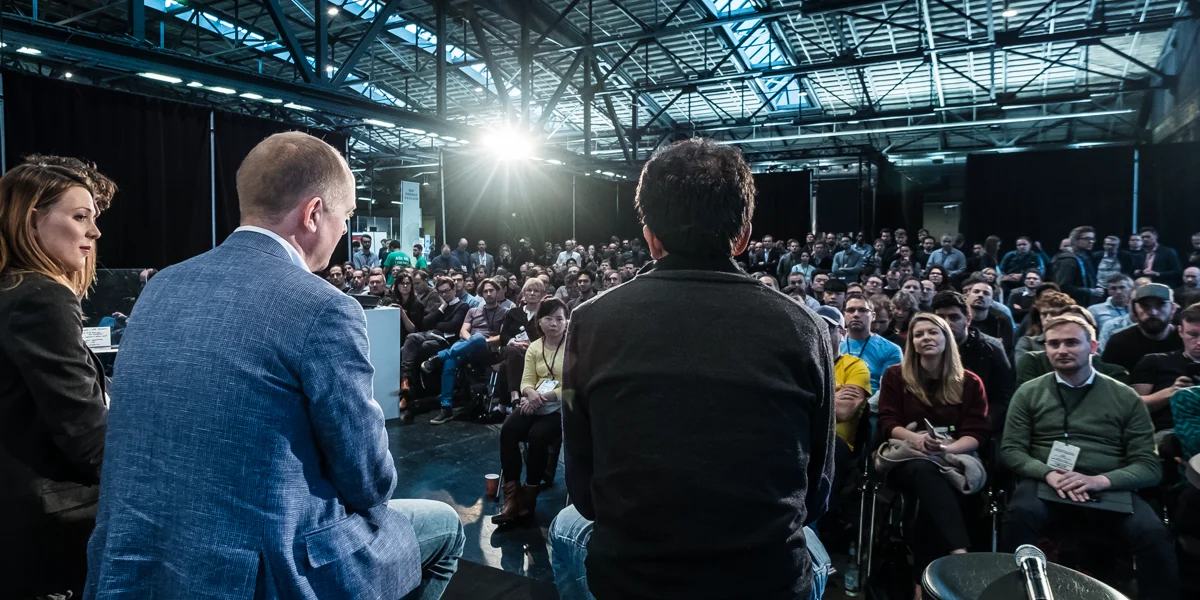
The Builders Stage is set to return to TechCrunch Disrupt 2026, serving as a central hub for founders, startup operators, and venture capitalists to engage in rigorous discussions regarding the mechanics of building and scaling resilient technology companies. Scheduled to take place from October 13-15 at the Moscone Center in San Francisco, the event is expected to draw more than 10,000 participants from across the global tech ecosystem. This year’s programming specifically targets the transition from early-stage innovation to sustainable enterprise growth, addressing a market environment defined by rapid artificial intelligence integration and shifting capital requirements.
The Strategic Role of TechCrunch Disrupt in the Startup Lifecycle
Since its inception, TechCrunch Disrupt has functioned as a critical proving ground for emerging technologies. Historically, the conference has been the launching pad for companies that have redefined their respective industries, including the likes of Dropbox, Fitbit, and Cloudflare. The 2026 iteration arrives at a pivotal moment for the venture community. Following the volatile market cycles of the mid-2020s, the emphasis for founders has shifted from "growth at all costs" to "disciplined scaling."
The Builders Stage, one of six specialized industry tracks at the conference, is designed to provide a tactical roadmap for this new era. While the Startup Battlefield competition focuses on the "pitch," the Builders Stage focuses on the "process." The 2026 agenda is structured to help founders navigate the specific milestones required to advance from a seed-stage concept to a Series A-ready organization, with a heavy emphasis on operational efficiency and defensible product strategy.
Navigating the AI-Dominant Market and Defensibility Challenges
A primary theme for the 2026 Builders Stage is the survival and differentiation of startups in a market dominated by generative AI giants. As foundational models from organizations like OpenAI, Anthropic, and Google become more capable, early-stage founders face the "roadmap risk"—the possibility that a core product could be rendered obsolete by a single platform update.
The session titled "What Happens When OpenAI Ships Your Roadmap" features Michel Tricot of Airbyte, Rob Toews of Radical Ventures, and Linda Tong of Webflow. This panel is expected to provide an analytical framework for identifying "moats" that exist beyond the model layer, such as proprietary data loops, deep workflow integration, and vertical-specific user experiences.
Complementing this is a session focused on the "non-AI" sector: "How to Win When You’re Not Building AI." Featuring insights from Shan Shan of Baillie Gifford and Yuri Sagalov of General Catalyst, this discussion addresses the "crowding out" effect in venture capital. Data from 2024 and 2025 suggests that while AI startups captured over 40% of all venture dollars, non-AI SaaS and infrastructure companies often demonstrated higher retention rates and more predictable unit economics. This session will analyze how these founders can leverage fundamentals—revenue quality and disciplined execution—to attract investors who are increasingly wary of AI-driven hype cycles.

Redefining Fundraising and the Series A Outlook for 2027
The fundraising landscape has undergone a structural transformation, with the "Series A crunch" remaining a significant hurdle for founders. The session "The Series A in 2027" will feature Jahanvi Sardana of Index Ventures, Shailendra Singh of Peak XV, and Janelle Teng Wade of Bessemer Venture Partners. These investors will provide a forward-looking analysis of the metrics that will define "fundability" in the coming year.
Current venture data indicates that the bar for Series A traction has risen significantly. Where $1 million in Annual Recurring Revenue (ARR) was once the gold standard, many firms now look for $2 million to $3 million, coupled with a clear path to profitability. The session will break down how founders can separate themselves from the pack by demonstrating "product-market fit 2.0"—a state where usage is not just high, but deeply embedded in the customer’s essential operations.
For even earlier-stage founders, "Winning Pre-Seed Without a Product" will offer a tactical guide to narrative-driven fundraising. Led by Puneet Agarwal of True Ventures and Austin Clements of Slauson and Co., the session explores how founders can build credibility and secure initial checks by demonstrating deep market expertise and "founder-market fit" before a single line of code is finalized.
Operational Scaling: From MVP to Billion-User Systems
Scaling a product involves more than just increasing server capacity; it requires a fundamental shift in decision-making frameworks. Robby Stein, VP of Product at Google, will headline a fireside chat titled "From MVP to Billions of Users." Stein, whose career spans leadership roles at Instagram and Google, will discuss the balance between maintaining the "speed of a startup" and the "reliability of an incumbent."
This operational focus extends to revenue generation in "The 90-Day GTM: Why $0–$10M ARR Is the New Baseline." In this session, Ryan Meadows of Lovable and Tomasz Tunguz of Theory Ventures will argue that AI-enabled tools have compressed the time required to reach significant revenue milestones. The discussion will analyze the "tactical levers" founders must pull in their first 90 days to achieve a high-velocity Go-To-Market (GTM) strategy, effectively moving the baseline for what constitutes an "early-stage" success.
The Human Infrastructure of Modern Tech Companies
Despite the rise of automation, the "human element" remains the most complex variable in scaling a startup. The Builders Stage will host a candid conversation titled "Yes, It’s Hard to Be a Founder," featuring Nell Daly of Revenge Capital and David H. Rosmarin of Harvard Medical School. This session aims to destigmatize the mental health challenges associated with high-growth environments, offering systems for managing burnout and decision fatigue.
On the organizational side, "Hiring When AI Is a Co-Founder" will explore the emergence of hybrid teams. Josh Reeves, CEO of Gusto, will lead a discussion on how early-stage startups are delegating engineering and support tasks to AI agents, thereby rewriting the standard hiring plan. This shift has profound implications for compensation and culture, topics that will be further explored by Matt Birnbaum of Wylder.co and Atli Thorkelsson of Redpoint Ventures. They will address how companies can compete for top-tier talent in a market where AI expertise commands unprecedented premiums.

Strategic Exits and the M&A Landscape
With the IPO window remaining selective, M&A (Mergers and Acquisitions) has transitioned from a "last resort" to a proactive strategic pillar. "M&A Is Now an Early-Stage Strategy" will feature Karl Alomar of M13 and Aklil Ibssa, Head of Corporate Development at Coinbase. The panelists will discuss how founders can architect their products and partnerships to increase their attractiveness to potential acquirers from day one.
This session is particularly relevant as mid-market consolidation increases. Analysis suggests that "tuck-in" acquisitions—where a larger firm buys a startup for its specific AI capabilities or engineering talent—will continue to be a dominant exit route in 2026 and 2027.
Event Logistics and Participation
TechCrunch Disrupt 2026 will provide various avenues for networking and engagement beyond the stage sessions. The Moscone Center will house the Disrupt exhibition floor, where hundreds of startups will showcase their technologies. Attendees can also participate in live Q&A sessions following each Builders Stage presentation, providing a rare opportunity for direct interaction with industry leaders.
Registration for the event is currently open, with early-bird pricing offering savings of up to $330. As ticket prices are structured on a tiered basis, organizers encourage early registration to ensure access to the full suite of programming, including the Startup Battlefield, the Builders Stage, and the various industry-specific tracks covering Fintech, SaaS, Hardware, and Sustainability.
Broader Implications for the Global Tech Ecosystem
The insights shared on the Builders Stage are expected to ripple through the broader tech community, influencing how the next generation of "unicorns" is built. By focusing on the "boring but essential" aspects of company building—unit economics, hiring frameworks, and defensible architecture—TechCrunch Disrupt 2026 aims to foster a more resilient startup ecosystem.
As San Francisco continues to reinforce its position as the global epicenter for AI development, the return of Disrupt to the Moscone Center serves as a testament to the city’s enduring role in the technology sector. The 2026 Builders Stage agenda reflects a mature understanding of the current tech landscape: one where innovation is constant, but success is reserved for those who can execute with precision and scale with intent.