admin
admin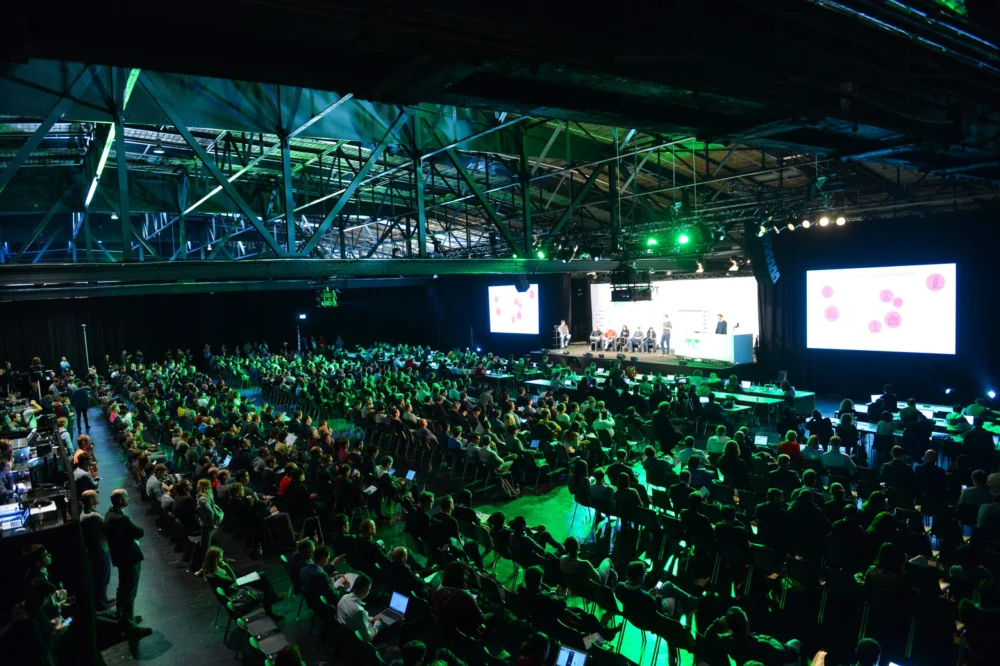
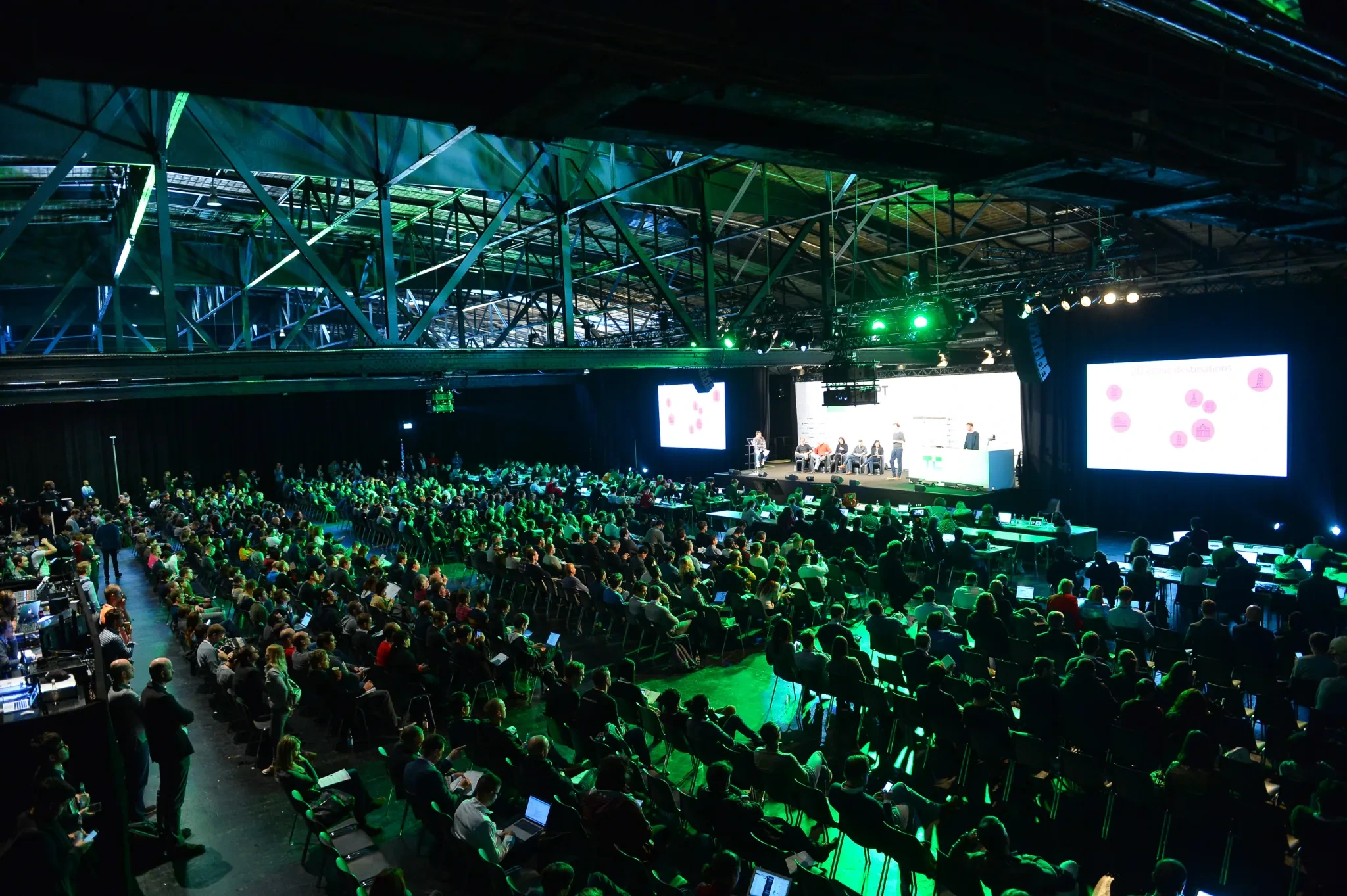
The second day of TechCrunch Disrupt 2025 commenced at San Francisco’s Moscone West, marking a critical midpoint for the three-day summit that has long served as a primary barometer for the global startup ecosystem. As thousands of founders, investors, and technologists gathered in the heart of the city, the atmosphere shifted from the introductory energy of the opening day to a rigorous schedule of high-stakes pitching, technical workshops, and strategic networking. With the event reaching its peak capacity, organizers announced that registration remains open for late attendees, offering a 50% discount on standard walk-up pricing to maintain the momentum of what has become a definitive year for the intersection of generative artificial intelligence and venture capital.
The Strategic Evolution of the Expo Hall and Startup Battlefield
The Expo Hall, which opened its doors at 8:00 a.m., serves as the physical manifestation of current market trends. This year, the hall features over 300 startups, a curated selection known as the "Startup Battlefield 200." These companies represent the top tier of applicants globally, selected for their potential to disrupt established industries or create entirely new market categories. Historically, the Startup Battlefield has been the launching pad for companies that have collectively raised billions in funding and achieved significant exits, including names like Dropbox, Fitbit, and Mint.
Throughout the morning and afternoon, the Pitch Showcase Stage hosted back-to-back sessions. The schedule was divided logically by sector: the morning was dedicated to consumer-facing innovations, while the afternoon shifted focus toward enterprise solutions. These pitches are more than mere presentations; they are rigorous examinations by panels of expert judges. For the Startup Battlefield Session 3 and 4 on the main Disrupt Stage, the judging panels included luminaries from Khosla Ventures, NEA, SignalFire, and Institutional Venture Partners. The presence of these firms underscores the continued importance of the "Disrupt" platform as a primary source for deal flow in an environment where venture capitalists are increasingly selective.
High-Stakes Insights from the Disrupt Stage
The Disrupt Stage, the event’s flagship venue, hosted a series of "no-filter" conversations that addressed the most pressing issues in technology. Vinod Khosla, the founder of Khosla Ventures and a pioneer in the venture capital space, delivered a keynote on the future of technology. Khosla, known for his early and aggressive bets on OpenAI and green technology, provided a vision of a world where AI-driven productivity could fundamentally decouple economic growth from traditional labor constraints. His analysis suggested that while the "hype cycle" for AI may fluctuate, the underlying structural shift is permanent and comparable to the industrial revolution.
Following Khosla, Elizabeth Stone, the Chief Technology Officer of Netflix, took the stage to discuss the evolution of streaming. Stone provided a rare look into how the streaming giant is utilizing machine learning to optimize content delivery and personalization in an increasingly fragmented media landscape. Her remarks highlighted the transition from simple recommendation algorithms to sophisticated systems that manage global infrastructure and content production workflows.
The stage also welcomed back Brynn Putnam, the founder of MIRROR. Having previously debuted her fitness technology on the Disrupt stage, Putnam’s return focused on the lifecycle of a founder—from initial inception to a high-profile acquisition by Lululemon and her subsequent ventures. This narrative of the "founder’s journey" remains a cornerstone of the Disrupt experience, providing practical lessons in scaling and exit strategies for the current cohort of entrepreneurs.
AI Stage: From Large Language Models to Physical Intelligence
The dedicated AI Stage reflected the industry’s shift from theoretical generative models to practical, scalable applications. A recurring theme across several sessions was the "Post-Training Revolution." Experts from Scale Venture Partners and CoreWeave discussed how reinforcement learning is currently upending the AI infrastructure stack, moving beyond the initial training of massive models to the fine-tuning and optimization required for enterprise-grade reliability.
The concept of "Physical AI" also took center stage. Jeff Cardenas, CEO of Apptronik, and Raquel Urtasun, CEO of Waabi, participated in a panel regarding intelligence in motion. They argued that the next frontier for artificial intelligence is not found on a screen but in the physical world—through humanoid robotics and autonomous freight. This transition requires a different set of safety protocols and computational requirements than purely digital AI, marking a significant area of investment for 2026 and beyond.
Furthermore, Or Lenchner, CEO of Bright Data, led a conversation on the transition from web pages to autonomous agents. The discussion emphasized that as AI agents begin to navigate the internet on behalf of humans, the "data layer" of the web must evolve to become more structured and accessible. This shift has profound implications for web privacy, data scraping regulations, and the fundamental architecture of the internet.
Building for Resilience on the Builders Stage
While the Disrupt and AI stages focused on the "what" and "why" of technology, the Builders Stage focused on the "how." Sessions on this stage were designed to provide tactical advice for founders navigating a challenging macroeconomic environment. A panel featuring partners from Sequoia Capital and Figma explored the nuances of designing products for the AI age, emphasizing that the user interface (UI) must evolve to accommodate the non-linear nature of AI interactions.
The debate over the geographic necessity of Silicon Valley also resurfaced. In a session titled "Do Startups Still Need Silicon Valley?", leaders from Revolution’s "Rise of the Rest" and SignalFire debated the merits of distributed teams versus the concentrated network effects of the Bay Area. While the consensus acknowledged that talent is now global, the density of capital and specialized expertise in San Francisco remains an unparalleled advantage for high-growth startups.
Networking and the "Women of Disrupt" Initiative
Recognizing that the most significant outcomes of Disrupt often happen outside the formal sessions, the event prioritized curated networking. The "Women of Disrupt Breakfast Reception" held at the Deal Flow Cafe provided a dedicated space for female founders and investors to connect. This initiative is part of a broader effort by TechCrunch to address the persistent gender gap in venture capital funding, where female-led startups still receive a disproportionately small percentage of total investment.
For the broader attendee base, the "Braindate" platform facilitated hundreds of small-group and 1:1 meetings. These sessions allowed participants to dive deep into specific technical or business problems, moving beyond the superficiality of traditional "handshake" networking. Meanwhile, the Deal Flow Cafe remained a restricted zone for founders and investors to conduct private negotiations, serving as the event’s "engine room" for future Series A and B rounds.
StrictlyVC: The Investor Perspective
For those holding Investor Passes, the "StrictlyVC" sessions provided a more clinical look at the state of the market. Dror Bin, CEO of the Israel Innovation Authority, offered a global perspective on deep-tech trends, while a panel of Limited Partners (LPs) discussed the current liquidity crisis in venture capital. With initial public offerings (IPOs) remaining scarce and M&A activity facing regulatory headwinds, LPs are increasingly focused on fund selection and the ability of General Partners (GPs) to return capital. This "LP Lens" session provided founders with a sobering look at the pressures their investors are facing, which in turn dictates the terms of new funding rounds.
Chronology of the Day and Side Events
The day’s events followed a precise timeline:
- 08:00 – 10:00: Expo Hall Opens; Women of Disrupt Breakfast.
- 09:30 – 12:00: Startup Battlefield 200 Consumer Pitches; Pavilion Pitch Sessions (Catalonia).
- 12:00 – 14:00: Keynote sessions on the Disrupt Stage; AI Stage deep dives into Reinforcement Learning.
- 14:00 – 16:00: Startup Battlefield 200 Enterprise Pitches; Builders Stage workshops on Pitching at the Inception Stage.
- 16:00 – 17:00: Closing Stage sessions on Synthetic Voices and Physical AI.
- 17:00 – Late: San Francisco Side Events.
As the official programming at Moscone West concluded for the day, the energy transitioned to various "Side Events" across San Francisco. These company-hosted parties, panels, and meetups are integral to the Disrupt ecosystem, extending the dialogue into more informal settings. From SOMA to the Mission District, these gatherings allow for the "serendipitous collisions" that often define the TechCrunch experience.
Broader Impact and Implications for the Tech Sector
The proceedings of Day Two at TechCrunch Disrupt 2025 suggest a maturing AI market. The focus has moved definitively away from "wrapper" startups—those that merely add a thin layer of functionality to existing large language models—toward companies solving deep infrastructure, security, and physical-world problems.
Furthermore, the emphasis on "Agentic AI" and "Autonomous Agents" across multiple stages indicates that the industry is preparing for a shift where software no longer just assists humans but executes complex workflows independently. This has significant implications for labor markets and enterprise efficiency, a theme that was echoed in the healthcare-focused breakout sessions.
As Disrupt enters its final day, the focus will shift toward the crowning of the Startup Battlefield winner and a final analysis of the investment landscape for 2026. The data and insights gathered during Day Two reinforce the notion that while the "easy money" era of venture capital has ended, the appetite for transformative technology—particularly in AI, defense, and healthcare—remains robust. For the thousands in attendance, the message was clear: in an era of rapid technological change, the ability to execute on "product-market fit" is more valuable than ever.