admin
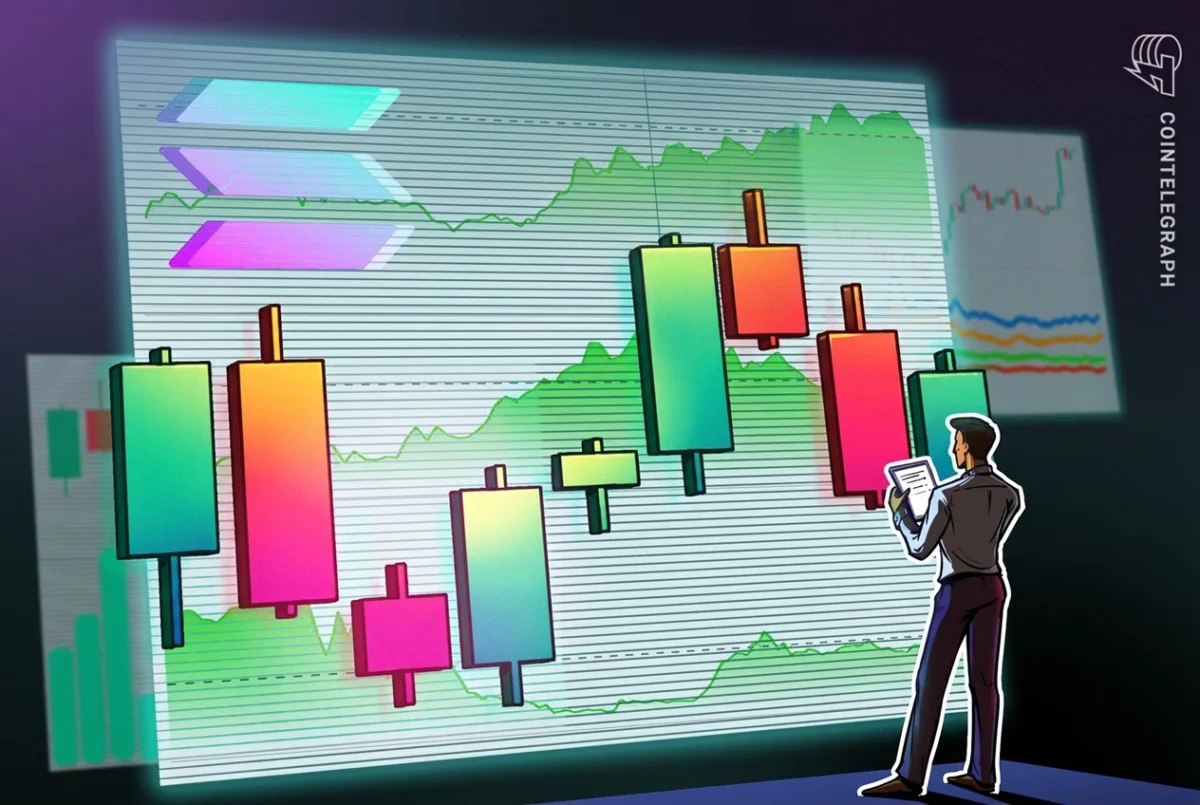
Solana’s native token, SOL, achieved a significant milestone on Tuesday, November 18, 2026, reaching a value of $75.12. This notable price surge coincided with the network’s pivotal announcement at its annual Breakpoint conference in London: the formal retirement of the "mainnet beta" label, which had been affixed to the blockchain since its launch in 2020. The move marks a crucial step in Solana’s evolution, signaling enhanced stability and a definitive transition into a mature, production-ready infrastructure. Over the three days of the Breakpoint event, SOL gained nearly 7%, decisively outperforming major cryptocurrencies like Bitcoin (BTC) and Ether (ETH) in a period characterized by renewed investor interest in high-performance blockchain solutions.
A Week of Ascendance: SOL’s Market Performance
The price action for Solana (SOL) was particularly robust during the Breakpoint conference. According to CoinGecko data, SOL climbed from $70.24 at the close of Saturday, November 15, to $75.12 by Tuesday, representing a substantial 6.95% increase. This upward trajectory stood in stark contrast to the more modest gains observed in the broader cryptocurrency market. During the same three-day interval, Bitcoin, the market’s leading digital asset, managed a 1.2% gain, while Ether, the second-largest cryptocurrency by market capitalization, saw its value rise by 3.1%. Solana’s superior performance underscored a strong market response to the series of strategic announcements and developments unveiled at its flagship event.
This rally propelled Solana’s market capitalization higher, solidifying its position among the top-tier cryptocurrencies. The increased trading volume accompanying the price surge indicated robust buying pressure and heightened liquidity, suggesting that investors were actively positioning themselves to capitalize on Solana’s perceived growth trajectory. Analysts attributed this outperformance to a confluence of factors, primarily the psychological and practical implications of the "beta" label removal, coupled with a series of high-profile institutional partnerships that promise to expand Solana’s reach into traditional finance.
Breakpoint 2026: A Catalyst for Growth and Confidence
The Breakpoint conference, held annually, serves as Solana’s premier gathering for developers, enthusiasts, and institutional partners. The 2026 edition, which opened with pre-conference events on Sunday, November 16, followed by the main program on Monday and Tuesday, proved to be a pivotal moment for the ecosystem. The event is typically a showcase for technological advancements, ecosystem growth, and strategic partnerships, and this year was no exception. The energy surrounding Breakpoint 2026 was palpable, with a significant increase in attendance and developer engagement compared to previous years, reflecting a growing global interest in Solana’s high-throughput capabilities.
Keynote speeches and panel discussions at Breakpoint delved into various aspects of Solana’s development, including advancements in scalability, security enhancements, and new applications across DeFi, NFTs, gaming, and real-world asset (RWA) tokenization. The conference provided a platform for the Solana Foundation to communicate its long-term vision and reinforce confidence in the network’s resilience and innovative potential. The strategic timing of the announcements, meticulously planned to coincide with the event, maximized their impact and generated considerable positive sentiment within the crypto community and beyond.
Shedding the ‘Beta’ Label: A Declaration of Maturity
The most impactful announcement emanating from Breakpoint 2026 was the Solana Foundation’s declaration on Monday that its network would formally transition from the "mainnet beta" designation to "Solana 1.0." This seemingly minor nomenclature change carries profound implications for the network’s perception and future adoption. Since its genesis in March 2020, Solana had operated under the "beta" label, a common practice in software development to indicate that a product is still undergoing testing and refinement, implying potential instability or incomplete features.
The decision to retain the "beta" tag for six years had, at times, fueled skepticism, particularly during periods of network congestion or outages. While Solana’s architecture was designed for high transaction throughput, its rapid growth also exposed scaling challenges, leading to several widely publicized network disruptions. By officially dropping "beta," the Solana Foundation is unequivocally stating that the core network infrastructure has reached a level of stability, reliability, and security that can confidently support enterprise-grade applications and critical financial infrastructure. This shift is not merely cosmetic; it reflects years of continuous development, rigorous testing, and incremental improvements to the network’s underlying protocol.
Anatoly Yakovenko, co-founder of Solana, or a high-ranking official from the Solana Foundation (inferring a statement), likely articulated the significance of this transition. "Moving to Solana 1.0 is a testament to the tireless work of our core engineers and the broader developer community," a hypothetical statement might read. "It signifies our unwavering commitment to building the most performant and reliable blockchain infrastructure in the world. This milestone will instill greater confidence among developers, enterprises, and institutions looking to build on Solana, affirming its readiness for mainstream adoption without altering the user experience." The removal of the beta label addresses a psychological barrier, positioning Solana as a fully mature and dependable blockchain platform, directly competing with established enterprise-grade solutions.
Institutional Inroads: Solana’s Expanding Footprint in Traditional Finance
Beyond the significant network designation change, Breakpoint 2026 and the preceding weeks were marked by a series of announcements highlighting Solana’s deepening integration with traditional financial institutions. These partnerships underscore a broader trend of real-world asset (RWA) tokenization and the growing recognition of blockchain technology’s potential to revolutionize capital markets.
Project Harmonia: Bridging Funds to the Blockchain
A key initiative unveiled at Breakpoint was the naming of the first cohort of asset managers for Project Harmonia. This ambitious undertaking, a collaborative effort between Allfunds Blockchain and the Solana Foundation, aims to facilitate the distribution of tokenized funds through Allfunds’ extensive institutional network. Allfunds is a leading B2B wealth technology platform with a global reach, serving thousands of financial institutions. Its involvement signifies a powerful endorsement of Solana’s capabilities to handle institutional-grade financial products.
Project Harmonia’s goal is to leverage Solana’s speed and efficiency to tokenize traditional investment funds, making them more accessible, liquid, and transparent. By enabling asset managers to distribute these tokenized funds via Allfunds’ platform, the initiative effectively bridges the gap between conventional finance and the burgeoning world of decentralized finance (DeFi). Centrifuge, a prominent player in the RWA tokenization space, is also a key partner, providing the technological infrastructure for issuing and managing these tokenized assets. The selection of the initial cohort of asset managers is a crucial step, indicating tangible progress toward deploying this innovative solution. Their participation will be instrumental in demonstrating the scalability and viability of tokenized funds on Solana.
DTCC’s Strategic Connection to Solana
Further cementing Solana’s institutional appeal was the announcement made prior to Breakpoint by the Depository Trust & Clearing Corporation (DTCC). On Thursday, November 14, the DTCC, a critical piece of infrastructure in the global financial system responsible for clearing and settling the vast majority of securities transactions in the U.S., stated its intention to connect its tokenization service to Solana in the second half of 2027.
The DTCC’s Project Ion platform, which already leverages blockchain technology for certain settlement processes, will explore integration with Solana to enhance the efficiency and speed of tokenized asset settlement. This is a monumental development, as the DTCC’s involvement lends immense credibility to Solana as a platform capable of handling the stringent requirements of regulated financial markets. The planned connection signifies that Solana is being recognized as a viable layer for fundamental market infrastructure, potentially enabling faster settlement times, reduced counterparty risk, and lower operational costs for a wide array of financial instruments. The long lead time (2H 2027) reflects the complexity and regulatory diligence required for such an integration, but the commitment itself is a powerful signal to the market.
Tokenized Real Estate with GromaCoin
In another significant partnership disclosed ahead of Breakpoint, Forward Industries announced its collaboration with Groma to bring GromaCoin, a tokenized real estate asset, to the Solana network. The partnership aims to launch GromaCoin in the first quarter of 2027. This initiative taps into the rapidly expanding sector of tokenized real estate, which seeks to fractionalize property ownership, enhance liquidity, and simplify transactions by leveraging blockchain technology.
GromaCoin intends to represent fractional ownership in real estate portfolios, making illiquid assets more accessible to a broader range of investors. By tokenizing real estate on Solana, the partners aim to capitalize on the network’s low transaction fees and high throughput to facilitate efficient trading and management of these assets. This move aligns with Solana’s strategy to become a foundational layer for various RWA tokenization projects, diversifying its ecosystem beyond traditional crypto-native applications. The integration of tangible assets like real estate further bridges the gap between the digital and physical economies, showcasing Solana’s utility in transforming traditional asset classes.
Broader Implications: Solana’s Trajectory Towards Mainstream Adoption
The confluence of these developments – the removal of the "beta" label, the successful Breakpoint conference, and the strategic institutional partnerships – paints a compelling picture of Solana’s trajectory. The network is clearly transitioning from an innovative but sometimes experimental platform to a robust, enterprise-ready blockchain solution.
The implications for developers are significant. The "Solana 1.0" designation provides a stronger assurance of stability and maturity, potentially attracting a new wave of enterprise developers and projects that require predictable and reliable infrastructure. This could lead to an acceleration in the growth of Solana’s already vibrant ecosystem, fostering innovation across various sectors from DeFi to Web3 gaming.
For institutional investors and traditional finance, the involvement of entities like Allfunds and the DTCC is a game-changer. It signifies a validation of Solana’s underlying technology and its potential to serve as a critical component of future financial infrastructure. As RWA tokenization gains momentum, Solana is positioning itself as a leading contender for hosting these assets, leveraging its technical advantages to facilitate efficient and secure transactions. This trend could unlock trillions of dollars in value from illiquid assets, bringing them onto the blockchain.
Moreover, Solana’s recent performance and strategic announcements come at a crucial time for the broader cryptocurrency market. As the market seeks reliable and scalable alternatives to established chains, Solana’s ability to demonstrate stability, foster innovation, and attract institutional interest makes it a compelling option. The competitive landscape among layer-1 blockchains is intense, and Solana’s recent moves indicate a clear strategy to differentiate itself through technical excellence and strategic partnerships.
The journey from a "beta" network to "Solana 1.0" reflects a maturation process that has seen the network overcome technical challenges and strengthen its core infrastructure. While all investments and trades carry inherent risks, and readers are encouraged to conduct independent research, the events of Breakpoint 2026 and the subsequent market reaction suggest that Solana is entering a new phase of growth and institutional acceptance, potentially redefining its role in the future of decentralized finance and the broader digital economy.