Dwi Wanna
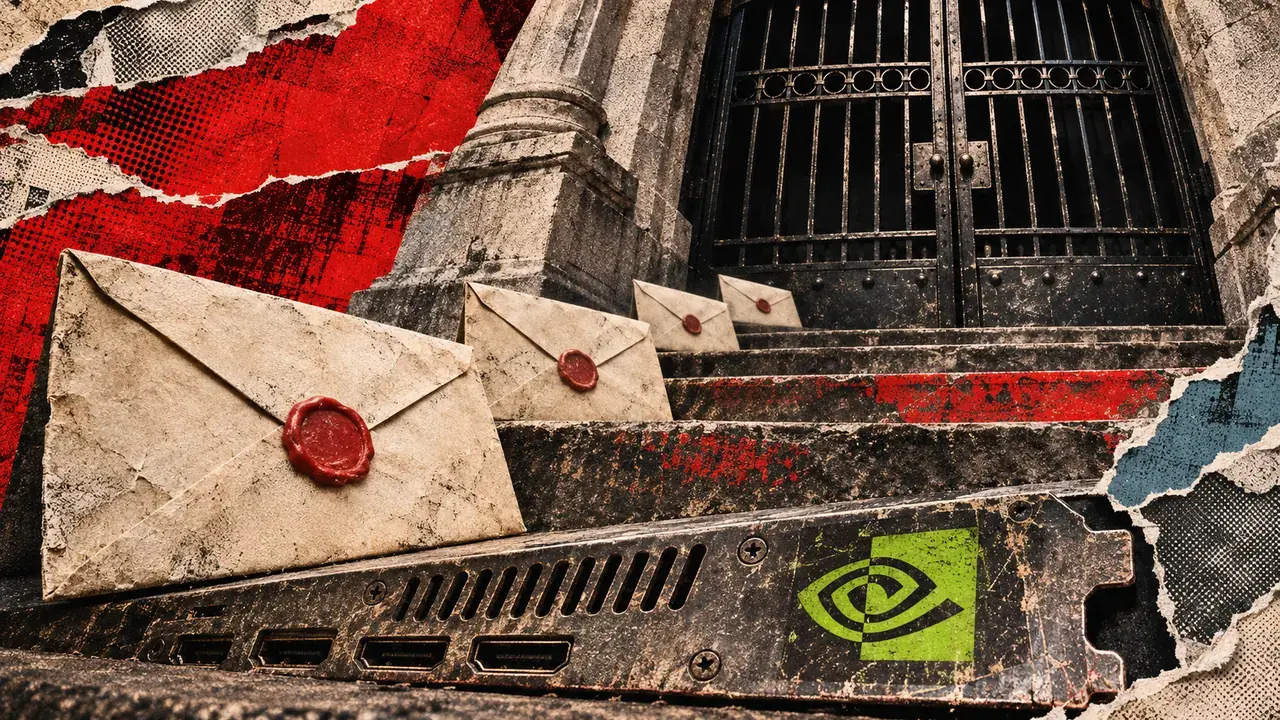
In a significant resolution to a long-standing legal battle, Nvidia Corporation and its leadership have reached a proposed $290 million settlement to resolve a class-action lawsuit filed by investors. The litigation, which has spanned several years and reached the highest levels of the American judicial system, centers on allegations that the semiconductor giant misled the public regarding the extent to which cryptocurrency mining drove its explosive revenue growth during the 2017 and 2018 digital asset bull market.
The settlement agreement, filed on November 24, 2026, in the U.S. District Court for the Northern District of California, seeks to compensate individuals and entities who purchased or acquired Nvidia common stock between August 10, 2017, and November 15, 2018. The plaintiffs filed an unopposed motion for preliminary approval of the deal in the Oakland-based federal court, marking a pivotal moment for shareholders who saw the value of their holdings crater when the cryptocurrency market corrected in late 2018.
Background: The 2017 Crypto Surge and the "Gaming" Narrative
To understand the gravity of the $290 million settlement, one must look back at the market conditions of 2017. During this period, the price of Bitcoin and, more importantly for Nvidia, Ethereum, reached then-unprecedented heights. Because Ethereum’s consensus mechanism at the time relied on Proof-of-Work (PoW) mining that was highly efficient on graphics processing units (GPUs), demand for Nvidia’s GeForce GTX 10-series cards skyrocketed.
While the primary intended audience for these cards was the global gaming community, professional and hobbyist miners began purchasing GPUs in bulk, often stripping retail shelves bare and driving secondary market prices to double or triple their manufacturer’s suggested retail price (MSRP).
The core of the legal dispute rests on how Nvidia classified this revenue. During earnings calls and in financial filings throughout late 2017 and early 2018, the plaintiffs allege that CEO Jensen Huang and other executives attributed the massive growth in the "Gaming" segment to organic demand from gamers and the rising popularity of e-sports. The lawsuit contended that Nvidia was well aware that a substantial portion of this growth was actually coming from the highly volatile cryptocurrency mining sector. By categorizing mining-related sales as "Gaming" revenue, the plaintiffs argued that Nvidia created a false impression of sustainable, long-term growth, shielding investors from the reality that their revenue was tethered to the boom-and-bust cycles of the crypto market.
The 2018 "Crypto Hangover" and Market Fallout
The "misleading" narrative allegedly came to a head in late 2018. As the price of Ethereum and other altcoins plummeted, mining became significantly less profitable. Almost overnight, the insatiable demand for new GPUs evaporated. Furthermore, a flood of used mining cards hit the secondary market, competing directly with Nvidia’s new inventory.
On November 15, 2018—the end date of the class period—Nvidia reported third-quarter financial results that missed analyst expectations and provided a weak outlook for the future. The company admitted to a "crypto hangover," acknowledging that a surplus of mid-range GPUs in the channel would take several quarters to clear. Following this revelation, Nvidia’s stock price experienced a sharp decline, shedding nearly 18% of its value in a single trading session and wiping out billions of dollars in market capitalization. This collapse served as the catalyst for the securities fraud litigation, as investors claimed they had been blindsided by risks that the company had allegedly downplayed or concealed.
Chronology of the Legal Proceedings
The path to the $290 million settlement was neither short nor simple. The litigation faced several hurdles, including initial dismissals and subsequent appeals.
- Initial Filings (2018-2019): Shortly after the stock drop, various pension funds and institutional investors filed suits, which were eventually consolidated.
- District Court Dismissal (2021): A lower court initially dismissed the case, ruling that the plaintiffs had not provided sufficient evidence that Nvidia executives acted with "scienter," or a specific intent to deceive.
- Appellate Reversal (2023): The U.S. Court of Appeals for the Ninth Circuit revived the case in a 2-1 decision, finding that the plaintiffs’ allegations regarding Jensen Huang’s internal knowledge were sufficient to proceed.
- Supreme Court Involvement (2024): Nvidia petitioned the U.S. Supreme Court to review the Ninth Circuit’s decision, arguing that the standards for pleading securities fraud should be stricter. The Supreme Court’s involvement underscored the national importance of the case regarding corporate transparency.
- Class Certification (March 2026): The district court officially certified the class, allowing thousands of investors to join the action.
- Mediation and Settlement (Late 2026): After intense negotiations and a mediator’s recommendation on September 24, the parties reached the current $290 million agreement to avoid the risks and costs of a protracted trial.
Terms of the Settlement and Eligibility
The proposed $290 million settlement is one of the larger securities class-action recoveries in recent years involving a technology firm. However, it is important to note that the total fund will be subject to various deductions before reaching investors. These include:
- Court-awarded legal fees and litigation expenses for the plaintiffs’ counsel.
- Taxes on the interest earned by the fund.
- Administrative costs associated with notifying class members and processing claims.
Who Qualifies?
The "Settlement Class" includes all persons and entities who purchased or otherwise acquired Nvidia common stock during the period from August 10, 2017, through November 15, 2018, inclusive.
Exclusions:
Certain parties are strictly excluded from the settlement, including:
- Nvidia Corporation itself and its subsidiaries.
- Individual defendants, such as Jensen Huang, and their immediate family members.
- Officers and directors of Nvidia during the relevant period.
- Any entity in which the defendants have a controlling interest.
- Liability insurers for the defendants.
Eligible investors will be required to submit a proof of claim form, providing documentation of their transactions. The "Recognized Loss" for each claimant will be calculated based on a court-approved plan of allocation, which typically considers the purchase price, the sale price (if sold), and the timing of the transactions relative to the corrective disclosures.
Official Responses and Denial of Liability
Despite the substantial payout, Nvidia and its executives have maintained a firm stance of non-admission. The settlement agreement explicitly states that the company denies any wrongdoing and that the decision to settle is not an admission of liability or a concession that any laws were violated.
Legal experts suggest that for a company of Nvidia’s current scale—now a multi-trillion-dollar titan at the forefront of the Artificial Intelligence (AI) revolution—a $290 million settlement is a pragmatic move to "clear the deck" of historical legal distractions. By settling, Nvidia avoids the unpredictability of a jury trial and the potential for even larger statutory damages.
The plaintiffs’ lead counsel, Bernstein Litowitz Berger & Grossmann LLP, hailed the settlement as a major victory for shareholder rights, noting that it provides "meaningful " recovery for investors who suffered during the 2018 market correction.
Future Implications for Corporate Transparency
The Nvidia settlement serves as a cautionary tale for technology companies operating in volatile or emerging markets. As Nvidia has transitioned from a gaming-focused company to the world’s leading provider of AI hardware, the lessons of the 2017 crypto boom remain relevant.
1. Revenue Granularity: The case highlights the necessity for companies to provide granular data when a single product line is being utilized by two vastly different consumer bases (e.g., gamers vs. industrial miners).
2. Disclosure Risks: In the current era, where Nvidia’s H100 and B200 chips are in high demand for AI, the company must be careful to distinguish between sustainable enterprise demand and potential speculative bubbles in the AI startup ecosystem.
3. Precedent for Future Litigation: The fact that this case survived a Supreme Court challenge before settling sets a precedent for how "scienter" is interpreted in the context of executive statements during earnings calls.
Next Steps in the Payout Process
The settlement process is currently in its preliminary stages. Judge Haywood S. Gilliam Jr. has scheduled a preliminary approval hearing for February 4, 2027, at the federal courthouse in Oakland.
If the judge grants preliminary approval, a court-approved claims administrator will begin the process of identifying and notifying potential class members. This will include mailing postcard notices and establishing a dedicated website where investors can download claim forms. According to the proposed schedule, investors will have approximately 90 days from the notice date to submit their claims.
A final approval hearing—often called a "fairness hearing"—will be scheduled approximately 130 days after the preliminary order. Only after the court grants final approval and any potential appeals are exhausted will the "Distribution Order" be signed, allowing checks or electronic payments to be sent to approved claimants.
While the $290 million figure is substantial, the individual payouts will depend entirely on the "participation rate"—the number of investors who actually file valid claims. In many large class actions, only a fraction of eligible shareholders submit the necessary paperwork, which can sometimes result in higher-than-expected per-share payouts for those who do participate.
As of late 2026, Nvidia continues to dominate the global semiconductor market, with its valuation far exceeding the levels seen during the 2017-2018 period. For the company, this settlement represents the closing of a chapter from its past, while for the investors involved, it represents a long-awaited conclusion to a decade-old grievance.