admin
admin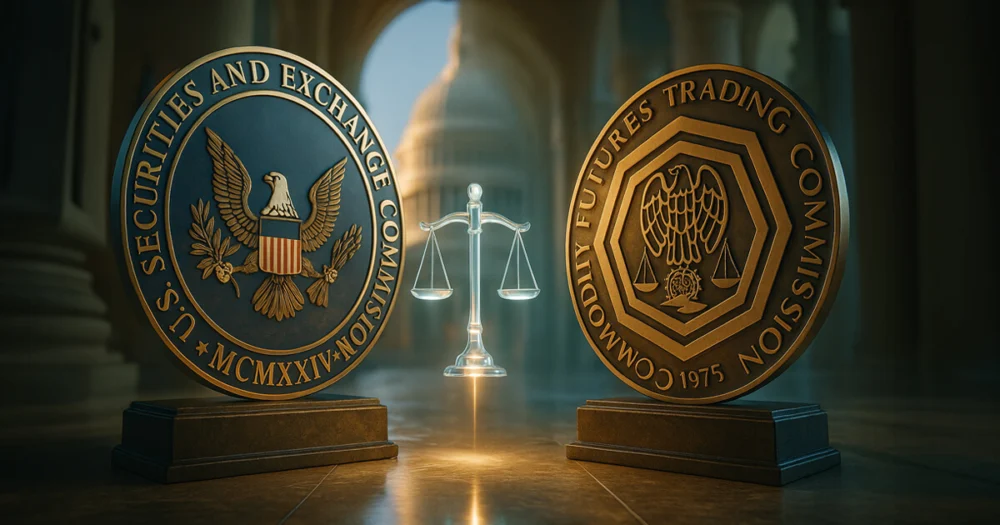
Washington lawmakers are once again grappling with the complex question of regulatory authority over the burgeoning digital asset market, a perennial challenge that has seen the Securities and Exchange Commission (SEC) and the Commodity Futures Trading Commission (CFTC) locked in a jurisdictional tug-of-war. The recent release of two competing Senate committee drafts signals a renewed effort to bring clarity to this often ambiguous landscape. The House of Representatives has already taken a step with the passage of the Digital Asset Market Clarity Act of 2025, but the Senate’s inaction until now has left the future regulatory framework for cryptocurrencies in a state of flux. These new proposals, originating from the Senate Agriculture and Banking Committees, aim to redraw the jurisdictional map, potentially reshaping everything from Bitcoin spot markets to Ethereum disclosures and the rulebooks governing digital asset exchanges. The choice between these two distinct approaches could fundamentally transform custody practices, asset classification, and disclosure requirements, redrawing the boundaries of the U.S. digital asset market for years to come.
The Agriculture Committee’s Blueprint: Empowering the CFTC
One of the most significant proposals comes from the Senate Agriculture Committee, spearheaded by Senators John Boozman and Cory Booker. Their bipartisan market structure discussion draft seeks to expand the authority of the CFTC, designating it as the primary regulator for "digital commodities" and their associated spot markets. This approach mirrors the existing regulatory structure for traditional commodities, which are overseen by the CFTC.
Under this framework, cryptocurrency exchanges, brokers, and dealers that handle digital commodities would be required to register with the CFTC. This registration process would likely involve meeting stringent capital requirements, implementing robust cybersecurity measures, and adhering to new custody rules. A key provision in this draft mandates the use of qualified custodians for digital assets, alongside the segregation of customer assets. This measure is designed to prevent conflicts of interest, particularly for entities with affiliated businesses. The draft also allows for joint rulemaking between the CFTC and SEC for entities that fall under overlapping jurisdiction or require dual registration, acknowledging the complexities of digital assets that may exhibit characteristics of both commodities and securities. However, specific issues, such as the regulatory treatment of decentralized finance (DeFi) protocols, are deferred for future debate, indicating that some of the most intricate aspects of the digital asset ecosystem may still require further deliberation.
This proposed legislation builds upon the principles outlined in the House’s Clarity Act, aiming to bring the volatile and often opaque spot markets for cryptocurrencies under a more established regulatory regime. If enacted, U.S.-based Bitcoin platforms, for example, would be compelled to register as digital-commodity exchanges. This would necessitate compliance with new capital adequacy standards, enhanced custody protocols, and stricter protections for retail investors, drawing parallels to the oversight applied to traditional futures markets.
Furthermore, the Agriculture Committee’s draft could foster greater standardization in data sharing across various trading venues. This improved data transparency is crucial for market surveillance and would be particularly beneficial for entities like Exchange-Traded Fund (ETF) issuers, who rely on comprehensive market data to assess liquidity and price discovery. Notably, while spot market oversight for digital commodities would shift to the CFTC, the regulation of ETFs themselves, which are considered securities, would remain under the purview of the SEC. This dual oversight model acknowledges the hybrid nature of some digital asset products.
The broader implications of this shift are substantial. Moving the primary oversight of Bitcoin spot markets to the CFTC would align exchange operations with commodity-exchange logic. This emphasizes clear reporting of trading activity and robust market surveillance, potentially at the expense of the detailed investor disclosures typically mandated by securities regulators. For market participants, this could lead to a more nuanced understanding of market quality and liquidity, as data becomes more standardized and accessible. While the CFTC’s role would be significantly enhanced, the SEC would retain jurisdiction over security-based digital assets and the increasingly popular crypto futures markets, ensuring that some level of dual oversight continues.
The Banking Committee’s Approach: Defining "Ancillary Assets" and SEC Authority
In parallel, the Senate Banking Committee has put forth its own legislative proposal, the Responsible Financial Innovation Act, which takes a different tack by focusing on digital assets that occupy a nebulous space between commodities and securities. This draft introduces the concept of "ancillary assets," defined as "fungible digital commodities" that are distributed through an arrangement that also constitutes an investment contract.
This framework would grant the SEC explicit authority to oversee these "ancillary assets." Issuers would be required to provide comprehensive disclosures regarding token distributions, the governance structures of their projects, and the associated risks. A significant aspect of this proposal is the mandate for the SEC to finalize rules defining what constitutes an "investment contract" within approximately two years. This would provide much-needed clarity for digital assets that have historically operated in a regulatory gray area. Additionally, the draft introduces a "decentralization certification process." This process would allow a digital asset project to transition out of securities treatment once network control and governance fall below certain predefined thresholds, signaling a move toward true decentralization.
This provision offers a conditional pathway for tokens linked to "active projects," such as Ethereum, to potentially shed their securities classification. A token might initially be subject to SEC oversight, including disclosure and investor protection requirements, but could later "graduate" to a different regulatory status once its governance becomes sufficiently decentralized and distributed among its network participants. This framework addresses a persistent ambiguity that has plagued the industry since early cases like the DAO report, providing a structured mechanism for digital assets to evolve. It also compels the SEC to articulate its definition of decentralization in a formal, written manner, rather than relying on case-by-case enforcement actions.
Under the Banking Committee’s model, practical distinctions between different types of digital assets would become more pronounced. Bitcoin, with its established history and decentralized nature, would likely continue to be treated as a digital commodity under the CFTC’s jurisdiction. Tokens that are more closely tied to specific enterprises or development teams would remain under the SEC’s ancillary-asset regime until they can demonstrate sufficient decentralization. Centralized exchanges would find themselves navigating both regulatory frameworks. They would likely need to register as CFTC digital-commodity exchanges for their spot crypto trading activities but would remain subject to SEC oversight for any listed security tokens.
The combined effect of these proposed regulations could necessitate dual registration for many U.S. digital asset platforms, leading to enhanced capital requirements and more transparent trading operations. A key unknown across both proposals is the precise timeline for implementation. The Banking Committee’s draft imposes specific deadlines for rulemaking, offering a clearer path forward. However, the Agriculture Committee’s draft leaves certain critical questions unresolved, and both proposals depend heavily on future coordination rules and extensive public consultations before they could become law.
The Path Forward: A Regulatory Tug-of-War
The House version of the Clarity Act has already passed, setting a precedent for legislative action. The Senate proposals, however, are still in the discussion phase, and opposition from various stakeholders within both parties is anticipated. These two Senate drafts currently serve as an invaluable guide for developers, traders, and investors navigating the evolving digital asset landscape.
Firstly, they offer a glimpse into how U.S. spot trading venues might evolve under a CFTC-led regulatory regime, emphasizing market integrity and surveillance. Secondly, they illustrate a potential future where token projects could transition from securities classification to a more commodity-like status, and how exchanges might need to implement robust internal firewalls to manage different regulatory requirements for various asset types.
While these drafts may not deliver the immediate and comprehensive clarity their titles suggest, they undeniably map out the next critical phase of the ongoing regulatory debate in Washington. In a market where asset classification directly influences liquidity, custody arrangements, and compliance obligations, understanding which agency will ultimately draw the regulatory lines could prove to be as strategically important as any on-chain analytical signal. The implications extend beyond mere paperwork; they touch upon the fundamental structure and accessibility of the digital asset market in the United States, impacting innovation, investor confidence, and the nation’s position in the global digital economy. The coming months will be crucial in determining whether Congress can forge a consensus and usher in a new era of regulatory certainty for digital assets.