admin
admin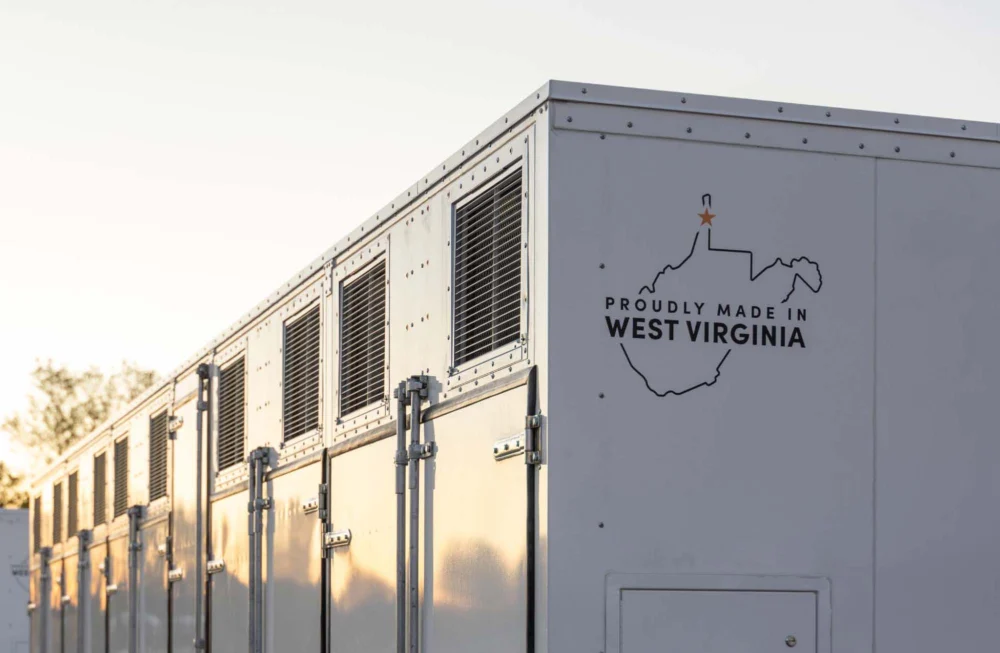
The technology giant Google has finalized a landmark $1 billion agreement with energy storage startup Form Energy to deploy a pioneering iron-air battery system at its newest data center facility in Minnesota. This massive investment marks a significant turning point for the long-duration energy storage industry, providing a commercial proof-of-concept for technology capable of discharging electricity for several days at a time. The deal is part of a broader 1.9-gigawatt clean energy initiative aimed at ensuring Google’s massive computational infrastructure can operate on carbon-free energy even when the sun is not shining and the wind is not blowing.
The centerpiece of the agreement is Form Energy’s proprietary "rust-breathing" battery technology, which is designed to solve the intermittency problems that have long plagued renewable energy grids. Unlike traditional lithium-ion batteries, which typically provide four to six hours of backup power, Form Energy’s iron-air systems are engineered to provide continuous discharge for up to 100 hours. This capability is essential for Google as it seeks to meet its ambitious corporate goal of operating entirely on 24/7 carbon-free energy by 2030.
The Minnesota Project: A New Blueprint for Green Infrastructure
The Minnesota data center project represents one of the most complex energy integration efforts in the history of the technology sector. The facility will be supported by a diversified portfolio of renewable assets, including 1.4 gigawatts of wind power and 200 megawatts of solar capacity. However, because wind and solar are variable, the inclusion of a 300-megawatt iron-air battery system is the critical component that allows the data center to maintain a steady, reliable load.
The $1 billion price tag for the battery system reflects both the scale of the installation and the nascent nature of the technology. For Google, the investment is a hedge against the rising costs of fossil-fuel-based "peaker" plants and a step toward total grid independence. By storing excess wind and solar energy during periods of high production, the Form Energy system can discharge that power during multi-day periods of low renewable output, effectively smoothing the energy curve for the entire region.
Industry analysts suggest that this project will serve as a bellwether for other hyperscale data center operators. As artificial intelligence continues to drive an unprecedented surge in electricity demand, tech companies are increasingly forced to become energy developers in their own right. The Minnesota installation demonstrates that long-duration energy storage (LDES) has moved out of the laboratory and into the realm of large-scale industrial application.
The Mechanics of Iron-Air Technology: How "Rust" Powers the Cloud
At the heart of the $1 billion deal is a chemical process that is as simple as it is revolutionary. Form Energy’s batteries operate on the principle of reversible oxidation, or "rusting." Each battery module contains iron pellets that react with oxygen from the ambient air to create iron oxide (rust). As the iron rusts, it releases electrons, which are then captured and sent to the grid as electricity.
To recharge the battery, the process is reversed. An electrical current is applied to the rusted iron, which removes the oxygen and converts the material back into metallic iron. This "breathing" cycle allows the battery to store and release energy over long periods without the significant degradation issues often associated with lithium-ion chemistries.
The primary advantage of iron-air technology is its cost-effectiveness and material abundance. Iron is one of the most common elements on Earth, making it significantly cheaper and easier to source than the lithium, cobalt, and nickel required for high-performance EV batteries. Furthermore, because the system uses water-based electrolytes, it poses no risk of thermal runaway or fire, making it an ideal choice for large-scale grid-level installations located near sensitive data center hardware.
A Chronology of Innovation: Form Energy’s Path to the Billion-Dollar Deal
The journey to the Google contract has been nearly a decade in the making. Form Energy was founded in 2017 by a team of industry veterans, including CEO Mateo Jaramillo, who previously led Tesla’s stationary storage division, and Yet-Ming Chiang, a renowned professor at the Massachusetts Institute of Technology (MIT).
- 2017–2019: Form Energy emerged from stealth mode, focusing on the fundamental chemistry of long-duration storage. During this period, the company secured early-stage funding from Breakthrough Energy Ventures, an investment fund led by Bill Gates.
- 2020–2022: The company successfully demonstrated its first prototypes and began aggressive fundraising. It focused on the "100-hour" benchmark, identifying it as the "holy grail" for seasonal and multi-day energy storage.
- 2023: Form Energy broke ground on "Form Factory 1" in Weirton, West Virginia. The facility, built on the site of a former steel mill, was designed to revitalize the local economy while providing the manufacturing capacity needed for grid-scale orders.
- 2024–2025: The company began delivering its first pilot modules to utility partners like Xcel Energy and Great River Energy. These early deployments paved the way for the massive scale-up required by the Google contract.
- February 2026: Google officially announced the Minnesota data center project, followed shortly by the disclosure of the $1 billion valuation for the Form Energy battery component.
Financial Momentum and the Road to an IPO
The $1 billion payday from Google has provided Form Energy with a massive boost to its balance sheet. Following the announcement, CEO Mateo Jaramillo confirmed that the company is currently in the process of raising an additional $500 million in venture funding to support the expansion of its manufacturing operations.

Prior to this latest round, Form Energy had already raised approximately $1.4 billion from a diverse group of investors, including TPG Rise Climate, G2 Venture Partners, and several sovereign wealth funds. The company’s ability to secure a billion-dollar contract from a "Big Tech" client has significantly de-risked its business model in the eyes of institutional investors.
According to financial disclosures, Form Energy is planning to launch an initial public offering (IPO) in 2027. The company’s trajectory is being closely watched by the broader clean-tech sector, as it represents a successful transition from a venture-backed startup to a major industrial supplier. The Google deal provides the revenue certainty needed to justify a high valuation on the public markets, positioning Form Energy as a leader in the rapidly expanding energy transition sector.
Broader Implications for the Global Energy Transition
The partnership between Google and Form Energy carries implications that extend far beyond the borders of Minnesota. As the global energy grid transitions away from coal and natural gas, the need for long-duration storage has become a matter of national security and economic stability.
In the United States, the Department of Energy (DOE) has set a goal to reduce the cost of long-duration energy storage by 90% by 2030. The Google-Form Energy deal is a major step toward that goal, as economies of scale at the Weirton factory are expected to drive down the per-kilowatt-hour cost of iron-air systems. If Form Energy can deliver on the Minnesota project, it is likely that other utilities and heavy industrial users will follow suit, creating a robust market for non-lithium storage technologies.
Furthermore, the project highlights a shift in the role of corporate entities in the climate fight. No longer content with merely purchasing "renewable energy credits" (RECs) to offset carbon emissions, companies like Google are now investing directly in the hardware and infrastructure necessary to transform the grid. This "firming" of renewable energy—turning intermittent wind and solar into reliable "baseload" power—is the next frontier of corporate sustainability.
Reaction from Industry Stakeholders
While official statements from the involved parties have been focused on the technical milestones, industry experts have expressed a mix of optimism and caution. "The scale of this deal is unprecedented for a non-lithium battery technology," said one energy analyst. "It shows that Google is willing to take a significant financial and technical risk to achieve its 24/7 carbon-free energy goals. If it works, it changes the game for how we think about data center design."
Local officials in Minnesota have also welcomed the news, noting that the project will bring hundreds of construction jobs and high-tech maintenance roles to the state. The integration of the battery system with the existing regional grid is expected to improve local energy resilience, potentially lowering costs for residential consumers by reducing the need for expensive peak-power imports.
In West Virginia, the news of the $1 billion contract was met with enthusiasm. The Weirton factory is a symbol of the "Rust Belt" transition to a "Green Belt," and the Google order ensures that the facility will be operating at high capacity for years to come.
Conclusion: A New Era for Energy Storage
The $1 billion agreement between Google and Form Energy is more than just a procurement contract; it is a statement of intent for the future of the global energy landscape. By betting on iron-air technology, Google is addressing the most difficult challenge of the renewable energy era: the "dark doldrums" when wind and solar are unavailable for days at a time.
As Form Energy prepares for its upcoming $500 million funding round and its 2027 IPO, the success of the Minnesota data center will be the ultimate test of its technology. If the iron-air batteries can indeed provide 100 hours of reliable power at a grid-scale level, the "rust" that once symbolized industrial decline may soon become the foundation of a clean, carbon-free future. For now, the tech world and the energy sector alike remain focused on Minnesota, where the world’s largest "breathing" battery is about to come to life.