admin

Bitcoin (BTC) encountered significant resistance, struggling to maintain its position above the $65,000 mark during Monday’s Wall Street open. The digital asset’s downward trajectory mirrored a broader decline in U.S. equities, which were primarily pressured by weakness across the technology sector, particularly among companies with strong ties to the burgeoning artificial intelligence (AI) industry. This market apprehension comes ahead of two pivotal events this week: Nvidia’s highly anticipated third-quarter earnings report and the initial public offering (IPO) of AI giant Anthropic.
Immediate Market Reaction and Broader Equity Decline
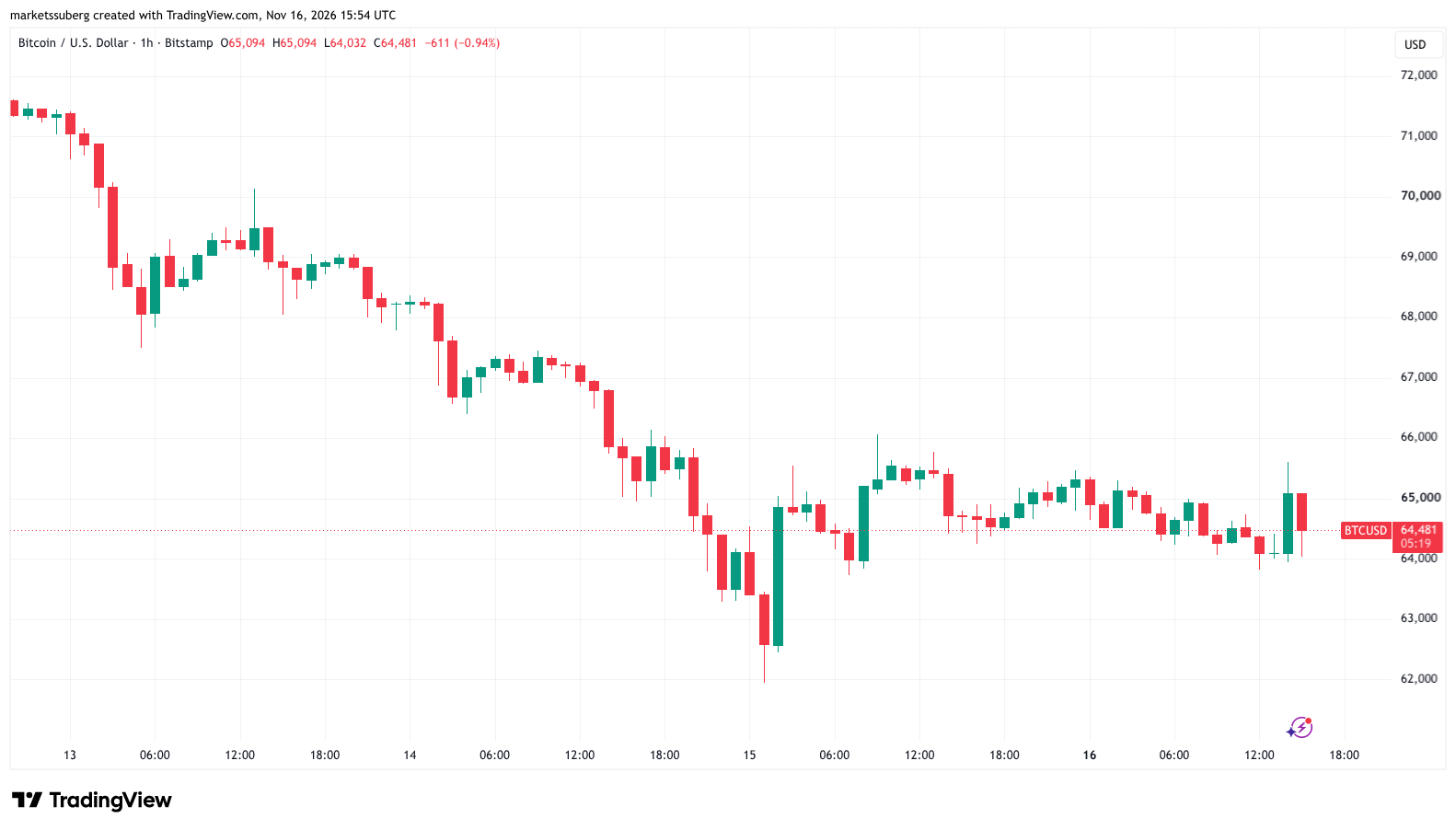
Data from TradingView indicated that BTC/USD briefly touched $65,600 at the commencement of the U.S. trading session before swiftly reversing course. The cryptocurrency subsequently shed nearly 1.5% of its value by the time of writing, settling into a range below the critical $65,000 threshold. This move underscored a palpable shift in investor sentiment, moving towards a more risk-averse stance.
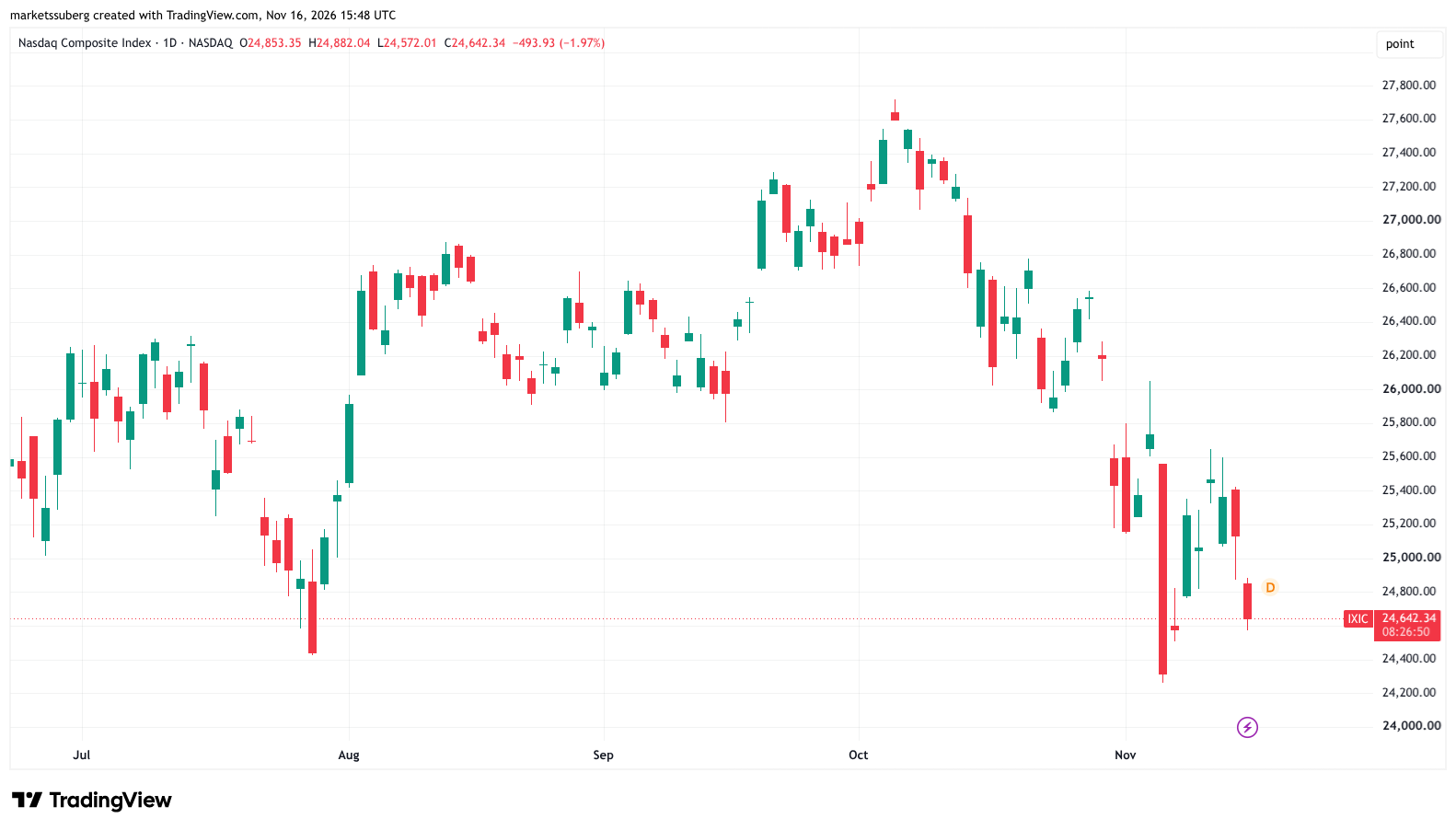
The traditional equity markets reflected this cautious mood. The S&P 500, a benchmark for large-cap U.S. equities, saw a decline of 1.2%. Even more pronounced was the fall in the tech-heavy Nasdaq Composite Index, which dropped by 1.8%. This downturn was largely attributed to concentrated sell-side pressure on AI-related stocks, suggesting that investors were recalibrating their positions ahead of major industry-specific news. The intertwined nature of these declines highlights the increasing correlation between the cryptocurrency market and conventional financial markets, particularly in periods of heightened uncertainty. Historically, Bitcoin has often been categorized as a "risk-on" asset, frequently moving in tandem with growth stocks and technology shares, making it susceptible to broader market sentiment swings.

Nvidia: A Bellwether for the AI Revolution and Market Nerves
A significant driver of current market anxiety stems from the technology giant Nvidia, whose third-quarter earnings report is due after the close of trading on Tuesday. Nvidia, a dominant force in the production of graphics processing units (GPUs) essential for AI and data centers, has seen its stock performance become a crucial barometer for the entire AI sector. Expectations for the company’s revenue are soaring, with projections circling an impressive $109 billion. However, this high bar also creates a precarious situation, as any deviation from these lofty expectations could trigger substantial market reactions.
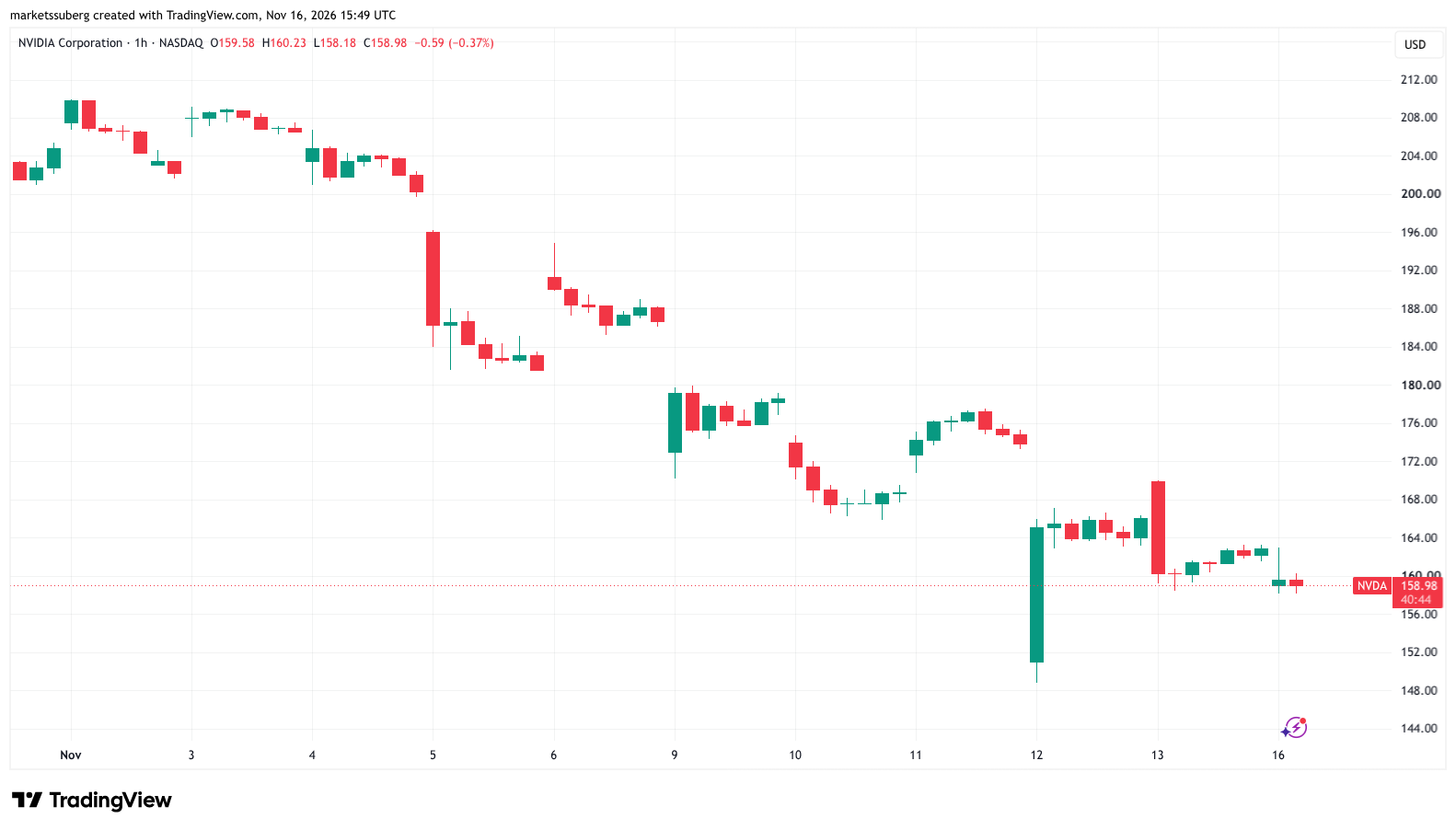
On Monday, Nvidia’s stock experienced a decline of up to 2.4%, signaling investor jitters. This pre-earnings volatility is typical for a company of Nvidia’s stature and influence, especially given its central role in what economist Mohamed El-Erian describes as "circular financing" within the AI sector. In an analysis released on the day, El-Erian articulated, "Amid AI’s pivotal role and tightening overall funding conditions, it’s important to remember that Nvidia-related uncertainties for the broader economy and markets are far from straightforward." He elaborated on Nvidia’s function as a bellwether, explaining that the company’s performance and outlook heavily influence investment flows throughout the AI ecosystem. This "circular financing" often involves venture capital funding AI startups, which then heavily invest in Nvidia’s advanced hardware to develop their technologies, creating a self-reinforcing cycle. A disruption in this cycle, such as a weaker-than-expected earnings report from Nvidia, could have ripple effects across the entire AI investment landscape.
The high stakes surrounding Nvidia’s earnings report underscore the company’s unparalleled position in the AI supply chain. Its GPUs are not just components; they are the fundamental infrastructure enabling the rapid advancements in machine learning, generative AI, and large language models. Consequently, Nvidia’s financial health and future guidance are seen as direct indicators of the AI industry’s momentum and, by extension, a significant portion of the global technology market.
Anthropic IPO: A New Giant Enters the Public Arena
Adding another layer of anticipation and potential volatility to the "biggest AI week of the year," as independent analyst Edward Corona termed it, is the impending initial public offering (IPO) of AI giant Anthropic. The company is slated to price its IPO on Wednesday, with market watchers keenly observing its target valuation of $1.4 trillion. Anthropic, known for its cutting-edge large language models and a direct competitor to OpenAI, has rapidly ascended to prominence in the AI space, securing substantial private funding rounds from major tech players like Google and Amazon.
An IPO of this magnitude carries immense weight. A successful debut for Anthropic could inject further confidence into the AI sector, potentially drawing more investment and validating the high valuations currently placed on AI companies. Conversely, a lukewarm or struggling IPO could dampen enthusiasm and prompt a re-evaluation of current market exuberance surrounding AI.
Edward Corona, in his recent commentary, highlighted the inherent unpredictability of these events. "What strikes me about this morning is how much of the AI trade now hangs on things nobody can model," he summarized. "A spreadsheet can’t tell you whether a CEO comes back, or how many tech shares get sold to make room for Anthropic." This sentiment captures the essence of the current market environment, where fundamental analysis often grapples with qualitative factors and speculative movements. Corona further cautioned that even a successful IPO debut for Anthropic might not necessarily translate into a broad uplift for other AI stocks, as investors might reallocate capital, selling existing tech holdings to participate in the new offering. The sheer scale of Anthropic’s target valuation means that its entry into the public market could necessitate significant portfolio adjustments across institutional investors.
Bitcoin’s Technical Outlook: A Retreat from Key Resistance
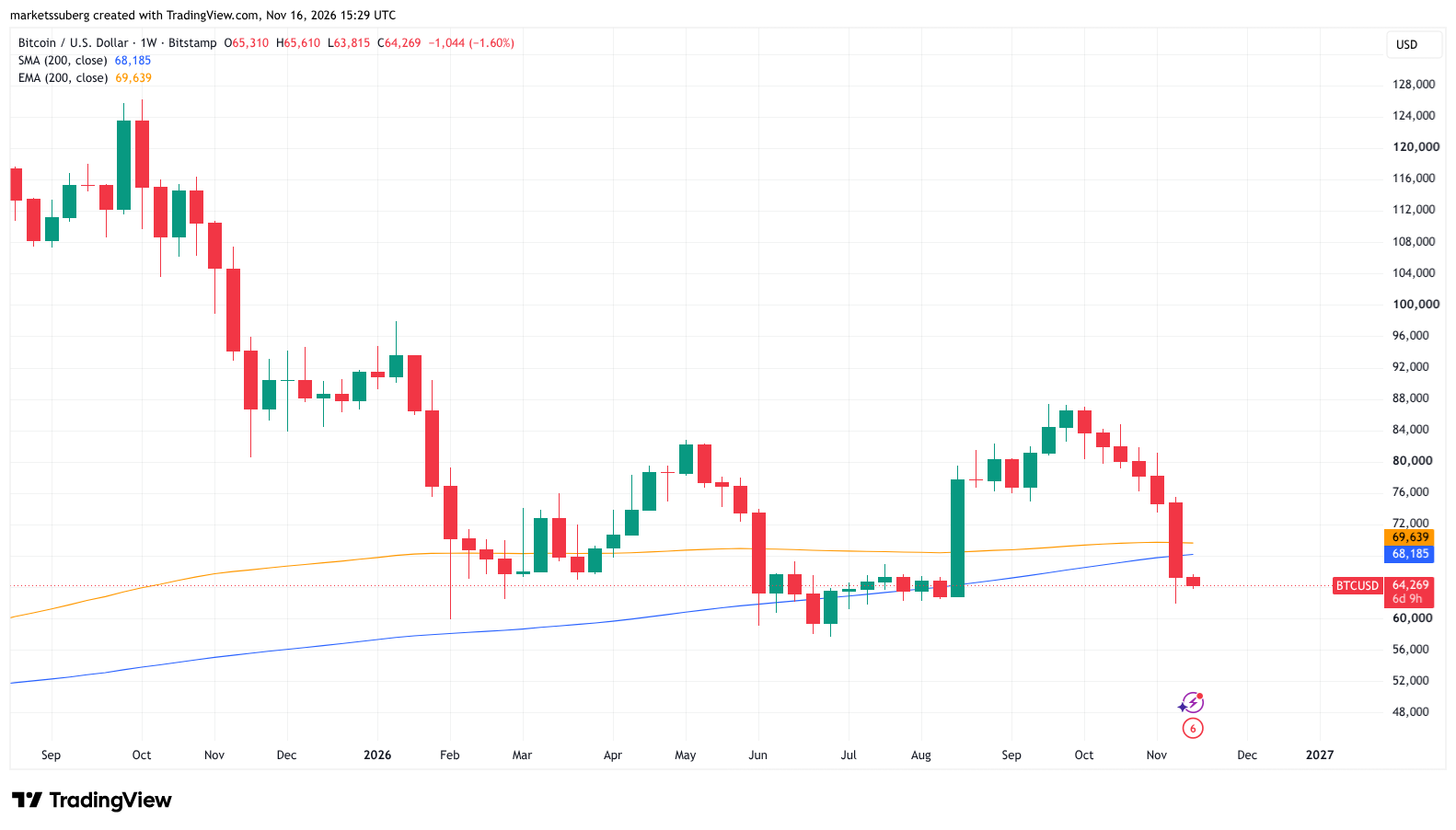
The renewed downside pressure on Bitcoin meant that key resistance levels, which have historically played a crucial role in previous bear-market recoveries, remained firmly out of reach. Specifically, BTC failed to reclaim the 200-week simple moving average (SMA) and the 200-week exponential moving average (EMA). These two trend lines form what traders often refer to as a "cloud," which BTC/USD typically needs to flip from resistance to support to confirm the initiation of a new, long-term uptrend. Currently, the 200-week SMA stands at $68,184, and the 200-week EMA is at $69,638. Bitcoin’s inability to breach these levels suggests that the market may still be consolidating or even vulnerable to further corrections before a sustained bullish momentum can take hold.
The significance of these moving averages cannot be overstated. In previous market cycles, the ability of Bitcoin to trade and hold above its 200-week moving averages has often been a precursor to significant bull runs, signaling a shift from a long-term bearish trend to a bullish one. Its current position below these levels, therefore, raises concerns among technical analysts.
Keith Alan, cofounder of crypto trading platform Material Indicators, underscored this concern in his commentary on Friday. He directly linked a potential failure of the 200-week SMA to act as support to Bitcoin falling further, possibly toward the $62,000 mark. Alan remarked to his X followers, "A deeper correction doesn’t necessarily invalidate the macro bullish thesis, but where buyers step in matters." This highlights the importance of identifying strong support zones where buying interest could re-emerge, potentially forming a base for future price appreciation. The current market action suggests that such a robust buying presence has yet to materialize convincingly at the $65,000 level.
Further compounding the bearish technical picture, Bitcoin’s relative strength index (RSI) on daily time frames plunged back into "oversold" territory. On Saturday, the daily RSI registered a reading of 20 on its 0-100 scale. This marks the first time since early June that the indicator has entered such extreme oversold conditions. An RSI below 30 typically signals that an asset may be undervalued or oversold, suggesting a potential rebound. However, in strong downtrends, an asset can remain oversold for extended periods, indicating persistent selling pressure. The current RSI reading suggests that while a bounce is technically plausible, the immediate market sentiment remains heavily skewed towards selling.
Broader Market Context and Interconnections
The current market dynamics underscore the increasing interconnectedness between the traditional financial markets and the digital asset space. Bitcoin, once seen as a completely uncorrelated asset, has shown a growing correlation with major tech indices like the Nasdaq, particularly during periods of macroeconomic uncertainty. This correlation arises from Bitcoin’s growing adoption by institutional investors and its classification as a "risk-on" asset, which tends to perform well when economic conditions are stable or improving and poorly during times of fear or tightening monetary policy.
The macroeconomic backdrop, including ongoing concerns about inflation, interest rate policies by central banks, and broader geopolitical tensions, continues to influence investor appetite for risk. In an environment where central banks might signal higher-for-longer interest rates, the cost of capital increases, making growth stocks and speculative assets like cryptocurrencies less attractive. This "risk-off" sentiment often leads investors to reallocate funds from volatile assets into safer havens, or to simply hold cash, awaiting clearer market signals.
The current week, with its confluence of critical AI-related events, serves as a microcosm of these broader market forces. The performance of Nvidia and Anthropic will not only dictate the short-term trajectory of the AI sector but will also likely send significant ripples through the broader technology market and, consequently, the cryptocurrency market. Altcoins, which often exhibit higher volatility than Bitcoin, are particularly susceptible to these shifts in market sentiment and could experience more pronounced movements depending on how the market reacts to the upcoming news.
Looking Ahead: Potential Scenarios and Implications
The coming days are poised to be highly volatile for both the cryptocurrency and traditional equity markets. A robust earnings report from Nvidia, exceeding the high expectations, could re-energize the AI trade, potentially leading to a rebound in tech stocks and a renewed upward push for Bitcoin. Such a scenario would signal continued strong demand for AI infrastructure and could restore investor confidence in the sector’s growth trajectory.
Conversely, a disappointing earnings report from Nvidia, even if it merely meets expectations without a significant beat, could trigger a more substantial market correction. Given the company’s elevated valuation and its pivotal role, any sign of slowing growth or increased competition could lead to significant sell-offs, impacting the entire tech ecosystem and subsequently weighing heavily on Bitcoin.
Similarly, the Anthropic IPO will be a critical litmus test. A highly successful debut, with strong investor demand and a soaring valuation post-listing, could further validate the AI boom and potentially attract more capital into the sector, indirectly benefiting risk assets like Bitcoin. However, if the IPO struggles to achieve its target valuation or sees weak trading performance, it could signal a cooling of investor enthusiasm for AI, prompting a broader re-evaluation of tech valuations and potentially exacerbating the current market downturn.
In the short term, investors in both traditional and digital assets should brace for continued volatility and exercise caution. The technical indicators for Bitcoin suggest further downside potential if key support levels are not defended. However, the long-term outlook for both the AI sector and Bitcoin remains underpinned by fundamental growth narratives – the transformative potential of AI and the increasing mainstream adoption of digital assets. The immediate challenge lies in navigating this period of intense uncertainty, where the interplay between corporate performance, investor sentiment, and macroeconomic factors will largely determine market direction. The resilience of these markets in the face of such significant catalysts will offer crucial insights into their maturity and their capacity to absorb both positive and negative shocks.