admin
admin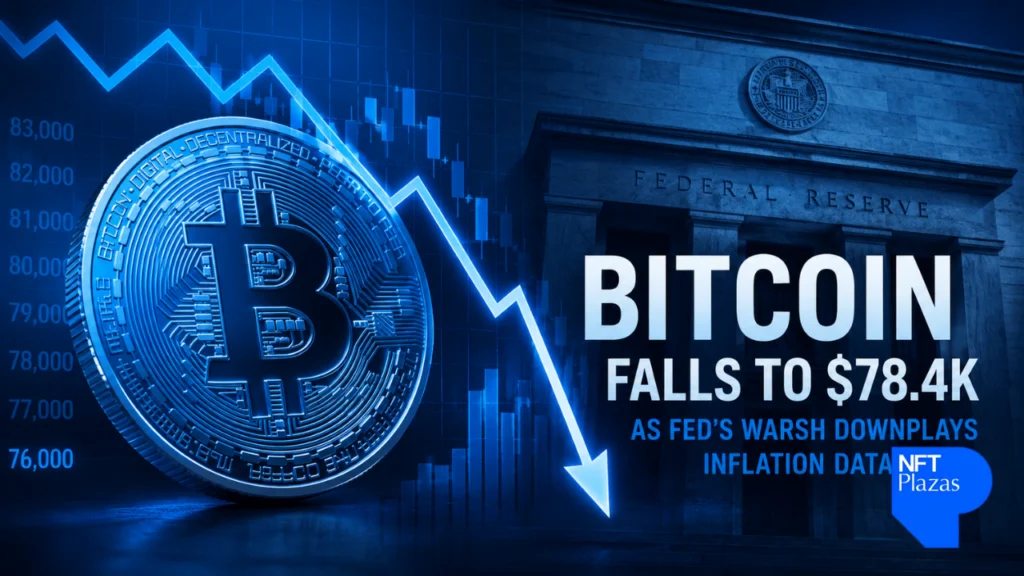
Bitcoin experienced a significant pullback, dropping to approximately $78,400, after Federal Reserve Chair Kevin Warsh delivered remarks at the Jackson Hole economic symposium that tempered market optimism regarding a swift easing of U.S. monetary policy. The leading cryptocurrency was trading around $77,765 on August 31, reflecting a roughly 0.6% decline over the preceding week and a notable retreat from its recent high of $81,455. Warsh’s commentary emphasized the persistent nature of inflation and reinforced the potential for a continued restrictive policy stance, prompting investors to recalibrate their outlook on interest rates and risk assets.
The annual Jackson Hole Economic Policy Symposium, hosted by the Federal Reserve Bank of Kansas City, is a critical event where central bankers, finance ministers, academics, and financial market participants convene to discuss long-term policy issues. Speeches delivered by Fed Chairs at this symposium often serve as crucial signals for the central bank’s future direction, capable of moving global markets. This year, Chair Warsh’s address underscored the Fed’s unwavering commitment to its 2% inflation target, directly challenging the narrative that recent softer inflation readings, specifically in Consumer Price Index (CPI) and Personal Consumption Expenditures (PCE) data, signaled a meaningful improvement in underlying price pressures. His firm stance effectively dashed hopes among market participants who had been anticipating that a cooling inflation environment would grant the Federal Reserve greater flexibility to pivot towards a more accommodative monetary policy sooner than expected.
The Fed’s Stance and Persistent Inflation Concerns
Chair Warsh’s speech at Jackson Hole was a deliberate attempt to manage market expectations, which had become increasingly dovish following several months of decelerating inflation figures. While some analysts and investors interpreted recent data as a sign that the Fed’s aggressive rate-hiking cycle was effectively bringing inflation under control, Warsh articulated a more cautious perspective. He highlighted that while headline inflation had indeed softened, underlying inflationary pressures remained stubbornly elevated. Official Fed data presented a stark picture: annual personal consumption expenditures inflation stood at 3.7%, with the six-month annualized rate even higher at 4.1%. Both metrics remained substantially above the central bank’s long-term target of 2%.
Warsh’s argument centered on the idea that short-term fluctuations in monthly data do not necessarily represent a sustained trend. He suggested that the "last mile" of disinflation – bringing inflation down from moderate levels to the 2% target – could prove more challenging than the initial phase. This perspective implies that the Fed is prepared to maintain higher interest rates for a longer duration to ensure inflation is definitively tamed, rather than risking a premature easing of policy that could lead to a resurgence of price pressures. His remarks were interpreted by markets as a clear signal that the central bank remains vigilant and is prioritizing its inflation mandate above all else, even if it means prolonged economic restraint.
Market Reaction: A Swift Shift in Rate-Hike Expectations
The immediate aftermath of Warsh’s speech saw a dramatic repricing of interest rate expectations across financial markets. Data from the CME FedWatch Tool, which tracks the probability of future Fed rate changes based on fed funds futures prices, vividly illustrated this shift. Prior to Warsh’s address, the market-implied probability of a September rate hike stood at approximately 35.4%. Within hours of his comments, this probability surged to 57%, indicating a significant increase in conviction among traders that the Federal Open Market Committee (FOMC) would indeed raise the benchmark interest rate at its upcoming meeting scheduled for September 15-16.

This sudden recalibration underscores the profound influence of Fed communication on market sentiment. While Warsh refrained from explicitly signaling the FOMC’s next move, his questioning of the value of regular forward guidance was particularly noteworthy. He argued that excessive signaling from the central bank could inadvertently create a feedback loop between policymakers and financial markets, potentially leading to speculative behavior and undermining the Fed’s ability to react flexibly to evolving economic conditions. This shift suggests that investors may become increasingly reliant on incoming economic data – such as inflation reports, employment figures, and even individual statements from various Fed officials – to gauge the central bank’s next policy decision, rather than relying on pre-announced guidance. Such an environment can introduce greater volatility and uncertainty, particularly for risk-sensitive assets like cryptocurrencies.
The Challenging Environment for Bitcoin and Risk Assets
For Bitcoin and the broader cryptocurrency market, a hawkish Federal Reserve translates into an increasingly challenging macroeconomic backdrop. The fundamental mechanisms linking Fed policy to digital assets are well-established:
- Opportunity Cost: Higher interest rates increase the attractiveness of yield-producing assets, such as government bonds and traditional savings accounts. As these "safe haven" assets offer better returns, the opportunity cost of holding non-yield-generating assets like Bitcoin, which does not pay dividends or interest, increases. This can divert capital away from riskier investments.
- Risk Appetite: Tighter monetary policy is typically associated with a broader reduction in overall market risk appetite. Investors tend to retreat from speculative assets during periods of economic uncertainty and higher borrowing costs, favoring assets perceived as safer.
- U.S. Dollar Strength: Higher U.S. interest rates generally strengthen the U.S. dollar as global capital flows towards dollar-denominated assets seeking higher yields. Since Bitcoin and most major cryptocurrencies are priced in U.S. dollars, a stronger dollar makes these assets effectively more expensive for holders of other currencies and can exert downward pressure on their dollar value.
The latest market decline following Warsh’s speech also triggered significant liquidations in the derivatives market, a common occurrence during periods of rapid price movements. Over a 24-hour period, more than $384 million in crypto positions were liquidated, with a substantial $310 million of that total comprising long positions. This indicates that many traders betting on continued price appreciation were caught off guard by the sudden downturn, leading to forced selling and exacerbating the price drop. Beyond Bitcoin, other major cryptocurrencies also felt the pressure; Ethereum, for instance, fell approximately 2.1% to trade around $2,400, mirroring the broader market’s negative sentiment.
Resilient Institutional Demand: A Counterbalancing Force
Despite the immediate market turmoil and the challenging macroeconomic headwinds, signs of robust institutional demand for Bitcoin have not evaporated. Data from the period leading up to Warsh’s speech highlighted this underlying strength. U.S. spot Bitcoin Exchange Traded Funds (ETFs) collectively attracted approximately $2.8 billion in inflows over eight consecutive trading sessions through August 26. BlackRock’s IBIT, one of the most prominent spot Bitcoin ETFs, accounted for a substantial portion of this, drawing in about $2.02 billion on its own.
These persistent inflows are particularly noteworthy because they suggest a divergence between short-term trading reactions to monetary policy shifts and longer-term institutional accumulation strategies. While retail traders and leveraged positions might be more sensitive to immediate macro news, institutional investors appear to be maintaining their conviction in Bitcoin’s long-term value proposition. This sustained demand from regulated investment vehicles could potentially provide a significant floor for Bitcoin prices, cushioning deeper corrections even amidst periods of macroeconomic uncertainty. It signals that a segment of the market views Bitcoin as a strategic asset for portfolio diversification or as a hedge against long-term inflationary concerns, independent of short-term interest rate fluctuations.
Indeed, Bitcoin’s impressive rally throughout August, which saw its price climb from roughly $62,000 to around $80,000, was significantly fueled by this very ETF demand. In addition to these inflows, a more favorable environment in U.S. Treasury markets had also contributed to the bullish sentiment. The U.S. Treasury had announced plans to at least double the maximum size of certain long-term Treasury buybacks, increasing the maximum size of individual operations involving securities maturing in 10 to 30 years from $2 billion to at least $4 billion, effective September 9. This move, intended to support liquidity in the long-term government debt market, had previously led to falling Treasury yields and a weaker dollar, providing a tailwind for risk assets, including Bitcoin. However, Chair Warsh’s recent comments have effectively shifted the market’s primary focus back to inflation and the Fed’s tightening stance, temporarily overshadowing these previously supportive factors.

Crypto’s Deepening Integration with Traditional Finance
The Jackson Hole symposium also served as a stark reminder of the accelerating interconnectedness between the digital asset ecosystem and the traditional financial system. Discussions among central bankers, representatives from the International Monetary Fund (IMF), the Bank for International Settlements (BIS), and leading financial researchers increasingly focused on the implications of stablecoins and tokenized assets. Dollar-backed stablecoins, in particular, are gaining recognition as a potential avenue for expanding global access to dollar-denominated assets and could contribute to demand for U.S. Treasury securities, as many stablecoin issuers hold significant reserves in short-term government debt.
However, this growth and integration are not without their risks, as highlighted by various financial bodies. The BIS has issued warnings that the widespread adoption of stablecoins could potentially draw deposits away from traditional commercial banks, which might increase banks’ funding costs. Furthermore, large-scale redemptions of stablecoins during periods of market stress could force issuers to rapidly sell their underlying Treasury securities or withdraw bank deposits, thereby transmitting stress and volatility into wider financial markets. This highlights the regulatory and systemic challenges that arise as digital assets become more intertwined with conventional finance.
Beyond stablecoins, blockchain technology itself is attracting considerable attention for its potential applications in tokenized securities, efficient settlement processes, collateral management, and streamlined cross-border payments. Major financial institutions are exploring the use of distributed ledger technology (DLT) to revolutionize various aspects of their operations. However, greater acceptance and integration of blockchain infrastructure within traditional finance do not automatically guarantee that public cryptocurrencies, such as Bitcoin or Ethereum, will be the dominant assets in these new applications. Many institutions are developing private, permissioned blockchains or utilizing existing central bank digital currency (CBDC) frameworks for these purposes, suggesting a nuanced future for the role of public cryptocurrencies in the evolving financial landscape. For Bitcoin investors, however, the immediate and most pressing concern remains the Federal Reserve’s monetary policy trajectory.
The Road Ahead: Navigating Macroeconomic Headwinds
Bitcoin now finds itself at a critical juncture, caught between the powerful forces of continued institutional buying pressure and an increasingly less supportive macroeconomic environment. While strong ETF inflows suggest a resilient base of long-term demand that could provide a floor for prices, a sustained rise in U.S. Treasury yields or a strengthening U.S. dollar could make another significant leg higher for Bitcoin considerably more challenging in the short to medium term.
The immediate focus for investors will be on incoming U.S. economic data and any further comments from Federal Reserve officials in the lead-up to the crucial September FOMC meeting. If subsequent inflation figures demonstrate a more convincing and broad-based cooling trend, markets could once again increase bets on a more accommodative monetary policy, which would likely provide a supportive tailwind for Bitcoin and other risk assets. Conversely, if price pressures remain stubbornly elevated or even show signs of re-acceleration, expectations for higher interest rates could solidify further, continuing to exert downward pressure on the cryptocurrency market.
Bitcoin’s recent fall towards the $78,000 level is therefore more than just a technical price correction. It represents a broader market reassessment of how quickly the Federal Reserve can pivot away from its restrictive policy stance. After an otherwise robust August rally, driven by ETF demand and previously favorable Treasury market conditions, Bitcoin now faces a significant test of whether its newfound institutional backing can withstand renewed pressure stemming from rising interest rates, higher Treasury yields, and a strengthening dollar. The $78,000 level, therefore, will remain a closely watched pivot point as investors scrutinize whether this latest decline is merely a temporary correction within a larger uptrend or the beginning of a deeper adjustment in the cryptocurrency market in response to a prolonged period of tighter monetary policy. The coming weeks, filled with economic data releases and Fed rhetoric, will be instrumental in shaping Bitcoin’s trajectory for the remainder of the year.