admin
admin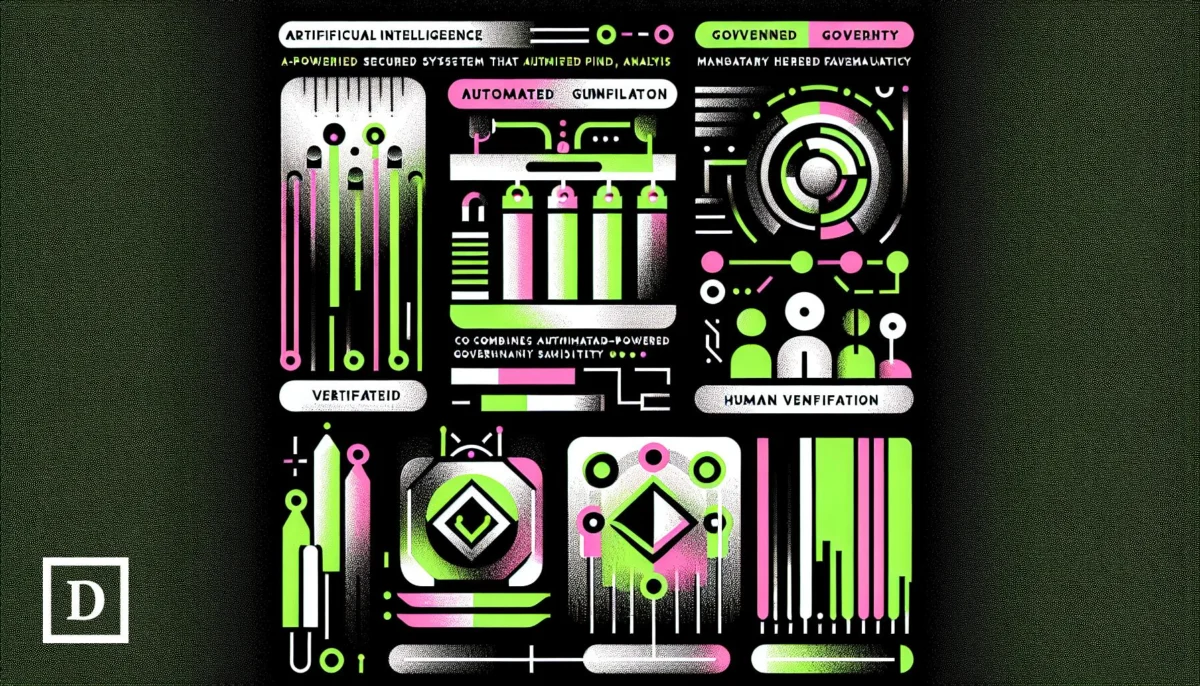
Aave Labs has launched Aave Checkpoint, a novel governance security system that integrates advanced artificial intelligence with essential human verification to scrutinize all Decentralized Autonomous Organization (DAO) proposals before their execution on the blockchain. This significant development, announced on April 15, aims to fortify Aave’s governance framework by introducing a robust, multi-layered review process for every proposal and its associated payload, thereby mitigating potential risks and ensuring the integrity of on-chain operations.
The introduction of Aave Checkpoint represents a proactive stride by the Aave ecosystem to address the inherent security challenges associated with decentralized governance. As DAOs become increasingly sophisticated and manage substantial financial assets, the need for rigorous proposal vetting has never been more critical. Aave, as one of the leading decentralized finance (DeFi) protocols, has consistently prioritized security, and Checkpoint is a testament to this ongoing commitment. The system is designed not to replace existing security protocols but to augment them, creating a more comprehensive and resilient governance mechanism.
The Mechanics of Aave Checkpoint
Aave Checkpoint is built upon two fundamental pillars: automated AI analysis and mandatory human review. The initial phase involves the deployment of artificial intelligence to conduct an automated assessment of each proposal. This AI-driven analysis is designed to identify potential vulnerabilities, inconsistencies, or anomalies within the proposal’s code, logic, and intended impact. By leveraging machine learning algorithms, Checkpoint can process vast amounts of data and detect patterns that might be missed by manual review alone, especially in complex smart contract interactions.
Following the automated assessment, a crucial second layer of defense is implemented: mandatory human verification. This ensures that no proposal can proceed to on-chain execution without a thorough review by qualified individuals. This human oversight is not merely a formality; it is an integral part of the security posture, allowing for nuanced judgment, contextual understanding, and the identification of risks that AI might not yet be equipped to fully comprehend.
Crucially, Aave Checkpoint works in conjunction with existing security measures, most notably the manual proposal reviews conducted by Certora. Certora is a well-respected blockchain security firm known for its expertise in formal verification and smart contract auditing. The synergy between Aave Checkpoint’s AI capabilities and Certora’s established manual review processes creates a formidable barrier against malicious or erroneous proposals. This collaborative approach underscores Aave’s strategy of employing a diversified set of security tools and human expertise to safeguard its DAO.
Background and Chronology of Aave’s Governance Evolution
Aave’s journey towards enhanced governance security has been an evolutionary process, marked by a series of enhancements and adaptations to its decentralized framework. The protocol, which originated as ETHLend in 2017 before rebranding to Aave in 2020, has consistently sought to empower its community through decentralized governance. Early on, Aave established a system where token holders could vote on proposals concerning protocol upgrades, parameter changes, and treasury management.
However, as the DeFi space matured and the stakes grew higher, the limitations of purely community-driven voting became apparent. The potential for sophisticated attacks, accidental bugs in complex proposals, or even well-intentioned but flawed implementations necessitated a more robust security architecture.
The development of Aave Checkpoint can be traced back to the growing recognition within the Aave community and its core development team of the need for advanced tools to manage governance risk. While specific public discussions detailing the genesis of Checkpoint are not readily available in the initial announcement, its introduction on April 15, 2024, signifies a culmination of research, development, and strategic planning aimed at addressing these evolving challenges.
Prior to Checkpoint, Aave relied on a combination of community consensus, technical reviews by the Aave Grants DAO (AGD) and the Aave ARC (Aave Risk Committee), and external audits from firms like Certora. These mechanisms, while effective to a degree, could sometimes be reactive or lack the systematic, automated pre-execution checks that Checkpoint now provides. The introduction of AI analysis represents a significant leap forward in the proactive identification of potential issues.
The integration with Certora’s manual reviews further solidifies this phased approach. Certora has been a long-standing partner in Aave’s security efforts, conducting rigorous audits of Aave’s smart contracts. By formalizing the collaboration within the Checkpoint framework, Aave is ensuring that human expertise, informed by AI-driven insights, is systematically applied to every governance decision.
Supporting Data and the Importance of Rigorous Review
The need for robust governance security is underscored by the increasing value locked within DeFi protocols like Aave. As of early 2024, Aave has consistently held billions of dollars in Total Value Locked (TVL), making it a prime target for malicious actors. A single exploited proposal could lead to catastrophic financial losses for users and a severe blow to the protocol’s reputation.
For instance, the history of DeFi is punctuated by incidents where poorly vetted smart contracts or governance exploits have resulted in significant losses. While Aave has largely avoided such major breaches, the increasing complexity of DeFi protocols and the sophistication of attack vectors demand continuous innovation in security.
The AI component of Aave Checkpoint is designed to analyze various aspects of a proposal, including:
- Code Vulnerabilities: Identifying potential bugs, reentrancy issues, integer overflows, and other common smart contract vulnerabilities within the proposed code changes.
- Logic Flaws: Assessing the intended logic of the proposal to ensure it aligns with the protocol’s security parameters and does not inadvertently create new attack vectors.
- Parameter Misconfigurations: Verifying that proposed changes to risk parameters, interest rates, or collateral factors are within safe and sustainable ranges.
- Economic Incentives: Analyzing whether the proposed changes could create unintended economic incentives that might be exploited.
- Payload Integrity: Ensuring that the payload, which contains the executable instructions for the smart contract, is accurate and directly corresponds to the approved proposal.
The human verification layer, in conjunction with Certora’s expertise, provides the critical human element that can:
- Understand Nuance: Interpret the complex interplay of economic, social, and technical factors that a proposal might entail.
- Identify Novel Threats: Recognize emerging attack patterns or vulnerabilities that current AI models may not be trained to detect.
- Provide Contextual Judgment: Apply real-world understanding and experience to assess the broader implications of a proposal beyond its immediate code.
- Approve or Reject with Justification: Make final decisions based on a holistic review, providing clear reasoning for their conclusions.
This dual approach, combining the speed and analytical power of AI with the critical thinking and contextual understanding of human experts, creates a powerful defense mechanism. It moves Aave’s governance process from a potentially reactive model to a more proactive and preventative one.
Official Responses and Community Reactions
While direct statements from Aave Labs leadership or Certora specifically regarding the launch of Aave Checkpoint were not detailed in the initial announcement, the initiative itself speaks volumes about the organization’s commitment to security and innovation. The Aave Governance forum serves as the primary channel for such discussions, and the introduction of Checkpoint is likely to have been preceded by extensive deliberation and consensus-building within the community.
The Aave DAO is known for its active and engaged community. It is reasonable to infer that the introduction of such a significant security enhancement would be met with broad support, given the paramount importance of security in DeFi. Community members, developers, and token holders alike would likely view Aave Checkpoint as a positive development that strengthens the protocol’s resilience and trustworthiness.
The involvement of Certora, a trusted third-party auditor, further lends credibility to the initiative. Their continued partnership in the manual review process suggests a shared vision for robust governance security.
The article’s source, referencing the Aave Governance forum, indicates that further details and community discussions would be available through that channel. This transparency is a hallmark of decentralized governance and allows for continuous feedback and improvement.
Broader Impact and Implications for DeFi Governance
The implementation of Aave Checkpoint has several significant implications for the broader DeFi ecosystem and the evolution of DAO governance:
- Setting a New Standard: Aave’s proactive approach to integrating AI with human oversight in governance security could set a precedent for other DAOs. As DeFi protocols continue to grow in complexity and value, the demand for similar multi-layered security systems will likely increase.
- Mitigating Systemic Risk: By reducing the likelihood of compromised proposals, Checkpoint contributes to the overall stability and security of the DeFi ecosystem, mitigating systemic risks that could ripple through interconnected protocols.
- Enhancing Investor Confidence: A demonstrably robust governance security framework can boost investor confidence, attracting more users and capital to the Aave protocol and, by extension, to the DeFi space.
- The Future of AI in Governance: This initiative highlights the growing role of artificial intelligence in critical infrastructure. As AI capabilities advance, we can expect to see more sophisticated applications in areas like risk assessment, anomaly detection, and even proposal generation or optimization within decentralized systems.
- The Indispensable Role of Human Oversight: Despite the advancements in AI, Aave Checkpoint underscores that human judgment remains indispensable. The system’s design emphasizes that AI is a tool to augment, not replace, human expertise, particularly in complex decision-making processes. This balance is crucial for navigating the nuanced challenges of decentralized governance.
- Scalability of Governance: The automated AI analysis component of Checkpoint can significantly improve the scalability of governance by handling the initial screening of a high volume of proposals efficiently. This frees up human reviewers to focus on more complex and critical aspects, enabling DAOs to manage growth without compromising security.
In conclusion, the introduction of Aave Checkpoint marks a pivotal moment in the ongoing effort to secure decentralized autonomous organizations. By blending the analytical power of artificial intelligence with the indispensable judgment of human experts, Aave is not only fortifying its own governance but also paving the way for more secure and resilient decentralized systems across the entire blockchain landscape. This multi-layered approach to proposal review exemplifies a mature and forward-thinking strategy for managing the inherent risks and complexities of governing decentralized protocols.