admin
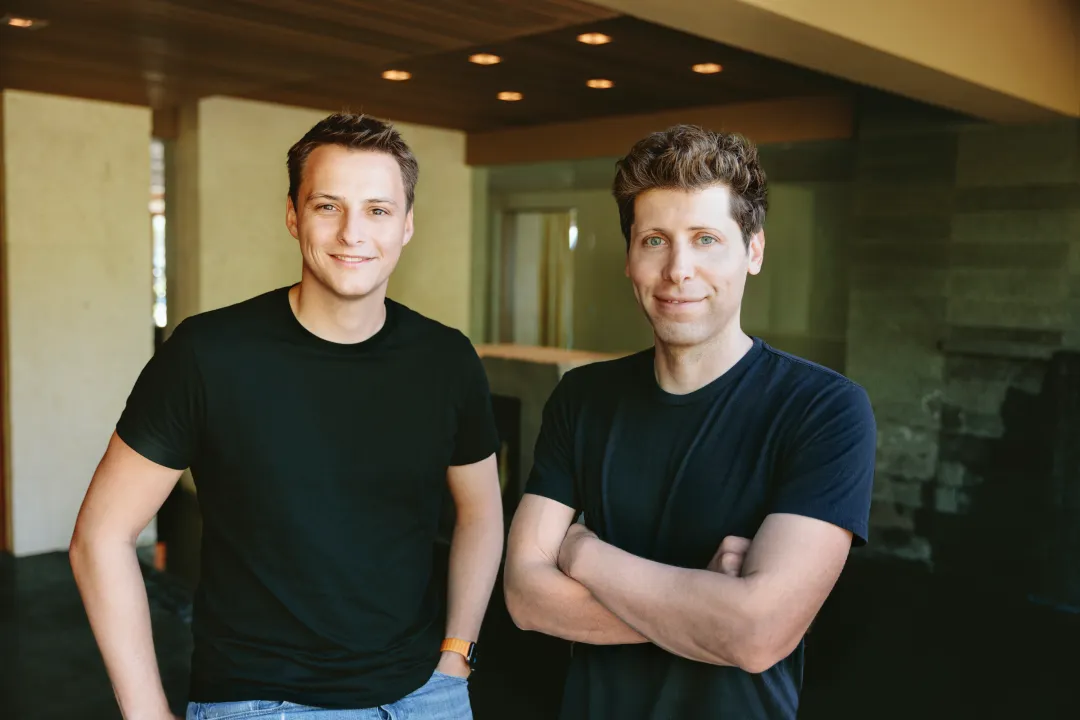
World, the ambitious digital identity and cryptocurrency project co-founded by OpenAI Chief Executive Officer Sam Altman, has successfully raised $52.5 million through a strategic sale of its native WLD tokens. This significant capital injection, directed toward the project’s expansion and the refinement of its "proof of human" technology, comes at a pivotal moment for the organization as it navigates a complex landscape of rapid artificial intelligence (AI) development, global regulatory scrutiny, and a recent corporate rebranding.
The funding round was structured as a token sale to a select group of strategic investors rather than a traditional equity raise. According to a press release issued by the company, the participating investors have agreed to a 12-month lockup period. Such lockup agreements are common in the digital asset space to prevent immediate secondary market liquidation, ensuring that large-scale investors remain committed to the project’s long-term roadmap. The company emphasized that this yearlong commitment underscores investor confidence in the "continued growth and utility" of the World ecosystem.
The proceeds from the sale are designated for the World Foundation, an exempted limited guarantee foundation based in the Cayman Islands. This entity serves as the non-profit steward of the network, tasked with overseeing the decentralization of the protocol and managing the distribution of resources to foster global adoption.
Strategic Backing and Investor Participation
The funding round was led by Pantera Capital, one of the most prominent venture capital firms specializing exclusively in digital assets and blockchain technology. Pantera’s lead role signals a significant endorsement from the institutional crypto community. Other notable participants in the $52.5 million sale included Eightco Holdings, Bain Capital Crypto, Susquehanna Crypto, and Selini Capital.
The involvement of these firms highlights a continued interest in the intersection of identity verification and decentralized finance (DeFi). While the project—operated by the San Francisco-based startup Tools for Humanity (TFH)—has faced its share of public skepticism, the caliber of the investors suggests a belief in the fundamental necessity of the technology in an AI-saturated future. Tools for Humanity is led by CEO and co-founder Alex Blania, who manages the day-to-day operations alongside Altman, who serves as a co-founder and a primary visionary for the project.
The Core Mission: Solving the Identity Crisis in the Age of AI
World’s primary objective is the creation of a global, permissionless identity protocol. As generative AI models become increasingly sophisticated—capable of producing hyper-realistic text, audio, and video—the ability to distinguish between a biological human and an automated agent has become a critical challenge for digital platforms.
The project’s solution is the "World ID," an anonymous digital marker that serves as a "human passport" for the internet. By verifying that an account is controlled by a unique human being without necessarily revealing that person’s legal identity, World aims to eliminate bot-driven fraud, Sybil attacks (where one person creates numerous fake identities), and the spread of AI-generated misinformation.
The verification process is facilitated by a proprietary hardware device known as the "Orb." The Orb is a chrome-plated, spherical device equipped with advanced sensors designed to scan a user’s iris. This scan is then converted into a unique cryptographic code—a "personhood" identifier—which is stored on the blockchain. Once the scan is complete and the uniqueness of the iris is confirmed, the user is issued a World ID and, in many jurisdictions, a grant of WLD tokens as an incentive for participation.
From Worldcoin to World: A Strategic Evolution
The project was originally introduced to the public under the name "Worldcoin." This branding reflected its dual nature as both an identity protocol and a global cryptocurrency. However, following a period of intense volatility in the crypto markets and a broader public backlash against the industry, the company recently rebranded to simply "World."
This shift in nomenclature is viewed by industry analysts as an attempt to distance the project’s identity-verification mission from the speculative connotations of the "coin" suffix. While the WLD token remains a central component of the ecosystem’s incentive structure and governance, the rebranding places a stronger emphasis on the "World ID" and the "World App" as utility-driven tools rather than purely financial assets.
The evolution of the project has not been without its setbacks. Despite its high-profile leadership and significant capital backing, World has struggled to achieve the massive scale its founders initially envisioned. While millions of users have signed up globally, the logistical challenge of deploying Orbs to every corner of the planet remains a formidable hurdle.
Chronology of Recent Developments
The $52.5 million raise is the latest in a series of major milestones and challenges for the project over the past 18 months:
- May 2023: Tools for Humanity raised $115 million in a Series C round led by Blockchain Capital, intended to support the rollout of the Orb and the World App.
- July 2023: The Worldcoin project officially launched out of beta, deploying Orbs in major cities worldwide and initiating the distribution of WLD tokens.
- Late 2023 – Early 2024: The project faced a wave of regulatory investigations. Authorities in countries including Kenya, Spain, and Hong Kong raised concerns regarding data privacy, the storage of biometric information, and the legality of offering tokens in exchange for iris scans.
- April 2024: The project launched "World Chain," a new Layer 2 blockchain designed to prioritize human users over bots by offering them priority blockspace and gas allowances. During this period, the company also announced integrations and partnerships with platforms like Tinder, Zoom, and Docusign to explore real-world applications for World ID.
- June 2024: Tools for Humanity confirmed a round of layoffs. While the company did not disclose the exact number of staff affected, the move was described as a strategic realignment to ensure the startup’s long-term sustainability amid a challenging scaling phase.
- July 2024: The project finalized the $52.5 million WLD token sale to strategic investors to bolster the World Foundation’s reserves.
Regulatory Landscape and Privacy Concerns
One of the most persistent hurdles for World remains the global regulatory environment. Privacy advocates and government data protection agencies have scrutinized the project’s use of biometric data. The central concern revolves around the "Orb" scans: even though World maintains that the actual images of the iris are deleted after being converted into a cryptographic hash, regulators remain wary of the potential for data breaches or the misuse of biometric identifiers.
In Spain, the AEPD (Data Protection Agency) previously ordered a temporary halt to the project’s data collection activities. Similarly, in Kenya, the government suspended the project’s operations pending a thorough review of its data security protocols. World has responded to these challenges by increasing transparency, publishing open-source code for its hardware and software, and implementing "Personal Custody" features that allow users to manage their own data.
The project’s leadership continues to argue that World ID is actually a privacy-enhancing technology. By providing a way to prove humanity without sharing names, emails, or government IDs, they contend that World offers a more secure and private alternative to the data-harvesting practices of traditional big-tech platforms.
Broader Implications and Future Outlook
The successful $52.5 million raise suggests that despite the controversy, the investment community views the "proof of human" problem as one of the most lucrative and necessary frontiers in technology. As AI agents begin to perform complex tasks—ranging from writing code to managing customer service—the value of a "Human-Only" verification layer could become indispensable for the digital economy.
The potential applications for World ID extend far beyond simple login credentials. If widely adopted, the protocol could facilitate:
- Sybil-Resistant Governance: Ensuring that in decentralized autonomous organizations (DAOs) or online voting systems, one person truly equals one vote.
- Universal Basic Income (UBI): Sam Altman has frequently discussed the potential for World to serve as a distribution mechanism for UBI in a future where AI has significantly disrupted the labor market.
- Fraud Prevention in E-commerce: Reducing the impact of bot-driven "scalping" for high-demand items like concert tickets or limited-edition merchandise.
- Secure Professional Interactions: As evidenced by the Docusign and Zoom integrations, World ID could provide a layer of certainty that the person on the other end of a digital contract or video call is who they claim to be.
The 12-month lockup on the newly sold tokens provides the World Foundation with a stable window to execute its next phase of growth. The challenge for Alex Blania and Sam Altman will be to move beyond the "crypto experiment" phase and prove that the World ID is a practical, scalable, and socially acceptable solution to the identity challenges of the 21st century.
With the backing of Pantera Capital and a replenished war chest, World is positioned to continue its global Orb deployment. However, the true measure of its success will depend on whether it can win the trust of global regulators and, more importantly, convince the general public that an iris scan is a fair price to pay for a verified digital future.