Dwi Wanna
For the digital asset market, these figures are more than just abstract economic indicators. They represent a tightening of the financial conditions that have historically fueled Bitcoin’s growth. As interest-rate futures now point toward a sustained period of higher borrowing costs through the first quarter of 2027, the "cost of carry" for Bitcoin positions is becoming increasingly burdensome for institutional and retail traders alike who rely on dollar-denominated leverage.
Record-Breaking Import Price Inflation
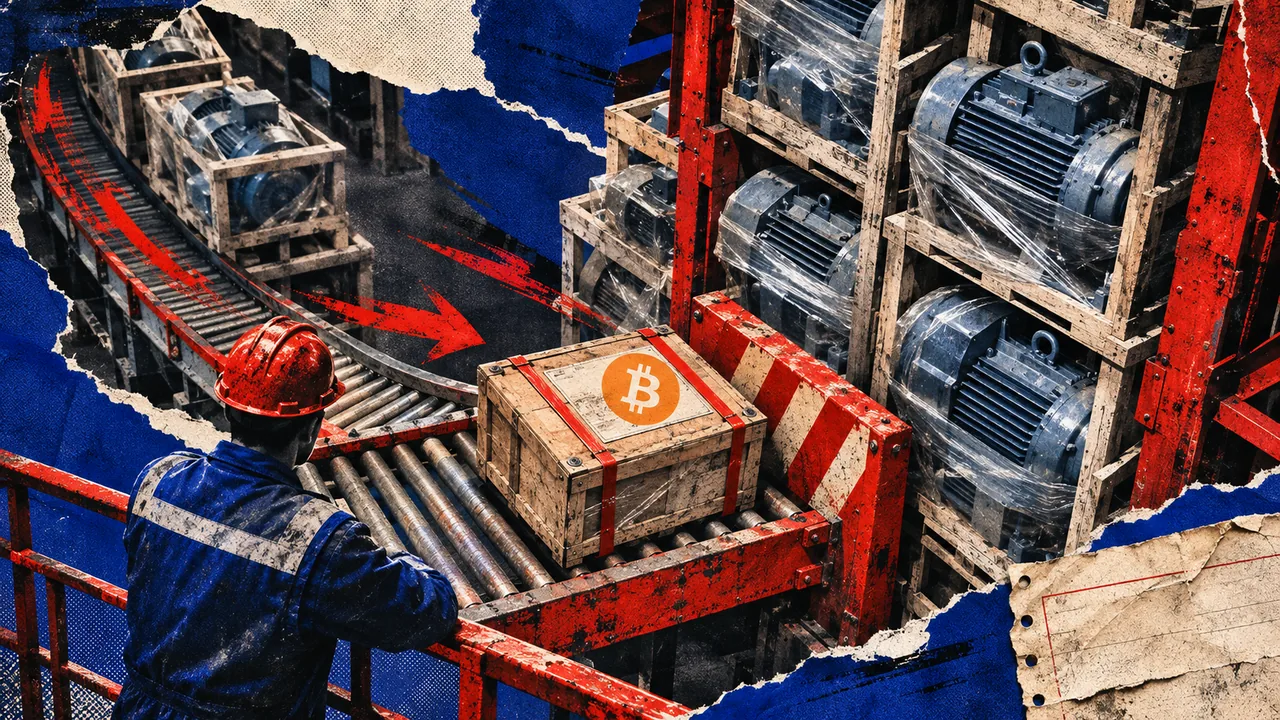
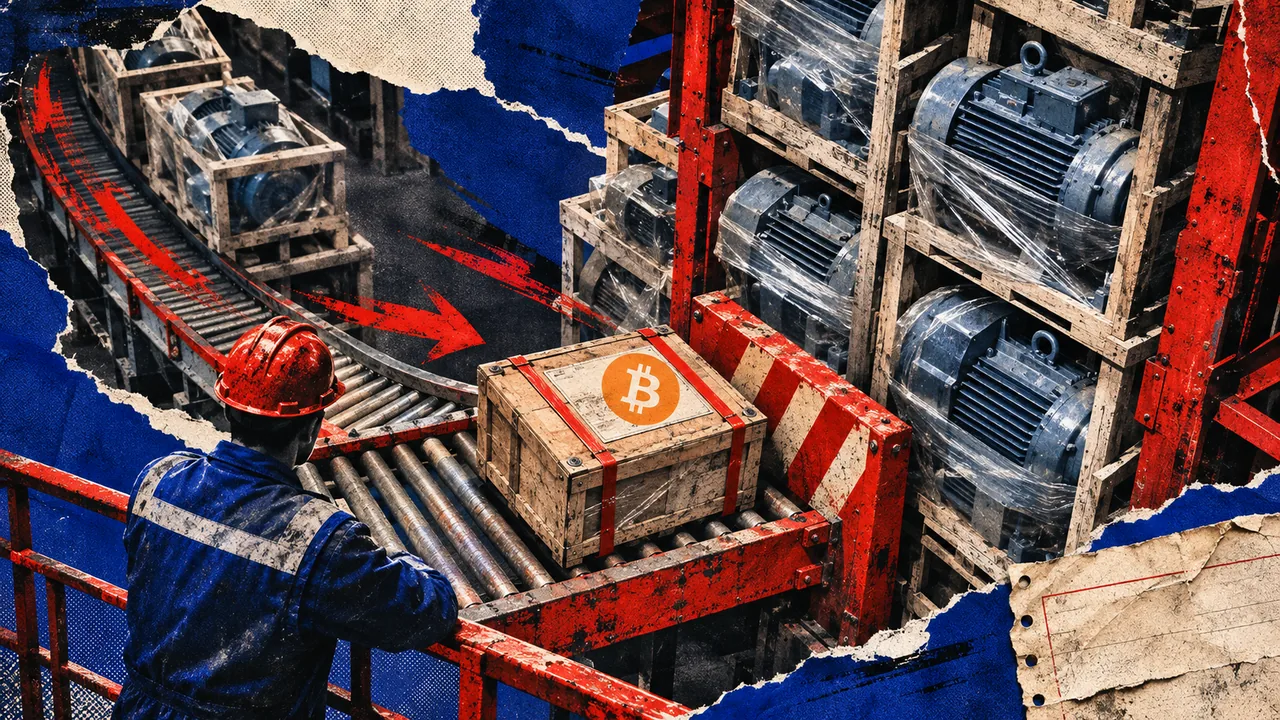
The Bureau of Labor Statistics’ report on import prices for October 2026 revealed a startling trend in the cost of capital goods. The 1.5% monthly jump in prices for imported machinery, electrical equipment, and semiconductors represents a 38-year high in terms of monthly acceleration. This category, which includes the foundational technology required for everything from data centers to automotive manufacturing, has become a primary driver of non-fuel inflation.
While fuel import prices rose by 3.6% in October—a deceleration from the 6.3% rise seen in September—the "non-fuel" sector showed worrying signs of persistence. Overall non-fuel import prices rose by 0.8%, an uptick from the 0.5% recorded the previous month. The data suggests that inflationary pressures are no longer confined to volatile energy markets but are becoming embedded in the hardware and technology supply chains.
The BLS noted that the surge was primarily driven by computers, peripherals, and semiconductors. For the cryptocurrency sector, which is heavily dependent on high-end computing hardware for mining and infrastructure, these rising costs represent a direct increase in capital expenditure (CapEx) requirements. Furthermore, the agency highlighted a significant data gap: many annual comparisons were left blank because a federal government shutdown in 2025 prevented the collection of year-over-year survey data, making the current monthly spikes even more difficult for analysts to contextualize within a long-term framework.
Industrial Output and Economic Contraction
While prices for imported technology rose, the actual volume of goods produced within the United States saw a notable decline. The Federal Reserve’s preliminary estimate for October’s industrial production showed a 0.4% drop, following a revised 0.7% increase in September. This contraction was felt most acutely in the utilities and mining sectors.
Utilities output plummeted by 4.3% in October, while mining output fell by 0.8%. Manufacturing, a core component of the industrial index, showed a modest 0.3% rise, but when excluding the volatile motor vehicles and parts sector, manufacturing output actually edged down by 0.1%. Despite these monthly setbacks, overall industrial production remained 2.1% higher than the previous year, though the momentum appears to be shifting toward a slowdown.
The divergence between falling output and rising import costs presents a "stagflationary" shadow over the market. Traditionally, a drop in industrial output might signal to the Federal Reserve that the economy is cooling sufficiently to warrant lower interest rates. However, when accompanied by record-breaking price increases in capital goods, the Fed’s ability to pivot toward a more accommodative stance is severely restricted.
Federal Reserve Stance and Interest Rate Futures
The Federal Open Market Committee (FOMC) held its policy target range at 3.75% to 4% during its October meeting. However, the decision was not unanimous, as two officials advocated for an immediate 25-basis-point increase, citing concerns over persistent price pressures. Following the release of the November 17 reports, the market’s expectations for future rate hikes solidified.
According to the CME Group’s FedWatch tool, the probability of a quarter-point hike in December has surged to 95%, with a 5% chance of a more aggressive half-point increase. Financial markets are no longer pricing in a "pause" or a "pivot" in the near term. Data derived from CME fed funds futures by Frenzy Capital suggests a steady climb in the effective federal funds rate:
- December 9: Expected rate of 4.14%
- January 27: Expected rate of 4.32%
- March 17: Expected rate of 4.48%
This trajectory indicates that the central bank is prepared to keep the "higher for longer" regime in place well into 2027. The upcoming release of the October Fed minutes is expected to provide further insight into the internal debate regarding these "sticky" inflation metrics and how much weight the committee is giving to the record rise in equipment costs versus the decline in industrial output.
Implications for Bitcoin and the Digital Asset Market
The relationship between Bitcoin and interest rates has historically been inverse. Bitcoin is often viewed as a "non-yielding" asset, meaning it does not pay dividends or interest. When interest rates on "risk-free" assets like US Treasuries rise, the opportunity cost of holding Bitcoin increases. However, the current threat to Bitcoin is more structural than just opportunity cost; it is about the mechanics of leverage.
Many institutional Bitcoin traders engage in "carry trades," where they borrow US dollars at prevailing interest rates to finance long positions in digital assets. As the expected federal funds rate climbs toward 4.5%, the cost of maintaining these positions rises significantly. If the returns on Bitcoin do not exceed the rising cost of capital, these traders may be forced to de-lever, leading to sell-side pressure.
Furthermore, for crypto-backed borrowers—individuals and firms who use their Bitcoin as collateral for dollar loans—the rising interest rate environment increases the risk of liquidation. Higher loan rates and more stringent repayment terms, combined with potential volatility in the underlying collateral, create a precarious environment for those seeking liquidity without selling their assets.

Supply Chain Dynamics and the 38-Year High
The 1.5% jump in imported machinery and computer costs is a reflection of broader global supply chain shifts. Analysts suggest that the increase may be linked to a combination of geopolitical tensions, trade tariffs, and a global rush to secure semiconductor capacity for artificial intelligence and automation.
Because the US is a net importer of high-tech capital goods, these price increases act as a "tax" on American businesses. When it becomes more expensive to import the tools of production, companies typically respond in two ways: they either pass those costs on to consumers (fueling further inflation) or they reduce their capital investment (fueling an economic slowdown). Both scenarios are generally negative for risk assets.
The fact that this is the fastest pace of increase in 38 years suggests that the post-pandemic "normalization" of supply chains has been interrupted. The 2025 federal shutdown also added a layer of statistical fog, making it difficult for the Fed to determine if the current spike is a temporary anomaly or the beginning of a new, higher-cost era for technology and machinery.
A Timeline of Recent Economic Events
To understand the gravity of the current situation, it is necessary to look at the chronology of the past year:
- Late 2025: A federal government shutdown halts data collection for the Bureau of Labor Statistics, creating a "blind spot" in year-over-year economic comparisons.
- September 2026: Industrial production shows a healthy 0.7% rise, while fuel import prices jump 6.3%, raising initial alarms about energy-driven inflation.
- October 2026: The FOMC maintains rates at 3.75%-4.0%, but internal dissent grows.
- November 17, 2026: Dual reports reveal a 0.4% drop in industrial output and a record 1.5% rise in imported capital goods prices.
- November 18, 2026: Markets price in a 95% certainty of a December rate hike, while Bitcoin traders brace for higher financing costs through March 2027.
Broader Economic Analysis and Future Outlook
The current economic data presents a "Catch-22" for the Federal Reserve. If they raise rates to combat the record-breaking surge in import prices, they risk deepening the contraction in industrial output and utilities. If they hold rates steady to support the manufacturing sector, they risk allowing inflation in capital goods to seep into the broader consumer price index (CPI).
For Bitcoin, the "new threat" is a regime of persistent inflation coupled with stagnant growth—a scenario often referred to as stagflation. In a typical inflationary environment, Bitcoin is sometimes touted as a "hedge." However, in a stagflationary environment where the central bank is forced to keep interest rates high despite a cooling economy, the "liquidity drain" often outweighs the "inflation hedge" narrative.
As the market awaits the December FOMC meeting and updated economic projections, the focus for Bitcoin participants will remain on the dollar’s strength and the cost of borrowing. If the path toward a 4.5% interest rate by March 2027 remains unchanged, the digital asset market may face a period of consolidation as the era of cheap capital officially comes to an end. The resilience of Bitcoin in the face of these 38-year record price surges will be the ultimate test of its maturity as a global financial asset.