Dwi Wanna
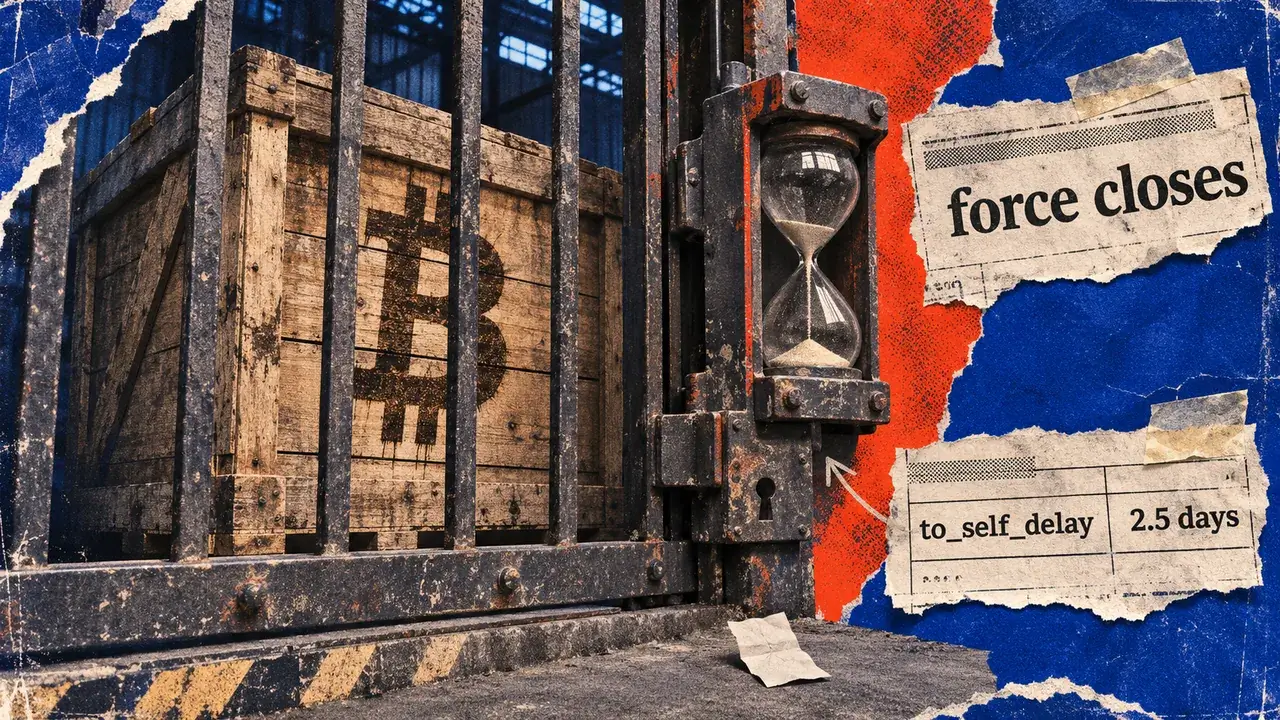
The operational efficiency of the Bitcoin Lightning Network has long been a subject of intense scrutiny, particularly regarding the friction points associated with channel closures. A comprehensive new study from Bitcoin Data Labs has illuminated a critical trade-off in the network’s settlement layer: while the monetary cost of a unilateral "force-close" has become remarkably low, the temporal cost—the time funds remain inaccessible—remains a significant hurdle for liquidity management. According to the research conducted by Saurabh Kumar, a sample of public channels in 2026 revealed that the median cost of a forced closure was just 925 satoshis across both parties. However, the party initiating the closure was forced to wait a median of 2.5 days before they could reclaim and "sweep" their balance into a standard on-chain wallet.
This discrepancy highlights a fundamental aspect of the Lightning Network’s security architecture. While Layer 2 solutions are designed for near-instant payments, the process of exiting the layer and returning to the Bitcoin base chain (Layer 1) is governed by a set of cryptographic constraints and time-locks. For node operators, liquidity providers, and casual users, these findings suggest that the "price" of a forced exit is not merely the transaction fee paid to miners, but the opportunity cost of sidelined capital.
The Mechanics of the Lightning Exit: Cooperative vs. Unilateral
To understand the implications of Kumar’s study, it is necessary to distinguish between the two primary ways a Lightning channel can be closed. In a "cooperative close," both parties agree on the final balance and sign a single transaction that settles the funds immediately on the Bitcoin blockchain. This is the ideal scenario, characterized by lower fees and instant liquidity.
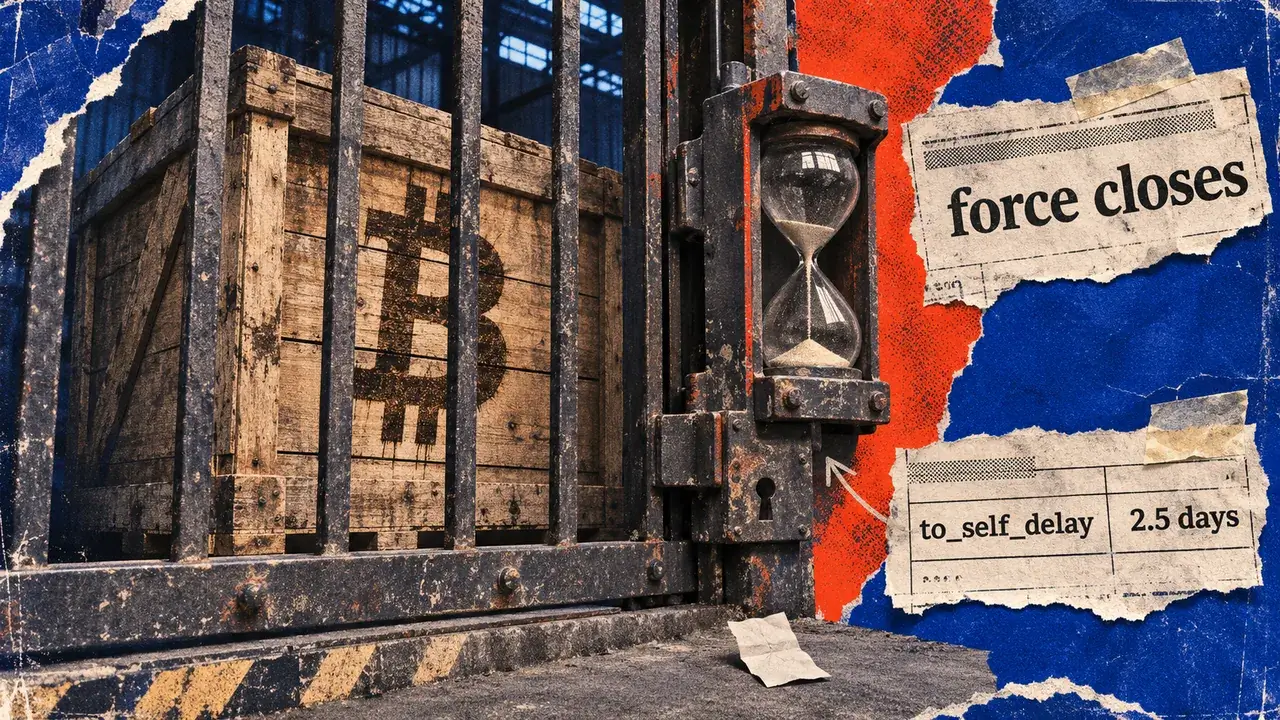
In contrast, a "force-close" (or unilateral close) occurs when one party is unresponsive or when there is a disagreement. In this scenario, the party wishing to exit must broadcast the last mutually signed "commitment transaction" to the Bitcoin network. Because the network must ensure that the broadcaster isn’t attempting to cheat by using an old, revoked state, the protocol enforces a mandatory waiting period. This security feature, known as to_self_delay under the Lightning BOLT 3 specification, gives the counterparty a window of time to prove if the broadcasted state is fraudulent and claim the funds as a penalty.
The Bitcoin Data Labs study provides a granular look at how these mechanisms have performed in a real-world environment over a nearly nine-year span.
Data Analysis: A Longitudinal Study of Channel Closures (2018–2026)
The research paper, titled "973,581 Channel Closes," analyzed a massive dataset spanning from January 2018 through October 31, 2026. Of the nearly one million closures tracked, 523,815 were identified as force-closes. This high volume of unilateral settlements provides a robust statistical foundation for Kumar’s conclusions.
The 2026 cohort, which serves as the most contemporary benchmark in the study, focused on 14,435 public force-closes occurring through October 4, 2026. This specific subset was monitored for an additional four weeks to ensure that all "sweep" transactions—the final step where a user moves funds from the time-locked output to a standard address—could be accurately recorded and analyzed.
Key findings from the 2026 data include:
- Median Force-Close Cost: 925 satoshis (combined cost for both sides of the channel).
- Median Cooperative-Close Cost: 197 satoshis.
- Cost Ratio: Force-closes were approximately 4.7 times more expensive than cooperative closes.
- Median Wait Time (2026): 2.5 days.
- Historical Median Wait Time (2018-2026): 1.7 days.
The increase in median wait time in 2026 (2.5 days) compared to the historical average (1.7 days) suggests that network participants may be opting for longer to_self_delay settings to bolster security, or that the composition of the network has shifted toward nodes that prioritize safety over immediate liquidity.
The Opportunity Cost: The "Break-Even" Analysis
One of the most innovative aspects of Kumar’s research is the introduction of a "break-even annual return" metric. This calculation attempts to quantify the temporal cost of the 2.5-day wait by asking: at what annual interest rate would the cost of the locked balance equal the fees paid for the force-close?
In 2026, this break-even rate was calculated at 1.2%. This is a sharp decline from the 16.7% break-even rate observed over the full study period (2018–2026). The decrease reflects a low-fee environment on the Bitcoin base chain during the 2026 sample period. When on-chain fees are low, the monetary cost of the transaction is negligible, making the "time-lock" the dominant factor in the exit’s total cost.
For a commercial routing node or a Lightning Service Provider (LSP), a 1.2% break-even rate implies that the capital locked in a force-closing channel is not a catastrophic loss, but it is a factor that must be modeled into their liquidity management strategies. If a node has millions of satoshis locked in various closing channels, the cumulative "wait time" effectively reduces the node’s available capacity to route other payments and earn fees.
Technical Evolution: Zero-Fee Designs and CPFP
The study also delves into the technical evolution of how these fees are paid. Under the newer BOLT 3 "zero-fee" commitment designs, the pre-signed commitment transaction itself carries no fee. Instead, the party broadcasting the transaction must use a secondary transaction—known as a "child" transaction—to pay the mining fees for both. This process, called Child-Pays-For-Parent (CPFP), allows for more flexible fee management, as the broadcaster can adjust the fee based on current mempool conditions at the time of the exit.
However, the research clarifies a common misconception: paying a higher fee to expedite the confirmation of the commitment transaction does nothing to shorten the mandatory to_self_delay period. Even if a miner picks up the transaction in the very next block, the broadcaster’s funds remain cryptographically locked for the duration specified in the channel’s original contract.
Furthermore, the study accounted for the resolution of Hashed Time-Locked Contracts (HTLCs). These are "pending" payments that were in flight when the channel closed. Resolving these requires additional transactions and fees, which Kumar integrated into the total force-close cost analysis.
Chronology of Lightning Network Settlement Trends
The timeline of Lightning’s development reveals a maturing ecosystem that has gradually optimized for cost, even as complexity has increased:
- 2018–2020: The early years were characterized by high experimentation. Many closures were the result of software bugs or protocol incompatibilities, leading to higher relative costs and unpredictable wait times.
- 2021–2023: The introduction of "Anchor Outputs" and improved CPFP mechanisms allowed for more reliable force-closes. This period saw the median wait time stabilize around 1.7 days.
- 2024–2025: The adoption of Taproot-based channels began to influence the data, though Kumar notes that simple-taproot spending details remain unclassified in certain cost analyses due to their unique footprint on the blockchain.
- 2026: The current state of the network shows a highly efficient fee environment but an increasing trend in the duration of funds being locked, reflecting a "security-first" approach among node operators.
Broader Implications and Industry Reactions
The findings from Bitcoin Data Labs have significant implications for the future of Bitcoin’s scaling layers. While the Lightning Network is often touted as the "instant" version of Bitcoin, this study serves as a reminder that it remains tethered to the rules of the base chain.
1. UX and Wallet Design:
For end-users, the 2.5-day wait can be a source of frustration and confusion. Non-custodial wallet developers may need to improve their interfaces to better communicate why funds are missing during a force-close. The "925 satoshi" fee is a selling point, but the "60-hour wait" is a friction point that requires better education.
2. Institutional Liquidity Management:
As institutional interest in Bitcoin grows, the role of LSPs becomes more vital. These entities must now account for the 2.5-day median "liquidity gap" when calculating their operational reserves. If an LSP suffers a mass-disconnection event, a significant portion of its capital could be sidelined for days, potentially impacting its ability to fulfill its service-level agreements.
3. Protocol Upgrades (Eltoo):
The study reinforces the desire for protocol upgrades like "Eltoo" (proposed via SIGHASH_ANYPREVOUT). Eltoo would simplify the channel state update mechanism and potentially eliminate the need for the punitive "penalty" window, replacing it with a more streamlined settlement process that could reduce wait times without compromising security.
Conclusion: The Real Cost of Sovereignty
The research by Saurabh Kumar provides a definitive look at the current state of Bitcoin’s most prominent Layer 2. It confirms that the network has succeeded in making the monetary cost of failure—the force-close—extremely affordable. In an era where on-chain transactions can sometimes cost tens of thousands of satoshis, a 925-satoshi exit is a testament to the efficiency of the Lightning protocol.
However, the 2.5-day waiting period remains the "hidden" cost of self-sovereignty. In the decentralized world of Bitcoin, where there is no central authority to mediate disputes, time is the ultimate arbiter of truth. For those who value the ability to exit a channel without a counterparty’s permission, the wait is a necessary trade-off for the security and trustlessness that the Lightning Network provides. As the network continues to evolve, the challenge for developers will be to find ways to shorten this "temporal tax" without opening the door to the very fraud the system was designed to prevent.