Dwi Wanna
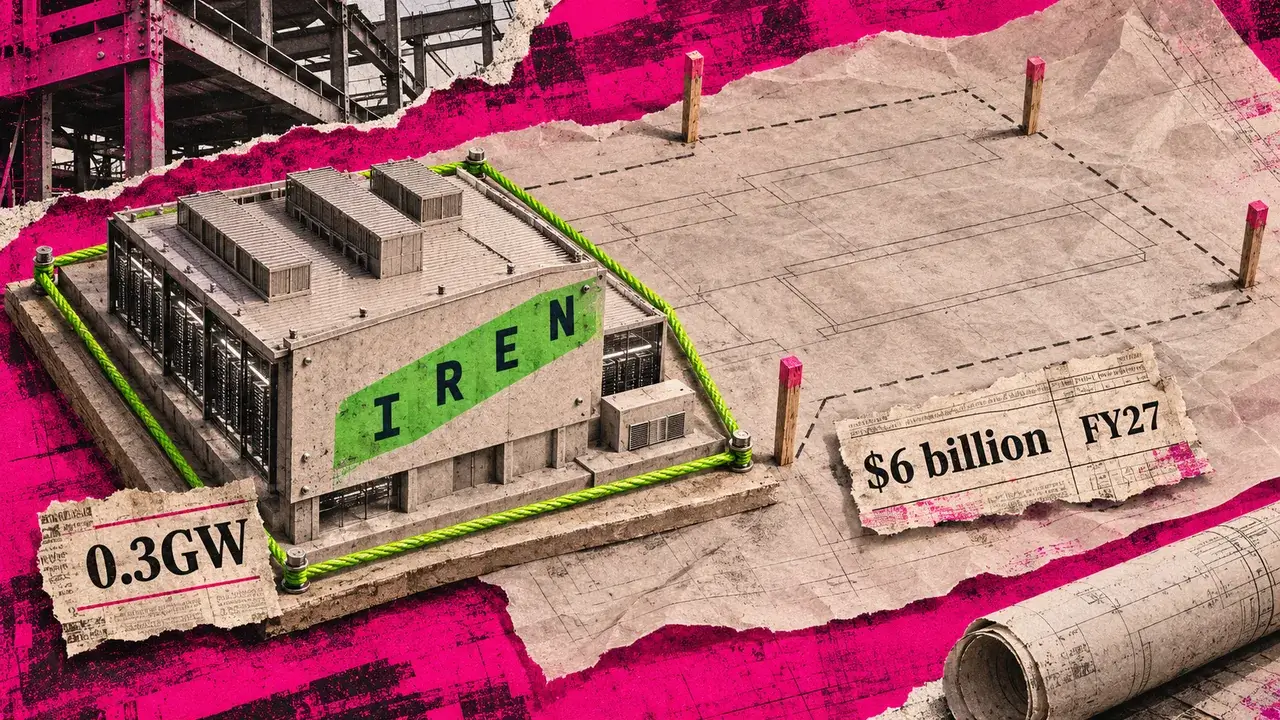
IREN, the high-performance computing and Bitcoin mining firm formerly known as Iris Energy, has officially adjusted its timeline for reaching a critical artificial intelligence revenue milestone. According to the company’s latest quarterly disclosures released on November 5, 2026, the target for achieving its annualized operating revenue milestone has been moved from December 31, 2026, to January 31, 2027, with management indicating the window could potentially extend through the end of February. This adjustment coincides with a massive capital call, as the firm identifies a separate $6 billion financing requirement to fuel a broader expansion plan that reaches far beyond its initial conditionally funded program.
The milestone in question involves an annualized operating revenue target exceeding $4 billion. It is important to distinguish this figure as an annualized run-rate (ARR) metric based on operating capacity rather than recognized GAAP annual revenue. The shift in timing highlights the logistical and technical complexities inherent in the massive pivot from cryptocurrency mining to AI-focused data center operations—a transition that is currently reshaping the landscape of the digital infrastructure industry.
Strategic Financial Architecture and the $15 Billion Roadmap
IREN’s financial strategy is currently bifurcated into two distinct phases: an initial 0.3-gigawatt (GW) program and a broader expansion aimed at reaching 0.8GW of total capacity by the end of the 2027 calendar year. As of the September 30 baseline, the company’s total planned expenditure for fiscal year 2027 (FY27) data center and GPU procurement stands at approximately $15 billion.
The company has categorized its funding for this $15 billion roadmap into three distinct buckets. The first two categories, which IREN describes as its "funded" component, total $9 billion. This includes $5.8 billion in cash (inclusive of restricted cash) and $3.2 billion in committed funding. The third category represents a $6 billion funding gap that the company intends to fill through various capital market activities and operational cash flows.
The "funded" status of the $9 billion bucket is subject to specific conditions. Management clarified that these commitments include undrawn GPU financing facilities and contracted customer prepayments that have not yet been received. Access to these funds is governed by facility conditions, the release of proceeds from escrow accounts, and specific availability periods. This capital is primarily earmarked for the initial 0.3GW of IT capacity, which serves as the foundation for the company’s near-term revenue targets.
The remaining $6 billion target is intended to cover the expansion from 0.3GW toward the 0.8GW goal. IREN expects to secure this through a combination of additional GPU financing, customer prepayments, data center-specific debt, and corporate-level equity or debt issuances. However, the company noted that these sources remain contingent upon prevailing market conditions and the restrictive covenants of existing debt agreements.
Shift in Revenue Composition: From Bitcoin to AI
The necessity for such aggressive capital expansion is underscored by a dramatic shift in IREN’s revenue mix. In the quarter ending September 30, IREN reported total revenue of $228 million. For the first time in the company’s history, AI-related services dwarfed its legacy Bitcoin mining operations.
The revenue breakdown for the quarter is as follows:
- AI Cloud Services: $135 million
- AI Cloud Lease: $65 million
- Bitcoin Mining: $28 million
Combined AI revenue surged to $200 million, up from approximately $71 million in the June quarter. Notably, the June figures consisted entirely of AI Cloud Services, with zero revenue attributed to AI Cloud Leases. The introduction and rapid scaling of the lease model indicate a strategic shift toward long-term, stable contracts that provide higher visibility into future cash flows. This shift is essential for securing the large-scale financing required for the $15 billion expansion plan.
Explaining the Milestone Delay: Design and Supply Chain Factors
Management has attributed the one-to-two-month delay in the AI operating milestone to two primary factors: customer-requested design modifications and supplier-side timing issues. In the high-stakes world of AI infrastructure, the rapid evolution of hardware—specifically NVIDIA’s Blackwell architecture and advanced liquid cooling requirements—often necessitates mid-stream adjustments to data center specifications.
The transition from a December 2026 target to a January or February 2027 window reflects the time required to integrate these design changes. While the delay is relatively minor in the context of a multi-year infrastructure build-out, it underscores the sensitivity of IREN’s timeline to the broader AI hardware supply chain.
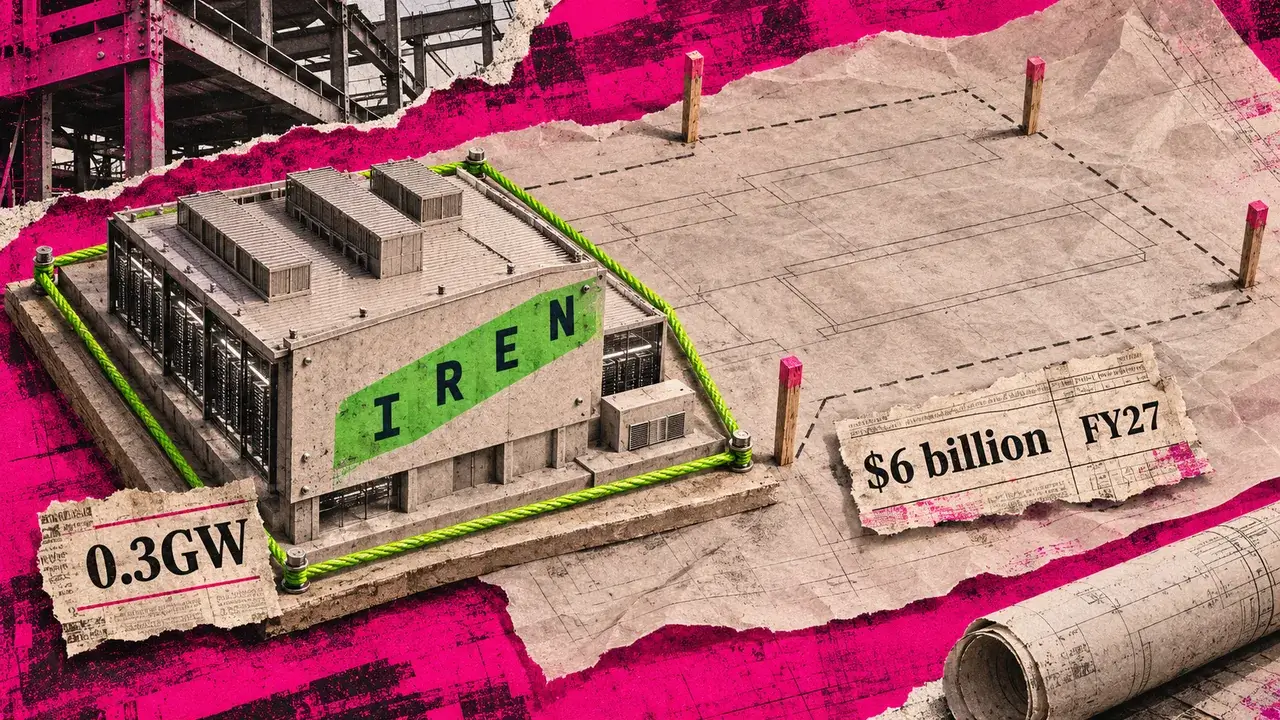
The company’s ARR projections are based on assumptions regarding GPU hourly pricing, utilization rates, and ancillary storage revenue. IREN has cautioned investors that recognized revenue may be materially lower than the ARR target, as the timing of revenue recognition depends on commissioning, rigorous testing phases, and final customer acceptance.
Procurement Progress and Post-Quarter Developments
Despite the timeline adjustment for the initial milestone, IREN is moving forward with procurement for its subsequent expansion phases. The company’s latest presentation reveals that GPUs have already been ordered for an additional 0.3GW beyond the initial program. This proactive procurement strategy is designed to mitigate future supply chain bottlenecks, though it increases the company’s immediate capital requirements.
A significant post-quarter development provides a template for how IREN intends to de-risk its $6 billion funding gap. Following the September 30 reporting period, the company signed a five-year contract that carries an estimated annual revenue of approximately $22 million per IT megawatt. Crucially, this contract includes customer prepayments that cover 90% of the associated estimated GPU capital expenditures (capex).
This model of "customer-funded expansion" is becoming a hallmark of the AI data center industry. By requiring customers to prepay a vast majority of the hardware costs, IREN can scale its capacity without relying solely on external debt or equity markets. However, the company noted that these terms vary across customers and are specific to the individual GPU requirements of each contract.
Historical Financing Context and Cost of Capital
IREN’s ability to reach its $15 billion goal will depend largely on its continued access to institutional credit. Previous transactions illustrate the tiered nature of this financing. In August, Blue Owl Capital announced a $2.4 billion financing facility for IREN’s Mackenzie "AI Factory." This facility was structured as a $1.2 billion senior secured loan and $1.2 billion in senior secured notes.
The disbursement of these funds is tied directly to physical deployment, with capital released in tranches as hardware is delivered and commissioned. The cost of this capital also varies significantly based on the counterparty and the collateral involved. For instance, IREN’s August results disclosed that Microsoft-related GPU financing carried a weighted-average interest rate of approximately 6% (excluding fees). In contrast, the Mackenzie equipment financing through Blue Owl carried a higher fixed rate of 9%.
As IREN seeks the final $6 billion of its expansion plan, the interest rate environment and the creditworthiness of its underlying customer contracts will be the primary determinants of its cost of capital.
Industry Implications and the "Great Pivot"
The trajectory of IREN is emblematic of a broader trend within the Bitcoin mining sector. Following the 2024 halving, which slashed the block reward for miners by 50%, many firms have found that their most valuable assets are no longer their mining rigs, but rather their energized land and power interconnections.
Companies like Core Scientific, Bitdigital, and TeraWulf have similarly announced pivots or expansions into high-performance computing (HPC) and AI hosting. The logic is purely economic: while Bitcoin mining offers "spot" market exposure to a volatile asset, AI compute contracts often span five to ten years and offer predictable, high-margin dollar-denominated revenue.
For IREN, the $4 billion ARR milestone represents a transformation from a speculative commodity producer to a foundational utility for the digital age. If the company successfully navigates the $6 billion funding requirement and the minor delays in its 0.3GW program, it will emerge as one of the largest independent AI infrastructure providers in the world.
Conclusion and Future Outlook
IREN’s revised timetable reflects the "growing pains" of an industry operating at the absolute limit of technical and financial capacity. By pushing its milestone into early 2027, the company is prioritizing design integrity and customer specifications over a symbolic year-end deadline.
The market’s focus will now shift to the company’s ability to execute on the 0.8GW capacity target and its success in securing the $6 billion in additional funding. With $200 million in quarterly AI revenue already on the books, IREN has demonstrated proof of concept. The challenge remains in the execution of a $15 billion capital deployment plan during a period of rapid technological iteration and shifting macroeconomic conditions. For now, the transition from "miner" to "AI factory" remains on track, albeit with a slightly extended horizon and a significantly larger price tag.