

 admin

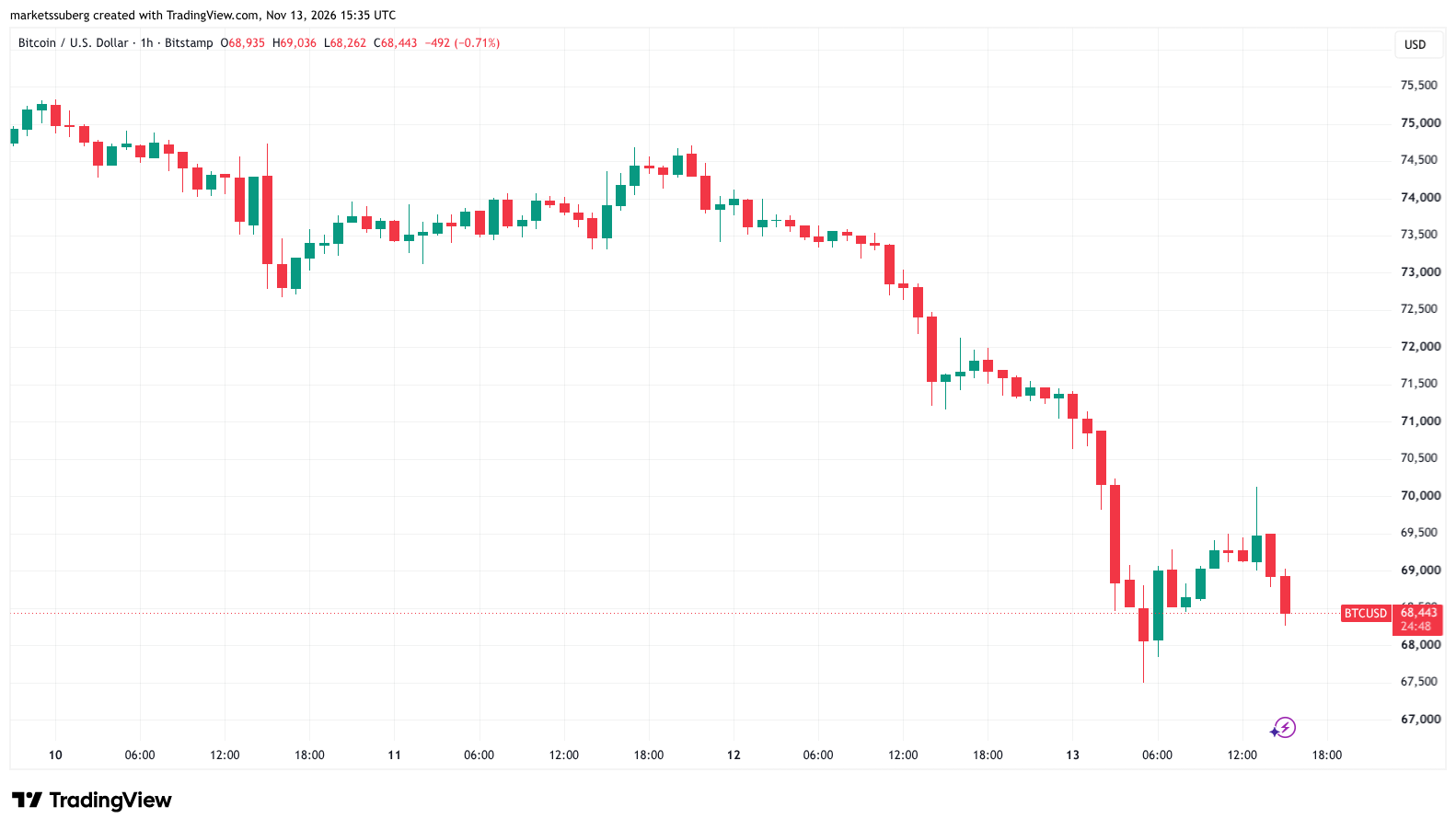
Bitcoin (BTC) demonstrated a modest recovery, hovering around the $68,700 mark following the opening of Wall Street on Friday, clawing back ground after an earlier dip to approximately $67,500. This rebound, however, occurred amidst a broader climate of economic uncertainty, primarily driven by the latest Producer Price Index (PPI) data from the United States, which indicated the largest annual gain since late 2022. The cryptocurrency’s volatility reflects a market grappling with persistent inflation signals, evolving Federal Reserve monetary policy expectations, and shifts in traditional equity markets.
Persistent Inflationary Pressures Highlighted by US PPI Data
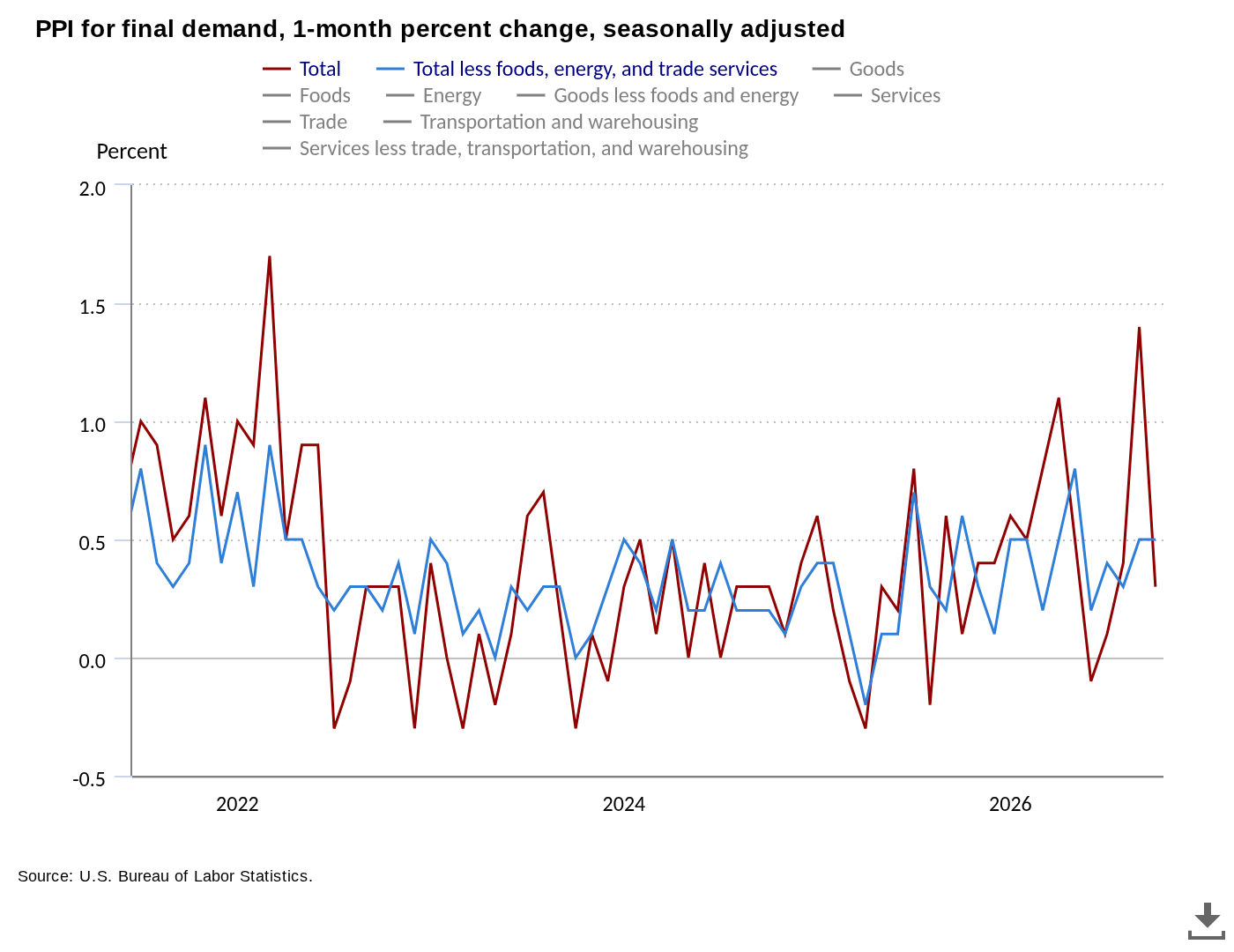
The US Producer Price Index (PPI), a critical economic indicator tracking the average change over time in the selling prices received by domestic producers for their output, registered a notable increase in October. According to data released by the US Bureau of Labor Statistics (BLS) on Friday, the PPI for final demand rose by 0.3% month-over-month and a significant 6.5% year-over-year. While both readings were marginally below market expectations by 0.1 percentage points, the annual increase marked the largest surge since November 2022, signaling a stubbornly inflationary environment that continues to challenge economic stability.

The PPI is often considered a leading indicator for consumer inflation (CPI) because changes in producer prices typically flow through to consumer prices. A sustained rise in PPI suggests that businesses are facing higher input costs, which they may eventually pass on to consumers. The October report detailed that the index for final demand goods saw a 0.5% increase, while prices for final demand services moved up by 0.2%. This broad-based increase underscores inflationary pressures across various sectors of the economy, complicating the Federal Reserve’s efforts to achieve price stability. The uptick in final demand goods was particularly noteworthy, encompassing a range of products from energy to manufactured goods, suggesting that supply-side constraints or increased demand for raw materials continue to contribute to rising costs.
To contextualize, the 6.5% annual gain reflects an economy still contending with the ripple effects of global supply chain disruptions, elevated energy costs, and robust consumer demand that have characterized the post-pandemic recovery. In late 2022, inflation reached multi-decade highs, prompting aggressive monetary tightening by the Federal Reserve. The current PPI figures indicate that while the pace of inflation may have decelerated from its peak, it remains significantly above the Fed’s long-term target of 2%, complicating the central bank’s path forward. The slight deviation from market expectations (0.1 percentage points lower than anticipated) offered a fleeting moment of relief but was overshadowed by the magnitude of the year-over-year increase, reminding market participants that inflation remains a formidable concern.
Federal Reserve’s Dilemma: Navigating Rate Hike Expectations
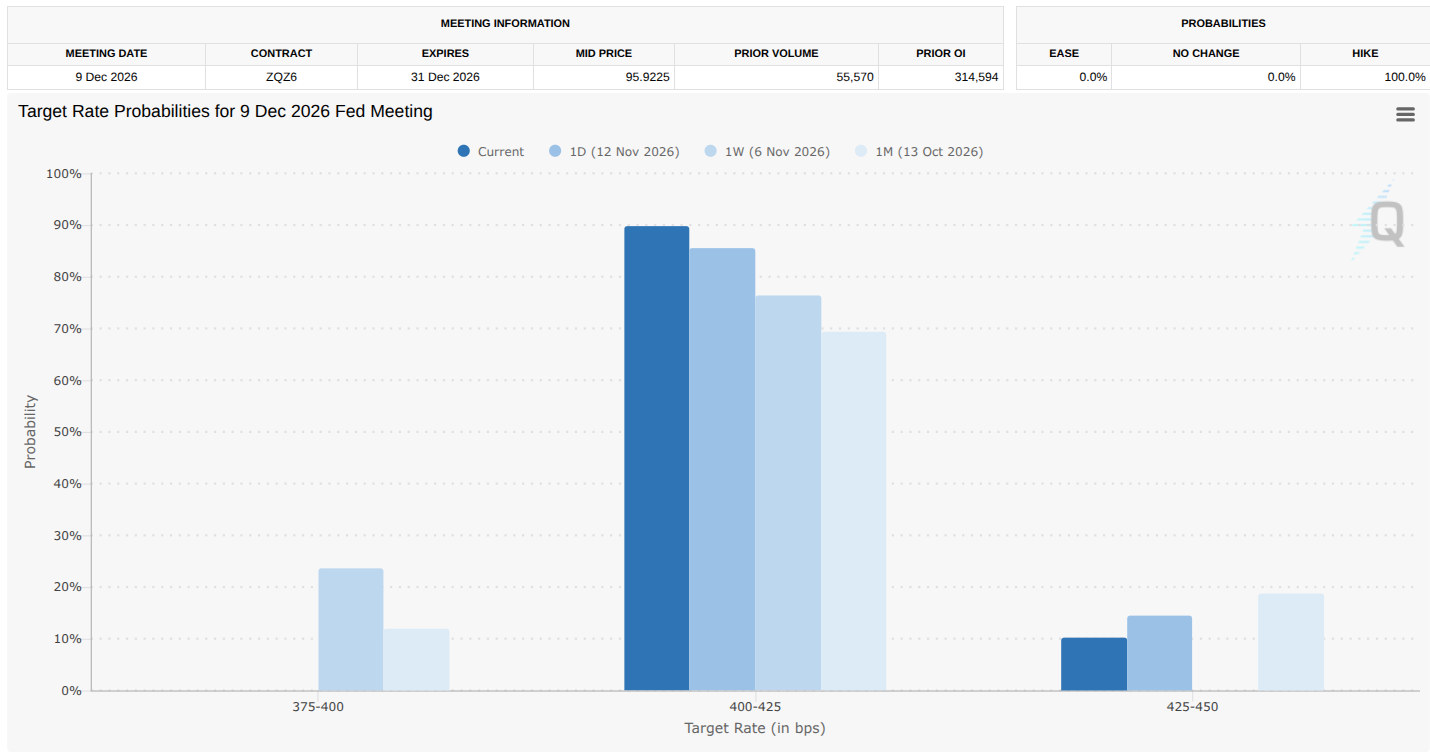
The release of the PPI data immediately impacted market expectations regarding the Federal Reserve’s upcoming monetary policy decisions. The CME Group’s FedWatch Tool, which tracks the probability of various interest rate changes based on futures pricing, showed a subtle but significant shift. The odds of a minimal 25-basis-point (bps) rate hike at the Fed’s December Federal Open Market Committee (FOMC) meeting rose from 85.4% on Thursday to 89.7% after the PPI report. Conversely, the probability of a more aggressive 50-bps move decreased from 14.5% to 10.3%.
This adjustment suggests that while the market is leaning more strongly towards a smaller hike, the persistent inflationary signals from the PPI report keep the Fed on a tightening path. The Federal Reserve operates under a dual mandate: to foster maximum employment and price stability. With inflation remaining elevated, the Fed is under pressure to continue its efforts to cool the economy, even as concerns about potential economic slowdowns or recession linger. The central bank has been engaged in a series of aggressive rate hikes since early 2022, moving the federal funds rate from near zero to its current elevated range in an attempt to curb soaring prices. Each economic data release, therefore, is scrutinized for clues about the effectiveness of these policies and the likelihood of future adjustments.
Prominent economists have weighed in on the Fed’s challenging position. Robin Brooks, a seasoned economist, described a 25-basis-point hike in December as "all but inevitable." However, he expressed skepticism about the efficacy of steeper increases, arguing that such moves might be ineffective against the current drivers of inflation. Brooks highlighted two primary factors: the potential for oil-price spikes stemming from geopolitical tensions, specifically referencing a hypothetical US-Iran conflict and its impact on the Strait of Hormuz, and a potential long-term acceleration in underlying inflation. He contended that if high inflation is primarily due to external shocks like oil prices, a 75-basis-point hike would do little to address it. Similarly, if the issue is a fundamental rise in the pace of underlying inflation, then a 75-basis-point increase would be "much too timid to get this under control." This perspective underscores the complexity of the current economic landscape, where traditional monetary tools might face limitations against certain inflationary forces, suggesting a deeper, structural component to current price pressures.
Turbulence in Traditional Equity Markets
The impact of the economic data and corporate news extended beyond the cryptocurrency realm, causing turbulence in traditional equity markets. Wall Street showed little sign of relief at the start of the US trading session. Investors were not only digesting the latest inflation figures but also parsing significant corporate developments, notably the reported resignation of Jensen Huang, co-founder and CEO of Nvidia, on Thursday. Nvidia, a titan in the semiconductor industry and a bellwether for the technology sector, particularly in the burgeoning field of artificial intelligence, saw its stock react to the news. While the specifics of Huang’s departure or its long-term implications are still being analyzed, the immediate uncertainty added to market jitters. The company’s significant market capitalization and influence mean that leadership changes at this level can send ripples throughout the tech sector and beyond.
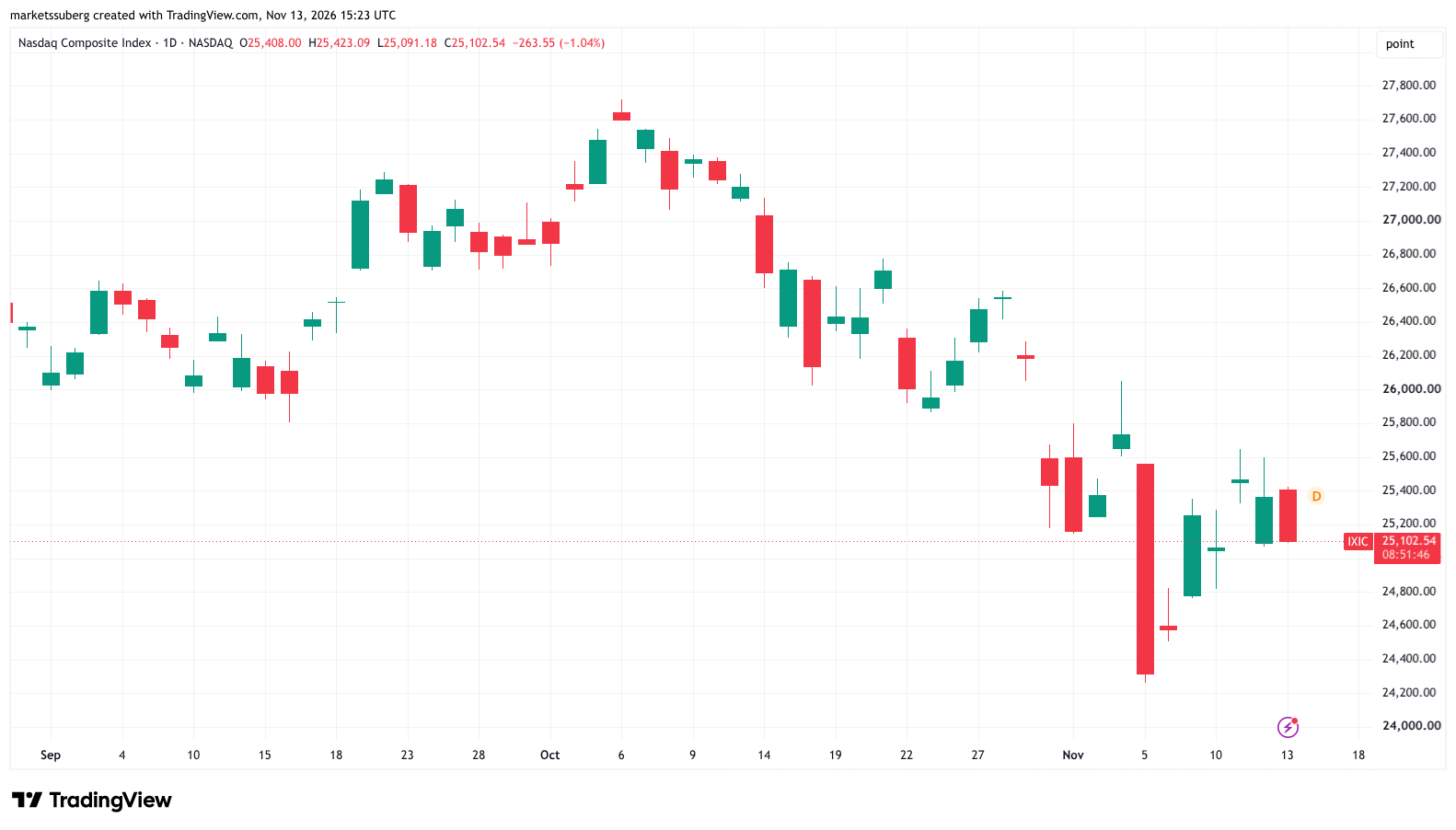
At the time of writing, the S&P 500, a broad market index, was down 1.2%, reflecting widespread selling pressure. The tech-heavy Nasdaq Composite Index, which includes many of the growth stocks that have been sensitive to interest rate expectations, performed even worse, dropping 1.5%. This synchronized downturn across major indices underscores the prevailing risk-off sentiment in the market. Higher interest rates typically make future earnings less valuable, which can particularly impact growth companies that are valued based on their long-term potential. The combined effect of persistent inflation, the prospect of continued monetary tightening, and high-profile corporate leadership changes created a challenging environment for equities, pushing investors towards more defensive assets or outright cash.
Bitcoin’s Vulnerable Position: Technical Breakdown Warnings
Bitcoin’s price action throughout Friday reflected its increasing correlation with broader macroeconomic factors and traditional market sentiment. Despite the minor rebound, the cryptocurrency remained down 4% on the day after touching a roughly 12-week low near $67,500. This significant decline has prompted warnings from crypto analysts regarding Bitcoin’s technical posture.
Crypto trader and analyst Rekt Capital issued a cautionary note, highlighting that a weekly close below $73,000 on Sunday would signal a critical support breakdown. According to Rekt Capital, such a breakdown has historical precedent, notably occurring twice previously in 2026. "Last week’s Weekly Candle Closed below 3 Weekly levels," he wrote on X (formerly Twitter), referring to key resistance levels at $75,000, $76,800, and $78,300. He further observed, "This Weekly Candle looks set to do something similar. Which is testament to sell-side momentum still gaining and the bears being in control." This assessment suggests that the selling pressure is intensifying, and bears are currently dominating market sentiment, indicating a potential continuation of the downward trend.
Historically, after each of the two previous breakdowns identified by Rekt Capital, Bitcoin experienced significant drops, falling to approximately the $60,000 level. This pattern suggests that a failure to hold critical support could trigger a further cascade of selling, potentially pushing Bitcoin towards lower price targets. Such technical analyses are closely watched by traders as they provide insights into potential future price movements based on past trends and market structure, often influencing short-term trading strategies and investor confidence. The psychological significance of these levels cannot be overstated, as large institutional and retail players alike adjust their positions in response to these technical indicators.
From a broader performance perspective, Bitcoin’s current valuation at $68,700 marks a substantial decline of 17.7% in the fourth quarter and 11.2% month-to-date. Data from CoinGlass, a cryptocurrency analytics platform, confirms that this quarterly performance is currently Bitcoin’s second worst on record. The only quarter with a more severe downturn would have been during significant market crises or bear cycles, underscoring the severity of the current market conditions for the leading cryptocurrency. This poor quarterly performance aligns with the "risk-off" environment observed in traditional markets, indicating that investors are reducing exposure to higher-risk assets in the face of economic uncertainty and tighter monetary policy. This trend challenges the long-held narrative of Bitcoin as a purely uncorrelated asset, demonstrating its susceptibility to broader financial market dynamics.
Broader Implications for the Crypto Ecosystem
The challenging market conditions for Bitcoin are not isolated but reflect broader trends within the cryptocurrency ecosystem. A recent report highlighted that stablecoin supply, a key indicator of liquidity and capital available within the crypto market, has fallen by $14.2 billion in the biggest 30-day drop since June 2022. This contraction in stablecoin supply suggests that capital is flowing out of the crypto market, or at least not entering at the previous rates, which can put downward pressure on asset prices. Stablecoins are crucial for trading and liquidity, often serving as a temporary haven during market volatility or as a gateway for new capital. Their decline often precedes or accompanies broader market downturns as investors either redeem them for fiat or move them to less volatile assets, signaling a reduction in overall crypto market liquidity.
The narrative of Bitcoin as an "inflation hedge" has been tested throughout this period of persistent inflation. While some proponents argue that Bitcoin’s finite supply makes it a store of value against fiat currency debasement, its recent performance, particularly its correlation with tech stocks and sensitivity to interest rate expectations, suggests it is still largely perceived as a risk asset. As such, it remains vulnerable to the same macroeconomic headwinds that affect traditional equities. This evolving perception is critical for its long-term adoption and integration into mainstream finance, as institutional investors weigh its risk profile against traditional asset classes.
Looking ahead, the trajectory of Bitcoin and the broader crypto market will likely continue to be heavily influenced by several interconnected factors. The Federal Reserve’s future interest rate decisions, which will be dictated by incoming economic data like CPI and PCE (Personal Consumption Expenditures) inflation reports, will be paramount. Any signs of cooling inflation could alleviate pressure on the Fed, potentially leading to a pause or even a pivot in monetary policy, which would generally be bullish for risk assets. Conversely, continued stubborn inflation could necessitate further tightening, exacerbating current market challenges and potentially prolonging the current bearish sentiment.
Geopolitical stability also plays a critical role, as evidenced by economist Robin Brooks’s comments on oil prices. Any escalation of global conflicts or significant disruptions to energy supplies could reignite inflationary pressures, further complicating the economic outlook and potentially impacting investor confidence across all asset classes. For the cryptocurrency market specifically, monitoring technical support levels, investor sentiment, and the flow of capital (as indicated by stablecoin supply) will be crucial for discerning future trends. The current period represents a critical juncture for Bitcoin, where its resilience against macro pressures and its ability to hold key technical levels will determine its short-term trajectory and potentially shape its long-term narrative. The market awaits clear signals from both economic indicators and central bank policy to determine if the current bearish momentum will persist or if a turnaround is on the horizon, potentially fueled by new catalysts such as institutional adoption or technological advancements within the crypto space.