admin
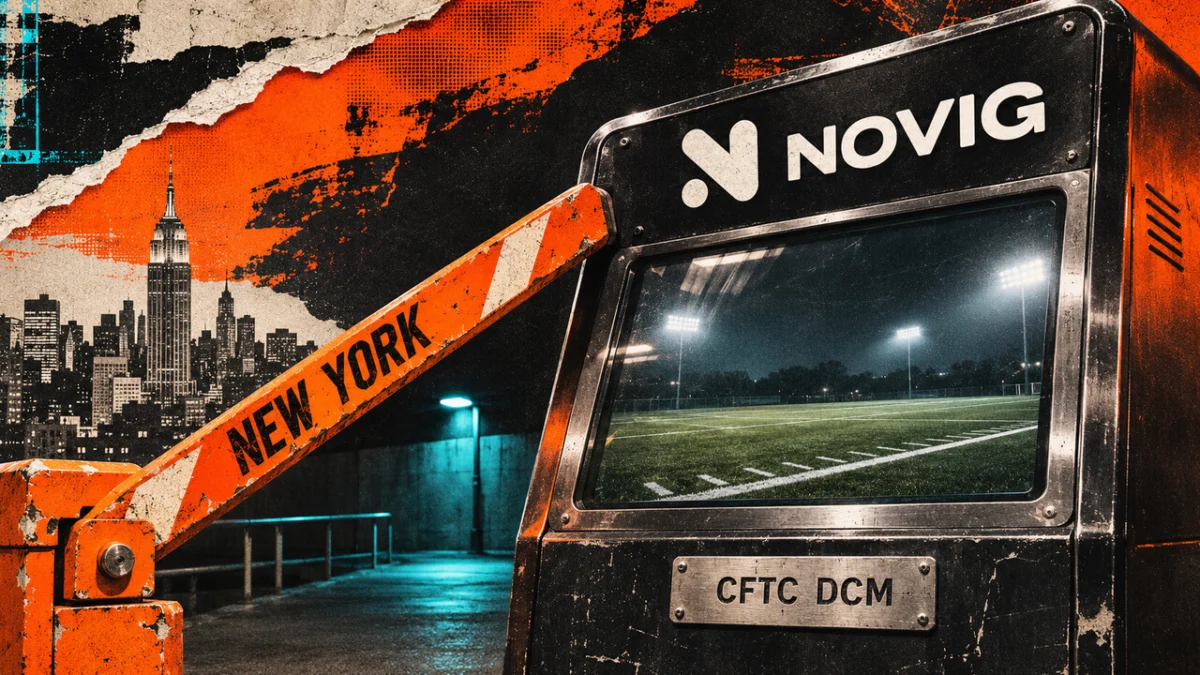
Novig, a platform seeking to operate a federally designated exchange for sports event contracts, has suffered a significant setback as a federal judge denied its request for preliminary protection from New York’s stringent gambling laws. The ruling, delivered on November 10, 2026, by US District Judge Loretta A. Preska, concluded that the sports contracts offered by Novig remain subject to state regulations, irrespective of the platform’s designation as a contract market by the Commodity Futures Trading Commission (CFTC). This decision, which Novig has since appealed, could have profound implications for the burgeoning market of event contracts and its intersection with existing state-level regulatory frameworks.
The core of the legal dispute hinges on whether Novig’s sports contracts qualify as "swaps" under federal commodities law, thereby potentially preempting state gambling regulations. However, Judge Preska’s opinion took a dual approach, first asserting that the contracts, as currently structured, likely do not meet the federal definition of swaps. Even if they were to be classified as swaps, the judge posited that New York could still assert its gambling authority over the betting activities facilitated by Novig. This two-pronged reasoning presents a formidable legal challenge for Novig as it pursues its appeal to the US Court of Appeals for the Second Circuit.
A Chronology of Legal and Operational Developments
The saga began with Novig’s efforts to establish a regulated marketplace for financial derivatives based on the outcomes of sporting events. On June 16, 2026, the CFTC granted Novig the designation of a contract market, a crucial step that typically places such exchanges under federal oversight. This designation was intended to provide a degree of regulatory clarity and potentially insulate Novig from the patchwork of state-specific rules. Following this federal approval, Novig announced its intention to offer New York sports contracts on August 4, 2026, signaling its readiness to engage with the large and active New York market.
However, the announcement immediately drew the attention of New York state regulators, who view such operations as falling squarely within the purview of the state’s long-standing anti-gambling statutes. In response, Novig sought a preliminary injunction from the federal court to shield its operations from state enforcement actions. The platform argued that the federal designation by the CFTC should preempt New York’s gambling laws, creating a conflict that the federal law should resolve in Novig’s favor.
The court’s denial of this preliminary injunction on November 10 marked a significant turning point. Novig promptly filed a notice of appeal the same day, indicating its determination to challenge Judge Preska’s decision at the appellate level. The appeal will focus on whether the federal designation grants Novig immunity from state gambling laws when facilitating bets on sporting events.
The Two Pillars of the Court’s Decision
Judge Preska’s ruling rested on two primary grounds, both of which pose substantial hurdles for Novig:
-
Exclusion from the Definition of Swaps: The judge meticulously examined Novig’s sports contracts and concluded that they likely fall outside the Commodity Exchange Act’s definition of "swaps." While acknowledging that sporting outcomes can be considered "events or contingencies," Judge Preska’s interpretation of the statute emphasized the necessity of an "inherent financial, economic or commercial connection" for a contract to be classified as a swap. She found that Novig’s contracts, in their current form, lacked this requisite connection, suggesting they are more akin to wagers than traditional financial derivatives. This finding, if upheld, means Novig cannot rely on the federal preemption argument afforded to registered swap entities.
-
Survival of State Gambling Laws: Even if, for the sake of argument, Novig’s contracts were to be considered swaps, Judge Preska’s alternative reasoning is equally impactful. She asserted that the CFTC’s exclusive jurisdiction over designated contract markets does not entirely extinguish the applicability of state laws, particularly those related to gambling. The judge differentiated between the federal government’s authority over the licensing and operational oversight of contract markets and the potential for state laws to regulate the "betting activity" conducted on those markets. This distinction suggests that while the CFTC may regulate the exchange itself, states could still enforce their prohibitions on gambling, even if the underlying instruments are deemed federal swaps.
Navigating Compliance: A Complex Proposition
Novig’s contention that complying with both federal and state laws would be impossible was also dismissed by the court. Judge Preska pointed to potential pathways for compliance, such as seeking state licensing for gambling operations and implementing geographic controls to restrict access to New York residents. These suggestions, while offering theoretical avenues, highlight the complex and potentially prohibitive regulatory landscape Novig would need to navigate if it were to operate within New York. The court’s stance suggests that Novig’s federal designation does not automatically grant it a license to operate in any state without regard to local laws.
This legal precedent draws parallels with the ongoing litigation surrounding Kalshi, another platform dealing with similar regulatory challenges. The Sixth Circuit’s approach in the Kalshi case, which also explored the interplay between federal commodities law and state gambling regulations, appears to have informed Judge Preska’s decision. The key distinction in the Novig case is the direct application of this reasoning to Novig’s specific request for protection against New York officials, marking a significant escalation in the legal battle over event contracts.
Broader Implications for the Event Contract Market
The implications of this ruling extend far beyond Novig. The market for event contracts, which offers individuals and institutions the ability to trade on the likelihood of future events ranging from elections to sports outcomes, has been growing rapidly. Platforms like Novig and Kalshi are attempting to legitimize this market by seeking regulatory clarity and federal oversight. However, this decision underscores the significant challenge posed by state-level gambling laws, which have historically been used to prohibit or tightly control wagering activities.
If Novig’s appeal is unsuccessful, it could signal a period of heightened regulatory uncertainty for the entire event contract industry. Other platforms may find themselves facing similar legal challenges in states with strict anti-gambling statutes. The ruling suggests that a federal designation alone may not be sufficient to insulate these businesses from state enforcement, forcing them to either seek state-specific approvals, which may be difficult to obtain, or limit their operations to jurisdictions that have legalized or are amenable to event contract trading.
The Nov. 10 order, while denying Novig’s immediate request for relief, does not represent a final judgment on the merits of the case or a nationwide ban on Novig’s operations. The federal exchange designation remains in place, and the ongoing litigation in the Second Circuit will determine the ultimate fate of Novig’s operations in New York. However, the judge’s reasoning has established a robust legal framework that state regulators can utilize to challenge such platforms, setting a challenging precedent for the future of federally regulated exchanges operating within the complex web of state laws.
The outcome of this appeal could be pivotal in shaping the regulatory landscape for event contracts, potentially forcing a broader conversation about how these innovative financial instruments should be classified and regulated in the United States. The decision will also be closely watched by investors, regulators, and policymakers interested in the evolving intersection of finance, technology, and the regulation of speculative markets.