admin
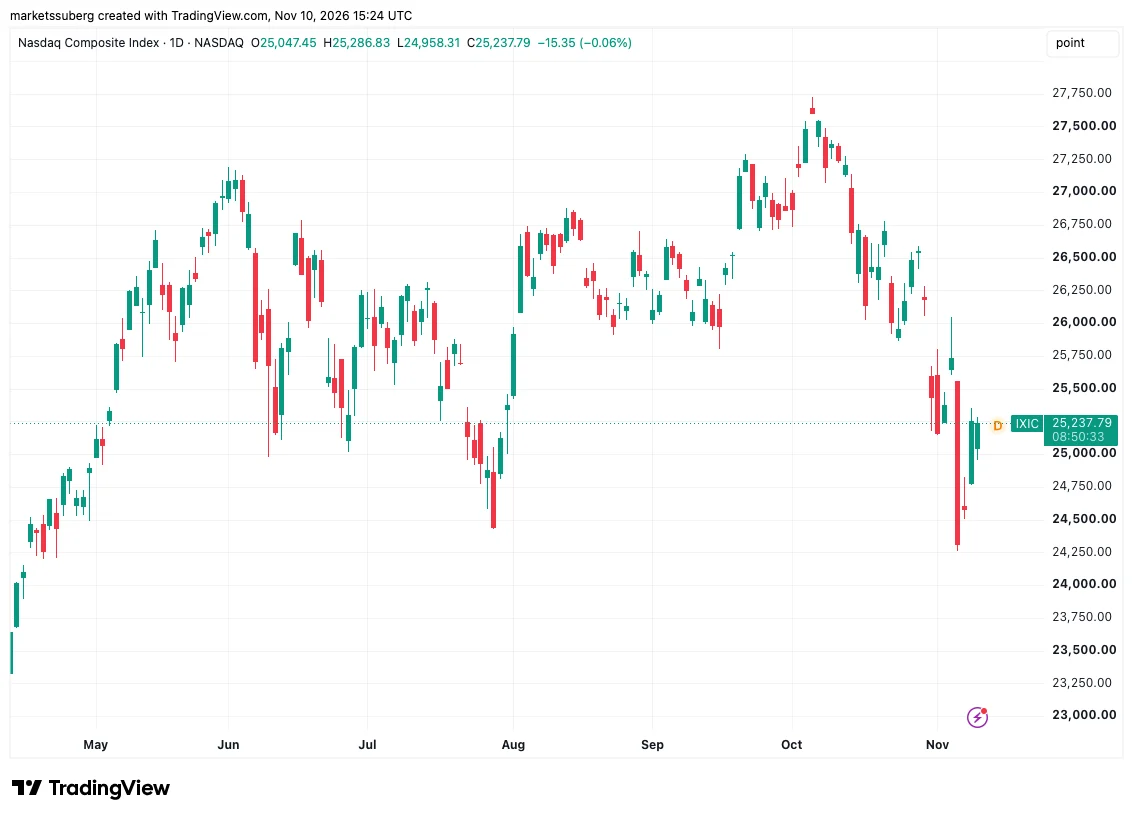
Bitcoin (BTC), the world’s leading cryptocurrency by market capitalization, experienced a notable decline, dipping towards its 11-week lows near the $73,500 mark during Tuesday’s Wall Street open. This market reaction came swiftly after the release of the latest U.S. inflation data, which indicated consumer price growth surpassed economists’ projections. The unexpected persistence of inflationary pressures has immediately prompted a recalibration of market expectations regarding the Federal Reserve’s monetary policy, specifically increasing the likelihood of further interest rate hikes before the year concludes.
The cryptocurrency’s downturn saw BTC/USD falling to $73,518, according to data compiled from TradingView. This level closely mirrored the low set just days prior on Sunday and marked its lowest point since August 21st, underscoring the sensitivity of digital assets to macroeconomic shifts. The broader cryptocurrency market often mirrors the performance of traditional risk assets, and Bitcoin’s recent price action serves as a stark reminder of its susceptibility to changes in investor sentiment driven by economic indicators.
October CPI Exceeds Forecasts, Fueling Rate Hike Bets
The catalyst for Tuesday’s market turbulence was the October print of the Consumer Price Index (CPI), a critical gauge of inflation released by the U.S. Bureau of Labor Statistics (BLS). The data revealed a month-on-month increase of 0.4%, a figure that surpassed the consensus forecast of 0.3%. While this represented a deceleration in the monthly rate of growth compared to September’s more robust 0.6% increase, the higher-than-expected figure for October was enough to send ripples through financial markets, particularly those sensitive to interest rate expectations.
It is noteworthy that the October CPI report lacked a year-on-year component, a consequence of data collection disruptions during the U.S. government shutdown in 2025. Despite this limitation, the monthly figures provided sufficient detail to inform market participants and policymakers about the prevailing inflationary environment.

A deeper dive into the BLS release highlighted key contributors to the overall price increase. The index for shelter, which includes rent and owners’ equivalent rent, rose by 0.3% in October, accounting for over thirty percent of the total monthly increase across all items. Food prices also saw a significant uptick, with the food index climbing 0.5% for the month. This was driven by a 0.4% rise in the food at home index and a 0.5% increase in the food away from home index, indicating broad-based inflationary pressures across the food sector.
In contrast to the previous month, energy price increases played a less dominant role in October’s CPI gain. The energy index advanced by a comparatively modest 0.7%, a stark reduction from the substantial 5.2% surge observed in September. This shift suggests that while some volatile components like energy may be cooling, core inflationary pressures, particularly from sectors like housing and food, remain persistent.
Economist Robin Brooks characterized the October CPI result as "discouraging." In his analysis, Brooks acknowledged that while the oil-price spike had heavily contributed to the September numbers, the underlying details of the October report still painted a concerning picture for inflation. He wrote, "All the details of this CPI report are discouraging, but October was also the peak of the second big oil price shock this year and that’s obviously going to bleed into core CPI inflation," suggesting that the effects of past energy price surges continue to ripple through the broader economy, affecting even core inflation measures.
Federal Reserve Signals Hawkish Stance Amidst Economic Indicators
The inflation data’s release immediately intensified scrutiny on the Federal Reserve’s upcoming monetary policy decisions. Earlier on Tuesday, prior to the CPI report, Federal Reserve Governor Christopher Waller had already voiced his inclination towards implementing a 25 basis point (0.25%) interest rate hike in December. Waller’s remarks indicated that he favored such a move even if inflation showed signs of cooling from September’s levels, emphasizing the Fed’s commitment to bringing inflation back down to its 2% target.
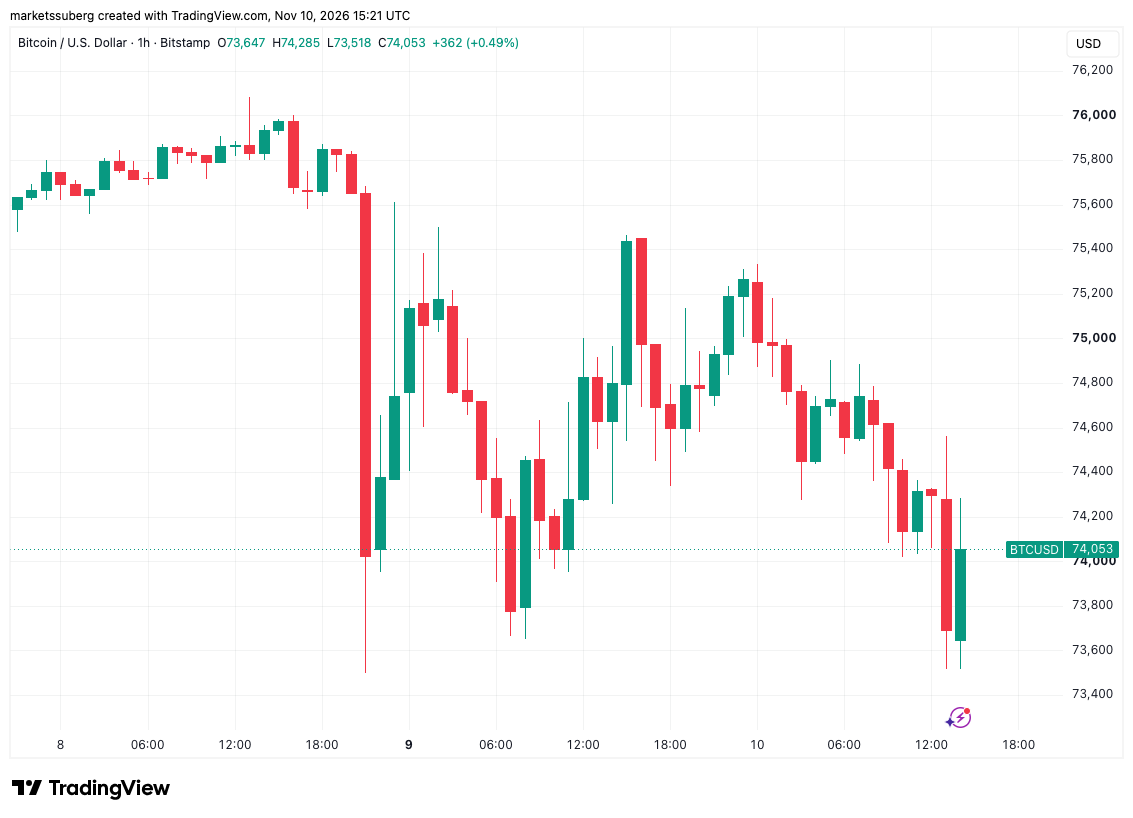
The CME Group’s FedWatch Tool, which gauges market probabilities for future Fed rate decisions, vividly illustrated the immediate impact of the CPI report. Before the inflation figures were released, markets were already pricing in a high probability – 96.3% – of a 25-basis-point hike at the Federal Open Market Committee (FOMC) meeting in December. However, in the wake of the higher-than-expected CPI print, these odds shifted, reflecting a more hawkish sentiment. The probability of a 25-basis-point hike marginally decreased to 85.3%, but critically, the likelihood of a more aggressive 50-basis-point hike surged to 14.7%. This notable increase in the odds for a larger rate hike underscored the market’s heightened concern over persistent inflation and the Fed’s potential response.
The Federal Reserve operates under a dual mandate from Congress: to achieve maximum employment and maintain price stability. When inflation runs above target, the Fed typically responds by raising the federal funds rate, which in turn influences other interest rates throughout the economy, aiming to cool demand and temper price increases. This tightening of monetary policy generally makes borrowing more expensive, which can slow economic growth and reduce liquidity in financial markets. Risk assets like Bitcoin often suffer in such environments as investors seek safer, yield-bearing assets. The current scenario highlights a challenging balancing act for the Fed, as strong labor market data continues to complicate the inflation picture, suggesting that economic activity may still be robust enough to withstand further rate hikes without immediately tipping into a recession.
Traditional Markets Under Duress: Nasdaq and Tech Stocks React
The impact of the CPI report was not confined to the cryptocurrency realm; U.S. stock markets also came under significant pressure at the Wall Street open. The tech-heavy Nasdaq Composite Index, known for its sensitivity to interest rate expectations due to its concentration of growth stocks, initially opened down 0.6%. While it managed to recoup some of these losses later in the trading session, the initial reaction underscored investor apprehension.
The CPI data added to an existing confluence of headwinds for equity market bulls. These included surprisingly strong labor-market data, which, while positive for employment, reinforces the Fed’s justification for maintaining a hawkish stance. Additionally, the prospect of tighter regulation in the burgeoning artificial intelligence (AI) sector, particularly under a Democratic-controlled House and Senate, has cast a shadow over some high-growth tech companies.
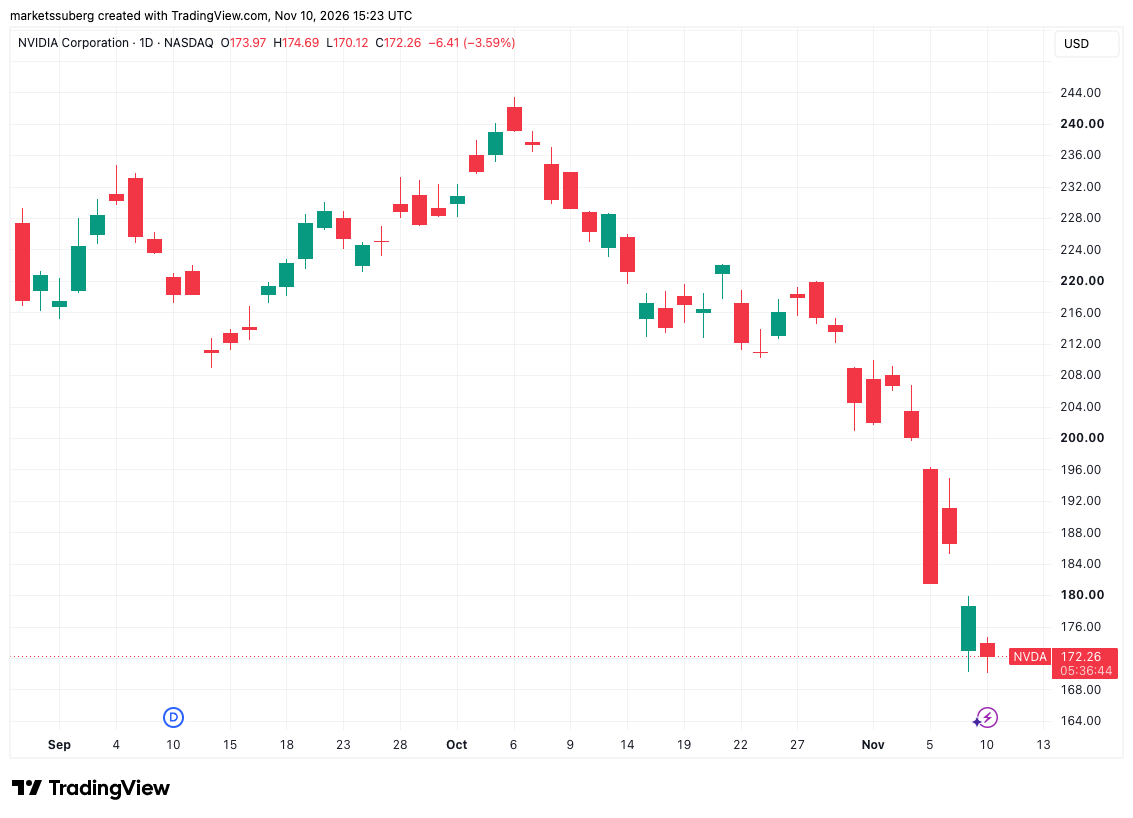
A notable individual stock affected was Nvidia, a leading chip manufacturer and key player in the AI hardware market. Nvidia’s stock fell by nearly 4% amidst a board investigation into whether its CEO, Jensen Huang, was targeted by a foreign intelligence effort. This specific corporate development, combined with the broader macroeconomic and regulatory concerns, created a particularly challenging environment for the company and the tech sector as a whole.
Trading resource Mosaic Asset Company offered insightful analysis on the day, noting, "Consumer inflation has continued running above target while the October jobs report removed any concerns about a slowdown in the labor market." This assessment succinctly captured the dilemma facing investors: a resilient economy struggling with persistent inflation, leading to expectations of a sustained restrictive monetary policy.
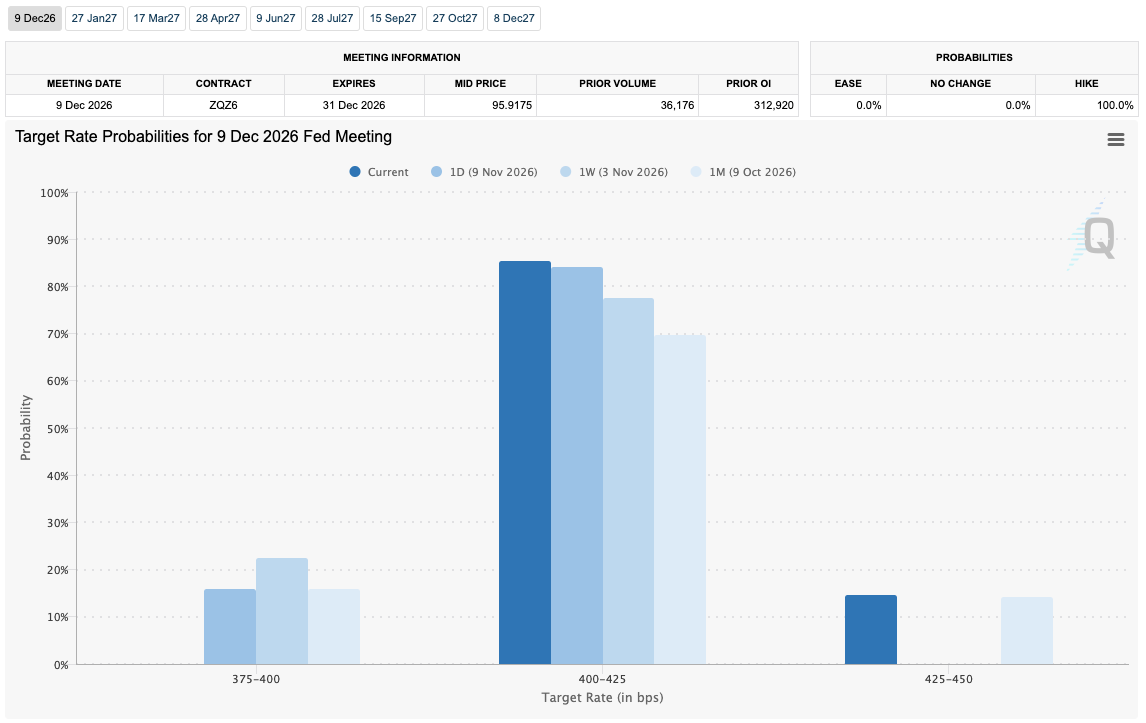
Despite the immediate downturn, Mosaic also observed signs of "extreme" sell-side pressure on the Nasdaq, which, counterintuitively, could signal that the index had formed a long-term bottom. This analysis pointed to a significant spike in the equity put/call ratio, which jumped over 1.0. This ratio, a measure of investor sentiment, indicates that the volume of put options (bets on falling prices) exceeded that of call options (bets on rising prices). A put/call ratio above 1.0 is generally considered a bearish signal, but extreme spikes can sometimes suggest that pessimism has reached an apex, potentially preceding a market rebound. Mosaic highlighted that this spike was "even higher than during the trade war selloff in April 2025," suggesting a level of bearish capitulation that could historically precede a reversal.
Investor Sentiment and Technical Outlook for Bitcoin
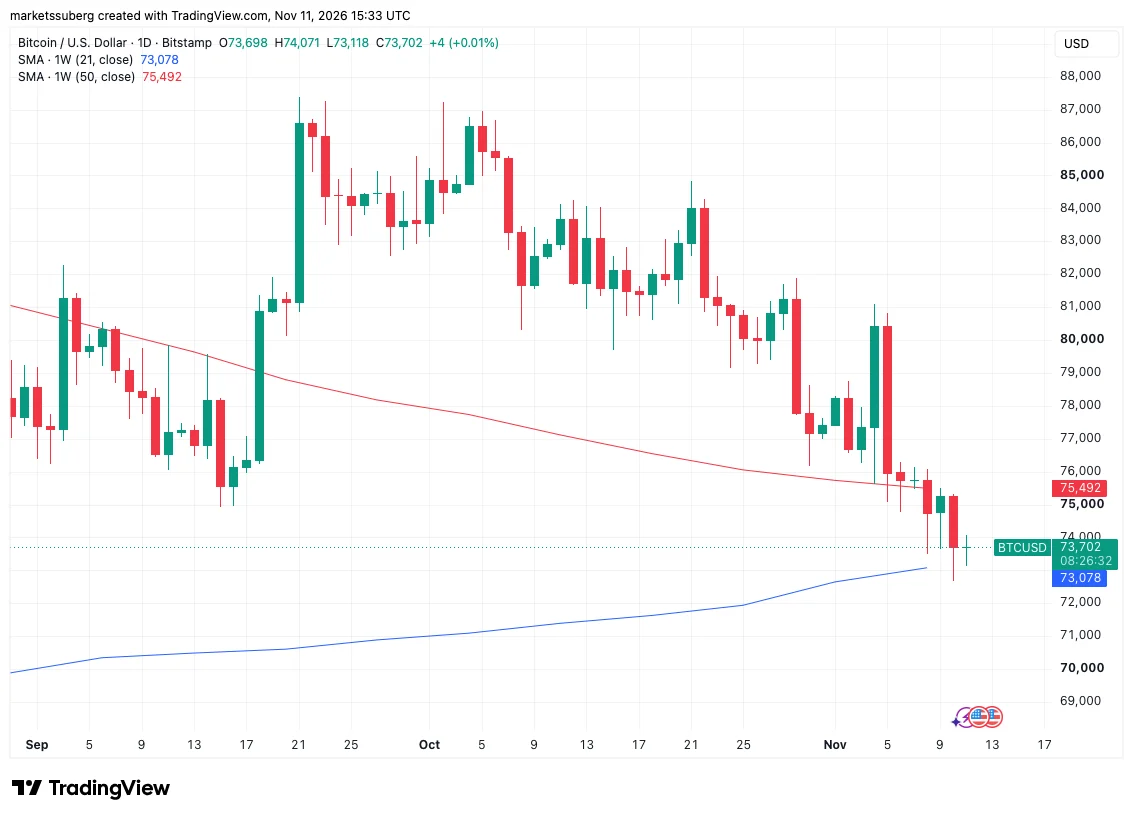
Bitcoin’s performance, closely tracking that of traditional risk assets, reflects its evolving role within the global financial landscape. As a digital asset, it is increasingly viewed through the lens of macroeconomic factors, with inflation data and interest rate expectations playing a pivotal role in its valuation. The dip to $73,518, an 11-week low, underscores that despite its perceived independence from traditional finance, Bitcoin remains highly correlated with broader market sentiment and liquidity conditions.
From a technical analysis perspective, the $73,500 level now represents a critical support zone. A sustained break below this point could potentially open the door for further downside, with analysts eyeing the next significant support levels. Conversely, a bounce from these lows could signal resilience, but any significant recovery would likely depend on more favorable macroeconomic developments or a shift in the Fed’s stance. The market’s immediate reaction suggests that investors are bracing for a period of continued caution, as the cost of capital is expected to remain high, making speculative investments less attractive.
The broader cryptocurrency market also felt the pinch, with many altcoins registering losses in sympathy with Bitcoin. This interconnectedness highlights the dominant influence of Bitcoin on the entire digital asset ecosystem. The prevailing sentiment among crypto investors remains one of watchful anticipation, as they weigh the potential for a continued "risk-off" environment against the long-term fundamentals and adoption narratives of digital currencies.
The Broader Economic Landscape and Future Implications
The October CPI report and its aftermath serve as a critical juncture in the ongoing economic narrative. The persistent inflationary pressures, coupled with a robust labor market, present a complex challenge for the Federal Reserve. Their next steps will be crucial in determining the trajectory of not only traditional financial markets but also the nascent digital asset space.
Looking ahead, market participants will be keenly watching for further economic data releases, particularly subsequent CPI reports and employment figures, for any signs that could influence the Fed’s December decision and beyond. Any indications of a sustained cooling of inflation, without a significant deterioration in the labor market, could provide the Fed with the necessary room to pause its rate hikes or even signal a future pivot towards easing monetary policy. Such a shift would likely be a significant boon for risk assets, including Bitcoin.
Conversely, if inflation remains stubbornly high, or if the labor market continues to show unexpected strength, the Fed may be compelled to maintain its hawkish stance, potentially even resorting to more aggressive rate increases. This scenario would likely extend the period of pressure on Bitcoin and other growth-oriented assets, as liquidity remains constrained and the opportunity cost of holding non-yield-bearing assets increases.
In conclusion, Bitcoin’s recent dip to an 11-week low is a direct consequence of an inflation report that defied expectations, reinforcing the market’s anticipation of a hawkish Federal Reserve. As central banks grapple with the complexities of economic stabilization, the interplay between macroeconomic indicators, monetary policy, and investor sentiment will continue to shape the volatile landscape for both traditional and digital financial assets.