Dwi Wanna
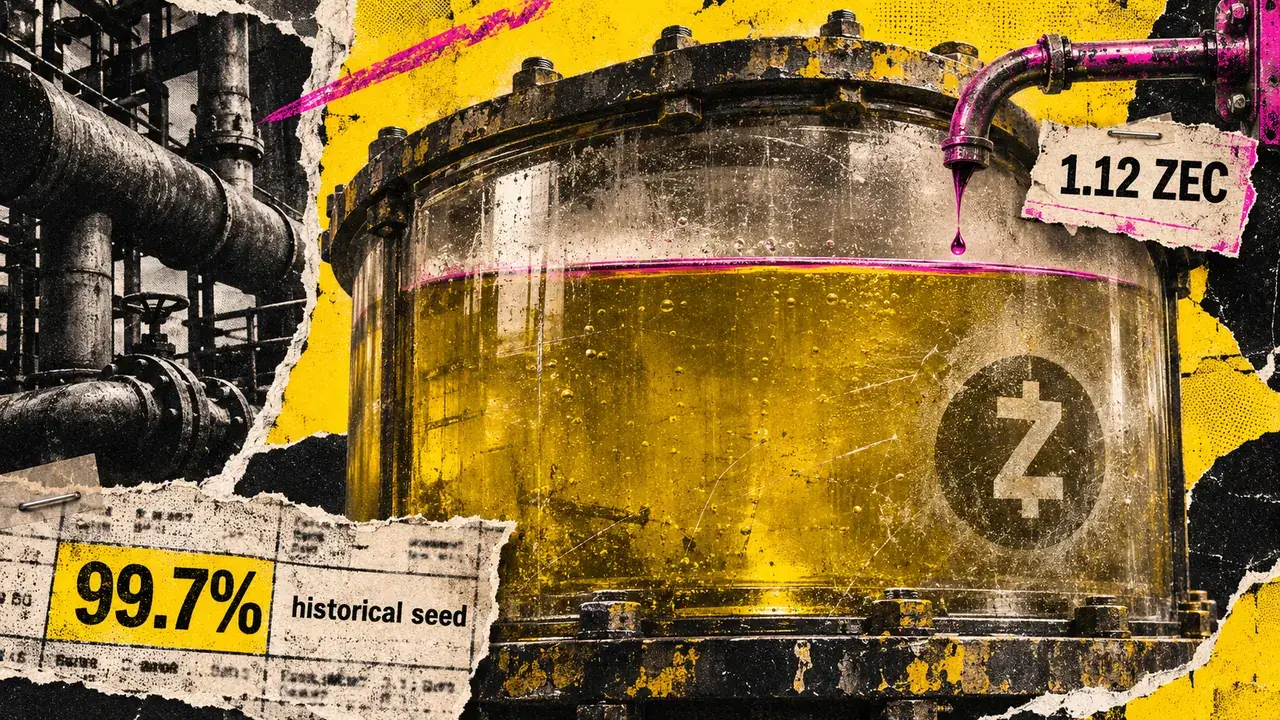
The Zcash network has officially transitioned into a new era of economic governance following the activation of Network Upgrade 7 (NU7), with early data revealing the initial composition of its newly established reserve for future block rewards. As of November 7, 2026, an observation of the Zcash mainnet conducted at 05:08:38 UTC showed that the Network Sustainability Mechanism (NSM) held a total balance of 369.7 ZEC. While the activation marks a pivotal shift in the protocol’s long-term security strategy, an analysis of the balance indicates that the reserve remains overwhelmingly comprised of inherited value rather than new contributions. Specifically, approximately 99.7% of the current balance is derived from a "historical seed" of unclaimed subsidies and fees, while only 1.12 ZEC has been accumulated under the newly deployed fee-recycling rules.
The observation, captured at block height 3,547,068 via the Zakura NU7 monitoring dashboard, provides the first empirical snapshot of how Zcash intends to sustain its network security as traditional block subsidies diminish. The data highlights the technical implementation of ZIP 237, the specification governing the reserve, which accounts for the historical seed of 368.58445520 ZEC. This seed represents value that miners opted not to claim in coinbase transactions prior to the NU6 upgrade. By subtracting this fixed historical amount from the reported total, analysts have determined that the subsequent accumulation of transaction fees since the NU7 activation stands at 1.11895065 ZEC, or roughly 0.3% of the total reserve.
The Architecture of the Network Sustainability Mechanism
The introduction of the NSM represents a fundamental change in the Zcash monetary policy, moving away from a purely inflationary model toward a regenerative one. Under the rules established by ZIP 237, the reserve acts as a public consensus accounting mechanism for value that exists outside the circulating supply. This value is not "burned" in the traditional sense seen in other protocols; instead, it is sequestered to be reissued as future subsidies.
The primary engine for this reserve is defined in ZIP 235, which mandates that 60% of the aggregate transaction fees from every block be directed into the NSM. The remaining 40% of the fees are distributed to the miners who successfully validate the block. To ensure precision in the protocol’s accounting, the 60% contribution is rounded down to the nearest whole zatoshi—the smallest unit of Zcash, equivalent to one hundred-millionth of a ZEC. Any remainder resulting from this rounding is granted to the miner.
This mechanism creates a direct link between network utility and long-term security. As transaction volume increases, the reserve grows, creating a larger pool of funds to support the network in future years. However, the current data suggests that the network is in a nascent stage of this transition. The 1.12 ZEC accumulated since the NU7 activation reflects the existing demand for block space, serving as a baseline for future performance evaluations.
Chronology of Deployment and Activation
The path to NU7 was marked by extensive community debate and technical development aimed at addressing the "subsidy cliff"—the eventual point where block rewards alone may no longer be sufficient to incentivize miners. The timeline for this transition is structured to allow for a multi-year accumulation phase before any funds are redistributed.
- Pre-NU6 Era: Miners occasionally left portions of their block subsidies or transaction fees unclaimed. These "lost" funds remained in the protocol but were effectively inaccessible.
- ZIP 237 Proposal: Developers proposed a method to track and formalize these unclaimed funds as a "historical seed" to provide the NSM with an immediate positive balance.
- NU7 Mainnet Activation: According to ZIP 259, the deployment specification, NU7 activated at block 3,543,405. This event officially triggered the fee-sharing rules between miners and the NSM.
- Observation Period: On November 7, 2026, at block 3,547,068, the first major audit of the NSM balance was recorded, showing the 369.7 ZEC total.
- Future Reissuance: The protocol is programmed to begin reissuing the accumulated reserve starting at block 8,939,664. This means the reserve will continue to grow for several years without any payouts, ensuring a robust buffer is established.
The substantial delay between activation and reissuance—spanning millions of blocks—is a deliberate design choice. It allows the reserve to reach a meaningful scale before it begins supplementing the halving-regulated block subsidies.
Technical Specifications and Exclusions
The current implementation of the NSM is focused exclusively on transaction fees as the source of new value. While earlier proposals discussed more complex removal and issuance designs, the final deployment under ZIP 259 was streamlined for stability. Notably, the specification excludes the removal mechanism described in ZIP 233 and the alternative issuance design of ZIP 234.
By focusing solely on the 60/40 fee split, the Zcash community has opted for a transparent and predictable model. The NSM balance is visible on the blockchain, allowing for real-time auditing of the protocol’s "savings account." This transparency is vital for maintaining market confidence, as it provides a clear view of the resources available for future network maintenance.
Furthermore, the reissuance formula is designed to be gradual. Once the payout phase begins at block 8,939,664, each block will add a small fraction of the preceding reserve balance to the scheduled subsidy. This amount is rounded up to a zatoshi to ensure the reserve is eventually utilized. Importantly, this additional subsidy does not replace the existing halving schedule; rather, it sits alongside it, providing a secondary layer of financial support for miners and funding streams.
Economic Implications and Security Funding
The distinction between the historical seed and new accumulation is more than a technicality; it is a vital metric for assessing the sustainability of the Zcash ecosystem. If the reserve continues to be dominated by the historical seed, it would suggest that transaction fee demand is not yet high enough to independently sustain the network in the long term.
A hypothetical scenario provided in ZIP 237 illustrates the scale of the mechanism: if 100,000 ZEC were removed from circulation and placed into the reserve, the initial payout would contribute approximately 0.01375 ZEC per block. Given that the current accumulation is only 1.12 ZEC above the seed, the eventual payout generated by recent activity would be negligible without a significant increase in network usage.
This underscores the importance of the "accumulation years" ahead. The success of the NSM is predicated on the growth of the Zcash fee market. For the reserve to provide a meaningful alternative to inflation-based subsidies, the network must see a sustained increase in shielded transactions and general utility.
Stakeholder Reactions and Industry Context
While official statements from the Electric Coin Co. (ECC) and the Zcash Foundation have emphasized the technical success of the NU7 activation, the broader crypto-economic community is watching the NSM experiment with interest. Unlike Ethereum’s EIP-1559, which burns a portion of transaction fees to create deflationary pressure, Zcash’s approach is "recycling" value.
Market analysts suggest that this model may be more suitable for a privacy-focused currency that prioritizes long-term security over immediate supply reduction. By keeping the value within the protocol’s issuance loop, Zcash ensures that the "work" performed by the network today contributes to the security of the network tomorrow.
Miners, who now receive 40% of fees instead of 100%, have generally accepted the change as a necessary trade-off for the longevity of the chain. The 1.12 ZEC accumulated in the early post-activation period represents a modest reduction in immediate miner revenue, but the promise of a more stable subsidy environment in the 2030s and 2040s provides a strategic offset.
Analysis of Future Challenges
Despite the successful launch, several challenges remain for the Network Sustainability Mechanism. The most pressing is the "fee demand" variable. As noted in the Zakura observation report, the opening snapshot cannot forecast future traffic or security adequacy. A growing total balance can be misleading if it is not broken down into its constituent parts; a reserve that stays static near the 368.58 ZEC seed would indicate a stagnant fee market.
Additionally, the mechanism must navigate the complexities of Zcash’s funding streams. ZIP 237 stipulates that prescribed percentages for funding streams—which support development and ecosystem grants—will apply to the combined total of the scheduled subsidy and the additional NSM-funded subsidy. This ensures that developers and contributors remain incentivized as the network transitions away from its original issuance model.
The road to block 8,939,664 will be a defining period for Zcash. The protocol has successfully built the "bucket" and seeded it with historical value; the task now is to fill it through active usage. As the network matures, the ratio of "new" value to "inherited" value in the NSM will serve as the primary barometer for Zcash’s economic health.
Conclusion
The 369.7 ZEC balance reported on November 7, 2026, serves as a humble but significant starting point for the Zcash Network Sustainability Mechanism. While the 1.12 ZEC in new contributions represents a small fraction of the total, it confirms that the technical apparatus of NU7 is functioning as intended. The transition from a subsidy-reliant economy to a fee-recycling economy is a marathon, not a sprint, and Zcash has now officially crossed the starting line. Future observers will look to the growth of this reserve as evidence of Zcash’s ability to evolve its security model in the face of the inevitable decline of block rewards. For now, the protocol rests on a foundation of inherited value, waiting for the demand of a privacy-conscious world to build the rest.