admin
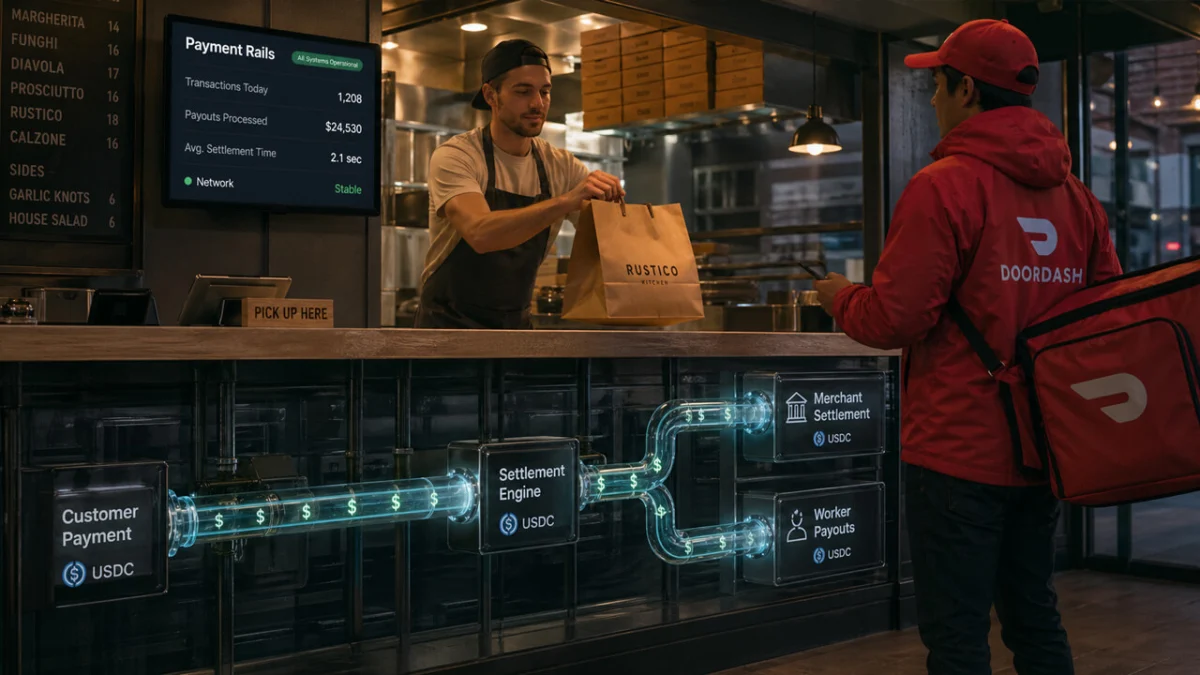
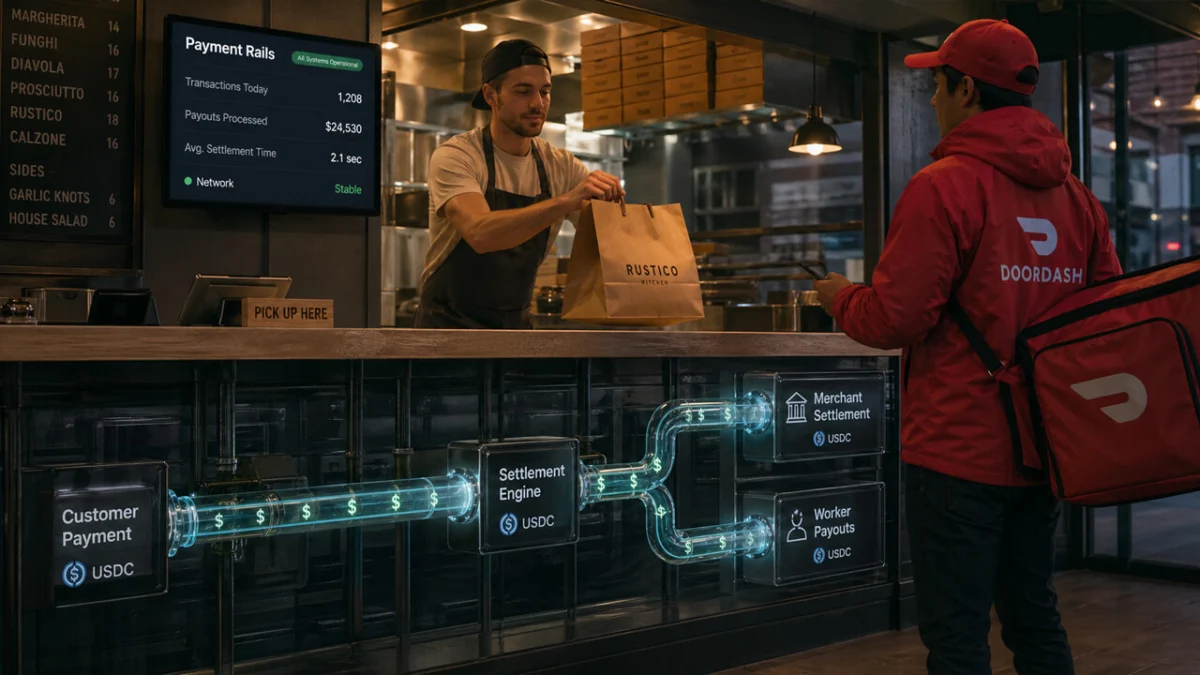
DoorDash, the global food delivery and logistics giant, has officially partnered with the Stripe-backed blockchain network Tempo to integrate stablecoin-powered payouts into its vast digital marketplace. This strategic move aims to leverage decentralized ledger technology to solve the persistent challenges of settlement latency, high transaction fees, and cross-border friction that affect millions of stakeholders across more than 40 countries. By adopting stablecoins as an underlying infrastructure for fund distribution, DoorDash is signaling a major shift in how enterprise-level platforms manage the movement of capital between customers, merchants, and independent contractors, known as Dashers.
The collaboration involves a consortium of high-profile financial and technology entities, including Stripe, Coastal Bank, ARQ, and Paradigm, all of which are working to introduce stablecoin payment rails through the Tempo network. For DoorDash, the integration is not merely a venture into the cryptocurrency space but a pragmatic operational upgrade designed to address the "payout problem"—a systemic bottleneck in the gig economy where earnings often take days to reach the bank accounts of those who earned them.
The Operational Challenge of Global Marketplace Payouts
In its current state, the DoorDash marketplace operates on a complex, multi-directional flow of capital. At any given moment, customers are paying for orders at checkout, merchants are awaiting settlement for goods sold, and Dashers are looking for immediate access to their earnings to cover daily expenses such as fuel and maintenance. Despite the front-end user experience appearing instantaneous, the backend financial plumbing remains tethered to a fragmented global banking system.
Traditional payment rails are frequently hindered by regional banking cutoffs, intermediaries, and jurisdictional delays. For a company like DoorDash, which handles massive transaction volumes across diverse currencies, these delays create a "liquidity gap." Merchants often wait 24 to 72 hours for funds to clear, which can strain working capital for small businesses managing inventory and payroll. Dashers, who often rely on immediate cash flow, are particularly sensitive to these delays. This pressure was highlighted recently when DoorDash introduced emergency gas relief programs in the United States and Canada to mitigate the impact of rising fuel costs on its delivery fleet. Stablecoin payouts offer a technological solution to these pressures by enabling near-instant settlement regardless of banking hours or geographic borders.
The Technical Foundation: Stripe and the Tempo Blockchain
The integration is powered by Tempo, a payments-focused Layer 1 blockchain co-developed by the payments processor Stripe and the venture capital firm Paradigm. Introduced last year, Tempo was specifically engineered to handle the throughput requirements of enterprise-scale commerce. Unlike general-purpose blockchains that may suffer from high gas fees or network congestion, Tempo focuses on sub-second finality and stablecoin-native fee structures.
The network’s partner list reflects its intent to become the "financial plumbing" for the internet-native economy. Alongside DoorDash, the ecosystem includes major players such as Shopify, OpenAI, Revolut, Deutsche Bank, and Visa. The design philosophy behind Tempo suggests a specific thesis: that existing financial infrastructure is too slow for the speed of modern commerce, and existing blockchains are too volatile or complex for mainstream enterprise adoption. By providing a stable, high-speed rail for digital dollars, Tempo allows companies to move money with the same efficiency that they move data.
A Chronology of Stablecoin Adoption in Enterprise Payments
The move by DoorDash is part of a broader timeline of accelerating stablecoin adoption among major fintech and logistics firms. Over the past 24 months, the narrative surrounding digital assets has shifted from speculative trading toward utility-driven infrastructure.
- Early 2023: Stripe begins exploring deep stablecoin integration after a brief hiatus from the crypto space, citing the increased stability and maturity of USDC (USD Coin) and the emergence of high-speed networks.
- Mid-2023: The launch of Tempo is announced, positioning it as a specialized network for institutional and enterprise payment flows.
- Late 2023: Shopify integrates USDC payments via the Base network, proving that large-scale e-commerce can successfully process blockchain-based transactions at checkout.
- Early 2024: Market data reveals that stablecoin transaction volume reached a staggering $28 trillion in the first quarter alone. While a significant portion of this was attributed to automated bot activity, the sheer scale demonstrated the robustness of the technology for moving value.
- Present Day: DoorDash joins the Tempo ecosystem, marking one of the first major instances of a logistics-heavy marketplace using stablecoins specifically for the "payout" side of the ledger rather than just the "payment" side.
Supporting Data: The Scale of the Opportunity
The shift toward stablecoin-based settlement is supported by compelling economic data. According to industry reports, traditional cross-border payments can cost between 1% and 3% in transaction fees, excluding currency conversion spreads. For a company like DoorDash, which operates in over 40 countries, these costs represent significant operational overhead.
Furthermore, the demand for "Instant Pay" services is at an all-time high in the gig economy. Surveys of delivery contractors indicate that over 70% of workers prefer platforms that offer immediate access to earnings. While DoorDash already offers "Fast Pay" options, these are often limited by the constraints of the Visa and Mastercard debit rails or local banking hours. Stablecoins, operating on a 24/7/365 basis, remove these limitations entirely.
On the merchant side, the impact is equally profound. Small-to-medium enterprises (SMEs) often operate on thin margins where a two-day delay in settlement can affect their ability to restock inventory. By shortening the settlement cycle from days to minutes, DoorDash can effectively increase the "velocity of money" within its ecosystem, allowing merchants to reinvest capital faster.
Official Responses and Strategic Perspectives
DoorDash co-founder Andy Fang has emphasized that the primary appeal of this technology is its ability to solve real-world operational problems. According to Fang, the goal is to make payouts faster and more affordable, aligning with the company’s mission to empower local economies. By reducing the friction associated with fragmented banking systems, the company can provide a more reliable experience for the people who power its platform.
Stripe has also been vocal about its stablecoin strategy. In recent technical whitepapers and legal explainers, the company has argued that stablecoins are now "practical" for moving money through parts of a business where settlement speed and foreign exchange friction are most acute. Stripe’s involvement as a backer of Tempo provides the regulatory and compliance framework necessary for a publicly-traded entity like DoorDash to engage with blockchain technology without the risks typically associated with the broader crypto market.
Broader Impact: The "Invisible" Blockchain Revolution
The DoorDash integration highlights a critical trend in the evolution of digital assets: the most successful applications of blockchain may be those that the end-user never actually sees. Unlike the consumer-facing "crypto mania" of previous years, where users were required to manage private keys and navigate complex exchanges, the Tempo-powered payouts function as backend infrastructure.
For a Dasher or a merchant, the experience remains familiar. They see a balance in their account that can be withdrawn or used. The fact that the money moved across a blockchain instead of an ACH (Automated Clearing House) network is irrelevant to the user; what matters is that the money arrived faster and with lower fees. This "invisible" integration is likely the primary path for mainstream adoption of stablecoins.
Implications for the Future of Financial Plumbing
The entry of DoorDash into the stablecoin ecosystem sets a precedent for other global marketplaces. If stablecoins can successfully manage the operational complexity of a platform with millions of users and high-frequency transactions, it proves that the technology is ready for the "boring" but essential work of global finance.
However, challenges remain. DoorDash has not yet released a full technical breakdown of its implementation, and it is expected that the system will initially operate as a hybrid model. In such a model, the blockchain handles the movement of value between treasury accounts and regional hubs, while traditional fiat ramps handle the final "last mile" into a user’s bank account. Over time, as regulatory clarity improves with frameworks like Europe’s MiCA (Markets in Crypto-Assets) and potential US stablecoin legislation, the entire flow may move on-chain.
Ultimately, DoorDash’s move confirms that stablecoins have found their "killer app" in the form of settlement infrastructure for internet-native commerce. While Bitcoin continues to serve as a macro-economic store of value, stablecoins are becoming the transactional layer that carries the world’s working capital. The success of this initiative will be measured not by token prices or market speculation, but by the subtle, steady improvement in the financial lives of merchants and workers who simply need their money to move as fast as their work.