admin
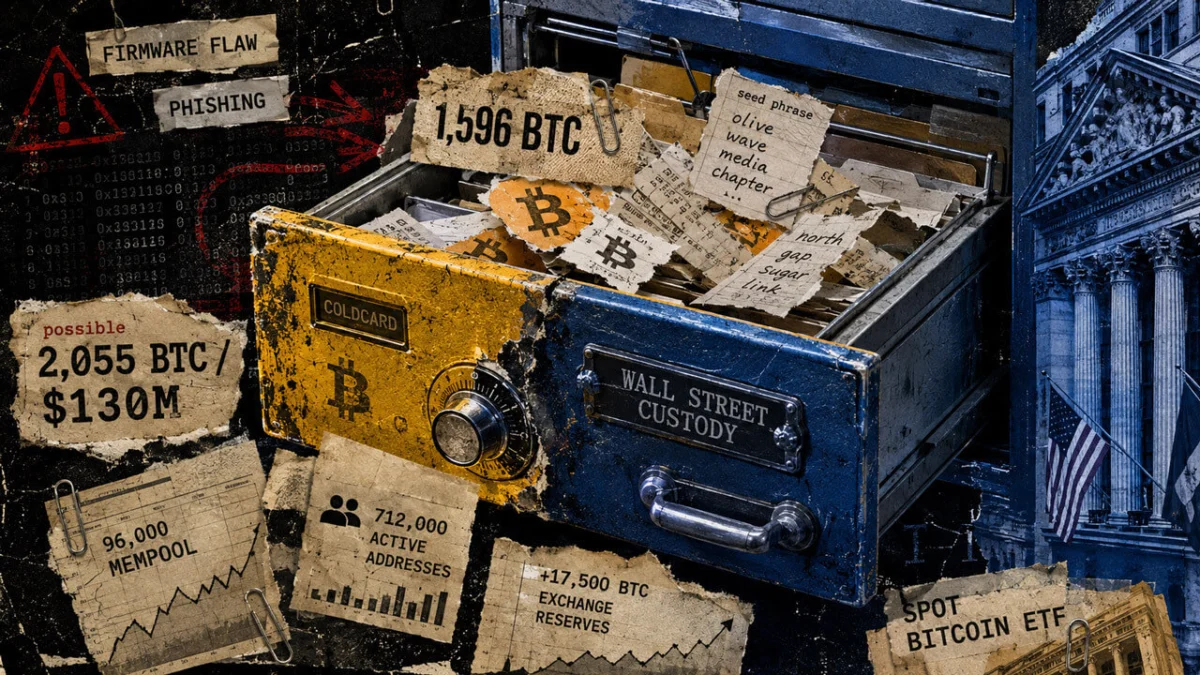
The cryptocurrency community is grappling with the fallout from a significant security breach affecting the Coldcard hardware wallet, a device widely trusted for its robust self-custody capabilities. This exploit has resulted in the confirmed theft of approximately 1,596 Bitcoin (BTC), valued at around $130 million USD, from an estimated 7,300 addresses. The ongoing fallout has spurred a mass migration of funds from potentially compromised wallets, creating significant ripples across the Bitcoin network and reigniting discussions about the fundamental principles of cryptocurrency security and custody.
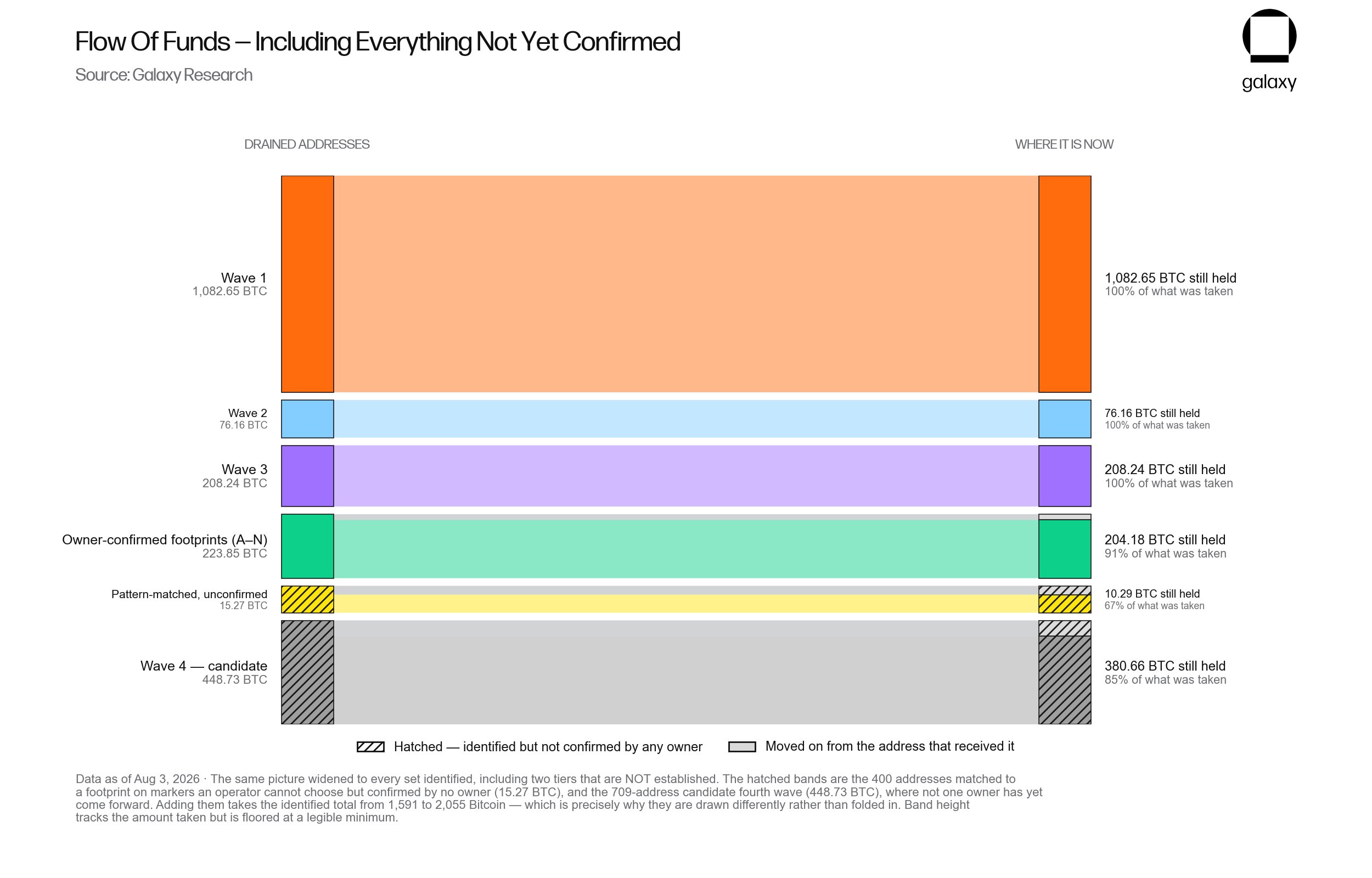
Galaxy Research, a prominent analytics firm, has been at the forefront of tracking the impact of this vulnerability. Their investigation has identified at least three major waves of attacks and 14 smaller incidents that directly led to the confirmed losses. Further analysis by Galaxy suggests a potential fourth wave of attacks, which could escalate the total Bitcoin stolen to 2,055 BTC, pushing the estimated value closer to $130 million. However, these addresses remain unconfirmed pending additional reports from victims. The sheer scale of the losses underscores the critical importance of secure seed generation and the potential ramifications when even specialized hardware wallets falter.
The Anatomy of the Exploit: A Flaw in Seed Generation
The root cause of this widespread theft lies in a coding error within the Coldcard firmware, believed to have been introduced in March 2021. This flaw subtly altered the way certain devices generated recovery seeds. Instead of relying exclusively on the hardware’s dedicated random-number generator for sufficient entropy, the faulty process introduced a weaker software-based method. This deviation meant that some generated seeds had a significantly reduced number of possible combinations, making them more susceptible to brute-force attacks.
Attackers, leveraging this weakness, were reportedly able to reconstruct the private keys associated with these vulnerable wallets remotely. Crucially, this bypass did not require physical access to the Coldcard device or knowledge of the user’s recovery words – the very safeguards that hardware wallets are designed to protect. While Coinkite, the manufacturer of Coldcard, has since released a security update to prevent the generation of new vulnerable seeds, this patch offers no protection to wallets whose recovery phrases were already compromised by the flaw. This distinction is vital: existing vulnerabilities remain active until the funds are moved to a wallet secured by a newly generated, strong recovery seed.

A Flood of Victims and the Race to Secure Assets
The gravity of the situation has prompted at least 73 victims to reach out to Alex Thorn, Galaxy Research’s head of research, seeking assistance in tracing their stolen Bitcoin. These victim reports have been instrumental in helping researchers pinpoint additional attack vectors and identify an estimated 15 attackers who are actively exploiting the vulnerability.
A significant portion of the stolen Bitcoin, approximately 90%, remains unmoved in attacker-controlled addresses. This suggests a degree of caution on the part of the perpetrators, possibly waiting for the initial outcry to subside or for an opportune moment to liquidate their ill-gotten gains. The Bitcoin associated with the initial three confirmed attack waves has not yet been moved. Galaxy Research has proactively shared the identified addresses of these stolen funds with U.S. law enforcement agencies, cryptocurrency exchanges, and blockchain investigation firms. This collaboration aims to flag any attempts by the attackers to transfer the funds through centralized platforms, thereby increasing the chances of recovery or seizure.
Bitcoin Network Activity Surges Amidst Migration Frenude
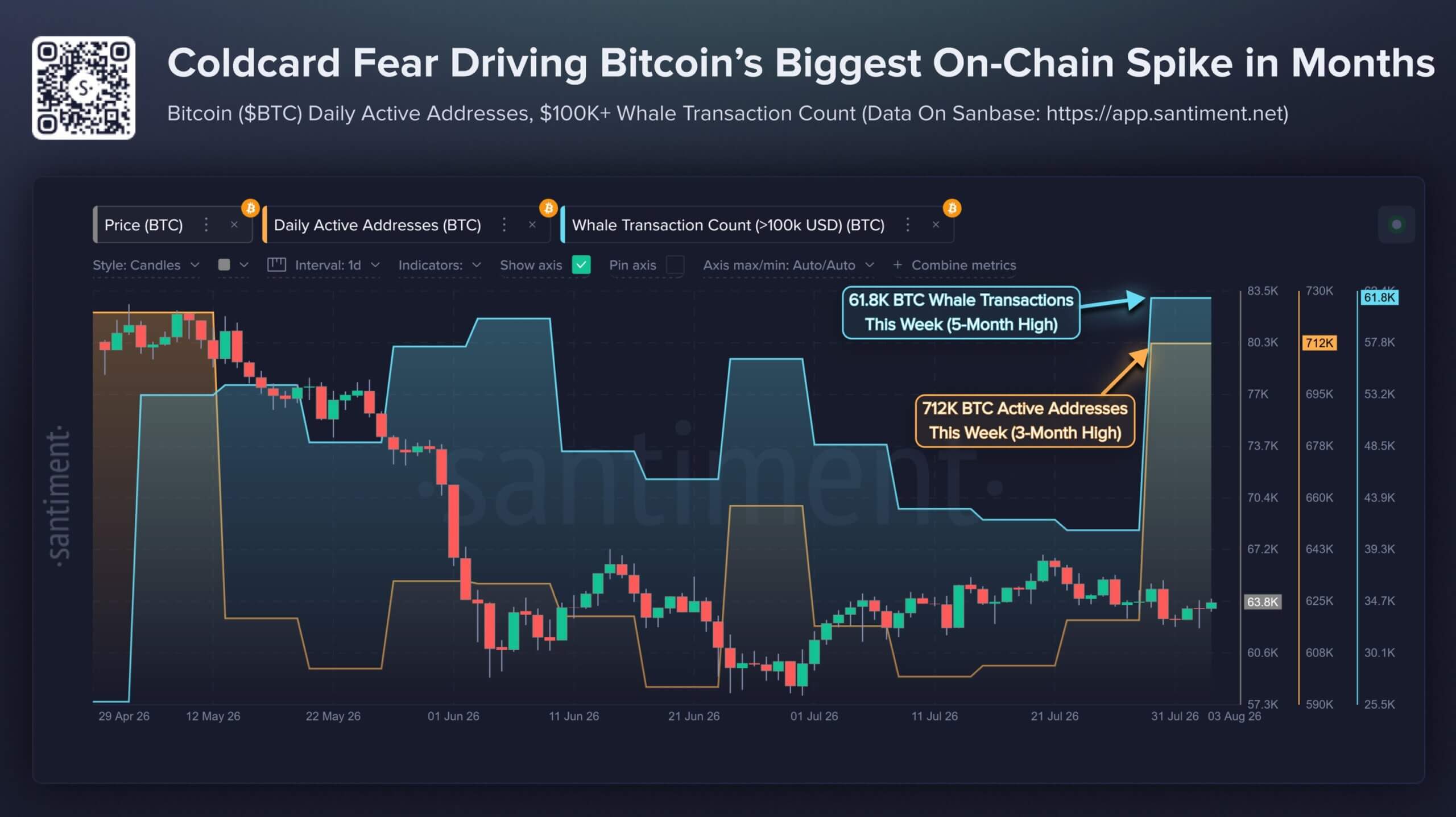
The urgent need for Coldcard users to migrate their funds has had a tangible impact on the broader Bitcoin network. On-chain data reveals a dramatic surge in network activity, reaching levels not seen in months, comparable to periods of significant market stress.
According to Santiment, a cryptocurrency analytics platform, the past seven days have seen an average of 712,000 active Bitcoin addresses, marking a three-month high. Furthermore, transactions exceeding $100,000 in value have surged to 61,800 within the same period, an indicator of substantial value being moved. This heightened activity is directly attributable to the mass exodus from potentially vulnerable Coldcard wallets.
CryptoQuant, another leading on-chain analytics firm, has identified the Coldcard crisis as the primary driver behind this network activity spike. Affected users are actively moving their Bitcoin to newly generated, secure wallets, consolidating balances, or, in some cases, transferring funds to custodial platforms. CryptoQuant’s analysis, shared with CryptoSlate, indicates that transactions valued below $100,000 have reached $3.2 billion, a figure not observed since November 2024.
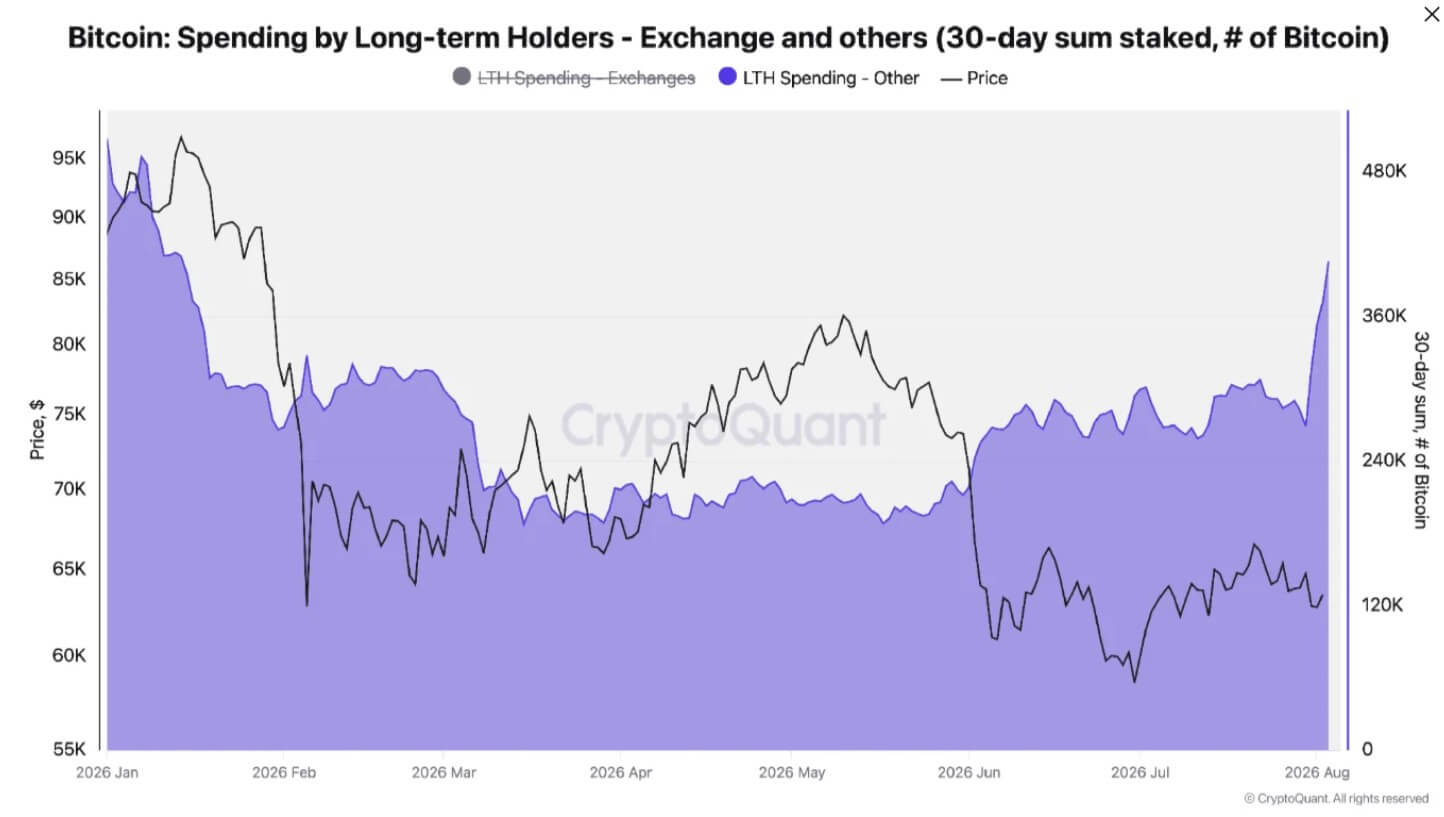
The behavior of long-term holders (LTHs) has also shifted significantly. CryptoQuant reported that LTHs spending Bitcoin outside of exchanges rose to 406,000 BTC on a 30-day basis as of August 3rd. This represents a substantial increase from 269,000 BTC prior to the exploit and is the highest level recorded since January. It is important to note that these movements do not necessarily signify a sell-off. A transfer from a compromised Coldcard address to a newly secured wallet will register as a "spent" Bitcoin transaction on the blockchain, even if the ultimate ownership remains with the original user.
The sheer volume of these migrations has also led to network congestion. The number of transactions awaiting confirmation in Bitcoin’s mempool jumped from approximately 33,000 to around 96,000, the highest level since June 20th, as countless users simultaneously attempted to move their assets.
Exchange Inflows and the Shadow of Phishing Scams
As users scramble to secure their Bitcoin, a portion of these migrated funds has found its way onto centralized cryptocurrency exchanges. CryptoQuant data indicates that deposits from smaller holders have reached their highest point since February 6th. This suggests that some users are opting for immediate, albeit less secure, custody solutions while they strategize their next steps, potentially considering whether to establish another self-custody wallet or switch hardware providers.
Between July 28th and August 3rd, total exchange reserves saw an increase of roughly 17,500 BTC, growing from approximately 2.702 million BTC to 2.719 million BTC. Binance emerged as a significant recipient, absorbing about 51% of this net increase, with its reserves rising by approximately 9,000 BTC to 659,000 BTC. While these inflows may contribute to short-term sell-side pressure, they do not definitively indicate an intention to sell. As previously mentioned, these could be temporary arrangements for users securing their assets.
However, this period of heightened vulnerability has also created fertile ground for malicious actors. Scammers are actively exploiting the situation by distributing fraudulent migration instructions and impersonating wallet support teams. This is particularly concerning for users attempting to move their Bitcoin into new self-custody wallets.
Trezor, a direct competitor to Coldcard, has issued a stark warning about the surge in phishing attempts following the disclosure of the Coldcard flaw. The company has reiterated its long-standing advice: never share recovery seeds or enter them into websites, applications, or forms received through unsolicited messages. Recovery words should only be entered directly on a Trezor device during a legitimate wallet restoration process. Users are urged to disregard any migration instructions received via email, direct messages, or phone calls, and Trezor has confirmed that its devices are unaffected by the Coldcard incident.
The challenge facing affected Coldcard users is multifaceted: they must act swiftly to move their Bitcoin before their private keys can be reconstructed, all while navigating a landscape rife with scammers eager to exploit their urgency. Importing an existing weak seed into a different hardware wallet does not resolve the underlying vulnerability; a completely new recovery phrase must be generated, and funds transferred. This process is inherently more complex than a simple firmware update or a standard wallet restoration, and it is precisely this complexity that scammers aim to leverage. They may direct users to fake applications, request recovery words under the guise of security checks, or provide seemingly safe, but fraudulent, transfer addresses.
The ETF Gambit: A Resurgence in the Custody Debate
The increasing movement of Bitcoin towards centralized exchanges and the heightened risks associated with self-custody migrations have inadvertently bolstered the argument for holding Bitcoin through regulated investment products, such as spot Bitcoin Exchange-Traded Funds (ETFs).
Eric Balchunas, a senior ETF analyst at Bloomberg Intelligence, has suggested that the Coldcard breach could prompt some investors, including seasoned long-term holders, to consider migrating their holdings to spot Bitcoin ETFs. Historically, Bitcoin proponents have been critical of ETFs, arguing that investors forfeit direct control over their coins and private keys. In an ETF structure, institutional custodians hold the underlying assets on behalf of the fund.
However, Balchunas posits that this arrangement might now appear more appealing when juxtaposed with the perceived risks associated with relying on a smaller hardware wallet manufacturer. He highlights that ETF issuers and their custodians are typically large financial institutions with extensive experience in safeguarding client assets, contrasting this with Coldcard’s operation by a smaller Canadian company with a limited workforce.
While institutional custody does not eliminate the possibility of theft or operational failure, Balchunas suggests that a successful attack on an ETF custodian would likely trigger immediate regulatory scrutiny and a coordinated response involving the fund manager, custodian, and law enforcement.
It is crucial to note that there is no current evidence directly linking the Coldcard exploit to an increase in investors purchasing ETF shares. Similarly, the rise in exchange deposits may prove to be a temporary phenomenon as users establish new, secure wallets and return to self-custody. Nevertheless, the breach has undeniably altered the risk-reward calculation for investors deciding on the safest way to hold their Bitcoin. Self-custody offers independence from intermediaries but places the full burden of security on the user. For those currently attempting to escape vulnerable seeds while simultaneously fending off sophisticated phishing attacks, the seemingly compromised convenience of institutional custody, once a point of contention, might now present a more straightforward, albeit less ideologically pure, path.