Dwi Wanna
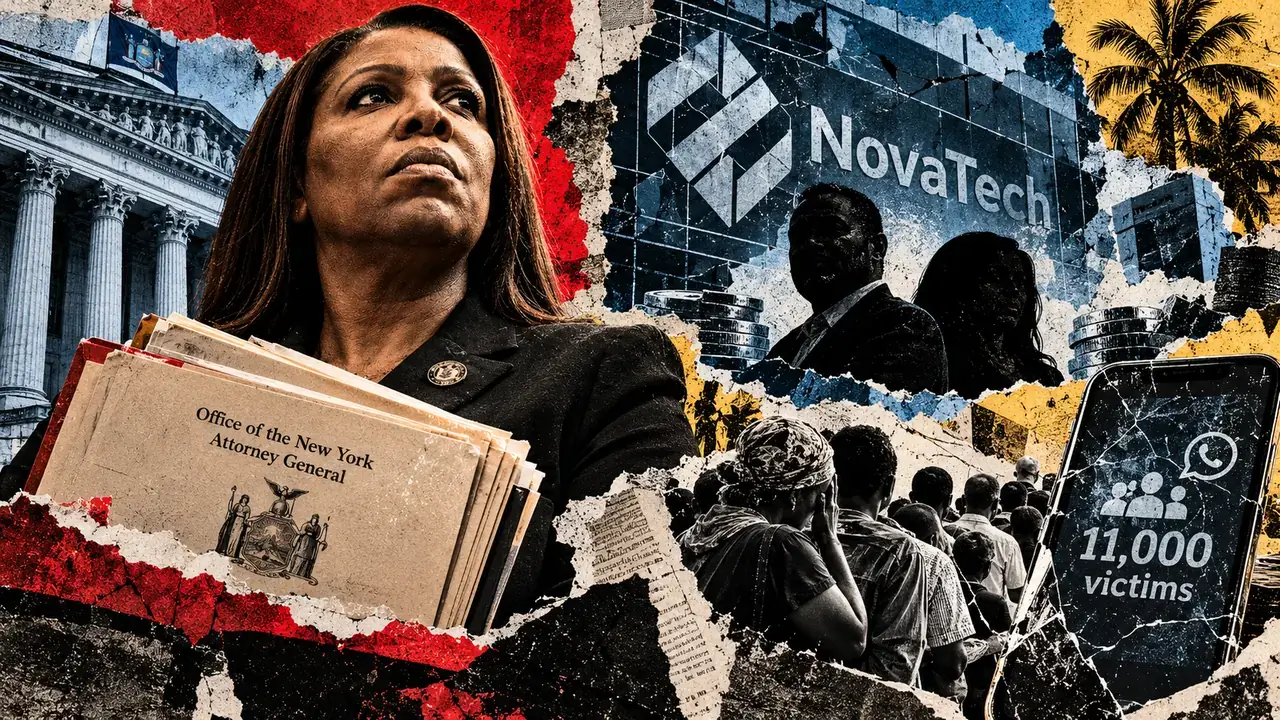
The Office of the New York Attorney General, led by Letitia James, has intensified its legal pursuit of the cryptocurrency investment firm NovaTech Ltd. and its founders, Cynthia and Eddy Petion. In a significant escalation of a long-running enforcement action, the state filed a motion on October 22, 2026, requesting a court order for the defendants to pay a staggering $1,367,023,585. This figure represents a combination of investor damages, disgorgement of ill-gotten gains, and accrued interest following a landmark 2025 default ruling on liability. While the motion marks a critical step toward securing justice for more than 11,000 New Yorkers allegedly defrauded by the scheme, the road to actual financial restitution remains fraught with administrative hurdles and extended payment schedules that stretch toward the end of the decade.
The filing serves as the quantitative follow-up to an August 4, 2025, default order issued by the New York State Supreme Court. That order found NovaTech, the Petions, and their associated entities liable for operating a massive fraudulent enterprise. Because the defendants failed to adequately contest the allegations or provide the court-ordered accounting of their finances, the court moved forward with a default judgment, leaving the specific dollar amounts for damages to be determined through subsequent written submissions. The current request for over $1.3 billion is the Attorney General’s definitive calculation of the scale of the financial devastation wrought by the firm.
The Mechanics of the NovaTech Allegations
The case against NovaTech is rooted in allegations of a sophisticated Ponzi and pyramid scheme that masqueraded as a high-tech cryptocurrency trading platform. According to the Attorney General’s investigation, NovaTech promised investors that their funds would be managed by experienced traders using proprietary algorithms to generate consistent weekly returns. In reality, the state argues that the vast majority of investor capital was never deployed into the markets.
The October 22 filing provides a stark breakdown of the company’s financial flows. Investigators identified approximately $1.161 billion in cryptocurrency deposits from investors. Of that massive sum, only about $26 million—less than 3% of the total—was ever transferred to legitimate trading platforms. The state contends that the remaining funds were used to pay "returns" to earlier investors, fund lavish lifestyles for the founders, and pay commissions to a multi-level marketing (MLM) network of promoters who recruited new victims.
By utilizing a classic Ponzi structure, NovaTech was able to maintain the illusion of profitability for years. However, when the flow of new capital slowed, the system inevitably collapsed, leaving thousands of investors unable to withdraw their principal balances. The state’s current demand of $1,134,549,691 in principal plus $232,473,894 in interest reflects the total identified loss to the investor pool, minus the small fraction that was actually used for trading purposes.
A History of Deception: From AWS Mining to NovaTech
The legal troubles for Cynthia and Eddy Petion did not begin with NovaTech. The Attorney General’s office has linked the couple to a predecessor scheme known as AWS Mining. Much like NovaTech, AWS Mining promised investors lucrative returns through cryptocurrency mining operations. When AWS Mining began to collapse under regulatory scrutiny and financial instability in 2019, the Petions allegedly pivoted to launch NovaTech, essentially migrating their existing network of investors and promoters into a new fraudulent vehicle.
This transition allowed the scheme to persist far longer than a typical crypto scam. By leveraging the trust built during the AWS Mining era, the Petions were able to expand NovaTech globally. At its peak, the platform claimed to have hundreds of thousands of members worldwide. The New York lawsuit, however, focuses specifically on the harm done within the state’s borders, where the impact was felt most acutely in tight-knit immigrant and religious circles.
Targeting Vulnerable Communities through Affinity Fraud
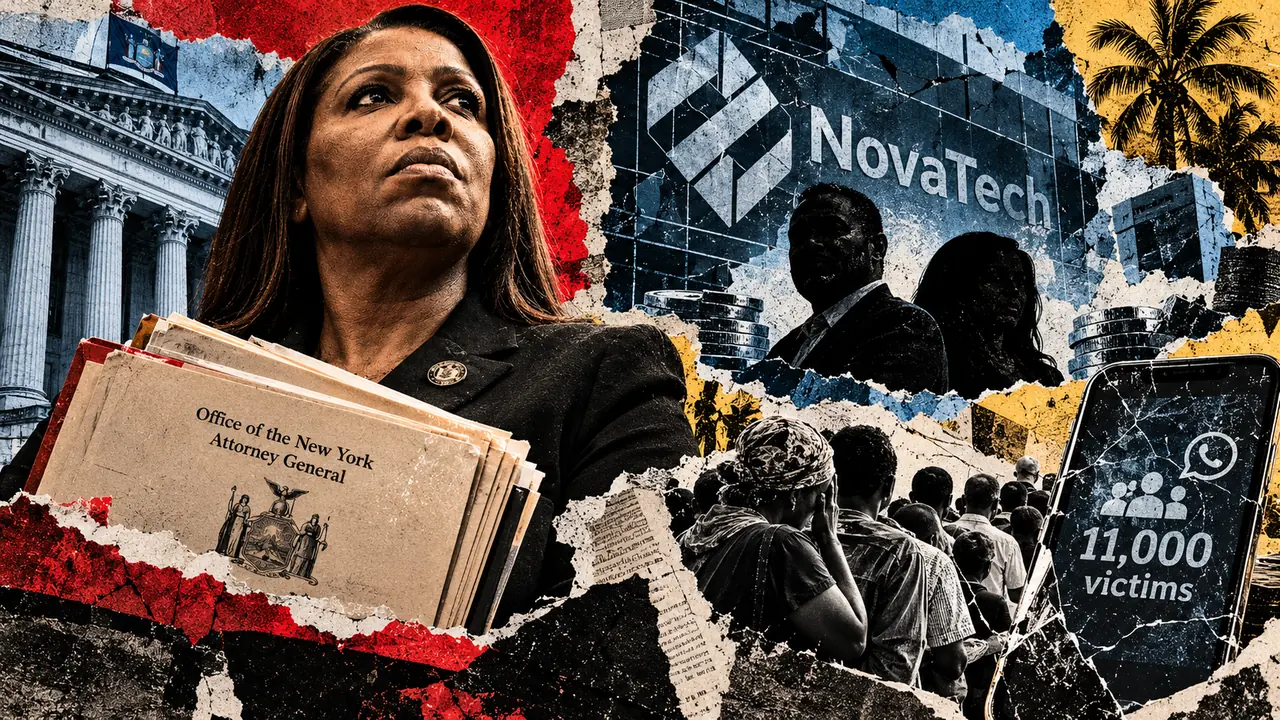
One of the most distressing aspects of the NovaTech case, as highlighted by Attorney General Letitia James, is the targeted nature of the recruitment. The scheme is a textbook example of "affinity fraud," where scammers exploit a shared identity—such as religion, ethnicity, or professional background—to build trust and bypass the skepticism of potential victims.
The Petions and their promoters specifically targeted the Haitian-American community in New York. Using WhatsApp groups, social media platforms, and even prayer circles, they framed the investment opportunity as a means of achieving financial "liberation" and community wealth-building. Promoters often used religious rhetoric, suggesting that the platform was a "blessing" or a "God-given" opportunity for prosperity.
This strategy was devastatingly effective. More than 11,000 New Yorkers, many of whom were first-generation immigrants or members of the Haitian diaspora, invested their life savings, retirement funds, and even money borrowed from family members. The Attorney General’s office noted that the use of WhatsApp was particularly insidious, as it allowed the fraud to spread rapidly through private, trusted networks that are often beyond the reach of traditional financial oversight.
Promoter Settlements and the 2029 Timeline
While the Petions themselves have largely remained elusive—failing to appear in court and ignoring previous orders—the state has successfully reached settlements with several high-level promoters who were instrumental in the scheme’s growth. These individuals, including Frantz Ciceron, James Corbett, Ricardo Roy Sr., and Martin Zizi, have collectively been hit with nearly $6 million in obligations.
However, the terms of these settlements highlight the agonizingly slow pace of recovery for the victims. For example, the agreement with Frantz Ciceron, finalized in mid-2026, involves a total obligation of $2 million. This includes $1.35 million in cash relief, but the payment schedule is staggered over several years. Following an initial $850,000 payment, Ciceron is required to pay four installments of $125,000 each December 31, from 2026 through 2029.
Furthermore, Ciceron’s settlement includes the transfer of rights to future distributions from the EminiFX receivership, another major crypto fraud case. This "layering" of recoveries across different fraud cases illustrates the complexity of modern financial litigation. For the 11,000 victims, these settlements provide a path to some recovery, but the multi-year payment windows mean that many will not see their full share of the settlement funds for several more years.
Obstacles to Restitution: The Data Gap
Even with a court order for $1.3 billion, the physical collection and distribution of these funds remain monumental challenges. The Attorney General’s filing admits that a significant hurdle exists in identifying which individual investors are owed specific amounts.
Because NovaTech operated primarily in the cryptocurrency space and failed to maintain proper "Know Your Customer" (KYC) records, many of the deposit usernames and wallet addresses cannot be reliably linked to specific individuals. The defendants have persistently refused to provide a court-ordered accounting of their books, leaving state investigators to reconstruct the financial history of the firm through blockchain analysis and bank records.

The filing notes that while the state can see the movement of funds out of wallets, those withdrawals rarely identify the recipients by name. Without a comprehensive database of users, the state must rely on victims coming forward and providing proof of their transactions—a process that is time-consuming and often difficult for investors who may have lost their digital credentials or who are hesitant to interact with government authorities.
Broader Implications for New York’s Crypto Oversight
The NovaTech case is a cornerstone of Attorney General Letitia James’s broader initiative to bring the "Wild West" of the cryptocurrency industry under the rule of law. Under the Martin Act—New York’s powerful and flexible securities fraud statute—the AG’s office has become one of the most aggressive regulators of digital assets in the United States.
This $1.3 billion demand follows other high-profile actions against major industry players like Gemini, Genesis, and the now-defunct Celsius Network. The state’s strategy is clear: by pursuing massive disgorgement orders and multi-million dollar penalties, New York aims to make the cost of non-compliance prohibitively high for crypto firms.
Industry analysts suggest that the NovaTech ruling will serve as a warning to other MLM-style crypto platforms. The state’s refusal to credit NovaTech for "returns" paid to investors—arguing that those were simply recycled deposits—sets a firm precedent. It establishes that in a Ponzi scheme, every dollar moved through the system is part of the fraud, and the operators are liable for the total volume of funds taken, regardless of how they were redistributed.
Conclusion and Next Steps
The motion filed on October 22 represents a symbolic and legal victory for the victims of NovaTech, but it is far from the end of the story. The court must now formally approve the $1.3 billion figure. Once approved, the state will face the arduous task of locating and seizing assets belonging to the Petions and NovaTech Ltd., many of which are believed to be held in offshore accounts or obfuscated through various cryptocurrency mixers.
For the 11,000 New Yorkers affected, the announcement provides a mixture of hope and frustration. While the state’s aggressive pursuit of the $1.3 billion demonstrates a commitment to holding the Petions accountable, the realization that promoter payments will continue through 2029 serves as a sobering reminder of the long-term consequences of financial fraud.
As the legal process continues, the Attorney General’s office continues to encourage affected investors to submit claims and documentation. For now, the $1.3 billion remains a "demand" on paper—a massive debt owed to the people of New York that the state is determined to collect, one installment at a time.