admin
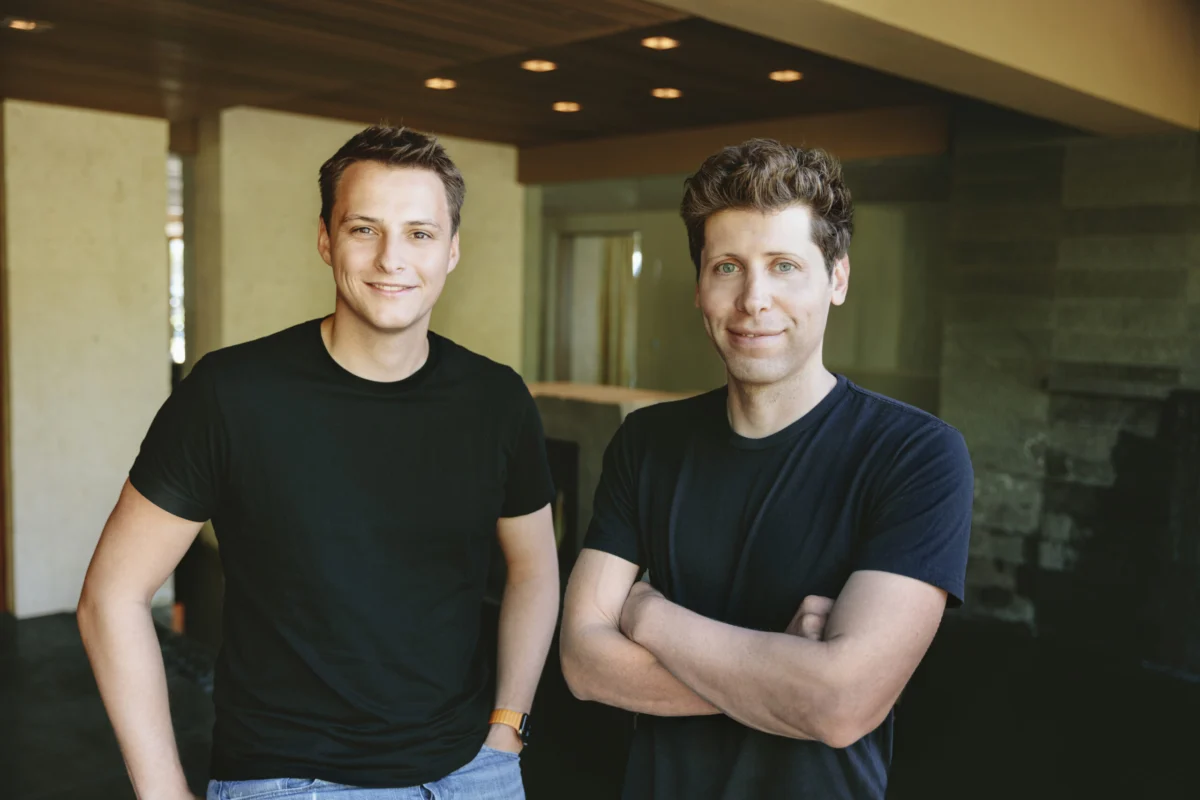
World, the digital identity and verification project co-founded by OpenAI Chief Executive Officer Sam Altman, has successfully secured $52.5 million in new funding through a strategic sale of its native cryptocurrency token, WLD. This capital injection, facilitated by the sale of tokens to a group of high-profile institutional investors, marks a significant milestone for the project as it seeks to scale its "proof of human" infrastructure in an era increasingly dominated by artificial intelligence. The investment was structured with a 12-month lockup period, a mechanism designed to ensure that participating investors remain committed to the long-term trajectory of the network rather than engaging in short-term market speculation.
The primary recipient of the funds is the World Foundation, an exempted limited guarantee foundation based in the Cayman Islands. This entity serves as the non-profit steward for the World network, overseeing the distribution of resources and the technical evolution of the protocol. According to an official statement released by the company, the participation of major venture capital firms underscores a growing institutional belief in the necessity of decentralized identity solutions as AI-generated content and automated agents become indistinguishable from human activity online.
Strategic Investment and the 12-Month Lockup Mechanism
The recent funding round was led by Pantera Capital, a prominent venture capital firm specializing in digital assets and blockchain technology. Pantera’s involvement is seen as a major endorsement of World’s technical roadmap. Joining Pantera in the strategic token sale were several other notable investment firms, including Eightco Holdings, Bain Capital Crypto, Susquehanna Crypto, and Selini Capital.
The implementation of a 12-month lockup period is a critical component of this deal. In the volatile landscape of digital assets, lockup periods are utilized to prevent large-scale "dumping" of tokens, which can destabilize the market price. By agreeing to these terms, the investors have effectively signaled their confidence in the project’s utility over the coming year. A spokesperson for World noted that this commitment reflects a shared vision of building a global identity and financial network that remains robust against the challenges posed by the rapid advancement of generative AI.
This capital raise follows a history of significant backing for the project’s operator, Tools for Humanity (TFH). Based in San Francisco, TFH is led by CEO and co-founder Alex Blania, alongside Sam Altman. Prior to this token sale, the project had raised over $250 million in traditional venture capital from investors including Andreessen Horowitz (a16z), Khosla Ventures, and Tiger Global.
The Core Mission: Solving the Proof of Personhood Problem
At the heart of World’s business model is the concept of "proof of personhood." As large language models and deepfake technologies evolve, the internet is facing an existential crisis regarding authenticity. Automated bots are increasingly capable of mimicking human behavior, leading to concerns over sybil attacks—where a single entity creates multiple fake identities to manipulate social media, influence elections, or exploit financial systems.
World’s solution is the World ID, a digital passport that allows users to prove they are a unique human being without revealing their personal identity. This is achieved through the use of the "Orb," a specialized hardware device designed by Tools for Humanity. The Orb is a metallic, spherical biometric scanner that captures high-resolution images of a user’s iris.
The technical process involves converting the intricate patterns of the iris into a cryptographic hash—a unique string of numbers that cannot be reversed to recreate the original image. This "IrisCode" is then compared against a global database to ensure the user has not already registered. Once verified, the user is issued a World ID, which can be used to sign into various applications and services. The company maintains that the actual biometric images are deleted by default after the hash is generated, a measure intended to address privacy concerns.
A Chronology of Evolution: From Worldcoin to World
The project has undergone a significant transformation since its inception in 2019. Originally launched under the name "Worldcoin," the project was initially viewed through the lens of a "universal basic income" (UBI) experiment. The premise was simple: distribute a global cryptocurrency to every human on Earth, verified by iris scans, to provide a financial cushion in a future where AI might displace human labor.
However, the "Worldcoin" branding faced substantial headwinds. The project became a lightning rod for criticism regarding data privacy and the ethics of collecting biometric data in developing nations. In response to these challenges and a broader "crypto winter" that soured public sentiment toward blockchain-based startups, the project rebranded to "World" in early 2024. This rebranding was accompanied by a shift in narrative, moving away from a purely financial focus toward a broader "human-centric" internet infrastructure.
In April 2024, the project reached a major milestone with the launch of "World Chain," a dedicated Layer 2 blockchain designed to prioritize transactions from verified humans over those from automated bots. This technical shift was intended to solve the problem of network congestion and high fees often caused by algorithmic trading bots on other blockchains. Shortly after the launch of World Chain, the company announced high-profile integrations with digital platforms such as Tinder, Zoom, and DocuSign, allowing these services to potentially offer "human-only" tiers or verification badges.
Financial Sustainability and Operational Challenges
Despite the successful $52.5 million raise, World faces significant operational hurdles. Scaling a hardware-dependent network is notoriously difficult and capital-intensive. The Orbs must be manufactured, shipped, and maintained at physical locations—ranging from specialized World offices to partner retail stores—across the globe.
The project’s expansion has not been without friction. In June 2024, Tools for Humanity conducted a round of layoffs, affecting a portion of its workforce. While the company did not disclose the exact number of departures, the move was widely interpreted as a consolidation effort to extend its financial runway and focus on core engineering goals.
Furthermore, the WLD token itself has experienced extreme volatility. Since its public launch, the token’s price has been subject to the fluctuations of the broader crypto market as well as specific news cycles surrounding Sam Altman’s other ventures, most notably OpenAI. Critics have pointed out that the concentration of token ownership among early investors and the TFH team could lead to market manipulation, a concern the 12-month lockup for the new investors seeks to partially mitigate.
Regulatory Scrutiny and Global Privacy Concerns
World’s reliance on biometric data has placed it under the microscope of data protection authorities worldwide. The project has faced temporary suspensions and investigations in several jurisdictions, including Kenya, Spain, Hong Kong, and Germany.
In Kenya, the government initially suspended Worldcoin operations over concerns regarding the legality of data harvesting and the lack of clear transparency in how the data was being used. While the project has worked to regain regulatory approval in various regions by emphasizing its privacy-preserving "zero-knowledge proofs," the legal landscape remains a patchwork of conflicting standards.
The European Union’s General Data Protection Regulation (GDPR) presents a particularly high bar. Regulators in Bavaria, where Tools for Humanity has a significant presence, have been leading an inquiry into whether the project’s "consent" model meets the strict requirements for processing sensitive biometric information. World’s leadership maintains that their system is "privacy by design," but the burden of proof remains on the company to satisfy skeptical government agencies.
Analysis: The Intersection of AI and Decentralized Identity
The timing of this investment is noteworthy as the debate over "AI safety" reaches a fever pitch. Sam Altman’s dual role as the head of OpenAI and a co-founder of World creates a unique dynamic. As OpenAI pushes the boundaries of what artificial intelligence can achieve—making it harder to distinguish between human and machine—World provides the "antidote" or the verification layer.
From a strategic perspective, World is positioning itself as the "trust layer" for the internet. If successful, World ID could become as ubiquitous as "Sign in with Google" or "Sign in with Apple," but with the added assurance of physical personhood. This has implications far beyond simple account security. It could revolutionize:
- Digital Governance: Enabling "one-person-one-vote" systems in decentralized autonomous organizations (DAOs) or even municipal voting.
- Wealth Distribution: Facilitating the fair distribution of grants, aid, or UBI without the risk of fraud.
- Content Moderation: Reducing the impact of bot farms on social media platforms, thereby curbing the spread of automated disinformation.
However, the central paradox remains: to protect humanity from the risks of AI, World requires humans to hand over their most sensitive biological data to a private entity. The success of the project will ultimately depend not on the amount of capital raised, but on the company’s ability to build a bridge of trust with a public that is increasingly wary of both Big Tech and the crypto industry.
Future Outlook and the Road to Mass Adoption
With $52.5 million in fresh capital, the World Foundation is expected to accelerate the deployment of "Orb 2.0," a more efficient and cost-effective version of the iris-scanning hardware. The goal is to make the verification process more accessible, potentially moving toward a model where third-party manufacturers can produce verified hardware, further decentralizing the network.
The project currently claims millions of verified users, with a high concentration in regions like Latin America, Southeast Asia, and parts of Europe. However, reaching "planet-scale" adoption requires overcoming the "creep factor" associated with eye-scanning. The recent partnerships with mainstream apps like Zoom and Tinder are a step toward normalizing the technology, framing it as a premium security feature rather than a dystopian requirement.
As the 12-month lockup period for Pantera and other investors begins, the tech industry will be watching closely to see if World can translate its significant financial backing into a sustainable and ethically sound global standard. In the race between AI’s ability to simulate humanity and the technology designed to verify it, World has just secured a vital lifeline to continue the contest.