admin

The proposed OKXICE platform, a pioneering joint venture between leading cryptocurrency exchange OKX and the Intercontinental Exchange (ICE), parent company of the New York Stock Exchange, is encountering substantial corporate resistance as six additional companies have reportedly filed objections to the tokenization of their stocks. This latest wave of opposition brings the total number of objecting corporations to twenty-two, casting a notable shadow over the ambitious initiative to introduce blockchain-based representations of traditional U.S. equities into the mainstream financial market.
Mounting Corporate Opposition to Tokenized Equities
According to a recent Reuters report, the roster of companies actively opposing the inclusion of their shares on the OKXICE platform has expanded significantly. Among the most recent prominent entities to register their objections are financial services giant Wells Fargo, semiconductor design firm Arm Holdings, and financial software innovator Intuit. These companies join a growing list that already includes technology behemoths Microsoft and Alphabet, Google’s parent company, which had filed their objections in the preceding week.
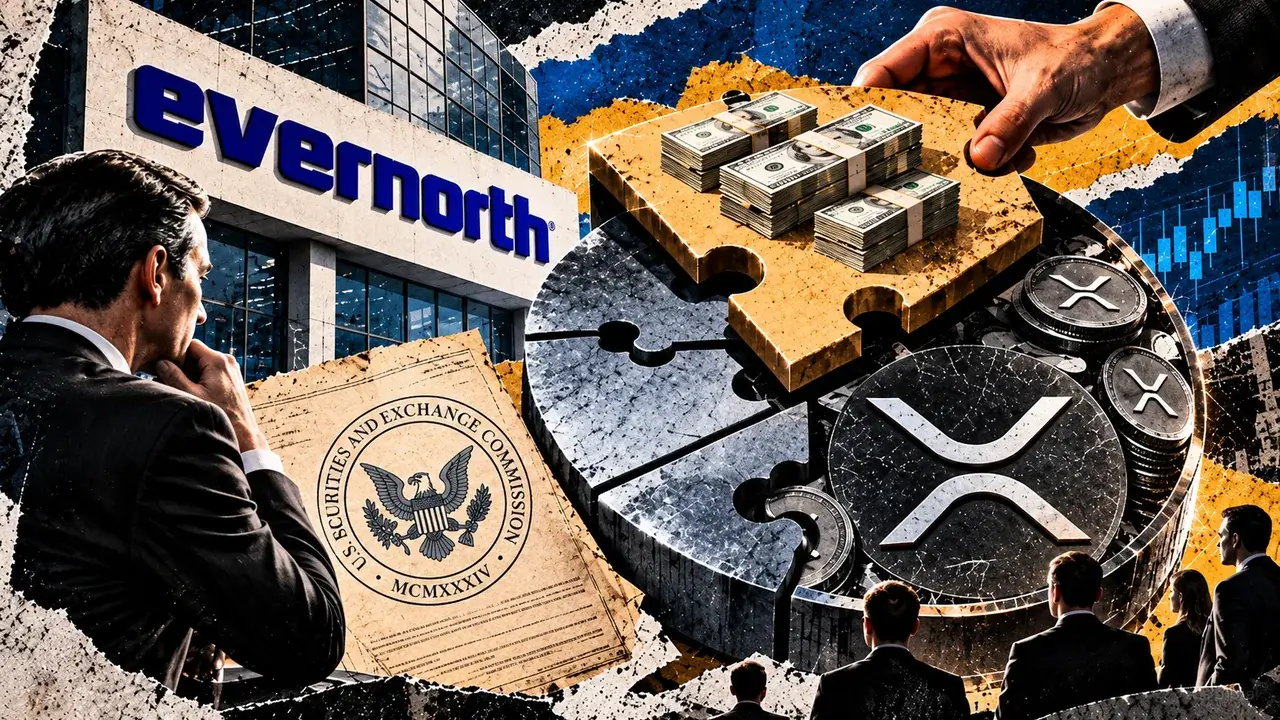
The objections stem from OKXICE’s filing with the U.S. Securities and Exchange Commission (SEC) earlier this month, where it initially proposed to list tokenized stocks for sixty-two prominent U.S. corporations. The current tally of twenty-two objectors represents over a third of the initially targeted companies, signaling a significant hurdle for the platform’s launch. A notable breakdown of the opposition reveals that sixteen of the objecting companies are primarily listed on the Nasdaq exchange, while six are listed on the New York Stock Exchange, indicating a broad-based industry concern rather than an issue confined to a single exchange’s constituents. The cumulative market capitalization of these objecting companies runs into the trillions of dollars, underscoring the gravity and widespread nature of the resistance.
The Vision of OKXICE: Bridging TradFi and Digital Assets
The OKXICE venture represents a bold attempt to bridge the traditional financial (TradFi) world with the burgeoning digital asset ecosystem. OKX, as one of the largest global cryptocurrency exchanges by trading volume, has been actively seeking avenues to expand its reach beyond native cryptocurrencies. Its partnership with ICE is particularly significant. ICE is a foundational pillar of global financial markets, operating not only the NYSE but also a vast network of exchanges, clearing houses, and data services worldwide. Its prior foray into the digital asset space with Bakkt, a regulated platform for Bitcoin futures and custody, demonstrated its interest in the sector, albeit with mixed results.
The premise of OKXICE is to create a regulated platform for the trading of tokenized U.S. stocks. This innovation aims to leverage blockchain technology to offer enhanced efficiencies, greater transparency, and potentially new investment opportunities. For ICE, the venture could represent a strategic move to future-proof its business model against the inevitable digitization of assets, while for OKX, it offers a pathway to legitimacy and broader institutional adoption within a strictly regulated environment. The vision is to provide a parallel market where shares of publicly traded companies can be represented as digital tokens on a blockchain, potentially unlocking new functionalities like fractional ownership, 24/7 trading, and faster settlement times.
Understanding Stock Tokenization: Promises and Perils
Stock tokenization involves issuing digital tokens on a blockchain that represent ownership of traditional shares. These tokens can be designed to mirror the economic rights of the underlying stock, including dividends and voting rights. The theoretical benefits are compelling:
- Fractional Ownership: Tokenization allows investors to own a fraction of a high-value share, democratizing access to expensive stocks and enabling more diversified portfolios for smaller investors.
- 24/7 Trading: Unlike traditional markets with fixed trading hours, blockchain-based platforms can operate continuously, offering greater flexibility and liquidity across different time zones.
- Faster Settlement: Traditional stock trades typically settle in two business days (T+2), while blockchain transactions can settle almost instantaneously (T+0 or T+1), significantly reducing counterparty risk and freeing up capital.
- Reduced Costs: Automation through smart contracts and the elimination of intermediaries could lead to lower transaction fees and operational costs.
- Enhanced Transparency: Blockchain’s immutable ledger provides a transparent record of all transactions, potentially reducing fraud and improving auditability.
However, the path to widespread adoption is fraught with challenges and perceived perils, many of which likely contribute to the current corporate resistance:
- Regulatory Uncertainty: The legal and regulatory framework for tokenized securities is still evolving in many jurisdictions, including the U.S. This ambiguity creates compliance risks and makes companies hesitant.
- Technological Complexity: Integrating blockchain technology with existing financial infrastructure requires significant investment, expertise, and a robust cybersecurity framework.
- Custody and Security: Ensuring the secure custody of tokenized assets and protecting against cyber threats is paramount.
- Liquidity and Market Fragmentation: Introducing a new trading venue for tokenized stocks could fragment liquidity from existing markets, potentially affecting price discovery and trading efficiency.
- Shareholder Rights: Companies must ensure that tokenized shares accurately confer all traditional shareholder rights and that the mechanisms for corporate actions (e.g., proxy voting) are robust.
- Reputational Risk: Associating with the still-nascent and sometimes volatile cryptocurrency space carries a reputational risk for established, conservative corporations.
A Chronology of Resistance: From Proposal to Protest
The timeline of the OKXICE initiative and the subsequent corporate backlash highlights the cautious approach many established entities are taking toward digital asset innovation:
- Early 2020s: Growing industry discussions and pilot programs explore the potential of asset tokenization, particularly for illiquid assets and real estate, but increasingly for publicly traded securities.
- September [Year Prior to Report]: Nasdaq, a prominent stock exchange, releases crucial guidance for companies considering the SEC’s "innovation exemption" for trading tokenized stocks. This guidance advises issuers to "be cautious about their participation," noting that "consequences for liquidity, price discovery, and long-term shareholder value may not become apparent until well after the experiment is underway." This pre-emptive caution from a major exchange operator underscores the inherent risks perceived in the novel trading model.
- Earlier This Month [Month of Report]: OKXICE formally files its proposal with the U.S. Securities and Exchange Commission (SEC), outlining its plans to launch a platform for tokenized U.S. stocks and listing sixty-two companies whose shares it intended to offer in tokenized form. This filing triggers the formal objection period for the listed companies.
- Last Week [Week Prior to Report]: Initial objections surface, with technology giants Microsoft and Alphabet reportedly filing formal protests against the tokenization of their shares on the proposed platform. This marked the first public indication of significant corporate pushback.
- Friday [Day of Report]: Reuters reports a substantial increase in opposition, confirming that six additional companies, including Wells Fargo, Arm Holdings, and Intuit, have formally objected. This brings the total number of dissenting companies to twenty-two.
- Tuesday [Day Following Report]: Andrew Cuomo, co-chair of OKXICE and former New York Governor, addresses the growing objections in an interview with Cointelegraph, stating that the company had "expected there to be more objections" as corporations typically seek to avoid being the first ones to test novel stock models.
Nasdaq’s Cautionary Stance and Regulatory Scrutiny
The guidance issued by Nasdaq in September, preceding OKXICE’s formal filing, offers critical insight into the regulatory and market operator perspective on tokenized stocks. While not directly an objection to OKXICE, Nasdaq’s advisory serves as a significant warning to listed companies considering such participation. By highlighting potential "consequences for liquidity, price discovery, and long-term shareholder value" that "may not become apparent until well after the experiment is underway," Nasdaq effectively articulates many of the concerns that likely underpin the objections from corporations like Wells Fargo and Microsoft.
The SEC, as the primary regulator for U.S. securities markets, plays a pivotal role in this process. Any new trading platform, especially one involving novel technologies like blockchain and tokenized securities, requires stringent regulatory approval. The "innovation exemption" mentioned by Nasdaq likely refers to a regulatory sandbox or a specific pathway designed to allow for controlled experimentation with new financial technologies, typically under close SEC supervision. The SEC’s historical stance on cryptocurrencies and digital assets has been one of caution, prioritizing investor protection and market integrity. This cautious approach, coupled with the objections from major corporations, will undoubtedly influence the SEC’s assessment of the OKXICE proposal, potentially leading to requests for more robust safeguards, clearer disclosures, or even a scaled-back initial offering.
The Rationale Behind Corporate Objections
While the objecting companies—including Wells Fargo, Arm Holdings, and Intuit—have largely declined to comment or provided no immediate response when contacted, their reasons for opting out can be logically inferred based on common concerns associated with novel financial products and blockchain integration:
- Regulatory and Legal Ambiguity: Companies operate in highly regulated environments. The evolving legal status of tokenized securities, potential jurisdictional issues, and the lack of established precedents create a minefield of compliance risks. They may fear unintended legal liabilities or regulatory enforcement actions.
- Reputational Risk and Brand Dilution: Associating their well-established brands with a nascent and sometimes volatile crypto market could be perceived as a reputational hazard. Mainstream investors and customers might view such an association with skepticism or confusion.
- Operational Complexity and Costs: Integrating a new tokenization layer for their shares would require significant operational adjustments, including new internal systems, compliance protocols, and investor relations mechanisms. The costs and resources required for such integration, especially for a potentially niche market, might outweigh the perceived benefits.
- Shareholder Value and Control: Companies are obligated to protect shareholder value. Concerns about potential market fragmentation affecting liquidity, price discovery, or even the dilution of ownership control through new tokenized forms could be paramount. They might also worry about the potential for arbitrage or market manipulation if their shares are traded on multiple, disparate platforms.
- Lack of Perceived Benefit: For many large, liquid companies, the immediate advantages of tokenization (like fractional ownership or 24/7 trading) might not outweigh the associated risks and complexities, especially if their existing investor base is well-served by traditional markets.
- Uncertainty of Technology: While blockchain offers promise, its application in large-scale, highly liquid equity markets is still relatively untested. Companies may harbor concerns about the security, scalability, and long-term stability of the underlying technology and the platform itself.
For financial institutions like Wells Fargo, the objections are particularly noteworthy given their deep understanding of market infrastructure and risk. Their hesitation underscores the serious operational and regulatory challenges they foresee. Similarly, for technology companies like Arm and Intuit, while perhaps more open to innovation, the specific application to their core equity structure might present too many unknowns.
Leadership’s Perspective: Anticipating Early Adopter Hesitancy
Andrew Cuomo’s statement to Cointelegraph—that OKXICE "expected there to be more objections in an effort to avoid being the first ones testing the stock model"—provides a candid perspective from the platform’s leadership. This acknowledgment suggests that OKXICE anticipated a natural reluctance among established corporations to be early adopters of a potentially transformative, yet untested, financial innovation.
This phenomenon, often referred to as the "first-mover disadvantage" in certain contexts, implies that while early movers gain a competitive edge, they also bear the brunt of developing new markets, educating users, and navigating regulatory hurdles. Subsequent entrants can learn from these pioneers’ mistakes and benefit from refined processes. Cuomo’s statement indicates a strategic understanding that the path to mainstream adoption of tokenized securities will likely be incremental, with an initial period of skepticism and resistance before broader acceptance. This suggests that OKXICE may need to adapt its strategy, potentially starting with a smaller, more receptive group of companies or offering more compelling incentives and assurances to overcome this initial hesitancy.
Broader Implications for Traditional Finance and Digital Asset Innovation
The growing corporate opposition to OKXICE’s tokenized stock platform carries significant implications for the broader landscape of traditional finance and the future of digital asset innovation:
- Future of OKXICE: The platform will likely need to re-evaluate its initial list of target companies. It may choose to proceed with a smaller group of willing participants, or it might need to refine its offering to address the specific concerns raised by objectors. The success of the venture will depend heavily on its ability to demonstrate robust regulatory compliance, technological security, and clear value propositions that outweigh the perceived risks.
- Regulatory Precedent: The SEC’s handling of this situation will set a crucial precedent for future tokenized securities initiatives. The regulator may impose stricter requirements, demand more comprehensive risk assessments, or even delay approval until clearer guidelines are established, particularly regarding market fragmentation and investor protection.
- Pace of TradFi Adoption of Blockchain: The resistance suggests that while traditional finance is increasingly exploring blockchain technology, the integration of digital assets into core market functions, particularly for highly liquid equities, will proceed at a more measured pace than some proponents might hope. It highlights a cautious, risk-averse culture inherent in established financial institutions.
- Investor Confidence: The public objections from major corporations could influence investor perception of tokenized assets. While dedicated crypto investors might view this as a temporary setback, mainstream institutional investors may become even more hesitant to engage with tokenized securities until regulatory clarity and corporate consensus improve.
- Competition and Innovation: Other platforms and initiatives in the asset tokenization space will be closely watching the OKXICE saga. This resistance might encourage them to focus on less liquid assets, private markets, or jurisdictions with more favorable regulatory environments, or to develop more robust solutions for addressing corporate concerns.
- Market Fragmentation Debate: Nasdaq’s warning about market fragmentation is a critical point. If tokenized markets develop in parallel with traditional ones without seamless interoperability, it could lead to inefficiencies, disparate pricing, and increased complexity for market participants. Future solutions will likely need to address this challenge head-on to ensure market integrity.
In conclusion, the significant corporate opposition faced by the OKXICE platform underscores the complex interplay of technological innovation, regulatory oversight, and corporate strategy in the evolving financial landscape. While the promise of tokenized securities remains compelling, the path to mainstream adoption is proving to be a challenging one, requiring meticulous attention to regulatory compliance, robust technological infrastructure, and the ability to clearly articulate tangible benefits that resonate with cautious corporate stakeholders. The outcome of this dispute will undoubtedly shape the future trajectory of digital asset integration within the traditional U.S. equities market.