admin
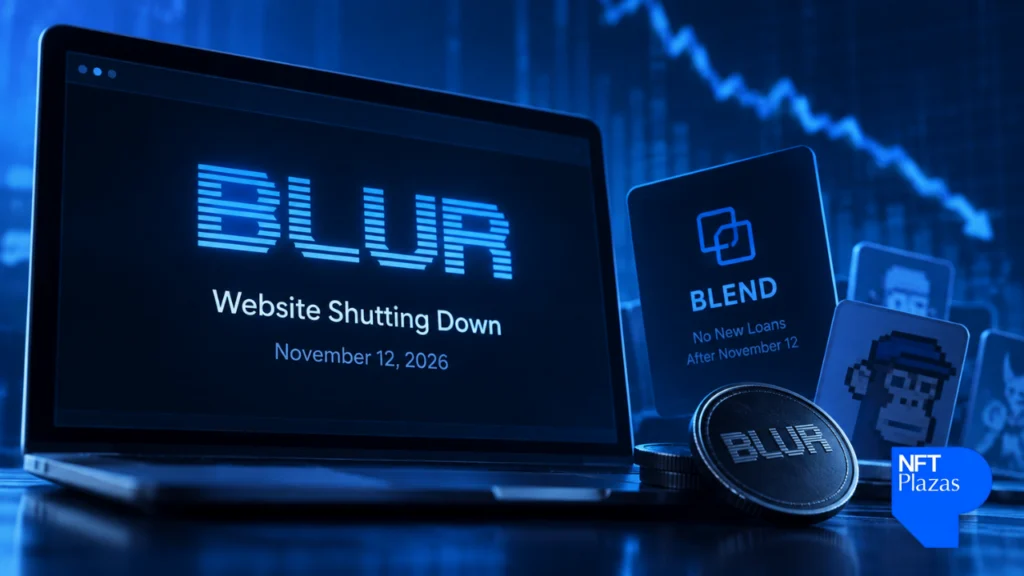
The prominent Ethereum NFT marketplace Blur has announced its decision to shut down its primary website, blur.io, on November 12, 2026, simultaneously halting the arrangement of new loans through its peer-to-peer NFT lending platform, Blend. This development marks a significant retreat for a platform that once emerged as a formidable challenger to OpenSea, dominating NFT trading volumes and pioneering an incentive-driven model for professional traders. The announcement, made via a post on X (formerly Twitter) on October 12, follows a prolonged and dramatic decline in NFT market activity and closely trails the closure notice of Blast, an Ethereum layer-2 network developed by the same founding team.
Blur’s Strategic Retreat: Website Closure and Blend’s End
The core of Blur’s announcement details a two-pronged operational winding down. First, the blur.io website, which has served as the primary interface for NFT collectors and professional traders to access the marketplace, will become inaccessible. This frontend closure will significantly impact user experience, as the intuitive interface, bulk purchasing tools, and rapid transaction capabilities that defined Blur’s appeal will no longer be directly available. However, it is crucial to note that Blur’s underlying marketplace protocol, built on Ethereum smart contracts, is slated to remain operational. This distinction implies that while the official user-friendly portal will vanish, on-chain transactions could technically still be executed by users employing alternative, potentially more complex, interfaces or custom integrations directly with the smart contracts. This shift will likely render the marketplace less accessible to the average user, effectively sidelining it from mainstream interaction.
Concurrently, Blend, Blur’s innovative peer-to-peer NFT lending platform, will cease matching new loans on the same November 12, 2026, deadline. Blend allowed users to borrow Ethereum (ETH) by collateralizing their digital collectibles, a mechanism that added liquidity and utility to otherwise illiquid NFT assets. Existing borrowers utilizing Blend have been given until this November 12 deadline to either repay their outstanding loans or face the default terms outlined in the protocol. Failure to settle these positions will result in the forfeiture of the NFTs used as collateral. Blur has indicated its intention to provide a separate tool post-deadline to assist users in withdrawing eligible assets from the Blend protocol, aiming to mitigate potential asset loss for those with open positions. The BLUR token, native to the ecosystem, will retain its governance rights over the protocol’s fee mechanism, allowing token holders to collectively decide on the potential introduction of marketplace trading fees in the future, despite the operational changes.
A Meteoric Rise and Precipitous Fall: The Blur Phenomenon
Blur burst onto the NFT scene in October 2022, rapidly establishing itself as a serious contender against the then-dominant OpenSea. Its strategy was clear and aggressive: target professional NFT traders with a suite of advanced features designed for efficiency and speed. These included faster transaction processing, comprehensive bulk purchasing tools, and, crucially, a zero-marketplace-fee model. This approach quickly resonated with a segment of the NFT community seeking more sophisticated trading environments.
The platform’s growth trajectory accelerated dramatically following the launch of its native BLUR token in February 2023. A massive airdrop, coupled with a robust rewards program for active traders, incentivized significant trading activity on the platform. By March 2023, Blur had achieved a staggering milestone, commanding over 70% of the total Ethereum NFT trading volume. During its peak, the marketplace recorded approximately $1.43 billion in monthly transactions, a testament to its successful, albeit highly incentivized, market penetration. The expansion into NFT-backed lending with Blend in May 2023 further solidified its ecosystem, offering new financial avenues for NFT holders.
However, the incentive-driven model, while effective in attracting initial liquidity and users, proved challenging to sustain in the long run, particularly as speculative demand within the broader NFT market began to wane. The once-dominant trading volumes experienced a precipitous decline. By March 2026, Blur’s monthly trading volume had plummeted to below $7 million, representing a catastrophic decline exceeding 99.5% from its 2023 peak. The zero-fee structure, a cornerstone of its initial appeal, also meant that Blur generated minimal direct marketplace revenue from trading. Data from Token Terminal indicates no recorded protocol revenue from trading fees over the past three years, though this figure does not account for potential earnings from Blend’s lending activities or other ventures. Critics frequently questioned whether Blur’s aggressive rewards program fostered genuine demand or merely encouraged wash trading and speculative activity, potentially contributing to the overall decline in NFT prices. While trading data alone cannot definitively separate genuine demand from incentive-driven actions, the correlation between the tapering of rewards and the decline in activity is undeniable. Blur has not publicly cited operating losses as the direct reason for its website shutdown, but the financial implications of such a drastic volume drop are self-evident.

Broader Market Context: NFT Industry’s Prolonged Winter
Blur’s decline is not an isolated incident but rather a stark reflection of the broader struggles plaguing the NFT industry. The market has been in a prolonged slump, failing to recapture the exuberant trading levels witnessed during the 2021-2022 boom. The speculative fervor that drove valuations to unprecedented heights has largely dissipated, replaced by a more cautious, and significantly smaller, market.
According to data compiled by CryptoSlam, monthly NFT sales across all blockchains fell to a paltry $167.2 million in September 2026. This figure represents a dramatic contraction compared to $554.8 million recorded just a year prior and a staggering drop from the $1.78 billion in monthly sales seen in December 2023. Statista, a leading market research firm, projects global NFT market revenue to hover around $318.3 million for the entirety of 2026, showing little to no growth from the previous year.
Insights from DappRadar suggest a nuanced trend: while overall sales volume has declined significantly, transaction counts have been somewhat sustained, supported by lower NFT prices. This indicates a shift in market dynamics where NFTs continue to attract buyers, but the activity is increasingly centered around more affordable assets rather than the high-value, blue-chip collections that dominated the market’s peak. For platforms like Blur, which relied heavily on high trading volumes and substantial token incentives to drive engagement, this shift presents an existential challenge to their long-term sustainability and viability. The market has moved away from speculative frenzy towards what many hope is a more fundamental, utility-driven adoption, but this transition has left many early, incentive-heavy projects struggling.
The Echo of Blast: A Connected Ecosystem Under Pressure
The announcement of Blur’s shutdown carries an additional layer of concern due to its direct connection with Blast, an Ethereum layer-2 network also founded by Tieshun Roquerre, known pseudonymously as Pacman, the same individual behind Blur. Just ten days prior, on October 2, Blast had announced its own closure, creating a ripple effect of uncertainty across the ecosystem.
Blast had generated significant buzz and attracted considerable capital ahead of its mainnet launch in February 2024. It managed to amass over $2.3 billion in deposits, largely fueled by promises of attractive yield opportunities and user rewards – a familiar incentive-driven strategy mirroring Blur’s initial success. However, these assets reportedly dwindled to approximately $32 million by the time the development team announced the network’s impending closure. The team cited operational costs exceeding revenue as the primary reason for the decision, deeming continued operations unsustainable. Blast users were given until October 26 to withdraw their funds through the network’s regular interface, preceding Blur’s separate November 12 deadline.
The consecutive closures of both Blast and Blur highlight a critical challenge facing many crypto projects that heavily relied on aggressive token incentives and yield farming to attract initial liquidity and users. While effective in the short term, this model often struggles with long-term sustainability once the initial hype fades and market conditions become less favorable. The combined impact of these shutdowns raises serious questions about the long-term viability of ecosystems built primarily on such promotional strategies, especially in a bear market environment where capital is scarce and investor sentiment is cautious.
Immediate Repercussions and Emerging Security Concerns

The news of Blur’s impending website closure triggered an immediate and sharp selloff in the BLUR token. Within 24 hours of the announcement on October 12, the token reportedly plummeted by more than 33%, dropping to approximately $0.012 by October 13. This dramatic price depreciation resulted in a significant reduction of its market capitalization, which declined to around $38 million, reflecting a widespread loss of investor confidence.
Beyond the financial impact, security concerns have also surfaced regarding NFT permissions previously granted to Blur’s smart contracts. Blockchain researcher 0xQuit, a respected voice in the crypto security community, issued a public warning. While stating that no existing vulnerabilities had been immediately identified, 0xQuit highlighted that upgradeable smart contracts could pose potential risks if administrative controls were compromised or misused. This warning prompted a wave of cautionary advice across the community, with users being strongly encouraged to review and revoke any unnecessary token or NFT approvals granted to Blur’s contracts through tools like Revoke.cash. Prominent figures within the NFT space, including Figge, CEO of Yuga Labs (creators of Bored Ape Yacht Club), and Luca Netz, CEO of Pudgy Penguins, publicly echoed these calls for precautionary measures, underscoring the seriousness of potential risks.
Amidst these developments, a representative from SushiSwap, a decentralized exchange, publicly expressed interest in potentially acquiring Blur. However, no formal negotiations or agreements have been confirmed, and the feasibility and scope of such an acquisition remain speculative at this stage.
Implications and the Road Ahead for NFTs
Blur’s website closure, while not equating to the disappearance of its underlying Ethereum protocol, undeniably marks the end of an era for one of the most dynamic NFT marketplaces. With trading activity severely diminished and Blend winding down its core function, the future relevance and utility of the Blur protocol, stripped of its user-friendly frontend and active incentive programs, remain highly uncertain.
This event serves as a critical inflection point for the broader NFT industry. It forces a re-evaluation of business models that rely heavily on aggressive trading incentives to bootstrap liquidity and attract users. The retreat of both Blur and Blast within such a short timeframe underscores the fragility of such models when market conditions turn unfavorable and the flow of speculative capital dries up.
The NFT market is in a period of profound transformation. While transaction counts suggest ongoing engagement, the shift towards lower-priced assets indicates a recalibration of value and utility. For the industry to move beyond its speculative phase and achieve sustainable growth, platforms will need to innovate beyond mere trading incentives. Focus may shift towards enhanced utility, real-world integrations, improved intellectual property frameworks, and more robust, community-driven ecosystems that can withstand market volatility. Blur’s journey, from its meteoric rise to its strategic retreat, offers invaluable lessons on the complexities of building and sustaining a decentralized platform in the ever-evolving landscape of Web3. The question of whether platforms built around aggressive trading incentives can remain viable once those rewards disappear is no longer theoretical but has been answered, at least for Blur, with a definitive conclusion.