admin
Bitcoin (BTC) experienced a notable downturn, slipping below the $82,000 threshold around Thursday’s Wall Street open, as renewed geopolitical tensions surrounding Iran resurfaced to exert significant pressure on global risk assets. The flagship cryptocurrency, often a barometer for broader market sentiment, saw its price dip to $81,256 on Bitstamp, marking a 2.9% decline within a 24-hour period, reflecting a pronounced shift away from speculative investments. This movement underscores the increasing interconnectedness between the volatile world of digital assets and the complexities of international diplomacy and traditional financial markets.
Geopolitical Tensions Reignite Risk-Off Sentiment
The immediate catalyst for this market unease was a series of comments from former President Trump, indicating that the United States was "not negotiating" with Iran. This statement, delivered to reporters, carried an implicit threat of escalating confrontation, with Trump adding, "We are going to have something one way or the other that will happen fairly soon. Most people seem to think it’s after the election and we’ll see what happens," referring to the upcoming US midterm elections on November 3. Such remarks immediately triggered a risk-off mentality across financial markets, as investors typically seek safer havens amidst geopolitical uncertainty.
The historical backdrop of US-Iran relations is marked by decades of tension, particularly since the 1979 Iranian Revolution. Key flashpoints have included the Iranian nuclear program, the 2015 Joint Comprehensive Plan of Action (JCPOA), and the subsequent US withdrawal from the agreement in 2018 under the Trump administration, followed by the re-imposition of stringent sanctions. Any indication of a breakdown in diplomatic channels or a potential for military engagement invariably sends ripples through global energy markets and stock exchanges, given Iran’s strategic importance in the Middle East and its role as a major oil producer. The specter of conflict heightens concerns about supply chain disruptions, energy price spikes, and broader economic instability, making investors wary of holding assets perceived as risky, including cryptocurrencies and high-growth stocks.
Ripple Effects Across Global Markets
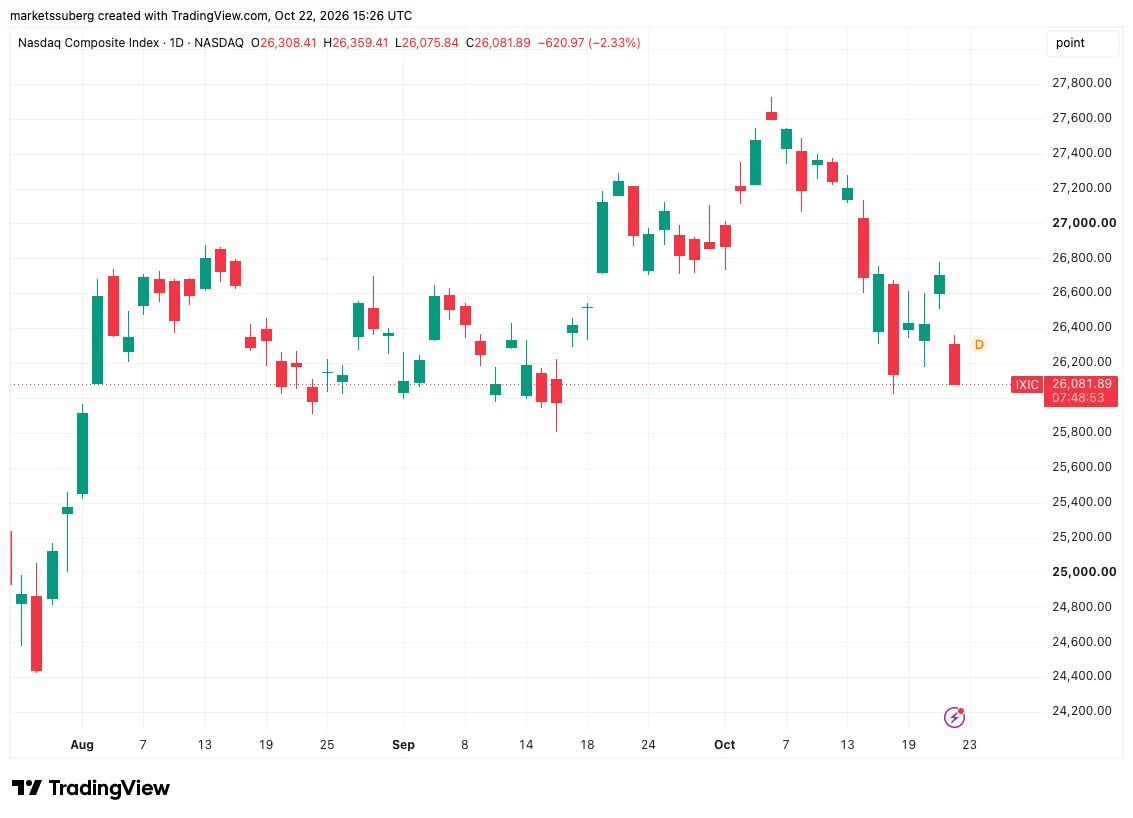
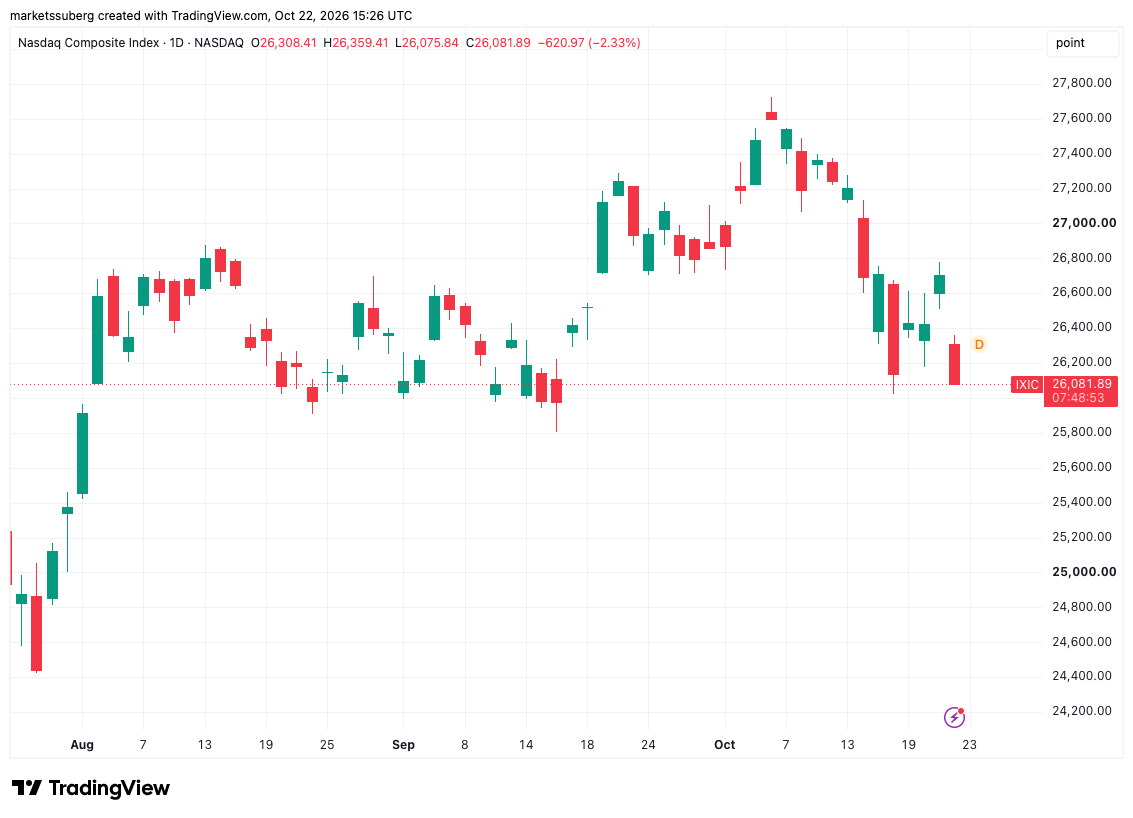
The impact of these geopolitical headlines was not confined to the cryptocurrency sphere. Traditional US stock markets registered significant declines at the open. The S&P 500 Index, a broad measure of large-cap US equities, fell by 1.3%, while the tech-heavy Nasdaq Composite Index, particularly sensitive to risk appetite, plummeted by 2.3%. This simultaneous downturn in both Bitcoin and major stock indices highlights Bitcoin’s evolving role, often correlating with broader equity markets rather than acting as a completely uncorrelated safe-haven asset, at least in the short term.
Beyond geopolitical anxieties, other factors contributed to the broader market sell-off. Mixed reactions to Tesla’s recent earnings report and capital expenditure figures, along with renewed "AI valuation fears," placed considerable pressure on the tech sector. Analysts have increasingly voiced concerns about the sustainability of the high valuations seen in many artificial intelligence-related companies, suggesting that a correction might be due. When combined with rising energy prices – often a consequence of geopolitical instability in oil-producing regions – the cumulative effect was a palpable shift towards risk aversion. Ian Lyngen, a strategist at BMO Capital Markets, noted this trend, stating, "Tech stocks came under pressure amid renewed AI valuation fears. The rebound in energy prices contributed to the risk-off tone."
In response to this heightened uncertainty, investors flocked to perceived safe-haven assets, most notably U.S. Treasuries. As demand for these government bonds surged, their prices rose, causing their yields to fall. The yield on the benchmark US 10-year Treasury bond approached 5% on the day, slipping to its lowest level since September 23. Lyngen confirmed this flight to safety, observing, "Treasuries have emerged as a primary beneficiary as global risk sentiment has come under pressure." The inverse relationship between bond prices and yields underscores the market’s immediate preference for stability over growth prospects during times of crisis.
Bitcoin’s Volatile Dance with Macro Factors
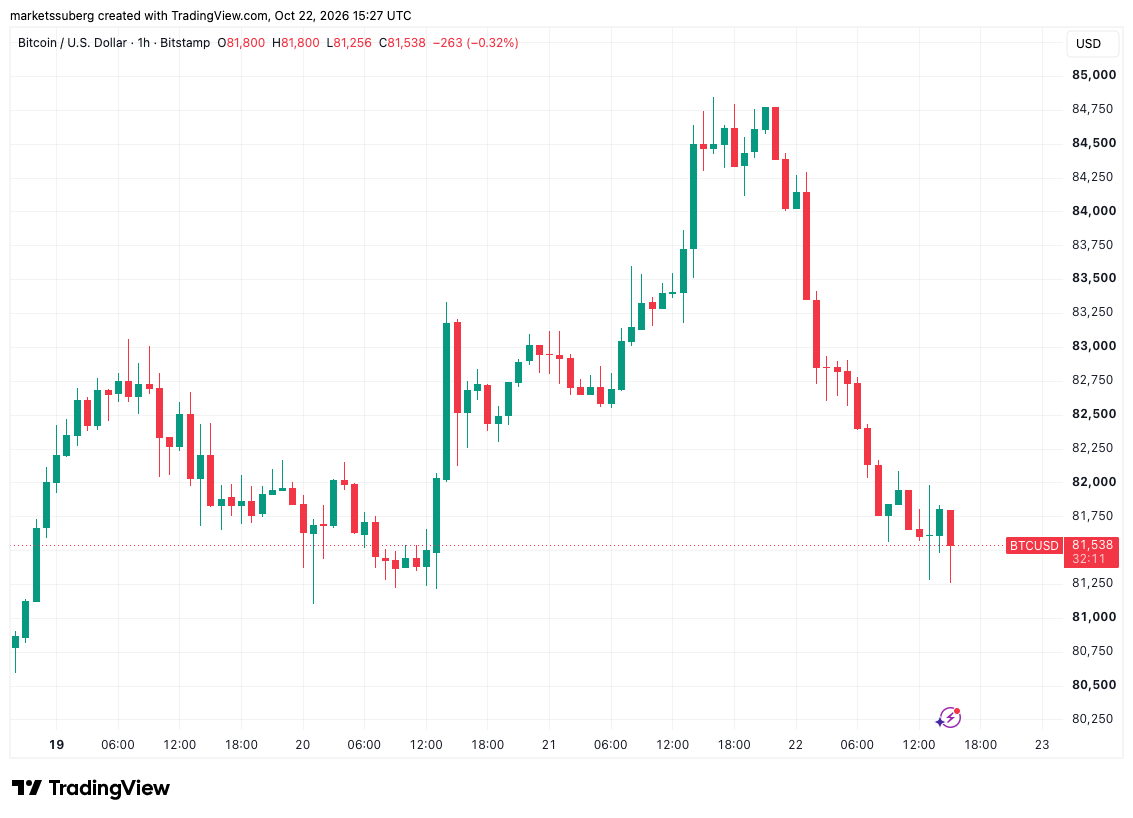
Bitcoin’s price action, after briefly reaching nearly $85,000 the day prior, continued to hover around the cost basis of the US spot Bitcoin exchange-traded funds (ETFs) at approximately $81,500. This level has become a crucial psychological and technical benchmark, representing the average price at which significant institutional capital has entered the market through these recently launched investment vehicles. The ability of BTC to sustain above or break below this level is often seen as an indicator of institutional conviction.
Analysts from Bitfinex Alpha, the research arm of crypto exchange Bitfinex, provided a near-term outlook, forecasting that BTC/USD would likely trade within a narrow range between $81,300 and $84,400. This sideways movement is anticipated to persist until the Federal Reserve rate policymakers’ next meeting on October 28. The Fed’s decisions on interest rates and monetary policy are critical drivers for asset prices across the board, influencing liquidity, borrowing costs, and overall investor appetite for risk. A more hawkish stance (higher rates) typically dampens enthusiasm for speculative assets like Bitcoin, while a dovish stance (lower rates or quantitative easing) can provide tailwinds.
The Bitfinex Alpha report elaborated on the conditions that could lead to a deviation from this predicted range. They suggested that "Sustained ETF demand with stable leverage metrics would support a breakout above $84,400," indicating that continued institutional inflows and a healthy market leverage environment could propel Bitcoin higher. Conversely, they warned that "macro headwinds combined with a close below $81,300 would increase the risk of a move towards the 15 October low at $79,821." This highlights the dual influence of broader economic conditions and specific crypto market indicators like leverage on Bitcoin’s short-term trajectory. The introduction of spot Bitcoin ETFs has significantly integrated Bitcoin into the traditional financial ecosystem, making its price more susceptible to macro-economic forces and institutional trading patterns.
Long-Term Outlook and Investor Sentiment
While short-term price movements are often dictated by immediate news cycles and technical indicators, the long-term outlook for Bitcoin is a subject of ongoing debate and analysis. On longer time frames, prediction markets offer insights into collective investor sentiment. Kalshi, a regulated prediction market, revealed that traders were trimming the chances of BTC/USD hitting new all-time highs (e.g., above $130,000) by mid-January 2027 to just 3%. This represents a significant markdown from earlier, more optimistic projections and suggests a cautious or even bearish sentiment among a segment of forward-looking investors regarding Bitcoin’s potential for explosive growth in the coming years.
This conservative long-term outlook could stem from several factors: the maturation of the asset class, which might lead to lower volatility and more stable growth rates; increased regulatory scrutiny across jurisdictions; or a persistent belief that macro-economic headwinds, such as prolonged high-interest rates or slower global economic growth, will continue to temper enthusiasm for risk assets. It also reflects the reality that after a period of significant appreciation, new all-time highs require even greater capital inflows and sustained positive catalysts. While Bitcoin has historically shown remarkable resilience and capacity for recovery, these prediction market figures indicate a more tempered expectation for its future performance compared to its early, explosive growth phases. The narrative surrounding Bitcoin as a "digital gold" or an inflation hedge continues to contend with its observed correlation to traditional risk assets, particularly during periods of market stress.
The Road Ahead: Navigating Uncertainty
The immediate future for Bitcoin and broader financial markets remains intertwined with a complex web of geopolitical, economic, and monetary policy factors. The trajectory of US-Iran relations will be a critical watchpoint; any further escalation or de-escalation could significantly impact market sentiment. The upcoming US midterm elections on November 3 are another pivotal event, as their outcome could reshape domestic policy, influence international relations, and affect fiscal spending, all of which have implications for economic stability and investor confidence.
Furthermore, the Federal Reserve’s meeting on October 28 is eagerly anticipated. The Fed’s stance on interest rates, its outlook on inflation, and any signals regarding quantitative tightening or easing will be instrumental in determining liquidity conditions and the overall risk appetite of investors. Beyond these macro events, the continued demand for spot Bitcoin ETFs and the stability of leverage within the crypto market will be crucial internal factors for Bitcoin’s price action.
In conclusion, Bitcoin’s recent retreat below $82,000 serves as a stark reminder of its vulnerability to global geopolitical events and broader economic shifts. While institutional adoption through ETFs has brought new capital and a degree of legitimacy, it has also increasingly tethered Bitcoin to the fortunes of traditional markets. As investors navigate a landscape fraught with geopolitical uncertainty, economic concerns, and evolving monetary policies, Bitcoin’s performance will continue to reflect this intricate interplay of forces. The coming weeks, laden with significant political and economic milestones, are set to define the immediate trajectory for both the cryptocurrency market and the global financial system at large.