admin
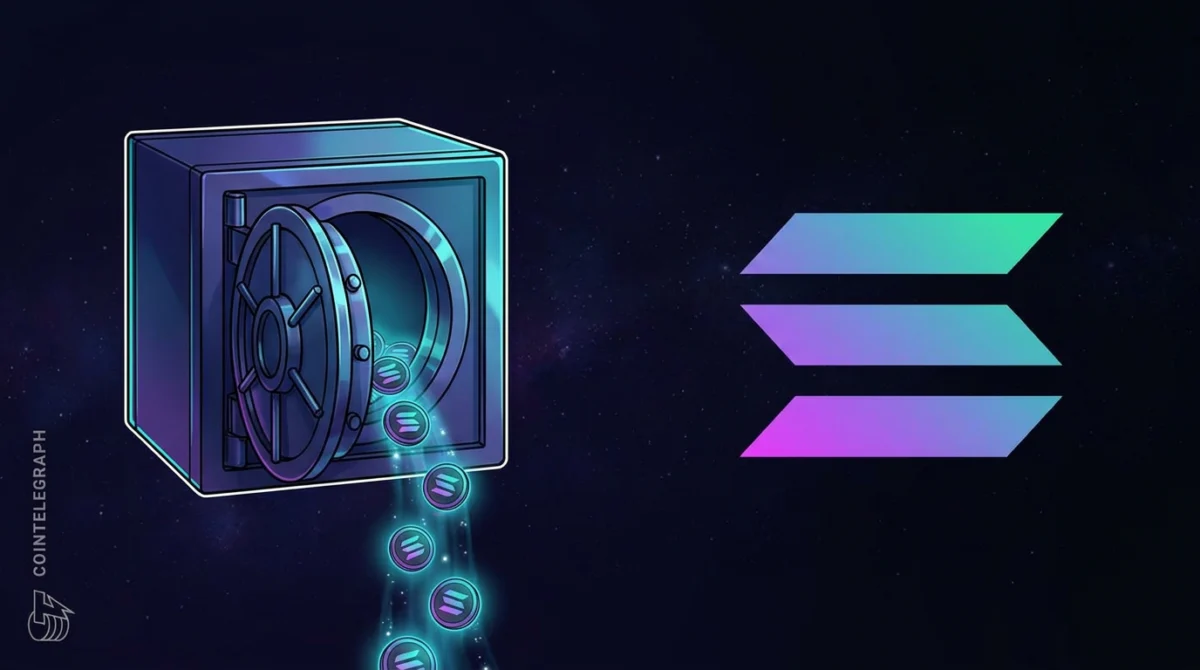
SkyAI, the company formerly known as Sharps Technology, has executed a significant strategic shift by selling its entire Solana (SOL) treasury and subsequently launching a tender offer to repurchase up to $201.3 million in shares and warrants from its investors. This decisive move marks a complete reversal of its prior cryptocurrency accumulation strategy, signaling a recalibration of its corporate financial policy and a sharpened focus on its core technological development. The company’s regulatory filing on Monday, October 19, 2026, with the US Securities and Exchange Commission (SEC) confirmed these developments, revealing that SkyAI held approximately $223.8 million in cash as of October 16, 2026, following the liquidation of its substantial SOL holdings.
The tender offer, a mechanism allowing shareholders and warrant holders to sell their securities directly back to the company at a fixed price, is designed to cover a substantial portion—up to 95%—of each class of SkyAI’s outstanding shares and warrants. Crucially, the company has clarified that this buyback initiative is now fully funded by its cash reserves and is no longer contingent on Solana’s price performance, a condition that had been initially considered when the buyback was first announced on October 11, 2026. This decoupling from crypto market volatility underscores SkyAI’s commitment to providing a clear exit strategy for investors while consolidating its financial position. Despite this divestment, SkyAI has affirmed its intention to continue developing its innovative financial platform, which aims to integrate stablecoin infrastructure built on the Solana blockchain with advanced artificial intelligence capabilities.
Background of SkyAI’s Cryptocurrency Treasury Strategy
To understand the magnitude of this strategic pivot, it is essential to trace SkyAI’s journey into the cryptocurrency space. The company, initially known as Sharps Technology, was primarily recognized as a medical device company focused on developing and commercializing safety syringe products. However, in a bold move reflecting a broader trend of corporate interest in blockchain and Web3 technologies, Sharps Technology announced a significant strategic pivot in late 2024 and early 2025. This pivot involved a rebranding to SkyAI and a pronounced shift towards integrating artificial intelligence with blockchain solutions, specifically leveraging the Solana ecosystem.
The company formally launched its Solana treasury strategy in August 2025, a period characterized by heightened institutional interest in digital assets and a bullish outlook for alternative layer-1 blockchains like Solana. This strategy was underpinned by a successful private placement that raised over $400 million, providing SkyAI with substantial capital to invest. The rationale behind such a move by corporations typically included diversifying treasury assets away from traditional fiat currencies, hedging against inflation, and signaling a deep commitment to the nascent Web3 economy they intended to build upon. For SkyAI, holding SOL directly on its balance sheet was seen as a strategic alignment with its new direction of building a financial platform on Solana.
The aggressive accumulation of Solana tokens began in earnest in September 2025, when SkyAI acquired more than 2 million SOL. At the time of acquisition, this position was valued at over $400 million, making it one of the most significant corporate treasury allocations to a single cryptocurrency outside of Bitcoin or Ethereum. The investment was intended not just as a speculative bet but as a foundation for its blockchain-centric future, providing both liquidity and a strong vote of confidence in the Solana network’s potential for high-throughput, low-cost transactions.
The Volatile Journey of Solana Holdings
The initial optimism surrounding SkyAI’s Solana treasury strategy, however, soon confronted the inherent volatility of the cryptocurrency markets. By the end of 2025, the company’s annual financial disclosures revealed that its holdings had grown slightly to approximately 2.08 million SOL. The cost basis for these holdings stood at an aggregate of $403.1 million, translating to an average acquisition price of roughly $194 per token. Unfortunately, by this time, the market value of its SOL holdings had declined to $250.1 million, resulting in approximately $153 million in unrealized losses.
This period of decline was not unique to SkyAI but reflected broader market pressures that impacted numerous companies adopting Solana as a treasury asset. The enthusiasm for SOL, which had seen meteoric rises, began to temper, leading to a significant correction across the digital asset landscape. By February 2026, a report highlighted that publicly traded Solana treasury companies collectively faced more than $1.5 billion in combined unrealized losses. These substantial paper losses not only eroded the value of their digital asset holdings but also exerted downward pressure on their share valuations, leading to a repricing of equity for many of these firms.
The price of SOL experienced a notable trough, falling to around $62 in June 2026. This dip would have exacerbated the unrealized losses for SkyAI had they still held their entire position. However, the market saw a recovery trend thereafter, with SOL trading near $104 as of Monday, October 19, 2026, according to CoinGecko data. While this recovery offered some relief to remaining holders, it evidently came too late or was insufficient to sway SkyAI from its decision to fully divest. The experience underscored the double-edged sword of holding highly volatile assets as a corporate treasury: immense upside potential matched by significant downside risk and the potential for substantial impact on quarterly earnings and shareholder confidence.
Details of the Tender Offer and Financial Implications
The tender offer represents a significant financial maneuver designed to return capital to shareholders and warrant holders, providing liquidity and a defined exit at a fixed price. By offering to repurchase up to $201.3 million in securities, SkyAI is signaling a commitment to shareholder value, especially after a period where its stock performance was closely tied to the volatile cryptocurrency market. The offer covers up to 95% of each class of the company’s outstanding shares and warrants, a remarkably high percentage that suggests a strong desire to streamline its capital structure and potentially reduce its public float.
The fact that the tender offer is entirely funded by cash on hand—specifically, the $223.8 million in cash reserves as of October 16, 2026, derived from the SOL liquidation—provides a clear picture of the company’s solid financial standing post-divestment. This eliminates any reliance on external financing or further market movements, which was a critical adjustment from its initial announcement on October 11, 2026, where the offer’s terms were reportedly still tied to SOL’s price. Removing this contingency de-risks the tender offer for SkyAI and provides certainty for participating investors.
From an investor’s perspective, a tender offer at a fixed price provides a guaranteed opportunity to sell securities, especially valuable for those who may have been holding shares during the period of significant crypto-related volatility. While the specific tender price per share or warrant was not detailed in the provided information, such offers are typically set at a premium to the recent market price to incentivize participation. SkyAI shares closed Monday, October 19, 2026, at $2.79, marking a 5.3% gain on the day. The stock has shown resilience, gaining approximately 65% over the past month, perhaps in anticipation or reaction to the clarity surrounding its strategic direction and the tender offer. However, it remains down about 41% over the past year, reflecting the challenges faced during its crypto treasury experiment. The tender offer could help stabilize the stock price by reducing the number of outstanding shares, potentially increasing earnings per share for remaining shareholders.
SkyAI’s Future Direction: AI and Solana Financial Platform
Despite divesting its treasury holdings of SOL, SkyAI has emphatically stated its intention to continue developing a financial platform that combines stablecoin infrastructure on Solana with artificial intelligence. This declaration is crucial, as it clarifies that the company’s retreat from direct SOL treasury management is not a complete abandonment of the blockchain space, but rather a refinement of its engagement model. The shift suggests a move away from speculative asset holding towards leveraging Solana as a foundational technology layer for its core product development.
The strategic focus on stablecoin infrastructure on Solana is particularly noteworthy. Stablecoins, designed to maintain a stable value relative to a fiat currency or other assets, are considered a less volatile component of the crypto ecosystem and are essential for building robust financial applications. Integrating this with AI capabilities could lead to innovative solutions in areas such as automated financial services, risk management, predictive analytics for transactions, or personalized financial advice delivered through decentralized applications (dApps). This revised strategy aims to harness the technological advantages of Solana—its high transaction throughput, low fees, and scalability—without exposing the corporate balance sheet to the extreme price fluctuations of its native token.
This pivot indicates a maturing perspective within SkyAI, recognizing that direct exposure to highly volatile crypto assets on the balance sheet might hinder rather than help its long-term objectives, especially when trying to build trust and stability in financial products. By focusing on the utility and infrastructure layers, SkyAI positions itself to benefit from the growth of the Solana ecosystem and broader Web3 adoption in finance, while maintaining a more traditional and stable financial footing for its operations.
Broader Implications for Corporate Crypto Treasuries
SkyAI’s reversal of its Solana treasury strategy carries significant implications for the broader trend of corporate cryptocurrency holdings. For several years, especially during the bull markets of 2020-2021 and selective periods thereafter, numerous companies explored or actively adopted strategies of holding cryptocurrencies like Bitcoin, Ethereum, or even altcoins like Solana, on their balance sheets. Motivations varied from inflation hedging and diversification to signaling innovation and aligning with Web3 visions.
However, the experiences of companies like SkyAI highlight the inherent risks and challenges associated with such strategies. The substantial unrealized losses faced by Solana treasury firms in early 2026 served as a stark reminder of crypto market volatility and its direct impact on corporate valuations. This period underscored the difficulties of managing a highly volatile asset in a corporate treasury context, where stability, liquidity, and clear valuation are paramount for financial reporting and investor confidence.
SkyAI’s decision could prompt other corporations to re-evaluate their own crypto treasury strategies. It suggests a potential shift towards more nuanced engagement with blockchain technology, prioritizing its utility for product development and operational efficiency over direct speculative asset accumulation. Companies might increasingly opt for strategies that involve building on blockchain platforms, accepting crypto for payments, or developing Web3-native products, while maintaining their core treasury in more traditional, stable assets. This could lead to a more conservative yet ultimately more sustainable integration of blockchain into mainstream corporate finance.
The move also offers a case study in corporate agility and risk management. While the initial foray into SOL holdings was ambitious, the decision to divest and launch a tender offer demonstrates a willingness to adapt to market realities and prioritize shareholder value and strategic clarity. This could set a precedent for how public companies navigate the volatile yet promising landscape of digital assets, balancing innovation with financial prudence.
Market Reaction and Expert Commentary
The market’s reaction to SkyAI’s announcement has been largely positive, as evidenced by the stock’s recent performance. The 5.3% jump on Monday and the 65% gain over the past month suggest that investors welcome the clarity and the strategic re-focus. The removal of the SOL price contingency from the tender offer, in particular, likely instilled greater confidence in the execution of the buyback and the company’s financial stability.
While direct expert commentary on SkyAI’s specific move wasn’t provided in the original text, the related article mentioning Fidelity’s view that "Solana shows resilience, but some areas need continued observation" provides broader context. This suggests that while Solana as a technology may be robust, its native token’s price stability and ecosystem maturity still warrant caution from institutional players. SkyAI’s decision could be interpreted as a reflection of this institutional prudence, opting to mitigate balance sheet exposure to a volatile asset while still believing in the underlying technology for its operational goals.
The implications extend to how traditional financial markets perceive crypto-native or crypto-adjacent companies. Companies that demonstrate a clear path to profitability and sustainable business models, rather than relying on speculative asset appreciation, are likely to garner more trust from mainstream investors. SkyAI’s pivot could be seen as a step towards achieving this, potentially broadening its appeal beyond purely crypto-focused investors.
In conclusion, SkyAI’s complete divestment of its Solana treasury and the subsequent launch of a substantial tender offer represent a watershed moment in its corporate evolution. This strategic reversal, driven by the volatile performance of its crypto holdings and a desire to provide clarity to investors, underscores the challenges and opportunities within the rapidly evolving digital asset landscape. By recalibrating its financial strategy and sharpening its focus on building an AI-powered financial platform on Solana’s infrastructure, SkyAI aims to forge a path towards sustainable growth and enhanced shareholder value, signaling a more mature and pragmatic approach to integrating blockchain technology into its core business model.