admin
admin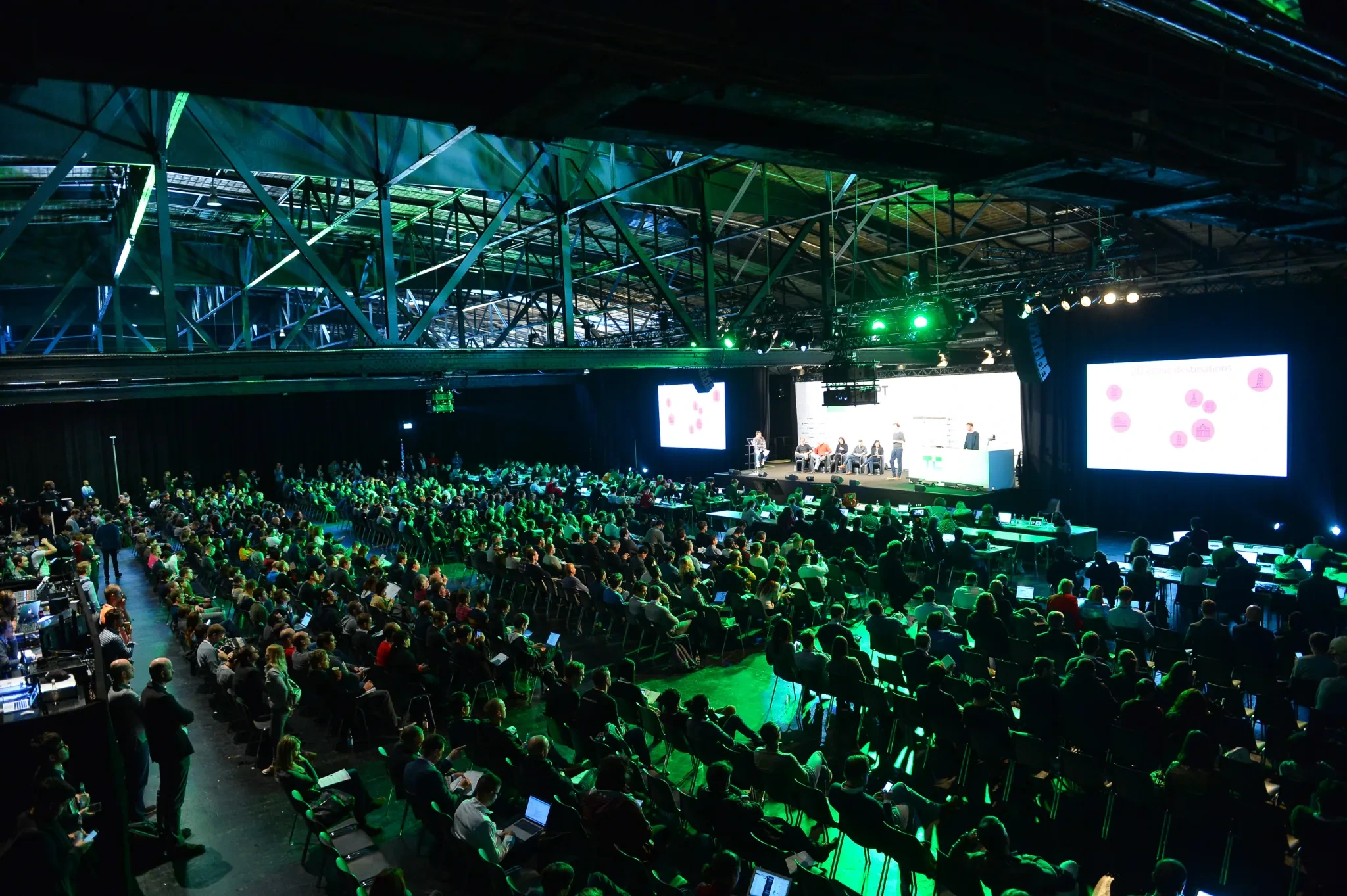
The final 24-hour countdown has commenced for the early registration window of TechCrunch Disrupt 2026, marking the last opportunity for founders, investors, and technology professionals to secure a discount of up to $200 before standard pricing takes effect. Scheduled to take place at San Francisco’s Moscone West from October 13 to 15, 2026, the event is positioned as a critical nexus for the global startup ecosystem, offering a condensed three-day environment designed to accelerate business development, fundraising, and technological research. Beyond the individual ticket savings, the current promotion includes a 50% discount on a second pass of the same type and group rates of up to 30% for teams of four or more, provided registration is completed by midnight.
The Strategic Importance of Disrupt 2026 in the Tech Calendar
TechCrunch Disrupt has long served as a bellwether for the health and direction of the venture capital and startup sectors. As the 2026 edition approaches, the event organizers have emphasized the theme of "Momentum," arguing that the physical proximity of over 10,000 industry leaders allows for a compression of business cycles that typically take months to resolve. In an era where digital communication is ubiquitous, the conference aims to facilitate high-density networking that leads to tangible outcomes, such as finalized term sheets, strategic partnerships, and product pivots.
The venue, Moscone West, is situated in the heart of San Francisco, a city that has seen a significant resurgence as a hub for artificial intelligence and biotechnology. By hosting the event in this location, Disrupt 2026 leverages the local concentration of talent and capital, while drawing in an international cohort of innovators from Europe, Asia, and Latin America. The three-day schedule is structured to maximize these interactions, moving beyond traditional keynote speeches to include interactive workshops, roundtable discussions, and the highly anticipated Startup Battlefield competition.
A Chronology of Innovation: The Legacy of TechCrunch Disrupt
To understand the stakes of the 2026 summit, one must look at the historical trajectory of the event. TechCrunch Disrupt was born out of the earlier TechCrunch50, which launched in 2007. Since its formal rebranding in 2010, the conference has been the launching pad for some of the most influential companies in the modern economy.

- 2010-2012: Early editions saw the debut of companies like Getaround and Cloudflare. This era established the "Startup Battlefield" as a premier stage for early-stage companies to gain visibility.
- 2013-2016: The event expanded its footprint, often hosting bi-coastal editions in New York and San Francisco. During this period, companies such as Dropbox and Zenefits utilized the platform to signal their dominance in the cloud and HR-tech spaces.
- 2017-2021: The conference navigated the shift toward specialized industry tracks, introducing stages dedicated to fintech, robotics, and healthcare. The 2020 and 2021 editions were held virtually due to global health restrictions, which led to the development of sophisticated digital networking tools that remain part of the hybrid experience today.
- 2022-2025: Returning to a primary in-person format, the event focused on the "AI Summer" and the integration of sustainable technologies. The 2025 event set records for investor attendance, a trend expected to continue into 2026.
As the 2026 event nears, the focus has shifted toward the maturation of generative AI and the "hard tech" revolution, including advancements in quantum computing and space exploration.
Detailed Breakdown of the 2026 Event Structure
Disrupt 2026 is organized into several distinct "pillars" to ensure that attendees can navigate the vast volume of information and networking opportunities efficiently. The organizers have confirmed more than 250 sessions across six industry-specific stages. These stages serve as specialized hubs where the most pressing challenges and opportunities of each sector are analyzed by experts.
The Six Industry Stages
While the full list of speakers is subject to ongoing updates, the stages are categorized as follows:
- AI and Machine Learning Stage: Focused on the transition from experimental LLMs to integrated enterprise solutions.
- SaaS and Enterprise Stage: Covering the evolution of the subscription economy and the rise of vertical-specific software.
- Fintech and Crypto Stage: Analyzing the regulatory landscape, decentralized finance, and the future of global payments.
- Sustainability and Climate Tech Stage: Highlighting innovations in carbon capture, renewable energy storage, and circular economy logistics.
- Hardware and Robotics Stage: Featuring live demonstrations of autonomous systems and next-generation consumer electronics.
- BioTech and HealthTech Stage: Exploring the intersection of data science and drug discovery, as well as the digitization of patient care.
The Startup Battlefield 200
Central to the event is the Startup Battlefield 200, an elite group of early-stage startups selected from thousands of applicants worldwide. These 200 companies receive free exhibition space on the show floor for all three days, giving them direct access to the 10,000+ attendees. From this group, a select few are chosen to compete on the Disrupt Stage for the Disrupt Cup and a $100,000 equity-free prize. Historically, Battlefield alumni have collectively raised over $9 billion in funding and achieved numerous successful exits.
Data Analysis: The Economic Impact of High-Density Networking
Market research into the efficacy of professional conferences suggests that the "collision frequency" of an event—the rate at which an attendee meets a relevant contact—is the primary driver of ROI. For founders, Disrupt 2026 represents a significant opportunity to lower their Cost Per Acquisition (CPA) for investor leads.

Data from previous years indicates that:
- Investor Density: Approximately 25% of attendees are accredited investors or venture capital partners, representing hundreds of billions of dollars in dry powder.
- Media Coverage: More than 400 media outlets typically attend Disrupt, providing startups with a level of visibility that would otherwise require significant PR expenditure.
- Operational Efficiency: Founders report that three days at Disrupt can replace up to six months of independent market research and outreach.
Furthermore, the 2026 event comes at a time when the venture capital market is seeking more rigorous unit economics and sustainable growth models. The sessions at Disrupt are curated to address these shifts, providing founders with the tactical knowledge required to navigate a more disciplined funding environment.
Official Responses and Participant Expectations
While official keynote speakers for 2026 are often announced closer to the event date, statements from previous participants and TechCrunch leadership highlight the unique value proposition of the summit. "Disrupt is not just a conference; it’s a catalyst," noted one venture partner from a top-tier firm following the 2025 event. "In three days, we can see the trajectory of the next five years of tech. It’s where the noise of the market is filtered into actionable insights."
Founders who have participated in the Startup Battlefield often cite the "Disrupt Effect" as a turning point for their companies. "The intensity of the competition and the caliber of the feedback from the judges forced us to refine our mission in ways we hadn’t considered," said a 2024 finalist. For the 2026 cohort, the expectations are even higher, as the integration of AI into every facet of the competition adds a new layer of technical scrutiny.
Broader Implications for the Tech Ecosystem
The timing of TechCrunch Disrupt 2026 is significant within the broader economic cycle. By October 2026, many of the experimental technologies debuted in the early 2020s will have reached a point of commercial maturity. The conference will likely serve as the primary arena where these technologies are benchmarked against one another.

Furthermore, the event’s focus on San Francisco’s Moscone West signals a continued commitment to the city’s role as the "capital of innovation." This has broader implications for local real estate, the hospitality industry, and the municipal government’s efforts to maintain a business-friendly environment for the tech sector. The influx of 10,000 high-spending professionals over three days provides a substantial boost to the local economy, reinforcing the symbiotic relationship between the tech industry and its geographical hubs.
Registration Logistics and Final Call
As the midnight deadline approaches, the urgency for potential attendees to finalize their plans increases. The $200 discount applies to various ticket tiers, including General Admission, Founder passes, and Investor passes. The "Buy One, Get One 50% Off" promotion is particularly targeted at early-stage teams and co-founders who need to maximize their presence at the event while managing limited budgets.
Registration is handled through the official TechCrunch Disrupt portal. Once the clock strikes midnight, prices will revert to the standard rate, and the additional group incentives may be reduced. For those looking to gain a year’s worth of insights, connections, and momentum in just 72 hours, the next 24 hours represent the most cost-effective window to join the 2026 summit.
In summary, TechCrunch Disrupt 2026 stands as more than a mere industry gathering; it is a strategic platform for growth. Whether an attendee is looking to close a Series A round, find a technical co-founder, or understand the competitive landscape of the late 2020s, the Moscone West summit in October 2026 is designed to be the starting point for that next phase of progress. Professionals are encouraged to secure their passes now to ensure they are part of the conversation that will define the next era of global technology.