admin
admin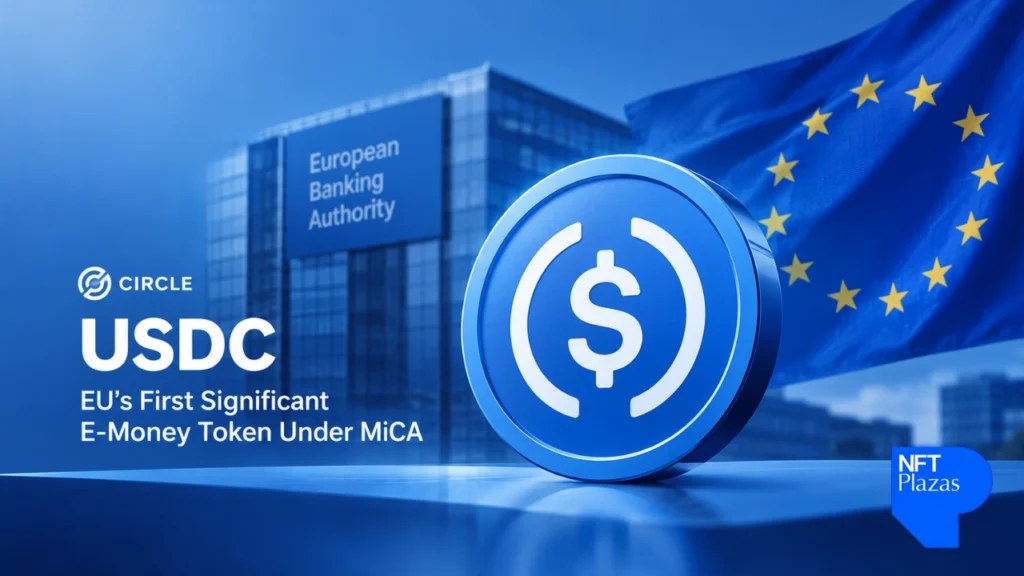
Circle’s USDC, the prominent dollar-backed stablecoin, has achieved a landmark designation as the first e-money token (EMT) to be classified as “significant” under the European Union’s groundbreaking Markets in Crypto-Assets Regulation (MiCA). This pivotal decision, announced by the European Banking Authority (EBA) on October 14, places USDC under direct EBA supervision for critical financial safeguards, a new regime set to commence on November 12, 2026. This move signifies a major step in the EU’s efforts to establish a robust regulatory framework for digital assets, particularly for stablecoins that wield substantial influence in the crypto economy.
The EBA’s assessment of USDC against MiCA’s stringent significance criteria has led to this unparalleled classification. Of the 45 e-money tokens that have been notified under the comprehensive MiCA framework to date, USDC stands out as the inaugural recipient of this enhanced designation. This classification introduces an additional, more rigorous layer of regulatory oversight, emphasizing the EU’s commitment to financial stability and consumer protection without altering USDC’s fundamental dollar peg or its existing authorization to operate within the European economic area. Crucially, it also delineates a clear division of supervisory responsibilities between the EBA and France’s Autorité de Contrôle Prudentiel et de Résolution (ACPR), the national competent authority that currently oversees Circle’s European operations. This dual-layered approach is designed to ensure comprehensive and continuous supervision of a token deemed systemically important.
Unpacking MiCA: The EU’s Landmark Crypto Regulation
To fully grasp the significance of USDC’s classification, it is essential to understand the broader context of MiCA. The Markets in Crypto-Assets Regulation is a pioneering legislative package introduced by the European Union, representing one of the most comprehensive regulatory frameworks for crypto assets globally. Proposed in September 2020 as part of the EU’s Digital Finance Strategy, MiCA’s primary objectives are multifaceted: to foster innovation and fair competition, ensure consumer and investor protection, and safeguard financial stability while maintaining market integrity within the rapidly evolving digital asset space.
MiCA categorizes crypto assets into three main types: crypto-assets (like Bitcoin), asset-referenced tokens (ARTs), and e-money tokens (EMTs). EMTs, such as USDC and EURC, are designed to maintain a stable value by referencing a single fiat currency. They are effectively digital representations of electronic money, falling under similar prudential and conduct requirements as traditional e-money institutions. The regulation mandates that issuers of stablecoins provide clear information to consumers, hold sufficient reserve assets, and implement robust governance structures. MiCA was officially adopted in June 2023, with various provisions rolling out in phases. Rules for ARTs and EMTs are set to apply from June 30, 2024, while provisions for other crypto-assets will come into effect on December 30, 2024. The EBA’s direct supervision for significant EMTs, however, will only commence in November 2026, allowing for a transitional period and for issuers to adapt to the heightened requirements. This structured rollout aims to provide clarity and predictability for market participants while allowing regulators to prepare for their new oversight responsibilities.
EBA to Take Direct Helm: Enhanced Oversight for USDC’s Core Financials
Under the new regulatory paradigm, the EBA will assume direct and principal responsibility for supervising several critical aspects of USDC’s financial health and operational resilience. Commencing November 12, 2026, the EBA’s remit will encompass USDC’s own-funds requirements, ensuring that the issuer maintains adequate capital to absorb potential losses. Furthermore, the EBA will directly oversee the composition and management of USDC’s reserve assets, demanding stringent standards to guarantee that these reserves are sufficient, liquid, and segregated to support the stablecoin’s peg and redemption capabilities. Liquidity standards, which dictate the ease with which assets can be converted to cash, will also fall under EBA scrutiny, alongside the review and approval of recovery and redemption plans. These plans are crucial contingency measures, outlining procedures for how Circle would respond to financial difficulties or significant market disruptions to ensure continuous service and the ability to meet redemption requests.
These robust safeguards are meticulously designed to ensure that Circle Internet Financial Europe SAS, the EU issuer of USDC, maintains not only adequate financial resources but also holds sufficient, high-quality assets to fully back the stablecoin, thereby mitigating risks of de-pegging or insolvency. The recovery plans, in particular, establish clear protocols for navigating financial distress, safeguarding both the stability of the stablecoin and the interests of its holders. This direct oversight by a pan-European authority like the EBA underscores the EU’s intent to treat large-scale stablecoins with the same level of prudential supervision traditionally applied to significant financial institutions.
A Coordinated Approach: Division of Regulatory Labor
While the EBA steps in to supervise the core financial stability aspects of USDC, France’s Autorité de Contrôle Prudentiel et de Résolution (ACPR) will retain crucial responsibilities over other integral components of Circle’s European business. The ACPR, as the national competent authority that initially authorized Circle’s operations in France, will continue to oversee corporate governance structures, ensuring sound management and internal controls. Its mandate will also include assessing qualifying ownership interests, evaluating the suitability and competence of senior management, scrutinizing outsourcing arrangements to third-party service providers, and managing potential conflicts of interest within Circle’s operations.
This carefully orchestrated division of responsibilities is not arbitrary but is specifically outlined in Article 117 of MiCA, which establishes a clear framework for the supervision of significant e-money tokens and asset-referenced tokens. The EBA and ACPR are mandated to coordinate their supervisory work closely, maintaining a continuous dialogue and sharing information to ensure a seamless and comprehensive oversight regime. This collaborative approach aims to prevent regulatory gaps and ensure that all facets of Circle’s European operations are adequately monitored, from financial reserves to operational integrity. The model acknowledges the dual nature of stablecoin operations, encompassing both their financial instrument characteristics and their underlying corporate and operational structures.
USDC’s Journey to European Prominence and Authorization
The latest “significant” designation does not mark USDC’s initial foray into the European Union market. Instead, it represents an escalation of regulatory oversight due to the token’s growing scale and influence. Circle Internet Financial Europe SAS, a subsidiary of the US-based Circle Internet Financial, LLC, is the entity responsible for issuing USDC within the European Union. Its US counterpart handles issuance in the United States. A significant milestone in Circle’s European strategy occurred in July 2024, when the company successfully obtained authorization from France’s ACPR. This authorization permitted Circle to issue both USDC and its euro-backed stablecoin, EURC, under the overarching European regulatory framework, thereby establishing a legitimate operational base within the EU.
This prior authorization was a critical prerequisite, enabling Circle to operate as an electronic money institution (EMI) in the EU, subject to national supervision. The subsequent EBA designation builds upon this foundation, subjecting USDC to an additional layer of scrutiny precisely because its usage and market footprint have expanded to a level that the EU considers systemically important. This phased approach, from national authorization to pan-European enhanced supervision, illustrates the EU’s methodical implementation of MiCA and its responsive mechanism for scaling regulatory oversight as digital assets gain traction.

The Criteria for "Significant" Status: Why USDC Stands Out
MiCA sets forth precise criteria for identifying e-money tokens that necessitate enhanced supervision, reflecting their potential impact on financial stability and market integrity. Under Article 56 of MiCA, the EBA is obligated to classify an e-money token as significant if it meets at least three of the criteria stipulated under Article 43. While the EBA’s October 14 announcement did not specify which individual criteria USDC met, general understanding of MiCA and USDC’s market position allows for an informed inference.
The criteria outlined in Article 43 typically cover factors such as:
- The number of tokenholders: A large, active user base indicates widespread adoption.
- The value of tokens issued: A substantial market capitalization signifies significant economic activity.
- The volume and value of transactions: High transaction frequency and large transfer amounts point to extensive use in payments and trading.
- The extent of their use for payments and transfers: Widespread integration into payment systems or for cross-border remittances.
- The importance of cross-border activities: Operations spanning multiple jurisdictions.
- The interconnectedness with the financial system: Links to traditional financial institutions or other significant market infrastructures.
USDC’s status as the world’s second-largest stablecoin by market capitalization, consistently hovering in the tens of billions of dollars (behind only Tether’s USDT), makes it a prime candidate for such a designation. Its dollar peg renders it an indispensable tool for crypto trading, facilitating transfers between various digital assets, and serving as a common settlement layer across numerous platforms. The sheer scale of its issuance, its vast number of tokenholders globally, and the significant daily transaction volumes it processes undoubtedly satisfy multiple significance criteria. Its extensive cross-border operations and interconnectedness with various crypto exchanges and DeFi protocols further underscore its systemic importance, making robust reserve management and coordinated international regulatory oversight paramount. Under MiCA, the EBA is tasked with periodically reassessing whether designated tokens continue to meet these requirements, ensuring that regulatory intensity remains commensurate with market impact.
Bolstering Cross-Border Cooperation: EBA and NYDFS Memorandum of Understanding
In a parallel development highlighting the global nature of stablecoin operations, the EBA simultaneously confirmed the establishment of a memorandum of understanding (MoU) with the New York State Department of Financial Services (NYDFS). This agreement is a strategic move designed to facilitate crucial information sharing and enhance cooperation on cross-border stablecoin activities. This initiative directly addresses the inherent challenges of supervising stablecoins issued through entities operating in diverse jurisdictions, often with interconnected ecosystems.
While Circle’s European entity (Circle Internet Financial Europe SAS) and its US counterpart (Circle Internet Financial, LLC) are legally distinct issuers, their operations are inextricably linked through the broader USDC ecosystem. The EBA-NYDFS MoU acknowledges this reality, creating a formal channel for regulators to exchange vital data, insights, and supervisory findings. Such cooperation is critical for monitoring potential systemic risks, preventing regulatory arbitrage, and coordinating supervisory responses to emerging issues. It allows authorities to gain a holistic view of a stablecoin’s global footprint, rather than being limited to their national or regional purview. This memorandum, however, is not a replacement for either regulator’s existing legal responsibilities but rather a mechanism to augment their individual oversight capabilities through collaborative intelligence. The move signals a growing recognition among international authorities that stablecoins, particularly those with significant global reach, necessitate a harmonized and cooperative regulatory approach to effectively manage their complexities and potential impacts on the global financial system.
Circle’s Ongoing Dialogue: Challenging MiCA’s Reserve Requirements
The announcement of USDC’s “significant” status arrives amidst an ongoing, critical debate initiated by Circle concerning specific aspects of the EU’s stablecoin rules. In October, Circle publicly urged European policymakers to re-evaluate certain requirements governing the composition of reserve assets that issuers must hold to back their stablecoins. Under MiCA, stablecoin issuers are mandated to maintain reserves in accordance with stringent requirements, which include specific minimum bank-deposit thresholds.
Circle has articulated concerns that mandatory deposits with commercial banks, while seemingly a straightforward stability measure, can inadvertently expose stablecoin issuers to concentration risks associated with their banking partners. The company frequently cites the dramatic collapse of Silicon Valley Bank (SVB) in March 2023 as a stark example. During the SVB crisis, approximately $3.3 billion of USDC reserves held at the bank became temporarily inaccessible, causing a temporary de-pegging of USDC from the dollar and highlighting the vulnerabilities inherent in such arrangements. Circle argues that diversifying reserve assets beyond commercial bank deposits, potentially including highly liquid government securities held in custody by regulated institutions, could enhance overall resilience and reduce single-point-of-failure risks. This ongoing debate underscores the intricate challenge regulators face in balancing the imperative of financial stability with the practical operational needs and risk management strategies of stablecoin issuers. While reserves must undeniably remain sufficiently liquid and secure to support immediate redemptions, their specific composition can have profound implications for both the issuers themselves and the broader banking system. It is important to note that the EBA’s recent decision regarding USDC’s significant status does not introduce changes to these underlying reserve rules; rather, it applies the existing MiCA framework and transfers specific supervisory responsibilities to the European authority for compliance with those very rules.
Implications for Europe’s Evolving Stablecoin Market
USDC’s designation as a “significant” e-money token marks a new, critical stage in the European Union’s oversight of large-scale stablecoins. From November 12, 2026, the EBA will directly supervise key financial safeguards for the token, including its reserves and liquidity, while the ACPR maintains oversight of Circle’s broader European operations. This tiered supervisory structure sets a clear precedent for how the EU intends to regulate stablecoins that achieve substantial market penetration.
For Circle, this classification translates into an undeniable increase in regulatory scrutiny, particularly concerning its reserve management, liquidity provisions, and overall financial resilience. While this may entail higher compliance costs and operational adjustments, it also offers the potential for enhanced trust and credibility among institutional investors and mainstream financial participants, who often seek regulatory clarity and robust oversight. For the wider European stablecoin market, this decision provides a concrete, real-world example of how MiCA’s enhanced supervisory framework will be applied to a major stablecoin. It signals to other large stablecoin issuers that similar scrutiny will likely follow as they grow within the EU.
Moreover, the decision strongly underscores the increasing importance of international coordination among regulators as digital assets transcend national borders. With the EBA and NYDFS establishing a formal channel for cooperation, authorities are actively building the necessary mechanisms to address the complex challenges posed by stablecoins with international reach and interconnected ecosystems. This collaborative approach is vital for ensuring consistent regulatory standards and preventing regulatory arbitrage.
While USDC’s classification does not definitively resolve the broader policy debate over the optimal regulatory architecture for stablecoins in Europe – particularly regarding the composition of reserve assets – it unequivocally establishes a clearer and more robust supervisory structure for one of the market’s largest dollar-backed tokens. As the EU continues to implement its ambitious crypto regulatory framework, this landmark decision for USDC will undoubtedly serve as a foundational element, shaping the future landscape of digital asset regulation and setting a benchmark for global regulatory efforts. It solidifies the EU’s position as a frontrunner in establishing a comprehensive and adaptable regulatory environment for the burgeoning crypto economy.