admin
admin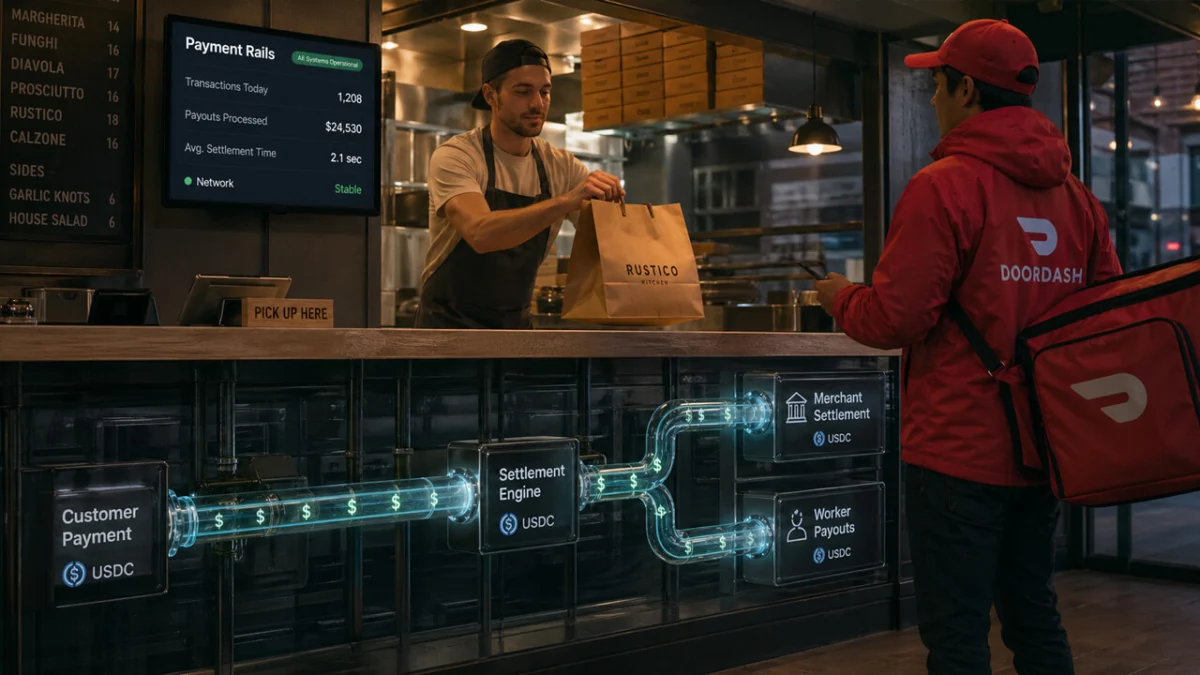
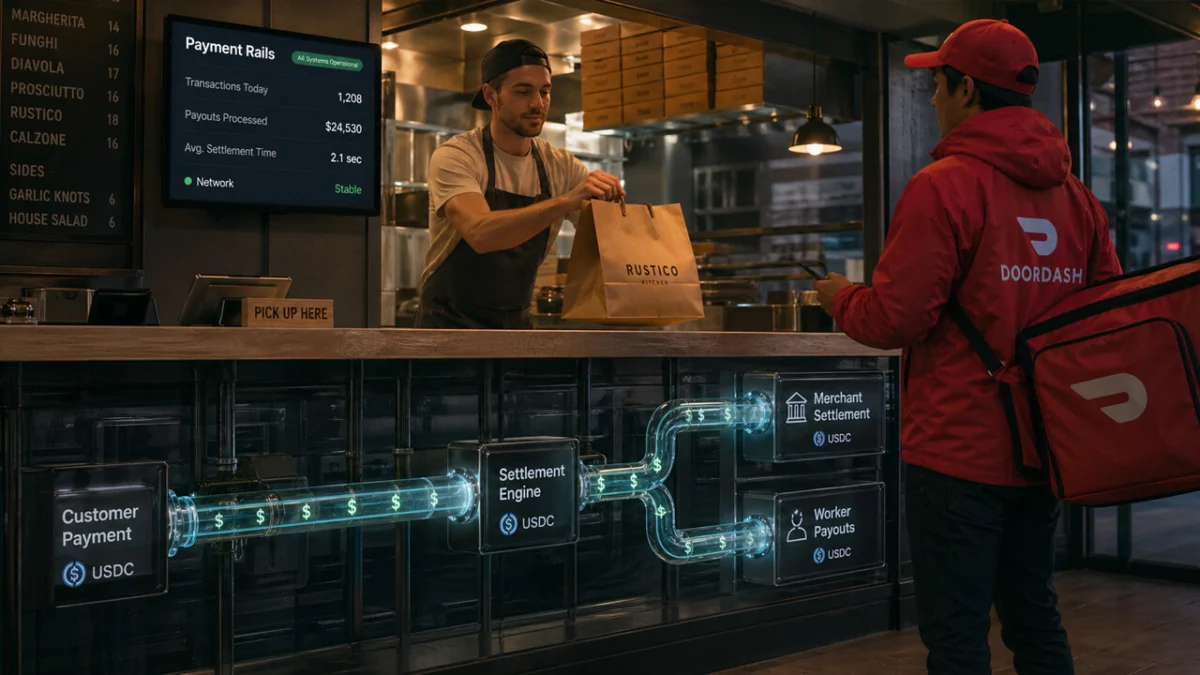
DoorDash, the leading food delivery and logistics platform, has officially announced a strategic partnership with Tempo, a payments-focused blockchain infrastructure provider backed by Stripe and Paradigm, to integrate stablecoin-powered payouts into its global marketplace. This move signals a major shift in how the world’s largest gig-economy platforms manage the complex movement of capital across international borders. By leveraging stablecoins—digital assets pegged to the value of a fiat currency like the U.S. Dollar—DoorDash aims to bypass the traditional banking bottlenecks that have historically slowed down the transfer of funds from customers to merchants and delivery contractors, known as Dashers.
The integration comes at a time when DoorDash operates in more than 40 countries, managing a three-sided marketplace where money flows constantly in multiple directions. Customers pay at checkout, merchants await settlement for fulfilled orders, and Dashers rely on rapid payouts to cover immediate operational costs like fuel and maintenance. According to DoorDash co-founder Andy Fang, the primary motivation behind this technological shift is the pursuit of speed and affordability. The existing financial infrastructure, which relies on regional banking rails and manual settlement windows, often forces participants to wait days for funds to clear, particularly in cross-border scenarios.
The Operational Impetus: Bridging the Settlement Gap
The traditional financial system is often characterized by fragmentation. When a customer in Toronto orders a meal via a U.S.-based platform, the payment must navigate a labyrinth of intermediary banks, currency exchange protocols, and regulatory "cut-off" times. For a company like DoorDash, these delays are not merely administrative inconveniences; they represent a significant friction point in their business model.
Merchants, many of whom are small-to-medium-sized businesses, operate on thin margins and require consistent cash flow to manage payroll and inventory. Slower settlement times directly impact their working capital and short-term liquidity. Similarly, Dashers—the independent contractors who power the delivery network—frequently require immediate access to their earnings. This need became particularly acute during recent periods of rising fuel costs. In response, DoorDash previously introduced emergency measures, such as gas relief programs in the United States and Canada, to mitigate the financial pressure on its workforce. The move to stablecoin payouts represents a more permanent, structural solution to these liquidity challenges.
Chronology of the Stripe-Tempo Evolution
The development of Tempo is a critical piece of the broader fintech landscape. Last year, Stripe, the global payments giant, partnered with the crypto-focused venture firm Paradigm to introduce Tempo as a payments-centric Layer-1 blockchain. This initiative marked a significant return to the crypto space for Stripe, which had famously ended its support for Bitcoin payments in 2018 due to volatility and slow transaction speeds.
The timeline of this evolution highlights a strategic pivot toward stablecoins as a utility-first application of blockchain technology:
- 2014-2018: Stripe explores Bitcoin but eventually retreats, citing the asset’s evolution into a "store of value" rather than a medium of exchange.
- 2022-2023: Stripe begins re-entering the space, focusing on USDC (USD Coin) settlements and payouts for creators on platforms like X (formerly Twitter).
- Late 2023: Tempo is unveiled as a high-throughput blockchain designed specifically for enterprise-grade payment flows, with a focus on sub-second finality and low, predictable transaction fees.
- 2024: DoorDash, along with Coastal Bank and ARQ, joins the Tempo ecosystem, signaling the start of real-world commercial testing.
The partnership list for Tempo has grown rapidly to include heavyweights such as Deutsche Bank, Shopify, OpenAI, Revolut, and Visa. This group suggests that the technology is being positioned as a "backend" solution for some of the world’s most transaction-heavy internet companies.
Technical Infrastructure and Supporting Data
Stablecoins have quietly become the "workhorse" of the digital asset economy. According to recent market data, stablecoin transaction volume reached a staggering $28 trillion in the first quarter of 2024. While a significant portion of this volume—estimated at up to 76%—is driven by automated bots and arbitrage in the decentralized finance (DeFi) space, the remaining volume represents a growing tide of real-world settlements.
The Tempo blockchain is designed to handle the specific requirements of a company like DoorDash. Unlike early blockchains that struggled with congestion and high "gas" fees, Tempo utilizes a design optimized for:
- High Throughput: The ability to process thousands of transactions per second to match the peak demand of a global delivery platform.
- Sub-Second Finality: Ensuring that once a payout is initiated, it is confirmed and irreversible in less than a second.
- Stablecoin-Native Fees: Allowing transaction fees to be paid in the stablecoin itself, removing the need for users or companies to hold a separate volatile "gas" token.
For DoorDash, the technical implementation may follow a hybrid model. While the company hasn’t released a full technical whitepaper, industry analysts suggest that the backend will likely use a "fiat-to-stablecoin-to-fiat" or "fiat-to-stablecoin-to-wallet" structure. This allows DoorDash to utilize blockchain for the high-speed transfer leg of the journey while maintaining compliance with local banking regulations via partners like Coastal Bank.
Industry Reactions and Strategic Partnerships
The involvement of Coastal Bank and ARQ in the Tempo rollout provides the necessary regulatory and custodial framework for DoorDash’s transition. Coastal Bank, known for its focus on fintech partnerships, provides the "banking-as-a-service" (BaaS) layer that bridges the gap between traditional bank accounts and digital wallets.
Market analysts view this move as a litmus test for the viability of stablecoins in mainstream commerce. "The most important question stablecoins are faced with now is whether large platforms see them as a practical way to move money through parts of their business where settlement speed and foreign exchange friction affect workers every day," noted a recent report from CryptoSlate.
The appeal for DoorDash co-founder Andy Fang is clear: if the company can reduce the cost of a single payout by even a few cents and accelerate the delivery of those funds by several hours or days, the cumulative impact across millions of transactions is massive. This efficiency gain provides a competitive advantage in a delivery market where operational margins are notoriously tight.
Broader Implications: The "Invisible" Crypto Revolution
The DoorDash-Tempo partnership highlights a growing trend in the technology sector: the "invisibilization" of blockchain. Unlike the consumer-facing crypto craze of 2021, where users were encouraged to buy and trade speculative tokens, this new wave of adoption focuses on backend infrastructure. The end-user—whether a restaurant owner in Chicago or a delivery driver in Sydney—may not even realize they are using a blockchain. They simply notice that their funds arrive faster and that the fees deducted from their earnings are lower.
This shift has several long-term implications for the financial industry:
1. Disruption of Correspondent Banking
The traditional correspondent banking system, which relies on a chain of banks to move money internationally, is notoriously slow and expensive. Stablecoin rails like Tempo offer a direct, peer-to-peer alternative that can operate 24/7, regardless of banking holidays or regional time zones.
2. Pressure on Legacy Payment Rails
As more enterprise-level companies adopt stablecoin settlements, legacy providers like SWIFT and traditional ACH (Automated Clearing House) systems may face increasing pressure to modernize their speeds or lower their costs to remain competitive.
3. Regulatory Clarity and Compliance
The participation of established entities like DoorDash, Stripe, and Deutsche Bank suggests a growing confidence in the regulatory environment surrounding stablecoins. While the U.S. and other jurisdictions are still refining their stablecoin legislation, these companies are moving forward with "compliance-first" designs that integrate KYC (Know Your Customer) and AML (Anti-Money Laundering) protocols directly into the payment flow.
Conclusion: A New Standard for Global Payouts
The decision by DoorDash to integrate stablecoin payouts via Tempo is more than a technological experiment; it is a strategic response to the limitations of the modern financial system. By addressing the "payout problem," DoorDash is tackling the most direct form of payment friction in its ecosystem—the gap between work completed and cash available.
While the full technical breakdown of the rollout remains to be seen, the direction of the industry is becoming increasingly clear. Large-scale platforms are no longer looking at crypto as a speculative asset class but as a fundamental upgrade to the plumbing of global commerce. If successful, the DoorDash initiative could serve as a blueprint for other gig-economy giants, from Uber to Airbnb, to transition their payout infrastructures to blockchain-based systems. In the near future, the hallmark of crypto’s success may not be a "consumer frenzy," but rather a silent, efficient redesign of the world’s financial infrastructure that ensures money moves as fast as the data that drives it.