admin
admin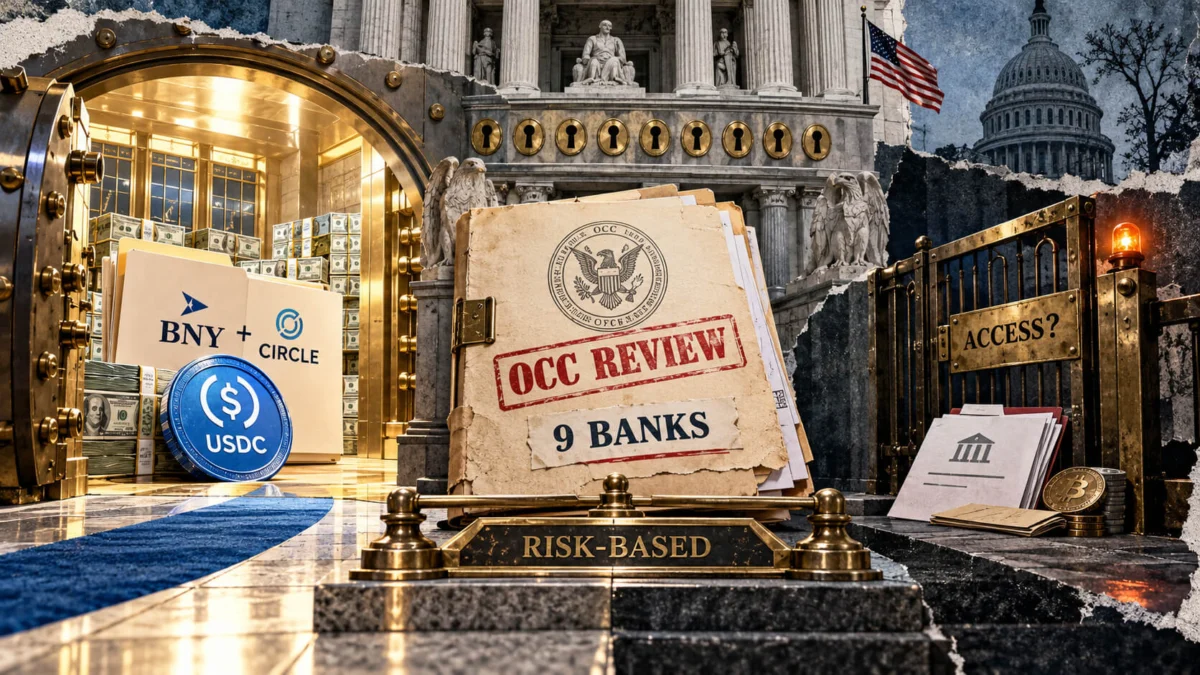
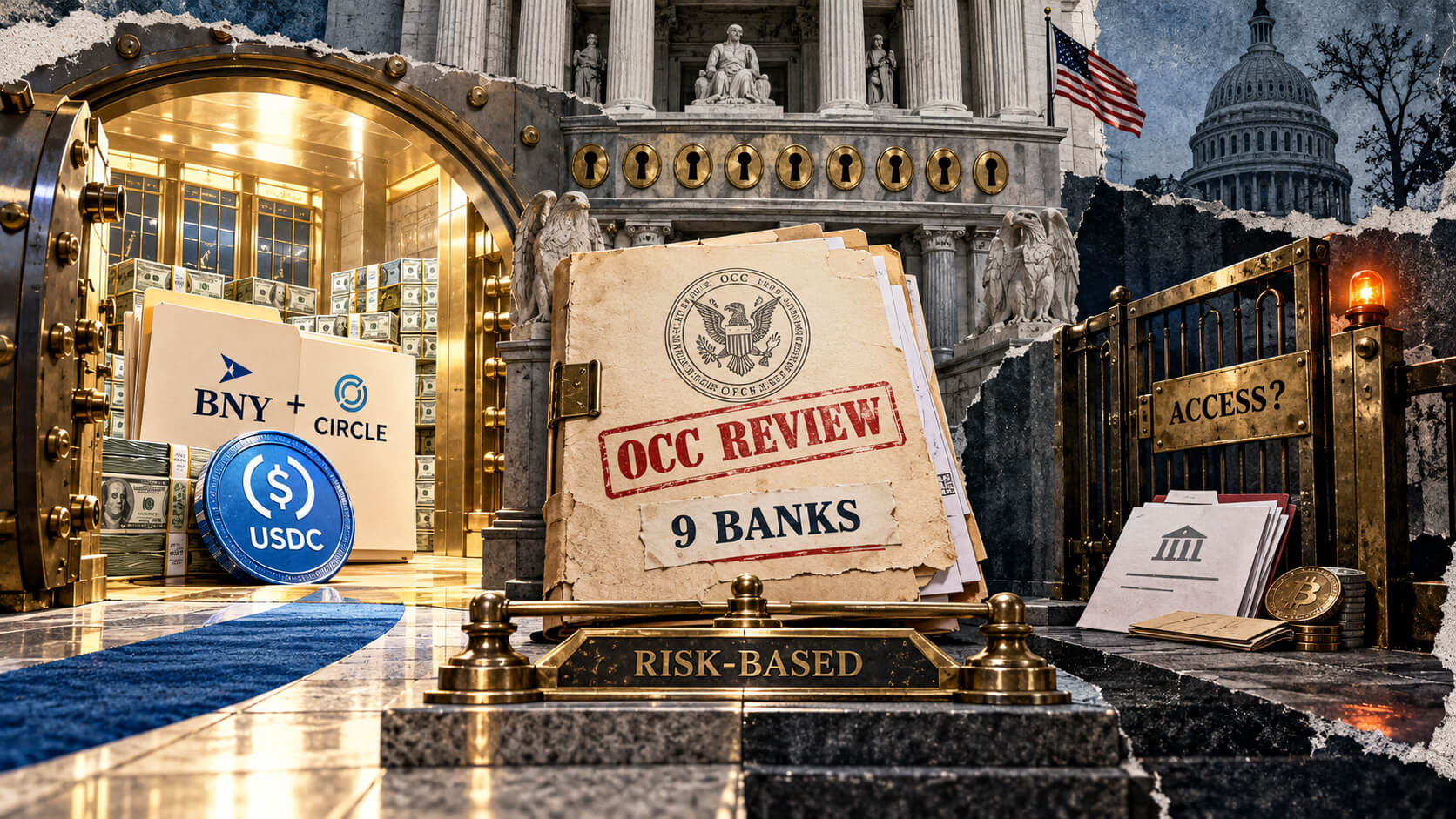
The Office of the Comptroller of the Currency’s (OCC) recent findings on debanking practices, released on October 14th, illuminate a complex and often restrictive landscape for digital asset businesses seeking access to traditional banking services. The report, which meticulously reviewed the historical policies of the nine largest national banks overseen by the agency between 2020 and September 2025, reveals that financial crime considerations have frequently served as a primary justification for denying or limiting services to digital asset issuers, exchanges, and administrators. This comprehensive examination, which involved sifting through nearly 100,000 complaints and approximately 50,000 documents totaling around 420,000 pages, underscores a persistent tension between regulatory oversight, financial crime prevention, and the burgeoning digital asset industry.
The OCC’s investigation delved into the banking decisions made by institutions such as JPMorgan Chase Bank, Bank of America, Citibank, Wells Fargo Bank, US Bank, Capital One, PNC Bank, TD Bank, and BMO Bank. The agency’s official summary highlights that many of these financial giants imposed significant restrictions on digital asset-related entities, often citing concerns related to anti-money laundering (AML) and the broader spectrum of financial crime. These restrictions manifested in various forms, ranging from outright prohibitions on business relationships to the imposition of stringent additional review and approval processes. While the broad finding encompasses all nine banks, the specific nuances of digital asset policies and the underlying reasons for individual refusals remain, according to the OCC, case-level matters requiring granular examination.
Comptroller Jonathan Gould, in his remarks accompanying the release of the findings, emphasized the imperative for banks to evaluate potential customers based on objective, risk-based criteria. This approach, he clarified, seeks to uphold the integrity of individual customer decisions grounded in legitimate risk assessments, while simultaneously challenging instances of improper exclusion. This stance aligns with the administration’s broader commitment to fair banking, as articulated in the August 2025 executive order "Guaranteeing Fair Banking for All Americans." This executive order, while not creating new privately enforceable rights, reinforces existing statutory protections and underscores the principle that access to financial services should not be unduly obstructed.
The OCC’s scrutiny of debanking practices is further contextualized by recent regulatory actions and policy shifts. On April 7th, the OCC, in conjunction with the Federal Deposit Insurance Corporation (FDIC), finalized its reputation-risk rule, which became effective on June 9th. This rule aims to delineate supervisory conduct by prohibiting agencies from pressuring banks over customer relationships based on public perception concerns that are separate from a bank’s actual financial or operational condition. Crucially, the final rule explicitly forbids supervisors from utilizing anti-money laundering (AML) concerns as a pretext for reputation-risk supervision. This regulatory evolution is significant, as it seeks to create a clearer boundary between legitimate financial crime concerns and subjective judgments about a business’s public image or perceived riskiness.
The implications of this rule are underscored by a separate, significant enforcement action. On October 13th, the OCC assessed a $750 million civil money penalty against Bank of America, citing deficiencies in transaction monitoring, reporting, expertise, and training. This substantial penalty serves as a potent reminder of the rigorous compliance standards expected of large financial institutions, particularly concerning the detection and prevention of illicit financial activities.
The regulatory framework governing digital assets in relation to traditional finance is also shaped by guidance from the Office of Foreign Assets Control (OFAC). OFAC’s standing guidance unequivocally states that U.S. persons and other entities subject to its jurisdiction bear the same obligations for digital currency transactions as they do for traditional fiat currency transactions. This means that compliance with sanctions regimes extends to the digital asset realm, reinforcing the need for robust due diligence and risk management by financial institutions.
The OCC’s findings highlight that the issues at stake extend far beyond the mere opening of a deposit account. A notable development illustrating the evolving relationship between traditional finance and digital assets is BNY Mellon’s announcement on June 29, 2026. The banking giant revealed its expansion of stablecoin services for institutional clients, which includes holding USDC in BNY custody and facilitating the minting and redemption of USDC with U.S. dollars through Circle. This arrangement directly links digital asset custody with the fiat side of stablecoin operations, demonstrating a growing integration of these sectors. While BNY Mellon has articulated service availability for its institutional clientele, the eligibility and access for smaller crypto businesses and the broader competitive implications of such arrangements remain subjects of ongoing discussion and potential future regulatory clarity.
A Historical Context of Restrictions and Evolving Scrutiny
The period under review by the OCC, from 2020 to September 2025, represents a critical phase in the maturation of the digital asset industry and its interactions with established financial institutions. During these years, the perceived risks associated with cryptocurrencies, including their potential use in illicit activities, became a focal point for regulators and banks alike. This heightened awareness, coupled with a lack of comprehensive regulatory frameworks specifically tailored to digital assets, led many financial institutions to adopt cautious, and often restrictive, approaches to onboarding clients in this sector.
The sheer volume of data processed by the OCC in its investigation—nearly 100,000 complaints and 50,000 documents—speaks to the pervasive nature of these debanking concerns. The agency’s approach appears to be a response to a growing number of complaints from businesses within the digital asset ecosystem who found themselves unable to secure or maintain essential banking relationships, despite often operating within legal frameworks.
Comptroller Gould’s emphasis on objective, risk-based criteria is a cornerstone of the OCC’s supervisory philosophy. This principle aims to ensure that decisions to decline customers are based on a genuine assessment of financial, operational, or compliance risks, rather than on broader disapproval of a lawful business model or reputational concerns. The challenge, and the consequential test for the OCC, lies in its ability to effectively distinguish between legitimate risk-based restrictions and decisions that may unduly stifle innovation or discriminate against a legal industry. The ultimate measure of success for the OCC’s scrutiny will be whether it leads to the provision of usable banking services for digital asset businesses.
Supervisory Tools and the Path Forward
The OCC possesses existing supervisory tools that can be leveraged to address customer access issues. A September 2025 bulletin clarified that the agency considers banks’ debanking records and prevention policies on a case-by-case basis when evaluating licensing applications. This means that a bank’s history of denying services, particularly to specific industries, could be a factor in its ability to obtain or maintain licenses.
Furthermore, debanking practices may also be considered within the framework of Community Reinvestment Act (CRA) ratings. The treatment of such practices in CRA assessments can be tailored to a bank’s size, complexity, and overall risk profile, offering another avenue for the OCC to influence banking behavior. When a bank seeks a licensing decision, its record and procedures regarding customer access can be subject to examination. Similarly, the OCC updated its online complaint reporting system in September 2025, and it actively uses complaint data, alongside other information, to refine its examinations and supervisory priorities. The OCC’s October 14th announcement explicitly references complaint intake and licensing scrutiny as actions already undertaken.
For businesses operating within the digital asset space, these existing tools offer a potential pathway to address individual cases of denied or terminated banking access. The critical determinant of whether a restriction is justifiable will be whether the stated reason for the denial is directly tied to the customer’s actual risks and the bank’s capacity to manage those risks effectively. Factors such as customer risk profile, the bank’s operational capacity to handle specific types of transactions, and the substantive grounds for the restriction are all essential components of this analysis.
The banking industry, represented by organizations like the Bank Policy Institute, has voiced its perspective on these matters. The Institute has publicly supported the principles of fair access and the establishment of clear, consistent standards, while simultaneously underscoring the paramount importance of maintaining sound risk management practices. This sentiment suggests a desire within the industry to comply with regulatory expectations while preserving the ability to manage inherent risks.
JPMorgan Chase, one of the banks under review, has also commented on its policies, stating that they prohibit political or religious discrimination. The bank acknowledged that it had rectified a process with WePay that had fallen short of its internal standards, indicating a willingness to address shortcomings when identified.
The integration of digital asset services, as exemplified by BNY Mellon’s stablecoin offerings, presents both opportunities and challenges. For new entrants in the crypto space, securing customer eligibility and undergoing objective assessments by banks remain crucial determinants for accessing essential services. While institutional-grade offerings are expanding, the question of whether comparable access will be extended to smaller issuers or exchanges remains an open competitive and regulatory question.
The OCC has indicated that it is actively considering further regulatory and supervisory changes. The true measure of progress in this evolving landscape will be the demonstrable increase in broader eligibility and the translation of these policy shifts into tangible customer access to essential banking functions. This will necessitate a rigorous assessment of financial, operational, AML, and sanctions requirements on their individual merits, ensuring that decisions are grounded in sound risk management rather than broader industry perceptions or subjective judgments. The ongoing dialogue and regulatory evolution suggest a path toward greater clarity and potentially more equitable access for the digital asset industry within the traditional financial system.