admin
admin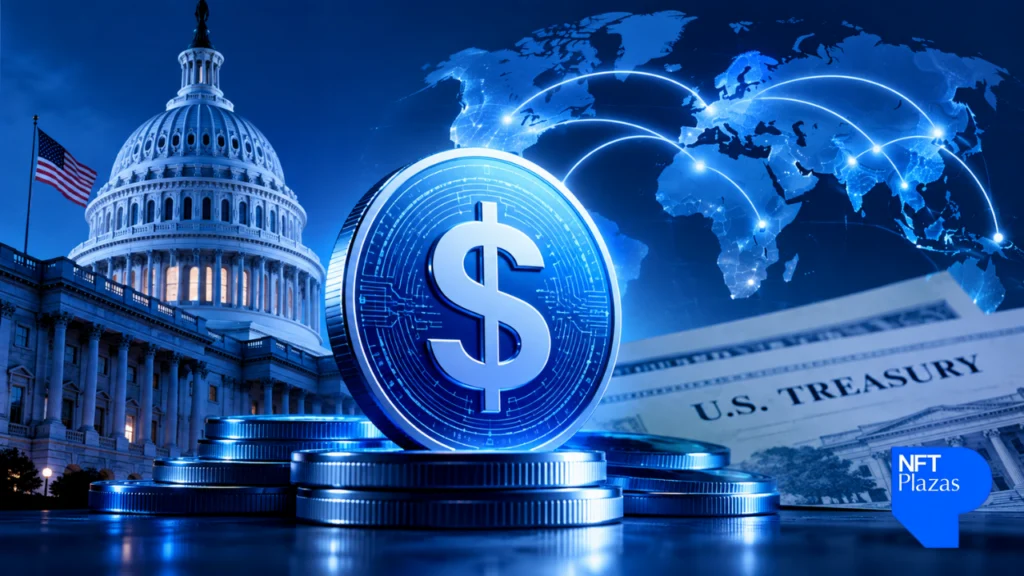
This strategic initiative, currently under active discussion within various U.S. government agencies, aims to leverage the burgeoning stablecoin market to reinforce the dollar’s preeminence in global finance. According to reports from Bloomberg, officials are exploring an intricate web of partnerships and joint ventures with private sector entities to champion stablecoin projects in international markets. Key agencies likely to be involved in this ambitious undertaking include the Treasury Department, the State Department, and the U.S. International Development Finance Corporation (DFC), as indicated by individuals with knowledge of the ongoing deliberations. The overarching objectives are clear: to strengthen the dollar’s entrenched position as the world’s leading reserve currency and to stimulate additional, robust demand for U.S. Treasury securities, which underpin the nation’s financial stability.
The Strategic Imperative: Fortifying Dollar Dominance
The U.S. dollar has long been the undisputed king of global finance, a status that bestows significant economic and geopolitical advantages upon the United States. It accounts for an overwhelming share of international trade invoicing, foreign exchange transactions (nearly 90% as cited by the Bank for International Settlements), and global foreign exchange reserves (over 58% as of recent IMF data). This "exorbitant privilege" allows the U.S. to borrow at lower rates, conduct international transactions with greater ease, and wield considerable influence over the global financial system. However, in an increasingly multipolar world, and with rising competition from other major economies developing their own digital payment systems, Washington is keen to innovate new avenues to preserve and extend this crucial dominance.
The proposed stablecoin initiative is seen as a forward-looking strategy to adapt the dollar’s influence to the digital age. By encouraging the adoption of U.S. dollar-backed stablecoins abroad, the U.S. aims to embed its currency more deeply into the digital financial infrastructure emerging worldwide. This move is not merely about promoting a technological trend; it is a calculated geopolitical and economic maneuver designed to safeguard America’s financial leadership in the 21st century.
Stablecoins: A Digital Bridge to Treasury Demand
At their core, stablecoins are a class of blockchain-based digital assets meticulously designed to maintain a stable value, typically pegged to an external reference asset, most commonly the U.S. dollar. Unlike the volatile price swings characteristic of cryptocurrencies like Bitcoin and Ethereum, stablecoins are engineered to function as reliable digital cash, facilitating the transfer of dollar-denominated value across various blockchain networks with speed and efficiency.
The stablecoin market is overwhelmingly dominated by tokens linked to the U.S. dollar. Tether’s USDT and Circle’s USDC stand as the two behemoths in this space, together commanding the vast majority of the market’s total value, which collectively exceeds $150 billion. While initially gaining traction primarily within cryptocurrency trading platforms, their utility has rapidly expanded. Stablecoins are now increasingly utilized for a diverse range of applications, including cross-border transfers, international payments, and settlement, particularly in regions where traditional banking infrastructure is slow, expensive, or inaccessible.
The architecture of these dollar-backed stablecoins creates a direct and significant link to U.S. government debt. To maintain their dollar peg and ensure user confidence in their redeemability, issuers are required to hold reserves equivalent to the tokens in circulation. These reserves typically comprise highly liquid assets such as cash, bank deposits, and, crucially, short-term U.S. Treasury securities. As the supply and adoption of dollar-backed stablecoins grow globally, their issuers naturally become larger and more consistent buyers of dollar-denominated assets, with U.S. government debt forming a substantial component of these holdings.
This symbiotic relationship is central to Washington’s profound interest. Treasury Secretary Scott Bessent, a key proponent of this strategy within the hypothetical future Trump administration as per the article’s internal chronology, has reportedly articulated stablecoins as a powerful instrument for reinforcing the dollar’s global standing. Indeed, stablecoin issuers have already emerged as significant institutional holders of U.S. government debt, with their cumulative Treasury holdings approaching the scale of those held by some major sovereign investors and central banks. For instance, reports indicate that major stablecoin issuers collectively hold tens of billions of dollars in U.S. Treasury bills, making them comparable to individual nation-states in their capacity as creditors to the U.S. government.
The GENIUS Act: Laying the Regulatory Foundation
The proposed overseas promotional push is underpinned by recent legislative action within the U.S., specifically the passage of the GENIUS Act. This federal stablecoin legislation, reportedly signed into law by President Donald Trump in 2025, provides the crucial regulatory framework necessary for this international expansion. The GENIUS Act establishes clear guidelines for payment stablecoins, mandating that issuers maintain robust reserves fully backing their tokens. Eligible reserve assets, as stipulated by the law, include U.S. dollars and highly liquid short-term Treasury securities.
From Washington’s perspective, this legislative framework serves multiple critical purposes. Firstly, it provides a legitimate and transparent regulatory foundation for the proliferation of dollar-backed stablecoins, both domestically and internationally. This clarity is essential for fostering trust and widespread adoption. Secondly, by requiring stringent reserve standards, the Act strengthens confidence in stablecoins’ ability to maintain their dollar peg, mitigating risks of instability that could undermine their utility and reputation. This regulatory certainty is vital for encouraging global financial institutions and users to embrace these digital assets.
Ultimately, the GENIUS Act equips the U.S. with another potent mechanism to extend the reach of the dollar beyond the confines of traditional banking networks. By establishing a credible and regulated environment for dollar-backed stablecoins, the U.S. aims to facilitate a form of "digital dollarization." Should stablecoins achieve widespread adoption for international commerce, remittances, and digital payments, consumers and businesses in foreign markets could gain direct, blockchain-enabled access to dollar-denominated financial instruments. This could lead to the dollar becoming more deeply integrated into the everyday transactions and financial lives of individuals and entities outside the United States, thereby cementing its digital footprint globally.
A Global Race for Digital Financial Infrastructure
The U.S. initiative does not unfold in a vacuum; it is a direct response to, and a component of, a broader global competition among major economies to develop and control the next generation of digital payment systems. This contest is not merely about which digital assets consumers choose, but fundamentally about which currencies become embedded within the foundational networks that facilitate global money movement.

China, for instance, has been a trailblazer in this space, aggressively developing its central bank digital currency (CBDC), the digital yuan (e-CNY), and actively participating in Project mBridge. Project mBridge is a multi-CBDC cross-border payment initiative, spearheaded by the Bank for International Settlements (BIS) Innovation Hub, which utilizes distributed-ledger technology to enable instant, low-cost international transfers between participating central banks. This project, involving central banks from China, Hong Kong, Thailand, and the UAE, represents a significant step towards creating an alternative, non-dollar-centric global payment infrastructure.
Similarly, Europe is pursuing its own ambitious digital strategy through the proposed digital euro. The European Central Bank (ECB) is meticulously researching and developing the infrastructure for a digital euro, aiming to complement physical cash and private digital payments. Beyond a CBDC, Europe is also investing in developing infrastructure to connect tokenized financial markets with central bank money, envisioning a future where a broader range of financial assets and transactions occur on distributed ledgers.
These developments underscore a critical geopolitical reality: the race is on to define the future of global finance. The U.S. sees dollar-backed stablecoins as a distinct advantage in this competition. Unlike CBDCs, which are directly issued and controlled by central banks, stablecoins leverage the private sector’s innovation and existing market penetration, offering a decentralized yet dollar-anchored alternative. This approach allows the U.S. to expand the dollar’s digital reach while simultaneously creating a new, substantial source of demand for its sovereign debt, all without directly issuing a federal digital currency. The strategic implication is clear: by facilitating the growth of dollar-backed stablecoins, the U.S. can ensure that even as the world transitions to digital payments, the dollar remains at the core of these new financial arteries.
Emerging Markets: A Double-Edged Sword
While the proliferation of dollar-backed stablecoins offers clear advantages for U.S. financial objectives, it presents a more complex and potentially perilous scenario for emerging economies. International financial institutions have sounded alarms regarding the potential ramifications. The International Monetary Fund (IMF) has issued stark warnings that widespread adoption of dollar-backed stablecoins could accelerate "currency substitution" – a phenomenon where a foreign currency increasingly replaces the domestic currency for transactions, savings, and accounting – particularly in countries grappling with weak local currencies, high inflation, or limited access to foreign exchange markets. The ease of accessing digital dollars could incentivize households and businesses to shift their savings and transactional activities away from unstable local currencies, exacerbating domestic economic challenges.
This pressure could become particularly acute during periods of financial instability. Stablecoins, by design, can traverse blockchain networks with reduced reliance on conventional banking channels, enabling large volumes of capital to cross borders with unprecedented speed. This frictionless movement could severely hamper the ability of central banks in emerging markets to monitor capital flows, implement effective monetary policy, or respond decisively to sudden capital flight, potentially destabilizing their financial systems. The Bank for International Settlements (BIS) has echoed these concerns, cautioning that extensive use of dollar-denominated stablecoins could amplify existing financial vulnerabilities in emerging markets and further entrench the dollar’s already formidable dominance, potentially stifling the development of local financial markets and monetary sovereignty.
However, the picture is not entirely bleak. Stablecoins also offer compelling potential benefits for these economies. They can dramatically enhance the speed and efficiency of cross-border transfers and remittances, significantly reduce transaction costs, and provide much-needed access to dollar liquidity in regions where traditional financial services are either prohibitively expensive or severely inefficient. For migrant workers sending money home or businesses engaging in international trade, stablecoins could represent a substantial improvement over existing systems, fostering economic activity and financial inclusion.
The ultimate impact on any given emerging market will likely be nuanced and highly dependent on a confluence of factors: the stability of its domestic currency, the robustness of its existing financial infrastructure, and the current level of dollarization already prevalent in its economy. Countries with strong, well-managed currencies and sophisticated financial systems might integrate stablecoins more smoothly, potentially harnessing their efficiency benefits. Conversely, those with fragile economies and underdeveloped financial sectors could face intensified challenges to their monetary sovereignty and financial stability.
The Role of Private Sector Innovation and Public-Private Partnerships
A crucial aspect of the U.S. strategy involves leveraging the innovation and infrastructure already built by private stablecoin issuers. Companies like Tether and Circle have invested heavily in developing the technology and establishing the market reach for their dollar-backed tokens. The proposed plan envisions formalizing and expanding partnerships and joint ventures between these private entities and U.S. government agencies.
The Treasury Department, with its mandate to manage U.S. finances and promote economic stability, would likely play a central role in guiding the financial and regulatory aspects of such partnerships. The State Department, responsible for U.S. foreign policy and international relations, would be instrumental in diplomatic outreach, negotiating agreements with foreign governments, and promoting stablecoin adoption as a tool for economic development and stability. The U.S. International Development Finance Corporation (DFC), which invests in private sector-led development projects in emerging markets, could provide funding, technical assistance, and risk mitigation to stablecoin projects aligned with U.S. development goals, particularly in regions where access to efficient financial services is critical.
These public-private collaborations could manifest in various forms: joint pilot programs for cross-border remittances, technical assistance to foreign central banks or financial institutions exploring stablecoin integration, or even direct investment in payment infrastructure that utilizes dollar-backed stablecoins. Such partnerships would allow the U.S. government to guide the development and deployment of these digital assets in a manner consistent with its strategic interests, while capitalizing on the agility and technological prowess of the private sector.
Conclusion: A New Frontier for Financial Diplomacy
As discussions within Washington progress, the initiative to promote U.S. dollar-backed stablecoins overseas marks a significant shift in financial diplomacy. It represents a proactive effort by the U.S. to adapt its tools of global influence to the rapidly evolving digital landscape. The implications are far-reaching: for the United States, it offers a dual benefit of expanding the dollar’s digital footprint and creating a sustainable demand channel for its Treasury securities. For emerging markets, it presents a complex trade-off between the undeniable efficiencies and cost reductions offered by modern digital payments and the potential risks to their monetary sovereignty and financial stability.
The success of this bold strategy will depend on careful navigation of geopolitical sensitivities, robust regulatory oversight, and effective public-private collaboration. Should Washington move decisively forward, this initiative could profoundly shape whether stablecoins remain primarily niche instruments within the cryptocurrency market or ascend to become a fundamental component of the global financial system, with the U.S. dollar firmly cemented at its digital core. The outcome will likely define a new era of currency competition and determine the architecture of global finance for decades to come.