admin
admin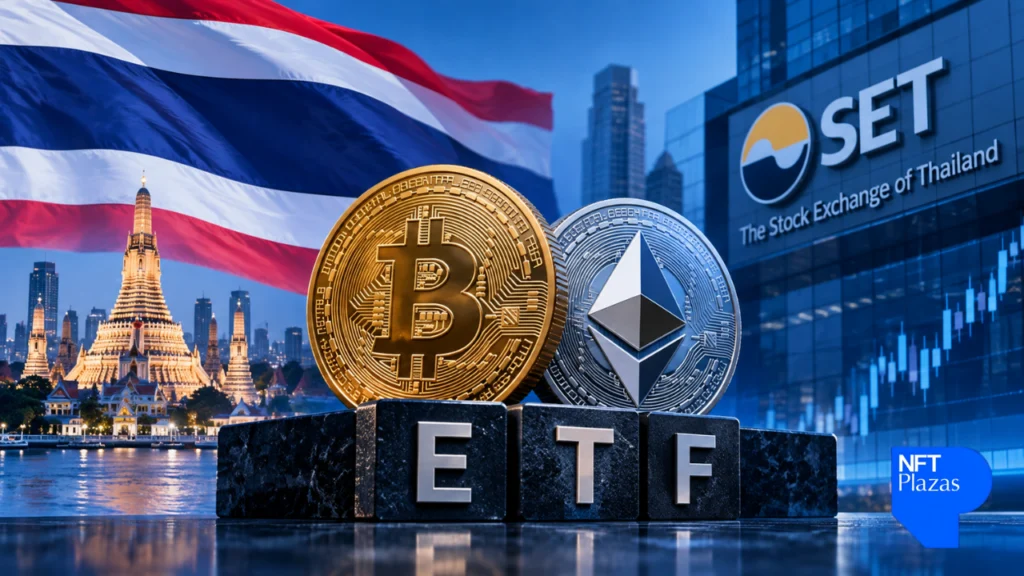
The Securities and Exchange Commission (SEC) of Thailand has officially finalized and published a comprehensive set of regulations that will permit the establishment and listing of locally domiciled Bitcoin (BTC) and Ethereum (ETH) Exchange-Traded Funds (ETFs) on the Stock Exchange of Thailand (SET). This landmark decision, formalized through the issuance of 11 notifications on October 8, represents a significant step towards integrating digital assets into the nation’s traditional financial markets, offering a regulated and familiar pathway for investors to gain exposure to the burgeoning cryptocurrency space. While the new framework is slated to take effect on October 16, 2026, marking a two-year preparatory period, its promulgation sets a clear direction for the future of digital asset investment in the Kingdom.
A Deliberate Path to Digital Asset Integration
Thailand’s journey toward allowing crypto ETFs has been characterized by a methodical and cautious approach, reflecting the regulator’s commitment to balancing innovation with robust investor protection. The SEC’s decision follows extensive public consultations conducted in two phases: the first in April and May, and a subsequent round in August and September. According to official reports, these consultations garnered broad support from market participants, including financial institutions, asset managers, and individual investors, underscoring a clear demand for regulated crypto investment products within the Thai market.
This measured pace is consistent with Thailand’s broader regulatory philosophy regarding digital assets. The country was among the first in Southeast Asia to establish a dedicated legal framework for cryptocurrencies and digital asset businesses through the Digital Asset Business Royal Decree in 2018. This decree provided a legal basis for licensing crypto exchanges, brokers, and other service providers, establishing the SEC as the primary regulator for the digital asset sector. However, direct investment by traditional funds into cryptocurrencies remained largely restricted, with only limited allowances for foreign crypto ETFs under specific conditions for qualified investors. The new domestic ETF framework seeks to bridge this gap, offering a more accessible and locally supervised avenue for investment.
The Regulatory Framework: Pillars of Protection and Market Integrity
The 11 notifications issued by the SEC outline a detailed regulatory framework designed to ensure the integrity of the market and safeguard investors. Key aspects covered include stringent requirements for fund management, secure digital asset custody, comprehensive investor disclosures, and specific trading restrictions.
Exclusive Initial Focus on Bitcoin and Ethereum:
At the outset, the framework is deliberately narrow in scope, limiting eligible underlying assets exclusively to Bitcoin (BTC) and Ethereum (ETH). This cautious selection reflects the SEC’s recognition of these two cryptocurrencies as the largest and most established digital assets by market capitalization, liquidity, and network security. The decision to start with BTC and ETH aligns with the approach taken by many other global regulators, including the U.S. Securities and Exchange Commission (SEC) and Hong Kong’s financial authorities, who have also prioritized these assets for initial ETF approvals. While the framework allows for the potential inclusion of additional cryptocurrencies in the future, any such expansion will be contingent upon factors such as enhanced liquidity, broader market acceptance, demonstrated network security, and robust investor protection mechanisms. This phased approach allows the regulator and market participants to gain experience and adapt to the unique characteristics of digital asset investing before expanding the risk profile.
Passive Investment Strategy and Exposure Requirements:
Each locally established crypto ETF must adhere to a passive investment strategy, meticulously designed to track the price movements of a single underlying cryptocurrency. To ensure a direct and transparent correlation, the fund must maintain an average net exposure of at least 80% of its Net Asset Value (NAV) to that specific digital asset over each accounting year. This high exposure requirement is crucial for maintaining the integrity of the ETF’s purpose – to provide direct exposure to the underlying crypto asset’s price – and prevents managers from deviating into broader, potentially more speculative, portfolios of digital assets. This clarity is intended to make these products more understandable and predictable for traditional investors.
Robust Custody and Security Standards:
Recognizing the unique security challenges associated with digital assets, the SEC has placed a paramount emphasis on custody. Under the new regulations, all digital assets underlying the ETFs must be held by custodians that are licensed and supervised by the Thai regulator. This ensures that the storage and management of these assets adhere to stringent local regulatory standards, providing a layer of security and oversight that might be absent in unregulated direct crypto holdings. The SEC has also indicated that it may consider permitting qualified foreign custodians in the future, should such arrangements be deemed necessary and appropriate, potentially facilitating international best practices and operational efficiencies. The importance of secure cold storage, multi-signature authentication, and regular audits for digital asset custodians cannot be overstated, and these regulations are expected to mandate such practices.
Qualified Fund Management and Supervision:
Asset managers seeking to launch these ETFs must demonstrate robust operational capabilities. This includes having adequately qualified personnel with expertise in digital assets, establishing appropriate operating systems capable of managing the unique aspects of crypto investments, and securing suitable arrangements with various service providers. Furthermore, the framework allows for the outsourcing of digital asset investment management, but only to firms that are licensed digital asset fund managers. In an innovative move, qualified digital asset businesses may also apply to become mutual fund supervisors for crypto ETFs, provided they meet specific requirements pertaining to financial standing, personnel expertise, and operational systems. This opens avenues for specialized crypto firms to integrate more deeply into the traditional financial ecosystem.
Enhanced Investor Safeguards and Disclosure:
A cornerstone of the SEC’s approach is the protection of retail investors. Securities brokers facilitating the purchase of these products will be mandated to provide comprehensive explanations of the ETFs’ characteristics, including their inherent risks, which notably include high volatility. Investors will be required to acknowledge their understanding of these risks before engaging in trading activities. Crucially, the rules explicitly prohibit securities firms from extending margin loans for crypto ETF purchases, mitigating the risk of amplified losses through leverage. Brokers will also be tasked with emphasizing appropriate asset allocation, discouraging excessive concentration in digital assets, and ensuring that investment decisions align with customers’ declared risk tolerance. These measures are designed to educate investors and prevent speculative overexposure, though it is explicitly stated that these safeguards do not eliminate the significant market risks associated with Bitcoin and Ethereum, whose prices can remain highly volatile.
Strategic Restrictions on Foreign Crypto ETFs:
Alongside the opening of the domestic market, Thailand is implementing strategic restrictions on access to certain overseas crypto investment products during the initial phase. Securities firms are prohibited from facilitating investments in foreign crypto ETFs for clients who do not qualify as institutional investors or ultra-high-net-worth individuals. Additionally, the initial issuance and offering of alternative products linked to foreign crypto ETFs, such as depositary receipts referencing overseas funds, will also be restricted. This approach effectively directs ordinary retail investors towards locally established and regulated products, fostering the growth of the domestic financial industry. By creating a somewhat "captive" market, the SEC aims to empower Thai asset managers, custodians, brokers, and other financial businesses to develop expertise and build robust infrastructure in the emerging digital asset space.

Implications for the Thai Financial Landscape
The introduction of domestic crypto ETFs is poised to have multi-faceted implications for Thailand’s financial ecosystem.
For Investors:
Retail investors, who might have been hesitant to engage directly with cryptocurrency exchanges due to perceived complexities, security concerns, or a preference for traditional investment channels, will now have a more familiar and regulated option. Investing through an ETF on the SET mirrors the process of buying shares in a traditional company or an existing equity ETF, eliminating the need for self-custody of digital assets, understanding private keys, or navigating unfamiliar crypto platforms. This accessibility could broaden the investor base for digital assets significantly. For existing mutual funds and private funds in Thailand, the new framework expands investment options, allowing them to allocate capital to locally established crypto ETFs, subject to their existing investment limits. This provides diversification opportunities and simplifies compliance compared to navigating the complexities of investing in foreign-listed crypto ETFs.
For the Domestic Financial Industry:
Thai asset managers are presented with a substantial new opportunity to innovate and develop products tailored for local demand. This could lead to a wave of new product offerings, potentially increasing fee revenue and attracting new clients. Custodian services, particularly those licensed locally, will see increased demand, prompting investment in secure infrastructure and expertise. Brokers will need to enhance their educational resources and compliance protocols to effectively onboard and advise investors on these new products. The restrictions on foreign crypto ETFs for retail investors further strengthen the incentive for domestic firms to seize this opportunity and build a competitive local market.
For the Stock Exchange of Thailand (SET):
The listing of crypto ETFs on the SET represents a modernization of the exchange’s offerings, potentially attracting a younger generation of investors and increasing overall trading volumes. It also positions Thailand as a forward-thinking market in Southeast Asia, aligning with global trends in financial innovation.
Global Context and Domestic Market Dynamics
Thailand’s move occurs amidst a significant global shift towards integrating cryptocurrencies into traditional finance. The U.S. saw the approval of spot Bitcoin ETFs in January 2024, which quickly attracted billions in assets, followed by discussions and potential approvals for spot Ethereum ETFs. Hong Kong, a key financial hub in Asia, also recently approved spot Bitcoin and Ethereum ETFs, signaling a regional trend. Thailand’s decision, while later than some Western counterparts, places it firmly among the pioneering nations in Asia to offer direct, regulated crypto investment products through its main stock exchange.
Interestingly, this regulatory opening comes at a time when activity on domestic Thai cryptocurrency exchanges has shown signs of weakening. Data attributed to the Thai SEC and reported in August 2026 indicated a significant decline in active exchange accounts, falling from approximately 265,000 in 2024 to about 121,000 in July 2026. Concurrently, the daily trading value experienced a 27.13% month-over-month decrease, settling at 1.378 billion baht. These figures suggest that factors such as a prolonged "crypto winter," regulatory uncertainties, or perhaps a preference for more traditional investment avenues, have dampened direct retail engagement with digital assets.
This apparent paradox—introducing new investment channels amidst a softer direct crypto market—highlights the potential strategic intent of the SEC. The ETFs could attract a different segment of investors: those who are more comfortable with regulated financial products and the established processes of the stock market. By offering a "wrapper" of traditional finance around digital assets, the SEC aims to re-engage investors and allow traditional asset managers to participate in cryptocurrency investing without requiring customers to directly manage digital wallets or navigate the complexities of decentralized finance. However, the ultimate demand for these ETFs will critically depend on various factors, including the availability of compelling products, competitive fee structures, prevailing market conditions for Bitcoin and Ethereum, and, crucially, sustained investor confidence.
Challenges and the Path Forward
While the regulatory framework is now finalized, the journey to actual trading remains. The effective date of October 16, 2026, provides asset managers with a substantial lead time—two years—to prepare. This period is critical for developing suitable ETF products, establishing robust operational systems, securing necessary personnel, and forging partnerships with licensed custodians and service providers. Each individual asset manager must still meet all regulatory requirements and obtain explicit approval for their specific products from the SEC before they can launch. As of the current announcement, no approved ETF issuer has been identified, nor has a first trading date or specific ticker for initial products been announced.
The SEC’s cautious and phased approach, beginning with the most established cryptocurrencies, mandating regulated custody, and ensuring comprehensive risk disclosures, underscores its commitment to responsible innovation. The restrictions on retail access to foreign alternatives further reinforce the strategy to nurture a robust domestic market. The next significant milestone will be the proactive engagement of asset managers in developing these products and securing the necessary regulatory approvals. Their readiness, coupled with investor education and market dynamics, will ultimately determine the success and expansion of this new investment frontier in Thailand. This move solidifies Thailand’s position as a forward-thinking regulator, striving to integrate the future of finance with established market safeguards.