admin
admin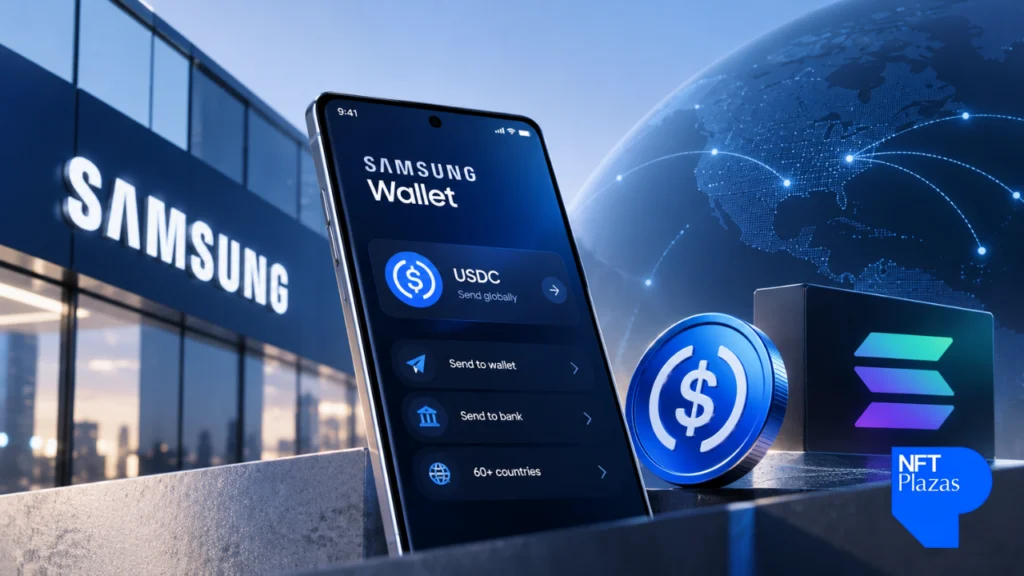
Samsung is poised to revolutionize the landscape of mobile finance by directly integrating stablecoin transfers into its Samsung Wallet application, a move projected to bring crypto-powered cross-border payments within reach of an estimated 82 million Galaxy devices across the United States. This significant development, slated for the last week of October 2026, will enable eligible U.S. users to seamlessly send Circle’s USDC stablecoin to compatible crypto wallets or qualifying bank accounts in over 60 countries worldwide. The initiative marks one of the most ambitious undertakings by a major smartphone manufacturer to embed stablecoins into the fabric of everyday digital payments, potentially streamlining international remittances and challenging traditional financial corridors.
The core of this new functionality lies within the Samsung Wallet, an application that has steadily evolved from a simple payment system to a comprehensive digital hub managing credit cards, digital IDs, boarding passes, and various other credentials. Crucially, Samsung emphasizes that users will not be required to download a separate cryptocurrency application or navigate the complexities of managing private keys to execute these transfers. This user-centric approach is designed to eliminate significant barriers to entry that have historically hindered mainstream crypto adoption. Woncheol Chai, head of Samsung Electronics’ Digital Wallet Team, articulated this vision, stating, "Sending money abroad should feel as convenient as using the wallet already on your phone." This statement underscores Samsung’s strategic intent to normalize blockchain-based transactions by integrating them into a familiar and trusted mobile ecosystem.
The Evolution of Mobile Payments and Samsung’s Digital Ambitions
The journey to this pivotal integration is rooted in the broader evolution of mobile payments and Samsung’s consistent efforts to expand its digital services. Launched initially as Samsung Pay in 2015, the platform gained traction by leveraging Magnetic Secure Transmission (MST) technology, which allowed it to be compatible with traditional credit card readers, alongside Near Field Communication (NFC). Over the years, Samsung Pay expanded its capabilities, incorporating loyalty cards, gift cards, and transit passes, demonstrating a clear trajectory towards becoming a holistic digital wallet. The rebranding to Samsung Wallet further consolidated these diverse functions, setting the stage for more advanced financial integrations.
Samsung has not been a stranger to the blockchain and cryptocurrency space. The company previously introduced features such as a built-in blockchain wallet for certain Galaxy devices, allowing users to store cryptocurrencies and access decentralized applications (DApps). These earlier forays, while significant, largely catered to an existing crypto-savvy demographic. The current stablecoin transfer integration, however, represents a qualitative leap, targeting a much broader, non-crypto-native audience by abstracting away the technical complexities inherent to blockchain technology. This move aligns with a growing industry trend towards making underlying blockchain infrastructure invisible to the end-user, prioritizing convenience and accessibility.
A Deeper Dive into the Mechanics: Powering Seamless Transfers
The intricate technical architecture underpinning Samsung’s new service involves a consortium of specialized partners, each contributing expertise in their respective domains. For the foundational blockchain network support, Samsung is leveraging the high-throughput capabilities of Solana and Sui. These networks are known for their speed and scalability, which are critical for facilitating efficient and cost-effective cross-border transactions.
Providing the essential regulated stablecoin infrastructure is Bastion, a firm specializing in compliant digital asset services. Further bolstering the security and regulatory adherence, Coinbase will act as Bastion’s sub-custodian, safeguarding the USDC through its institutional-grade Coinbase Prime Vault. This multi-party collaboration allows Samsung to focus on delivering a seamless consumer experience while delegating the complex and highly regulated aspects of custody, compliance, and money movement to established experts.
Samsung has been explicit about its role within this ecosystem, clarifying that it is neither a bank, a money transmitter, nor a digital-asset custodian. This distinction is crucial for regulatory compliance and for defining the boundaries of its service offering. Customer funds and stablecoins will be managed entirely through its regulated partners, ensuring that the service operates within established financial guidelines. Security for users remains paramount, with biometric authentication required on the registered Galaxy device before any transfer can be initiated, adding a robust layer of protection against unauthorized transactions.
The fee structure for these transfers is designed with transparency in mind. Samsung will not levy fees for USDC transfers directed to compatible external crypto wallets. However, it notes that receiving wallets or exchanges may impose their own charges. For bank transfers, where USDC is converted into local currency for the recipient, separate charges will apply, varying based on the destination country and the transaction amount. Before confirming any bank transfer, Samsung Wallet will clearly display the applicable fee and an estimated delivery time, empowering users with complete information.
Supporting Data and Market Implications

The potential impact of this initiative is magnified by the sheer scale of Samsung’s reach and the growing significance of stablecoins in the global financial landscape. With 82 million compatible Galaxy devices in the U.S. alone, Samsung is providing an unparalleled distribution channel for stablecoins, a challenge that crypto companies have traditionally struggled to overcome. This direct integration bypasses the need for users to actively seek out and adopt dedicated crypto platforms, effectively bringing the technology to where they already are.
USDC, issued by Circle, stands as one of the largest and most widely adopted dollar-pegged stablecoins, boasting a market capitalization that frequently ranks among the top cryptocurrencies. Its design as a blockchain-based digital dollar enables the rapid and secure movement of value across international borders without the reliance on often slow and expensive traditional banking rails. The global remittance market, estimated to be well over $800 billion annually, is particularly ripe for disruption. Traditional remittance services often involve high fees, unfavorable exchange rates, and lengthy transfer times, especially for recipients in developing nations. Stablecoins offer a compelling alternative by significantly reducing these costs and accelerating transaction speeds, often settling within minutes rather than days.
This move by Samsung also addresses one of the most significant barriers to mainstream cryptocurrency adoption: complexity. The process of acquiring, storing, and sending stablecoins typically demands a certain level of technical proficiency, including setting up a wallet, securing private keys, understanding blockchain addresses, and navigating exchange platforms. By embedding this functionality directly into Samsung Wallet, the company is attempting to abstract away much of this friction, making the experience akin to using any other mobile payment service.
Lily Liu, president of the Solana Foundation, articulated the broader vision, stating, "Stablecoins have the potential to make moving money around the world faster and easier." She emphasized that while stablecoins have clearly demonstrated the efficiency of blockchain for financial transactions, achieving mainstream distribution has remained a formidable hurdle. Samsung’s initiative could very well provide that missing distribution layer, bridging the gap between innovative blockchain technology and everyday consumer use.
Broader Impact and Future Horizons
Samsung’s U.S. rollout is not an isolated event but rather a foundational step in its broader strategic vision for digital-dollar payments. The company had previously indicated its exploration of stablecoin savings and payment features across its entire Galaxy ecosystem. The October 2026 launch serves as the first major consumer deployment of this ambitious strategy, signaling a profound commitment to integrating blockchain-based financial services into its core offerings.
The significance extends beyond the sheer number of supported devices. By bringing blockchain-based payments into a familiar mobile wallet environment, Samsung is fundamentally altering the entry point for millions. This approach is particularly impactful for remittances, where a sender in the U.S. can initiate a USDC transfer, and the recipient abroad can receive the funds directly in their local currency via an eligible bank account. This capability promises to simplify and accelerate a process that has historically been cumbersome and costly.
However, access to this transformative service will not be universal from day one. Eligibility criteria are strict: users must be 18 years or older, reside in the U.S., possess a valid Samsung Account, and operate a compatible Galaxy device running Android 13 or later. Furthermore, robust identity verification (Know Your Customer/KYC) and biometric authentication procedures will be mandatory to ensure compliance and security. The availability of transfers will also be contingent on supported countries, networks, and recipient account types, with sanctioned jurisdictions explicitly excluded to adhere to international regulations.
Samsung’s move could establish a new paradigm for crypto payments by rendering the underlying blockchain infrastructure largely invisible to the user. The goal is to make sending money abroad feel as intuitive as using a conventional mobile payment service, without requiring consumers to grasp the intricacies of blockchain networks or even consciously perceive the transaction as a "crypto payment."
While the initial launch focuses on the U.S. and cross-border remittances, Samsung has indicated broader ambitions. The company has not yet announced a timeline for expanding the feature beyond the U.S., as future growth will be heavily dependent on navigating local regulations and securing suitable banking and stablecoin partners in other regions. Furthermore, Samsung has hinted at potential future support for online payments and even tap-to-pay transactions on eligible Galaxy devices, powered by stablecoins operating silently in the background. If these plans materialize, Samsung Wallet could evolve from a digital repository for cards and credentials into a pervasive payment platform where stablecoins are a fundamental, yet largely unseen, component of daily financial interactions.
The October 2026 launch will serve as a crucial test case, evaluating whether mainstream smartphone users are truly ready to embrace blockchain-based payments when the need to "think like a crypto user" has been effectively removed. This initiative represents a bold step towards democratizing access to the efficiencies of blockchain technology, potentially reshaping the future of global finance, one Galaxy device at a time.