

 admin
admin
The East Asian cryptocurrency landscape is currently experiencing a period of intense dynamism, characterized by unprecedented growth in peer-to-peer (P2P) stablecoin transactions in China despite stringent crypto restrictions, alongside a mixed economic outlook for exchanges in leading markets like South Korea. While institutional adoption and regulatory clarity are progressing in financial hubs such as Singapore and Hong Kong, the region also grapples with the persistent challenges of crypto-related crime and the broader implications of geopolitical sanctions. A recent report by blockchain analytics firm Chainalysis highlights these diverging trends, painting a complex picture of innovation, regulatory adaptation, and market resilience across the continent.
China’s Resilient Crypto Economy: Stablecoins Flourish Despite Bans
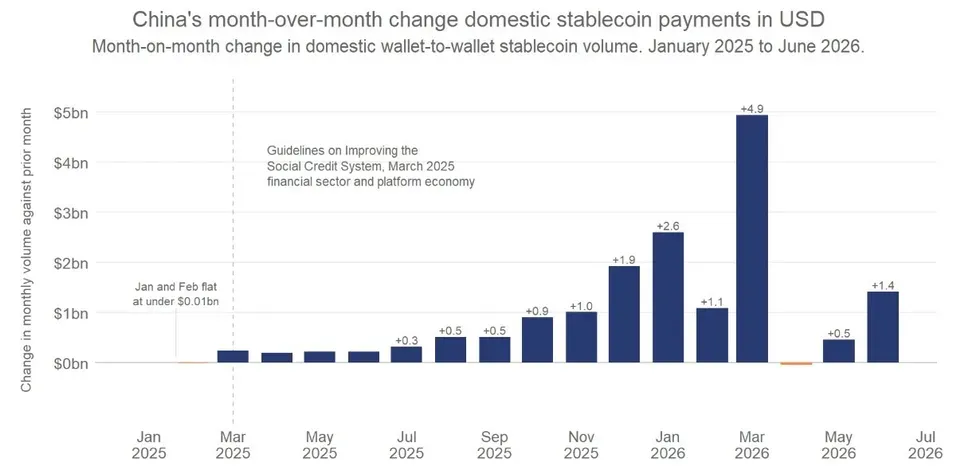
Defying a comprehensive ban on cryptocurrency activities, China has witnessed an astounding 43-fold increase in the number of unique wallets engaged in peer-to-peer (P2P) stablecoin transactions between the first quarter of 2024 and the second quarter of 2026. This remarkable growth underscores the enduring demand for digital assets within the country, even as the government maintains a tight grip on its financial markets.
According to Chainalysis, the blockchain analytics firm, China’s self-custodied stablecoin holdings facilitated a staggering $104.1 billion across 18.1 million transfers during the reporting period from July 2025 to June 2026. This substantial activity points to a robust, albeit clandestine, digital asset economy. The firm’s new report estimates China’s total crypto economy to be worth at least $176 billion, with domestic P2P activity accounting for 59.1% of this total – a significant 3.5 times increase from its share in the 2025 reporting period.
A key characteristic of this Chinese stablecoin usage is its high turnover rate. Stablecoin holdings turned over 33.2 times per year, more than three times the global average of 9.3. Chainalysis interprets this pattern as consistent with users treating stablecoins not merely as investments but as "working capital." This suggests stablecoins are being actively utilized for various purposes, including cross-border remittances, capital flight, circumventing traditional financial controls, or engaging in commercial transactions that bypass official channels.
The surge in P2P stablecoin activity presents a significant challenge to Chinese regulators who, since 2017, have progressively implemented severe restrictions on cryptocurrencies, banning initial coin offerings (ICOs), domestic crypto exchanges, and, most notably, cryptocurrency mining in 2021. The resilience and adaptability of the crypto market in China, particularly through P2P stablecoin channels, indicate that a substantial segment of the population remains keen to access and utilize digital assets, potentially driven by factors such as a desire for financial autonomy, inflation hedging, or facilitating international trade and payments outside of strict state control. This ongoing cat-and-mouse game between regulators and users highlights the difficulty of completely suppressing decentralized technologies.

South Korea: A Dual Narrative of Growth and Challenge
South Korea continues to stand out as East Asia’s largest crypto economy, commanding an impressive $449.1 billion. The Chainalysis report indicates that overall activity in the country grew by 12.3% in the year leading up to June 2026, compared to the previous year. A notable trend observed among South Korean retail traders is a strong preference for AI-linked tokens, reflecting a broader market fascination with artificial intelligence and its perceived potential for high returns. This speculative interest in emerging tech sectors within crypto underscores the tech-savvy nature of the South Korean investment community.
However, the first half of 2026 presented a challenging environment for South Korean crypto exchanges. Operating profits plummeted by a staggering 78% as the broader crypto market experienced a downturn, leading to reduced trading activity, depressed market valuations, and a decline in customer deposits. The Korea Financial Intelligence Unit (KoFIU) provided specific figures, noting that the average daily trading volume at domestic virtual asset exchanges fell by 44% compared to the preceding six months. Concurrently, market capitalization dropped by 33%, and won-denominated deposits decreased by 35%. Exchange sales also saw a significant decline of 41% over the same period, even as the number of accounts eligible to trade saw a slight increase of 0.4%. This disparity suggests that while user interest might persist, a bear market or a period of consolidation can severely impact the profitability of centralized exchanges, pushing trading volumes down.
Amidst these fluctuating market conditions, South Korea is making significant strides in establishing a robust framework for tokenized securities. Tokenization platform Securitize saw its shares jump by 8% following the announcement of a strategic partnership with South Korean technology giant LG CNS. This collaboration involves a memorandum of understanding (MOU) to develop tokenized assets and digital asset infrastructure specifically tailored for South Korean financial institutions. The partnership grants Securitize an early and crucial foothold in the market, positioning it favorably as the country prepares to implement a new regulatory framework for tokenized securities. Just last week, the Financial Services Commission (FSC) proposed comprehensive rules governing the issuance and circulation of tokenized stocks, bonds, funds, and other securities, with the framework slated to take effect in February 2027. This proactive regulatory move signals South Korea’s intent to diversify its crypto economy beyond speculative trading, embracing the potential of blockchain technology to modernize traditional financial instruments and attract institutional participation.
Singapore and Hong Kong: Competing for Institutional Dominance
Singapore and Hong Kong, two of Asia’s premier financial hubs, are actively vying for leadership in the institutional digital asset space, each implementing strategic initiatives to attract major players and foster innovation.
In Singapore, multinational banking giant Standard Chartered has announced ambitious plans to launch digital asset custody services catering to institutional clients. The London-headquartered firm intends to custody a select range of cryptocurrencies, stablecoins, and tokenized real-world assets for institutional and accredited corporate investors. Standard Chartered emphasized Singapore’s pivotal role as a "leading financial and innovation hub," affirming its importance within the bank’s "global strategy" for digital assets. This move aligns with Singapore’s proactive regulatory stance under the Monetary Authority of Singapore (MAS), which has been developing a clear and robust framework for digital asset service providers.
Further solidifying Singapore’s position, licensed crypto exchange Independent Reserve has expanded its offerings by adding cross-border payment tools. These tools enable businesses to execute fiat and stablecoin payouts, with accounts fundable in Singapore or US dollars to facilitate payments to suppliers or employees in over 20 currencies, including USDC and USDT options. Additionally, Independent Reserve has launched crypto derivatives trading for sophisticated investors through its subsidiary, ReserveX, broadening the range of financial products available to institutional participants. In another significant development, Payward, the parent company of Kraken, has partnered with Singapore Gulf Bank to enable round-the-clock institutional crypto settlement, further streamlining operations for institutional investors in the region. These developments collectively underscore Singapore’s commitment to becoming a comprehensive and compliant ecosystem for digital finance.
Meanwhile, Hong Kong is also making significant strides in establishing its regulatory framework and attracting institutional capital. Hong Kong government officials have reaffirmed their commitment to an end-2026 deadline for submitting an amendment bill aimed at establishing licensing regimes for digital asset trading, custody, advisory, and management services. Christopher Hui, the Secretary for Financial Services and the Treasury of Hong Kong, stated in a recent policy briefing that the government would submit this amendment bill "within this year" to create a broader regulatory framework for digital asset activities.
Chainalysis data highlights Hong Kong’s strong appeal to institutional investors, ranking it top in the East Asia region for institutional activity. Institutional platforms accounted for 16% of service inflows, nearly three times the share observed in any regional neighbor, with the city receiving almost $24 billion in inbound business-to-business flows. This institutional focus is further bolstered by Hong Kong’s issuance of its first stablecoin licenses in April, a move designed to provide regulatory clarity and foster the growth of a compliant stablecoin ecosystem. Both Singapore and Hong Kong are strategically positioning themselves to become leading global digital asset hubs, with their respective regulatory clarity and sophisticated financial infrastructure attracting significant institutional interest and investment.
Japan’s Evolving Digital Asset Landscape and Geopolitical Stance
Japan’s cryptocurrency market demonstrates a unique characteristic with decentralized exchanges (DEXs) playing a prominent role. According to the Chainalysis report, DEXs account for nearly 35% of service activity in Japan, representing the highest share among mature East Asian markets. The data indicates that 65.7% of DEX swaps were modest in size, ranging between $10 and $1,000, suggesting a vibrant retail user base. Furthermore, DEX activity in Japan has surged by more than 200% since 2022, reflecting a growing preference for decentralized trading platforms. This trend is occurring within a well-defined regulatory environment, as Japanese lawmakers passed revisions in July that formally bring digital assets under the country’s established financial-markets framework, providing greater clarity and oversight.
On the international front, Japan has taken a firm stance against entities perceived to be aiding Russia in circumventing financial restrictions. The Japanese government recently added the Russian cryptocurrency exchange Garantex to its expanded list of sanctions against Russia, citing the continuing war in Ukraine. This move aligns with broader international efforts to isolate Russia financially. Officials added 33 organizations and nine individuals linked to Russia to its asset-freeze list, which restricts payments and capital transactions with the targeted parties. Garantex has a history of being sanctioned by the US, the EU, and other jurisdictions for its alleged role in helping Russian entities evade financial restrictions, underscoring Japan’s commitment to upholding international financial integrity and solidarity with global allies.
The Underbelly: Scams and Physical Threats in Emerging Markets
While East Asia embraces digital asset innovation, the region also grapples with the persistent shadow of crypto-related crime, ranging from sophisticated cyber fraud to violent physical assaults.
In India, the Central Bureau of Investigation (CBI) has made arrests in connection with an alleged international tech-support fraud and extortion racket that specifically targeted US nationals. The elaborate scam involved the use of fake computer pop-ups displaying toll-free "Microsoft" numbers. Victims who called these numbers were falsely informed that their computers had been compromised or connected to illegal activities, such as child pornography. This coercive tactic was designed to extort money from unsuspecting individuals, often instructing them to transfer funds via Bitcoin ATMs. One Florida resident reportedly lost a staggering $440,000 to these scammers, highlighting the devastating financial impact such schemes can have. The arrests by the CBI underscore the global nature of cybercrime and the challenges law enforcement agencies face in combating these transnational operations.
Similarly, in Thailand, a harrowing incident brought the physical risks associated with high-value crypto holdings into sharp focus. Three armed assailants robbed a home in Bang Lamung, violently forcing a foreign resident to transfer cryptocurrency valued at $820,000. In addition to the digital assets, the robbers also made off with cash and three Rolex watches. Local police suspect that the perpetrators may be Chinese nationals, suggesting the involvement of organized criminal networks that transcend national borders. This "meatspace attack" serves as a stark reminder that the security concerns surrounding cryptocurrencies extend beyond digital vulnerabilities, encompassing physical threats to individuals who possess significant digital wealth.
The diverse developments across East Asia illustrate a dynamic and rapidly evolving cryptocurrency landscape. From China’s defiant stablecoin growth and South Korea’s ambitious tokenization push to Singapore and Hong Kong’s institutional race, the region is a microcosm of global crypto trends. However, the persistent challenges of market volatility, sophisticated scams, and physical security risks underscore the complex interplay of innovation, regulation, and crime that continues to shape the future of digital assets worldwide.







