admin
admin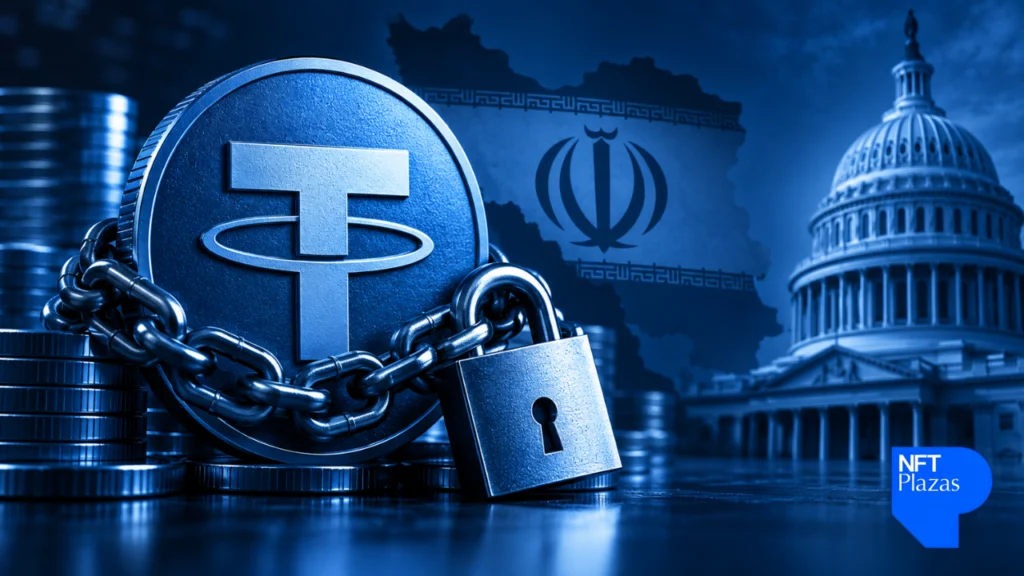
Tether, the issuer of the world’s largest stablecoin, USDT, has announced its successful collaboration with authorities to freeze nearly $550 million in USDT linked to Iranian entities and sanctioned networks during 2026. This significant disclosure, made on September 28, highlights the increasingly prominent, yet complex, role of stablecoins in global financial sanctions enforcement, simultaneously drawing heightened scrutiny from U.S. lawmakers regarding the stablecoin’s broader utility in illicit finance. The actions taken by Tether, which included freezing funds connected to Iran’s central bank and other designated networks, directly coincided with a critical report from Democratic investigators on the Senate Permanent Subcommittee on Investigations, alleging that USDT has emerged as a primary conduit for Iranian entities to circumvent the traditional financial system and evade stringent U.S. sanctions.
This confluence of events underscores a fundamental tension inherent in the architecture of stablecoins and public blockchains: the very technological infrastructure that facilitates rapid, efficient, and borderless financial transfers also inherently creates a transparent, immutable ledger of transactions, offering an unprecedented digital trail for investigators. While proponents laud the transparency as a powerful tool for law enforcement, critics point to the sheer volume and speed of stablecoin transactions as a significant challenge for compliance, raising questions about the efficacy of current controls in preventing illicit use.
The Evolving Landscape of U.S. Sanctions Against Iran
The United States has long employed a comprehensive and multifaceted sanctions regime against Iran, primarily aimed at curbing its nuclear ambitions, countering its state sponsorship of terrorism, and addressing its human rights abuses. These sanctions are designed to isolate Iran from the international financial system, restrict its access to foreign currency, and impede its ability to fund destabilizing activities. Historically, these measures have targeted traditional banking sectors, oil exports, shipping, and various state-owned enterprises. However, with the proliferation and increasing adoption of digital assets, particularly stablecoins like USDT, the focus of U.S. sanctions enforcement has expanded significantly to encompass the cryptocurrency ecosystem.
The Office of Foreign Assets Control (OFAC) within the U.S. Treasury Department is the primary agency responsible for administering and enforcing these sanctions. Over the past few years, OFAC has demonstrated a growing sophistication in identifying and sanctioning entities involved in using cryptocurrencies for illicit purposes. This proactive stance reflects a recognition that digital assets, while offering innovative financial solutions, can also be exploited by sanctioned regimes and criminal organizations seeking to bypass traditional financial gatekeepers. The current actions against Iran-linked crypto activity are not isolated incidents but rather part of a broader, concerted effort by Washington to close all potential avenues for sanctions evasion, including those leveraging emerging financial technologies. This proactive adaptation of sanctions policy reflects a dynamic cat-and-mouse game between state actors and those seeking to circumvent international restrictions, with digital assets now firmly entrenched on the battlefield.
Tether’s Proactive Enforcement: A Detailed Chronology of Freezes
Tether’s recent disclosure details a series of significant freezes initiated throughout 2026, culminating in the nearly $550 million figure. The company emphasized its commitment to cooperating with global law enforcement and regulatory bodies, portraying these actions as concrete evidence of its robust compliance framework.
The largest single action occurred in April 2026, when Tether successfully froze more than $344 million in USDT spread across two distinct blockchain addresses. This decisive move followed direct intelligence and information received from OFAC and other U.S. law enforcement agencies. The very next day, OFAC formally added both of these addresses to its sanctions designation specifically targeting Iran’s central bank. The U.S. government explicitly cited clear links between these addresses and the Islamic Revolutionary Guard Corps-Qods Force (IRGC-QF), a designated terrorist organization, as well as Hezbollah, another group supported by Iran and deemed a foreign terrorist organization by the U.S.
Building on this precedent, in July 2026, Tether executed another substantial freeze, targeting over $130 million in USDT held across four separate TRON wallets. These addresses were subsequently added to the same OFAC sanctions designation, further solidifying the connection to Iran’s central bank and its associated proxies. Together, these two major operations constitute the overwhelming majority of the roughly $550 million in Iran-linked USDT freezes reported by Tether for the year.
It is crucial to understand the technical distinction Tether makes between "freezing" cryptocurrency and a government "seizure" or "forfeiture." When Tether freezes USDT at a specific address, it effectively renders those tokens immovable, preventing any further transactions from that wallet. However, the legal ownership of those funds does not automatically transfer to the government at this stage. A separate, often complex, legal process—typically involving court orders and judicial proceedings—is required for the government to formally seize and gain control of the assets. This distinction highlights the collaborative nature of enforcement, where private entities like Tether act as initial gatekeepers, while government bodies follow through with the legal mechanisms to permanently confiscate illicit funds.
Tether CEO Paolo Ardoino underscored the company’s position, stating, "Tether has consistently demonstrated that USDT is not a haven for sanctioned actors, terrorist organizations or criminal networks." He further highlighted the inherent value of public blockchains in providing an immutable and traceable record of financial activity, arguing that this transparency ultimately aids law enforcement in tracking and identifying illicit flows. Beyond the Iran-linked freezes, Tether reported an impressive aggregate figure: its cooperation with authorities worldwide has led to the freezing of more than $4.9 billion in illicit assets to date, with over $2.4 billion of that amount directly linked to U.S. authorities. This broader statistic reinforces Tether’s argument that its platform, while globally accessible, is not a lawless frontier.
Senate Scrutiny: Allegations of USDT as a Sanctions Evasion Channel
While Tether emphasizes its proactive role in compliance, a report from the Senate Permanent Subcommittee on Investigations presents a more critical perspective on USDT’s role in Iran-linked financial activities. The investigative report, which predated Tether’s announcement but intensified lawmaker interest, meticulously examined 846 cryptocurrency wallets that had been sanctioned or targeted for seizure due to their confirmed connections to Iran and its various proxy groups. The findings were stark: a significant 84% of these wallets had transacted exclusively or nearly exclusively in USDT.

Furthermore, Senate investigators traced more than $600 million in USDT through the accounts of just two sanctioned Iranian oil smugglers between 2021 and 2025. This granular data suggested a systemic pattern rather than isolated incidents. The report posited that USDT’s unparalleled liquidity, widespread availability across numerous exchanges, and relative ease of cross-border transfer make it an "important payment rail" for Iranian networks actively seeking to bypass conventional banking restrictions. The investigation also alleged that certain transactions connected Iranian banks directly with financial networks associated with designated terrorist organizations like Hezbollah and the Houthis, further exacerbating concerns about the stablecoin’s potential role in facilitating dangerous geopolitical activities.
Senator Richard Blumenthal, a leading voice in the investigation, publicly called upon both the Treasury and Justice departments to launch comprehensive investigations into potential sanctions violations and to thoroughly examine Tether’s role in transactions involving these Iranian networks. It is crucial to note that the Senate findings are presented as investigative allegations and not as a legal determination that Tether itself has violated U.S. law. Tether, in its response, has vigorously rejected the characterization that USDT provides a safe haven for sanctioned actors, instead reiterating its consistent cooperation with authorities and its documented record of freezing identified illicit wallets. This divergence in interpretation highlights the ongoing debate between industry self-regulation and external governmental oversight in the rapidly evolving digital asset space.
Washington’s Broadening Campaign: Digital Assets in the Crosshairs
The heightened scrutiny of Tether and USDT unfolds against a backdrop of Washington’s increasingly aggressive and comprehensive strategy to integrate digital assets into its sanctions enforcement framework. The U.S. government recognizes that as the global financial system evolves, so too must its tools for maintaining national security and combating illicit finance.
In August 2026, the Treasury Department launched "Operation Economic Outcast," a significant initiative designed to target financial networks supporting Iran. This operation explicitly expanded its focus beyond traditional sectors like oil, gold, aviation, and shipping to include digital assets and related technology. This marked a clear signal that cryptocurrencies are no longer considered a fringe element but a core component of the illicit finance landscape that requires robust counter-measures.
The campaign continued into September 2026, when OFAC sanctioned BitBank, a prominent Iranian digital-asset venture. The sanctions also extended to BitBank’s software developer and several associates of Babak Zanjani, an Iranian financier previously implicated in illicit activities. Treasury alleged that Zanjani’s network systematically utilized digital-asset businesses, including BitBank, to move funds on behalf of the Islamic Revolutionary Guard Corps, directly linking crypto firms to Iran’s military apparatus.
Further illustrating the legal trajectory from a Tether freeze to government forfeiture, a separate Justice Department case also emerged in September 2026. Federal prosecutors sought the forfeiture of approximately $61 million in USDT spread across 10 TRON addresses. These funds had been previously frozen by Tether, and the Justice Department alleged that they represented proceeds from Iranian oil sales specifically intended to benefit Iran’s government and military-linked organizations. This case, while separate from Tether’s $550 million figure, provides a concrete example of how issuer-level freezes serve as an initial step in a broader legal process culminating in the confiscation of illicit funds by the U.S. government.
The Compliance Conundrum: USDT’s Scale and Future Challenges
The current developments underscore a profound and escalating compliance challenge for Tether and indeed for the entire stablecoin industry. USDT’s sheer operational scale across global cryptocurrency markets is enormous, with billions of dollars in daily transaction volume. While this scale facilitates rapid value transfer across borders and public blockchains provide an indelible record that aids investigators, it also presents an formidable task for proactive compliance. Monitoring systems must be sophisticated enough to flag sanctioned addresses and suspicious transaction patterns in real-time, crucially before funds can be moved, laundered, or otherwise dissipated across the vast digital landscape.
This challenge is poised to grow exponentially as faster blockchain infrastructure continues to expand stablecoin payment capacity. Projects like StableChain, for instance, are targeting speeds of up to 10,000 transactions per second. Such advancements, while promising for efficiency, would enable significantly larger payment flows and complicate the real-time detection of illicit activity, placing immense pressure on existing compliance mechanisms.
For Tether, issuer-level controls remain a critical enforcement mechanism. Unlike traditional banks which are subject to a myriad of national and international regulations, the blockchain itself is a neutral ledger; it does not inherently determine whether a transaction complies with sanctions. Instead, the responsibility falls upon a multi-stakeholder ecosystem: stablecoin issuers like Tether, cryptocurrency exchanges, financial regulators, and law enforcement agencies. Each plays a distinct yet interconnected role in identifying, flagging, and ultimately restricting illicit financial activity. Tether’s ability to "blacklist" and freeze addresses is a powerful tool at the issuer level, but its effectiveness is contingent on timely and accurate intelligence from external bodies.
The Iran case vividly illuminates both the immense potential and the significant pitfalls associated with USDT’s growing importance in the global financial arena. On one hand, the inherent transparency of blockchain technology offers authorities an unprecedented tool for tracking and tracing illicit financial flows, providing a digital breadcrumb trail that traditional financial systems often lack. On the other hand, USDT’s unparalleled liquidity, global accessibility, and ease of use simultaneously make it an attractive target for sanctioned networks and individuals seeking to circumvent established financial controls.
Tether’s demonstrated ability to freeze nearly $550 million in Iran-linked funds undoubtedly showcases that issuer intervention can effectively block substantial amounts once authorities successfully identify targeted wallets. However, the comprehensive nature of the Senate investigation raises a more profound and broader question: whether these issuer-level controls, even when diligently applied, can truly keep pace with the rapidly accelerating and increasingly sophisticated use of stablecoins within sanctions-sensitive markets. As U.S. authorities continue to sharpen their focus and expand their enforcement efforts into the digital asset space, Tether’s compliance practices, along with those of other major stablecoin issuers, are inevitably slated to face increasing and continuous scrutiny from regulators and lawmakers alike. The outcome of this ongoing regulatory and enforcement pressure will undoubtedly shape the future trajectory of stablecoins and their integration into the global financial ecosystem.