admin
admin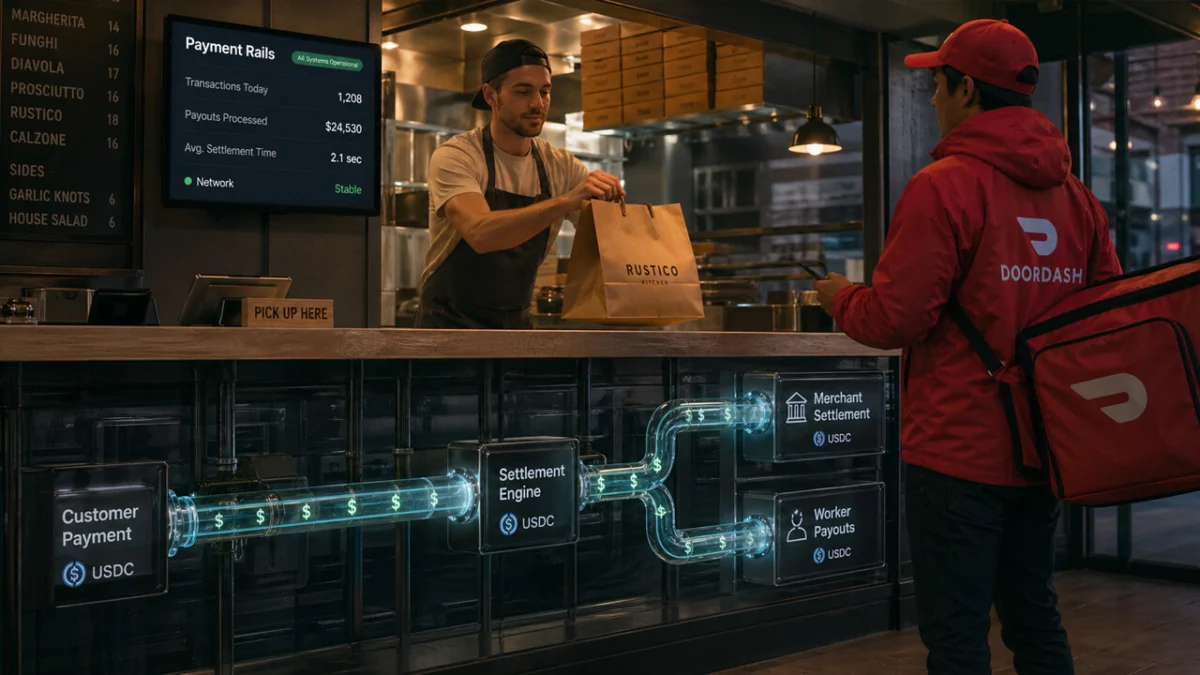
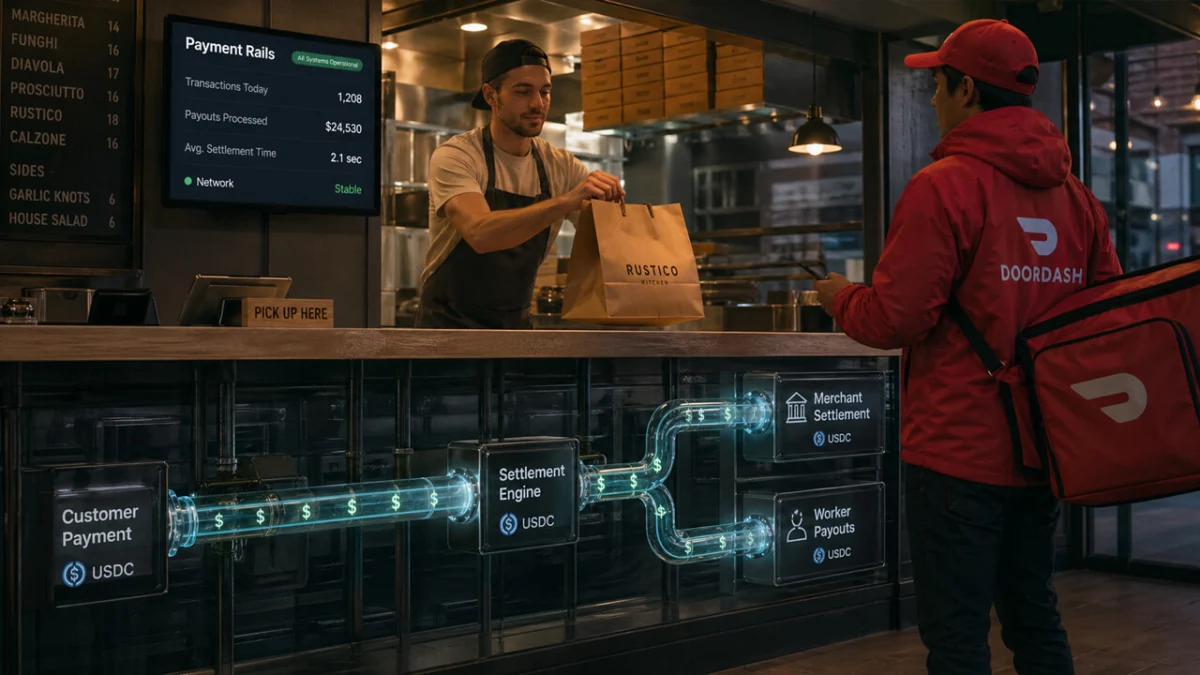
DoorDash has officially entered into a strategic collaboration with Tempo, a blockchain infrastructure provider backed by Stripe and Paradigm, to integrate stablecoin-powered payout mechanisms into its expansive global marketplace. The initiative represents one of the most significant real-world applications of stablecoin technology to date, aiming to streamline the movement of capital across a platform that operates in more than 40 countries. By leveraging blockchain-based settlement rails, DoorDash intends to address the inherent inefficiencies of traditional banking systems, which often subject merchants and independent contractors to settlement delays, high foreign exchange friction, and rigid banking cutoffs.
The integration focuses on the complex "tri-sided" nature of DoorDash’s business model. In a typical transaction, customers pay at checkout, merchants await settlement for goods sold, and "Dashers" (delivery couriers) rely on timely payouts to manage their daily liquidity. While the consumer-facing side of the app offers an instantaneous experience, the backend financial infrastructure has historically lagged, often taking hours or days to clear funds depending on the jurisdiction and the specific banking rails involved. The adoption of Tempo’s infrastructure is designed to bridge this gap, offering a more responsive financial experience for the millions of users who power the DoorDash ecosystem.
The Operational Thesis: Solving the Payout Problem
The primary motivation behind DoorDash’s move into stablecoin infrastructure is operational efficiency rather than speculative interest. DoorDash co-founder Andy Fang has emphasized that the appeal of stablecoins lies in their ability to make payouts faster and more affordable. In the high-volume, low-margin world of delivery marketplaces, the speed of money movement is a critical competitive advantage. Traditional financial systems are built on a fragmented network of regional clearinghouses and intermediary banks. These systems are often bound by "banking hours" and manual reconciliation processes that do not align with a 24/7 global delivery economy.
For merchants, particularly small and medium-sized enterprises (SMEs), the delay between a customer’s order and the receipt of funds can create significant working capital constraints. These delays affect the ability to manage payroll, restock inventory, and handle short-term liquidity needs. Similarly, Dashers often operate on tight financial margins where immediate access to earnings is essential for covering operational costs like fuel and vehicle maintenance. By utilizing stablecoins, DoorDash can potentially bypass the traditional multi-day settlement cycle, providing near-instant liquidity that mirrors the real-time nature of the delivery work itself.
Chronology of Development: From Stripe’s Re-entry to Tempo’s Launch
The partnership with DoorDash is the result of a multi-year trajectory in which major fintech players have sought to professionalize blockchain infrastructure for enterprise use. The timeline of this development is marked by several key milestones:
- Late 2023: Stripe and Paradigm introduced Tempo, a Layer 1 blockchain specifically designed for payments. Unlike general-purpose blockchains, Tempo was engineered with a focus on high throughput, sub-second finality, and a fee structure optimized for stablecoin transactions.
- April 2024: Stripe announced its return to the crypto space, enabling merchants to accept stablecoin payments (specifically USDC) for the first time since it ended Bitcoin support in 2018. This signaled a shift in Stripe’s strategy toward assets with low volatility and high transactional utility.
- Mid-2024: DoorDash faced increasing pressure from Dashers regarding rising fuel and living costs. The company responded with gas relief measures in the United States and Canada, highlighting the urgent need for more flexible and immediate payout options for its workforce.
- Late 2024: Tempo revealed its initial partner list, which included DoorDash alongside other global giants such as Shopify, OpenAI, Revolut, Visa, and Deutsche Bank. This coalition suggests a concerted effort by industry leaders to establish a new standard for internet-native financial plumbing.
Supporting Data: The Scale of the Stablecoin Opportunity
The decision to integrate stablecoins comes at a time when the volume of digital dollar transactions is reaching unprecedented levels. According to recent market data, an estimated $28 trillion in stablecoin transaction volume was recorded in the first quarter of the year alone. While a significant portion of this volume—approximately 76%—is attributed to automated bots and decentralized finance (DeFi) activities, the remaining organic volume represents a growing appetite for efficient value transfer.
For a company like DoorDash, which processes tens of billions of dollars in Gross Order Value (GOV) annually, even marginal improvements in settlement speed and fee reduction can result in substantial savings. Traditional cross-border transfers can cost between 1% and 3% in fees, excluding currency conversion spreads. Stablecoin rails on a network like Tempo aim to reduce these costs to a fraction of a cent per transaction. Furthermore, the ability to achieve "finality"—the point at which a transaction cannot be reversed—in under a second provides a level of certainty that traditional ACH or wire transfers cannot match.
Strategic Responses and Industry Reactions
The involvement of major institutions like Coastal Bank and ARQ alongside DoorDash indicates that the traditional banking sector is beginning to embrace hybrid models. While some crypto purists argue that centralized involvement by companies like Stripe and Visa clashes with the decentralized ethos of blockchain, the corporate response has been one of pragmatic adoption.
Industry analysts suggest that for stablecoins to reach mainstream maturity, they must become "invisible" to the end user. The goal is not for a Dasher to necessarily know they are being paid in a digital token, but rather to experience the benefit of having their earnings available in their local currency or a digital dollar equivalent the moment a delivery is completed. This "backend-first" approach is seen as a more viable path to adoption than consumer-facing crypto wallets, which have struggled with user experience and security hurdles.
Stripe’s published strategies on stablecoin payouts further reinforce this view. The company has explicitly stated that businesses are turning to these assets because they reduce delays and expand reach into regions where traditional banking infrastructure is underdeveloped or prohibitively expensive. By acting as the bridge between the blockchain and the merchant’s bank account, Stripe and Tempo provide the compliance and regulatory layer that large public companies like DoorDash require.
Broader Impact and Long-term Implications
The DoorDash-Tempo partnership serves as a litmus test for the viability of stablecoins as a foundational layer for global commerce. If successful, the implications for the broader economy are significant:
1. The Redesign of Financial Plumbing
For decades, the global financial system has relied on legacy technology that was not designed for the internet age. The integration of stablecoins into platforms like DoorDash suggests a transition toward "internet-native" money. This shift could eventually force traditional banks to modernize their own rails to remain competitive, potentially leading to a global standard for 24/7, instant settlement.
2. Stability vs. Speculation
The move further differentiates stablecoins from volatile assets like Bitcoin. While Bitcoin has solidified its role as a "digital gold" or a store of value, stablecoins are positioning themselves as the "working capital" of the digital economy. This clear division of utility allows enterprises to engage with blockchain technology without exposing their balance sheets or their users to market volatility.
3. Empowerment of the Gig Economy
The gig economy is uniquely sensitive to payment friction. For the millions of independent contractors globally, the "time-to-money" metric is a primary factor in platform loyalty. By offering stablecoin-powered payouts, DoorDash sets a new benchmark for the industry, likely prompting competitors like Uber, Lyft, and Instacart to explore similar infrastructure to attract and retain workers.
4. Regulatory and Compliance Evolution
As stablecoins move into the core operations of multi-billion dollar companies, regulatory scrutiny will intensify. The success of the DoorDash initiative will depend on how well Tempo and its partners navigate evolving frameworks such as the Markets in Crypto-Assets (MiCA) regulation in Europe and emerging stablecoin legislation in the United States. The ability to maintain high standards for Anti-Money Laundering (AML) and Know Your Customer (KYC) protocols within a blockchain environment will be paramount.
Conclusion: A Subtle Revolution in Infrastructure
DoorDash’s decision to adopt stablecoin-powered payouts is not merely a technical upgrade; it is a signal that the "utility phase" of blockchain technology has arrived. While much of the public discourse surrounding crypto remains focused on price action and institutional ETFs, the real transformation is occurring within the backend systems that govern the global movement of money.
By addressing the specific pain points of settlement delays and high transaction costs, DoorDash is demonstrating that stablecoins can solve real-world operational problems for millions of merchants and workers. As this technology becomes more deeply embedded in the infrastructure of global marketplaces, the measure of its success will not be found in a consumer frenzy, but in the quiet, efficient, and near-instant arrival of earnings into the pockets of those who earned them. The redesign of the world’s financial plumbing is underway, and it is being driven by the practical needs of the modern economy.