admin
admin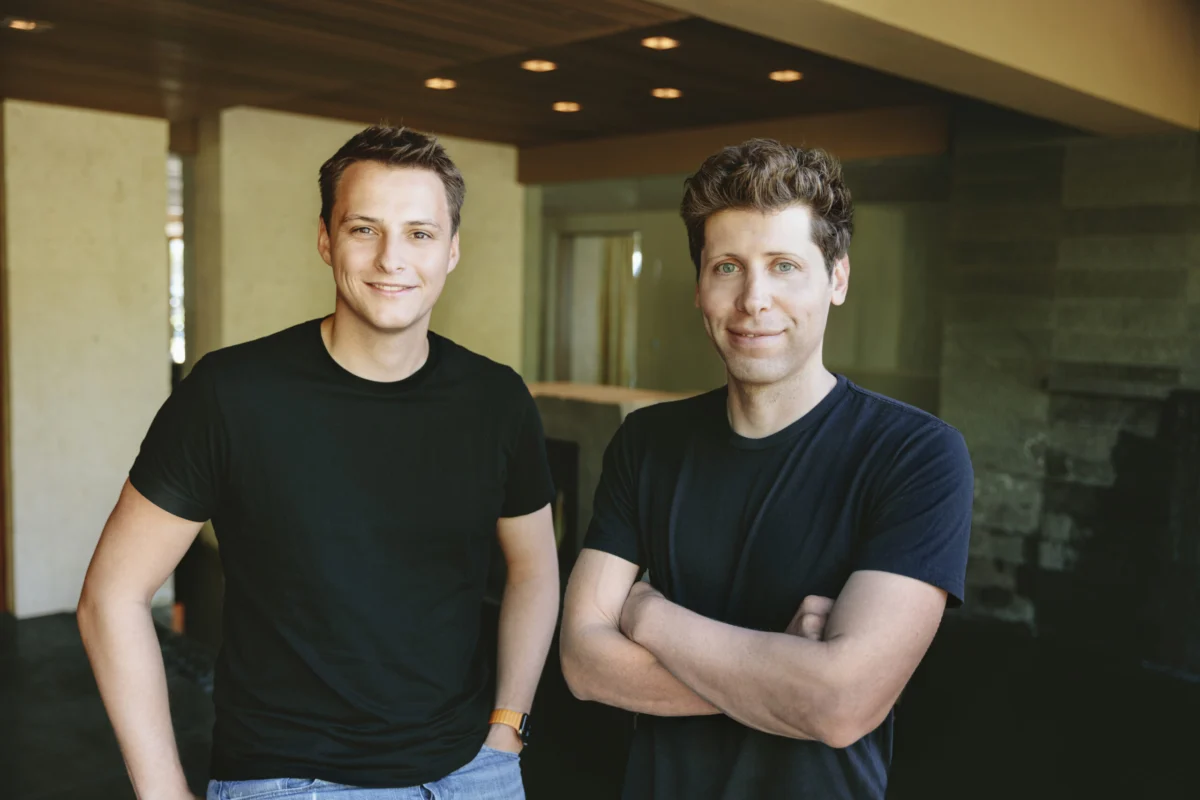
The online verification startup World, co-founded by OpenAI Chief Executive Officer Sam Altman and Alex Blania, has successfully raised $52.5 million through a targeted sale of its native cryptocurrency token, WLD. This capital injection, sourced from a group of strategic institutional investors, marks a significant milestone for the project as it navigates a complex landscape of technological innovation, regulatory scrutiny, and shifting market sentiment toward digital assets. The funding is specifically earmarked for the World Foundation, an exempted limited guarantee foundation based in the Cayman Islands, which serves as the non-profit steward of the World network’s decentralized growth and infrastructure development.
A defining characteristic of this transaction is the inclusion of a mandatory 12-month lockup period for all participating investors. In the volatile world of cryptocurrency and blockchain-based startups, such lockup agreements are critical mechanisms designed to prevent immediate liquidity events that could destabilize a token’s market price. By committing to a year-long holding period, the investors have signaled what World describes as a "long-term commitment" to the project’s continued expansion and the utility of the WLD token. This move is interpreted by industry analysts as an attempt to foster stability and institutional confidence in a project that has often faced skepticism regarding its long-term viability and privacy implications.
The Investor Profile and Financial Structure
The recent funding round was spearheaded by Pantera Capital, one of the most prominent venture capital firms specializing in digital assets and blockchain technology. Pantera’s lead role provides a layer of institutional credibility to World, given the firm’s history of early investments in foundational crypto projects. Joining Pantera in this strategic sale were several other notable entities, including Eightco Holdings, Bain Capital Crypto, Susquehanna Crypto, and Selini Capital.
The involvement of Bain Capital Crypto and Susquehanna—firms traditionally associated with sophisticated financial modeling and high-stakes technology investments—suggests that the project’s "proof of human" value proposition is resonating with sectors beyond the niche crypto community. The $52.5 million will be managed by the World Foundation, which operates independently of Tools for Humanity (TFH), the San Francisco-based technology company that initially developed the project’s core hardware and software. TFH, led by CEO Alex Blania, remains the primary service provider and operator of the World ecosystem, maintaining the technical infrastructure required to scale the network.
The "Proof of Human" Mission in the Age of Artificial Intelligence
World occupies a unique and often controversial niche in the technology sector. Its primary objective is the creation of a global identity and financial network based on "proof of personhood." As generative artificial intelligence continues to advance, the ability of digital systems to distinguish between human users and sophisticated AI agents has become increasingly compromised. World’s founders argue that in a future dominated by AI-generated content, deepfakes, and automated bots, a reliable, privacy-preserving method of verifying human identity will be essential for the integrity of the internet and the global economy.
The cornerstone of this verification system is the World ID, which the company describes as an anonymous digital marker. Unlike traditional forms of identification that rely on government-issued documents or centralized databases, the World ID is designed to prove that an individual is a unique human being without necessarily revealing their legal identity. This is achieved through the highest level of verification in the World system: the iris scan.
To obtain a verified World ID, users must interact with a specialized piece of hardware known as the "Orb." The Orb is a five-pound metallic sphere equipped with advanced biometric sensors. It scans a user’s iris and uses the intricate patterns of the eye to generate a unique cryptographic identifier, or "iris code." This code is then compared against the existing database to ensure the user has not already registered. Once the uniqueness is confirmed, the system issues a World ID. The company maintains that the raw biometric images are deleted by default after the code is generated, though this claim has been a central point of contention for privacy advocates and international regulators.
A Chronology of World’s Evolution and Rebranding
The project’s journey from a conceptual whitepaper to a global network has been marked by both rapid scaling and significant pivot points. Originally launched under the name "Worldcoin," the project was initially perceived by the public as a cryptocurrency-first venture. The WLD token was designed not only as a utility token for the network but also as a means of incentivizing global adoption. In its early stages, the project gained notoriety for its "airdrop" model, where users in certain regions were given WLD tokens in exchange for having their eyes scanned by an Orb.
However, the "Worldcoin" brand faced substantial headwinds. The collapse of major crypto exchanges and a broader regulatory crackdown on digital assets in 2022 and 2023 created a challenging environment for any project with "coin" in its name. Furthermore, the project faced bans or temporary suspensions in several jurisdictions, including Kenya and parts of Europe, over concerns regarding data collection practices and the exploitation of vulnerable populations in developing nations.
In response to these challenges and the explosive rise of AI, the project underwent a strategic rebranding to simply "World." This shift was intended to de-emphasize the speculative nature of the cryptocurrency and re-center the narrative on the "Proof of Human" tools. The rebranding coincided with a technological evolution of the platform. In April 2024, the project launched a significantly updated version of its mobile application and announced a series of high-profile integrations.
Partnerships and Market Integration
To increase the utility of the World ID, Tools for Humanity has sought to integrate its verification tools into widely used digital platforms. The company recently announced partnerships and integrations with major services including Tinder, Zoom, and Docusign. The logic behind these moves is clear: Tinder could use World ID to verify that profiles belong to real humans, reducing the prevalence of "catfishing" and bot-led scams; Zoom could use it to ensure meeting participants are verified individuals; and Docusign could add a layer of biometric-backed security to digital contracts.
Despite these high-profile names, the project’s growth has not been without friction. An earlier report suggested a partnership with Ticketmaster, but the company later issued a correction clarifying that no such partnership exists. This correction highlights the difficulties World faces in securing universal adoption among major corporate entities, many of whom remain cautious about the privacy implications of iris-based biometrics.
Operational Hurdles and Internal Restructuring
While the $52.5 million funding round represents a vote of confidence from investors, the project’s internal operations have faced recent turbulence. In June 2024, Tools for Humanity conducted a round of layoffs, reflecting a broader trend of belt-tightening across the tech industry. These layoffs suggested that despite its ambitious global vision, the company is not immune to the pressures of scaling a hardware-intensive business model in a high-interest-rate environment.
The challenge for World lies in the logistics of the Orb. Unlike software-only platforms that can scale at virtually zero marginal cost, World requires the physical deployment of Orbs at partner locations and offices worldwide. Each Orb is a sophisticated and expensive piece of hardware that requires maintenance and human operators. This physical bottleneck has made it difficult for the project to reach the "billions of users" envisioned by Sam Altman at its inception.
Data Privacy and Regulatory Landscape
The central tension surrounding World remains the balance between its mission of "anonymous verification" and the inherent sensitivity of biometric data. Regulatory bodies in the European Union, under the General Data Protection Regulation (GDPR), have scrutinized how World handles the data of its citizens. The project’s reliance on the Cayman Islands for its Foundation also raises questions regarding jurisdictional oversight and transparency.
World has consistently defended its privacy protocols, noting that the system uses "zero-knowledge proofs" (ZKPs) to verify personhood without sharing the underlying biometric data with third-party applications. However, the psychological hurdle of asking users to scan their eyes into a "metallic ball" remains a significant barrier to mainstream consumer acceptance.
Implications for the Future of Digital Identity
The successful $52.5 million token sale provides World with the necessary runway to continue its hardware deployment and software refinements. For lead investor Pantera Capital and its peers, the bet is that "Proof of Human" will become a foundational layer of the internet’s infrastructure as AI continues to blur the lines between human and machine.
If World succeeds, the WLD token could transition from a speculative asset into a vital utility for a global identity protocol. If it fails to overcome the dual hurdles of regulatory resistance and consumer privacy fears, it may be remembered as an ambitious but overly intrusive experiment in the era of early AI. For now, the 12-month lockup ensures that World’s most significant financial backers are tied to the project’s fate through 2025, providing a period of relative stability as the company attempts to prove that its "metallic ball" is the key to a more secure and human-centric digital future.