admin
admin
The global cryptocurrency landscape was shaken on Thursday following a sophisticated cyberattack on Bitget, one of the world’s leading digital asset exchanges, resulting in the theft of more than $351 million. Preliminary investigations and on-chain data analysis suggest that the breach was orchestrated by state-sponsored hacking collectives originating from North Korea. This incident marks the largest digital currency heist of 2026 to date, surpassing a previous $340 million exploit recorded earlier in September. The sheer scale of the theft has reignited intense debate regarding the security of centralized exchanges and the evolving capabilities of nation-state actors in the decentralized finance (DeFi) and broader crypto ecosystems.
According to official statements from Bitget and reports from blockchain security firms, the breach targeted the exchange’s "hot wallets"—digital repositories connected to the internet to facilitate rapid trading and liquidity. While these wallets are essential for the operational efficiency of a high-volume exchange, they represent a perennial point of vulnerability compared to "cold storage," which keeps assets offline and inaccessible to remote intruders. The attackers reportedly gained unauthorized access to these systems, initiating a series of rapid-fire transfers that drained hundreds of millions of dollars in various cryptocurrencies before the exchange’s internal monitoring systems could fully intercede.
Anatomy of the Intrusion
The cyberattack began in the early hours of Thursday, catching the exchange’s security protocols off guard. Investigators believe the perpetrators utilized a combination of advanced social engineering and a compromise of open-source software dependencies to gain a foothold within Bitget’s server infrastructure. This "supply chain" style of attack has become a hallmark of sophisticated hacking groups, allowing them to bypass traditional perimeter defenses by exploiting trusted software components.
Once inside the network, the hackers focused on the private keys governing Bitget’s hot wallets. By mirroring legitimate transaction requests, the actors were able to siphon assets including Bitcoin, Ethereum, and various stablecoins into a network of intermediary wallets. From there, the funds were "peeled"—broken into smaller increments—and routed through various mixing services and cross-chain bridges to obscure the audit trail. This methodology is designed to frustrate law enforcement and blockchain forensic analysts, making the recovery of stolen assets notoriously difficult.
Immediate Institutional Response and User Safeguards
In the immediate aftermath of the detection, Bitget moved to contain the damage by suspending all cryptocurrency withdrawals across its network. The company’s technical teams have been working around the clock to audit the remaining assets and fortify the exchange’s security architecture. In a series of communications via the social media platform X (formerly Twitter), Bitget confirmed the breach and sought to reassure its global user base regarding the safety of their holdings.
Gracy Chen, the Chief Executive Officer of Bitget, addressed the crisis directly, noting that the patterns observed during the heist were "highly consistent with known patterns of North Korean hacker organizations." Despite the staggering loss, Chen emphasized that the exchange remains solvent and committed to user protection. Central to this assurance is the Bitget User Protection Fund, which currently holds approximately $464 million.
"The integrity of our users’ assets is our highest priority," Chen stated. "Our protection fund was established specifically for scenarios of this magnitude. We are prepared to utilize these reserves to ensure that no user suffers a financial loss as a result of this criminal activity."
While the fund provides a significant buffer, the exchange has not yet provided a definitive timeline for when withdrawals will be reinstated. The company noted that a full forensic audit must be completed to ensure that no dormant malware or "backdoors" remain within the system that could lead to a secondary exploit.
The Shadow of North Korea: Attribution and Methodology
The suspicion falling on North Korea is not without historical and statistical precedent. For several years, international intelligence agencies and cybersecurity firms have tracked the activities of groups like the Lazarus Group, which operates under the direction of the Reconnaissance General Bureau, North Korea’s primary intelligence agency. These groups have transitioned from traditional cyber-espionage to large-scale financial theft, with a specific focus on the cryptocurrency sector.
According to data provided by TRM Labs, a leading blockchain intelligence firm, North Korean hackers have been extraordinarily prolific in 2026. The firm’s latest report indicates that North Korean state-linked actors are responsible for approximately 75% of all stolen cryptocurrency value globally this year. The Bitget heist is viewed as a continuation of this trend, characterized by meticulous planning, technical brilliance, and a total disregard for international financial regulations.

The motivation behind these attacks is widely believed to be the circumvention of international sanctions. With its traditional economy crippled by global restrictions, the North Korean regime has turned to the digital frontier to generate hard currency. United Nations investigators and U.S. federal agencies have frequently asserted that the proceeds from these crypto heists are funneled directly into the country’s prohibited nuclear weapons and ballistic missile programs. This adds a layer of geopolitical urgency to the theft, as the $351 million loss is viewed not just as a corporate failure, but as a matter of international security.
Contextualizing the 2026 Crypto Crime Landscape
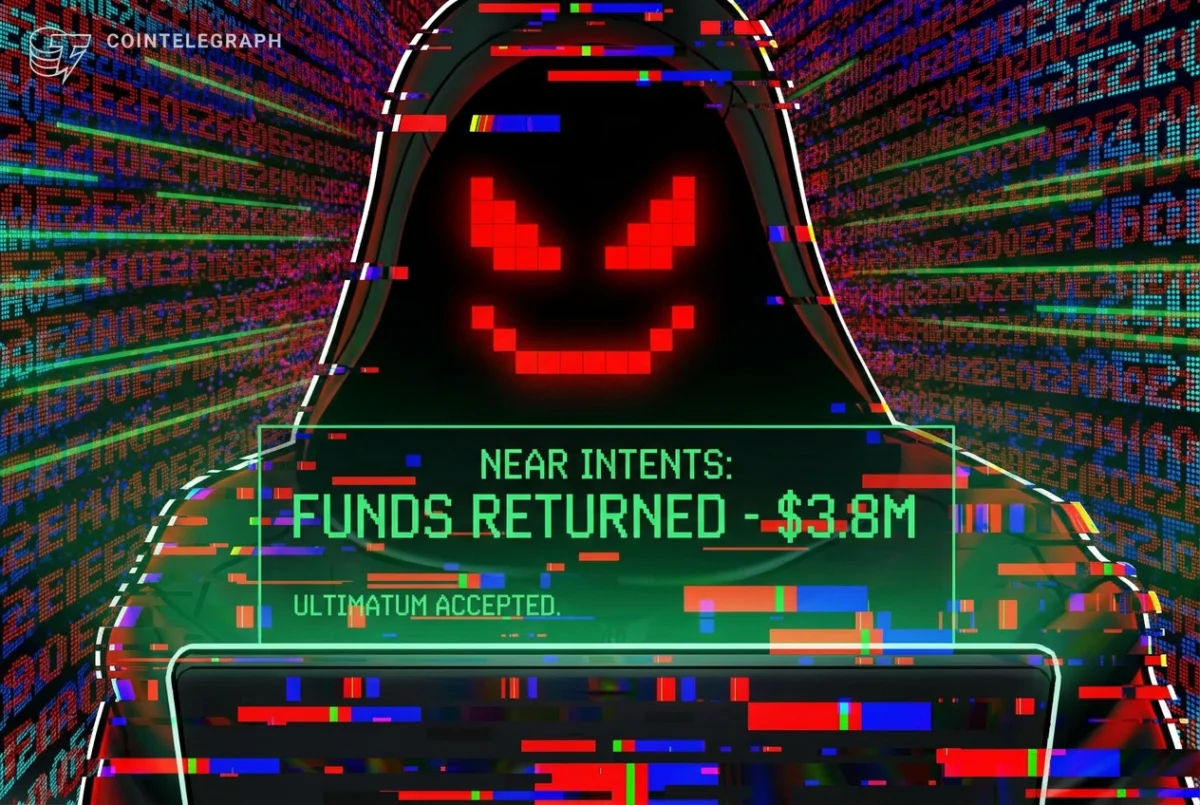
The Bitget incident eclipses the previous record for 2026, which occurred on September 8th. In that instance, a hacker managed to seize $340 million from a separate protocol. However, that case took an unusual turn when the perpetrator eventually returned the vast majority of the funds, retaining only a "bounty" of $47 million. The Bitget heist appears far less likely to result in a voluntary return of assets. Unlike "white hat" or "grey hat" hackers who might target vulnerabilities to prove a point or claim a reward, state-sponsored actors are driven by the absolute acquisition of capital.
The year 2026 has been a volatile period for exchange security. Despite advancements in Multi-Party Computation (MPC) and hardware security modules (HSMs), hackers have found success by targeting the human element and the underlying software supply chain. The Bitget breach serves as a stark reminder that even large-scale, well-capitalized exchanges are not immune to the sophisticated persistent threats (APTs) posed by nation-states.
Comparative Data: Major Crypto Heists of the Decade
To understand the magnitude of the Bitget theft, it must be compared to the most significant breaches in the history of the industry:
- Ronin Bridge (2022): $625 million – Attributed to the Lazarus Group, targeting the Axie Infinity ecosystem.
- Poly Network (2021): $611 million – A vulnerability in cross-chain contracts was exploited, though most funds were later returned.
- FTX Unauthorized Withdrawals (2022): Over $400 million – Occurred during the exchange’s high-profile collapse.
- Bitget (2026): $351 million – Currently the largest of the year, targeting hot wallet infrastructure.
- Coincheck (2018): $534 million – A landmark hack involving NEM tokens that led to a massive overhaul of Japanese crypto regulations.
The Bitget heist secures a place among the top ten largest crypto thefts of all time, highlighting a worrying trend where the average value per successful hack continues to climb as the market cap of digital assets increases.
Regulatory and Industry Implications
The fallout from the Bitget hack is expected to trigger a fresh wave of regulatory scrutiny. Regulators in jurisdictions where Bitget operates are likely to demand more transparent reporting on "Proof of Reserves" and more stringent requirements for "Proof of Security." There is growing pressure from international bodies, such as the Financial Action Task Force (FATF), for exchanges to implement more robust "travel rule" compliance and to enhance their ability to freeze stolen assets in real-time.
Industry experts suggest that the incident may accelerate the shift toward decentralized exchanges (DEXs) or "non-custodial" trading solutions, where users retain control of their private keys. However, DEXs have their own sets of vulnerabilities, often involving smart contract bugs. For centralized exchanges (CEXs) like Bitget, the path forward involves a radical shift in how hot wallets are managed. This may include lower caps on hot wallet balances, mandated multi-signature approvals for any transfer exceeding a certain threshold, and the use of AI-driven anomaly detection to kill-switch systems the moment suspicious patterns emerge.
The Road to Recovery
As Bitget navigates the coming weeks, its primary challenge will be maintaining user trust. While the $464 million protection fund provides a financial safety net, the reputational damage is significant. The exchange must demonstrate not only that it can repay its users, but that it has fundamentally altered its security posture to prevent a recurrence.
For the broader cryptocurrency market, the $351 million heist is a sobering reminder of the "Wild West" elements that still persist in the digital age. As blockchain technology becomes increasingly integrated into the global financial system, the stakes of cybersecurity have never been higher. The battle between innovative financial platforms and state-sponsored cyber-criminals is no longer a fringe concern; it is a central conflict of the 21st-century digital economy.
Law enforcement agencies, including the FBI and Europol, are reportedly coordinating with international exchanges to blacklist the addresses associated with the stolen funds. However, with the North Korean government providing a safe haven for these hackers, the prospects of bringing the individuals to justice remain slim. The focus remains on containment, recovery, and the fortification of the global digital asset infrastructure against the next inevitable attempt.