admin
admin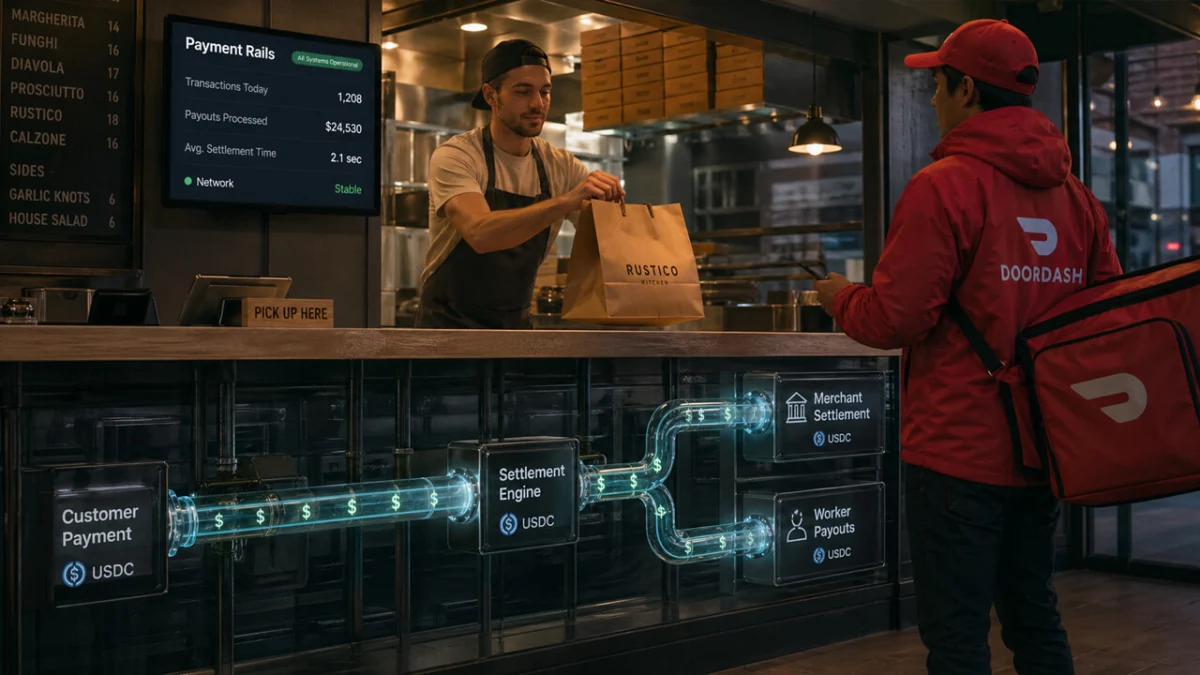
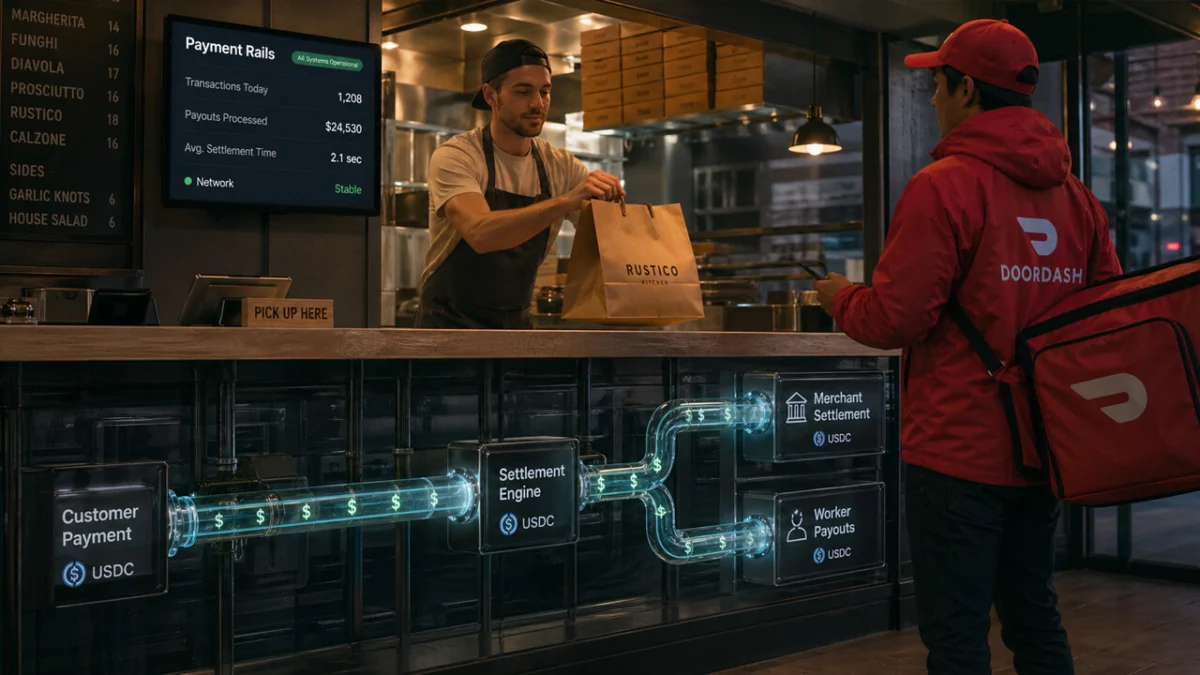
In a move that signals a significant shift in the operational architecture of global gig economy platforms, DoorDash has announced a strategic partnership with Tempo, a blockchain infrastructure provider backed by payments giant Stripe and investment firm Paradigm. This collaboration aims to integrate stablecoin-powered payouts into the DoorDash marketplace, a complex ecosystem that currently spans more than 40 countries and facilitates billions of dollars in annual transactions. By leveraging stablecoins—digital assets pegged to the value of a fiat currency like the U.S. Dollar—DoorDash intends to bypass the traditional banking hurdles that frequently delay the transfer of earnings to its network of merchants and "Dashers."
The integration marks one of the most prominent real-world applications of blockchain technology by a major consumer-facing platform. While crypto-assets have long been associated with speculative trading, DoorDash’s adoption focuses squarely on utility: solving the "payout problem" that plagues high-volume, multi-national marketplaces. For DoorDash, the movement of money is a multi-directional challenge. Customers pay at checkout, merchants await settlement for goods sold, and Dashers rely on rapid payouts to cover immediate operational costs like fuel and maintenance. By implementing stablecoin rails, DoorDash aims to compress the settlement window from days to seconds, providing a more fluid financial experience for all participants in its delivery ecosystem.
The Fragmented State of Global Payment Rails
To understand the significance of DoorDash’s move, one must examine the inefficiencies inherent in the legacy financial system. Current cross-border and even domestic payment infrastructures are built upon a fragmented network of regional banking "rails," such as ACH in the United States, SEPA in Europe, and various local systems across Asia and Latin America. These systems are often bound by strict operating hours, weekend closures, and manual reconciliation processes.
When a customer places an order on DoorDash, the payment appears instantaneous on the frontend. However, the backend reality is far more complex. Settlement delays can stretch from several hours to several business days depending on the jurisdiction and the specific banking partners involved. For a global marketplace operating in 40+ countries, this creates a massive reconciliation burden. Intermediary banks often charge fees at every step of the journey, particularly in cross-border transfers where foreign exchange (FX) friction adds further costs.
DoorDash co-founder Andy Fang highlighted that the primary appeal of stablecoins lies in making payouts both faster and more affordable. In a high-volume, low-margin industry like food delivery, the ability to eliminate even a small percentage of transaction friction can lead to substantial bottom-line improvements. More importantly, it addresses the immediate liquidity needs of the platform’s most vital stakeholders: the small business owners and the independent contractors.
Chronology of the DoorDash and Tempo Partnership
The foundation for this integration was laid in late 2023 when Stripe and Paradigm introduced Tempo, a Layer 1 blockchain specifically designed for payments. Unlike general-purpose blockchains that often suffer from high volatility in transaction fees (gas) or slow finality times, Tempo was engineered with "stablecoin-native" fees and sub-second finality. The project was launched with an impressive roster of partners, including Deutsche Bank, Shopify, OpenAI, Revolut, and Visa, signaling a concerted effort by major industry players to build a standardized settlement layer for internet-native commerce.
Throughout early 2024, Stripe began publishing a series of technical whitepapers and explainers detailing the strategic advantages of stablecoin payouts. These documents argued that for global enterprises, the primary value proposition of digital dollars is the reduction of "dead time" in the treasury cycle. By mid-2024, the pilot programs for Tempo’s infrastructure began to take shape, with DoorDash, Coastal Bank, and the fintech firm ARQ emerging as the first wave of implementers.
The timing of DoorDash’s announcement is also linked to broader economic pressures. Over the past 18 months, rising fuel costs and inflation have placed increased financial strain on gig workers. In response, DoorDash introduced various relief measures, such as gas rewards and emergency support programs in the U.S. and Canada. The move toward stablecoin payouts is seen as a structural extension of these efforts, providing Dashers with faster access to their earnings without the delays typical of traditional bank transfers.
Supporting Data: The Scale of Stablecoin Utility
The shift toward using stablecoins as a backend settlement tool is supported by staggering transaction data. According to recent market analysis, stablecoin transaction volume reached approximately $28 trillion in the first quarter of 2024 alone. While a significant portion of this volume—estimated at 76%—is driven by automated bots and high-frequency trading within the crypto ecosystem, the remaining "organic" volume represents a growing share of global value transfer.
For a company like DoorDash, which handles tens of billions in Gross Order Value (GOV), the potential savings are significant. Traditional cross-border remittance and business-to-business (B2B) payments can cost anywhere from 1% to 5% when accounting for all intermediary fees and FX spreads. In contrast, stablecoin transfers on optimized networks like Tempo can cost a fraction of a cent, regardless of the transaction size or the geographical distance between the sender and receiver.
Furthermore, the stability of the assets involved is crucial. By using U.S. Dollar-backed stablecoins, DoorDash avoids the volatility risks associated with assets like Bitcoin. This allows the company to treat the digital asset as a "digital wrapper" for fiat currency, ensuring that a merchant who is owed $100 receives exactly $100 worth of value, settled instantly on the blockchain.
Official Responses and Strategic Rationale
The partnership has garnered attention from both the fintech and crypto sectors. Stripe, which has a long and complex history with cryptocurrency—having famously accepted and then discontinued Bitcoin payments in 2018—now views stablecoins as the definitive solution for the "last mile" of global payments. Stripe’s leadership has consistently argued that stablecoins are not a replacement for the financial system but a necessary upgrade to its plumbing.
Coastal Bank and ARQ, as partners in the Tempo ecosystem, provide the necessary regulatory and compliance framework. One of the primary hurdles for enterprise adoption of crypto has been the lack of clear KYC (Know Your Customer) and AML (Anti-Money Laundering) protocols on-chain. Tempo addresses this by integrating compliance checks directly into the transaction flow, ensuring that DoorDash can meet its legal obligations across its 40+ operating jurisdictions.
Industry analysts suggest that DoorDash’s role is a "litmus test" for the entire sector. If a platform with the operational complexity of DoorDash can successfully transition a portion of its payouts to stablecoin rails without disrupting its existing accounting and tax reporting structures, it will likely pave the way for other gig economy giants like Uber, Airbnb, and Instacart to follow suit.
Impact on Merchants and the Gig Workforce
The most direct impact of this integration will be felt by the "Dashers" and the merchants. For a local restaurant owner, cash flow is the lifeblood of the business. Slower settlement times can hinder the ability to purchase inventory, pay staff, or manage short-term debt. A stablecoin-based system allows for "streaming" settlements, where funds are released almost immediately after a delivery is completed, rather than being batched for the end of the week.
For Dashers, the benefits are equally tangible. In the traditional model, "Instant Pay" features often come with a fee or are limited by the worker’s bank’s ability to process real-time payments. Stablecoins provide a path to truly instant liquidity. A Dasher could, in theory, finish a delivery at 11:00 PM on a Sunday and have usable funds in their digital wallet by 11:01 PM, ready to be used for fuel or groceries via a linked debit card or a mobile payment app.
This shift also has profound implications for financial inclusion. In many regions where DoorDash operates, a significant portion of the workforce may be underbanked or rely on expensive check-cashing services. Stablecoins offer a low-cost alternative for receiving and storing value, requiring only a smartphone rather than a traditional bank account.
Broader Implications for the Future of Commerce
The DoorDash-Tempo partnership represents a pivot in the narrative of cryptocurrency adoption. For years, the industry focused on "consumer-facing" crypto—trying to convince shoppers to pay for coffee with Bitcoin. That approach largely failed due to price volatility and the superior convenience of credit cards. The new strategy, exemplified by DoorDash, is "infrastructure-facing."
Under this model, the end-user may not even know they are using a blockchain. The "crypto" happens in the background, serving as the invisible financial plumbing that connects different parts of a global business. The consumer pays in fiat, and the merchant receives fiat (or a stablecoin they can instantly convert), but the journey the money takes in between is faster, cheaper, and more transparent because it travels on a unified digital ledger.
As this technology matures, the divide between "crypto" and "fintech" is expected to blur. The successful implementation of stablecoin payouts at DoorDash would prove that blockchain’s greatest contribution to the global economy isn’t a new form of money, but a more efficient way to move the money we already have.
While several technical details remain—such as the exact percentage of payouts that will move to the chain and the specific "fiat-to-crypto" on-ramps being used—the direction of travel is unmistakable. DoorDash is not just delivering food; it is helping to deliver a new era of financial infrastructure where the speed of money finally matches the speed of the internet. The outcome of this integration will likely determine the pace at which other Fortune 500 companies integrate stablecoins into their core operating systems, potentially leading to a wholesale redesign of global settlement economics.