admin
admin
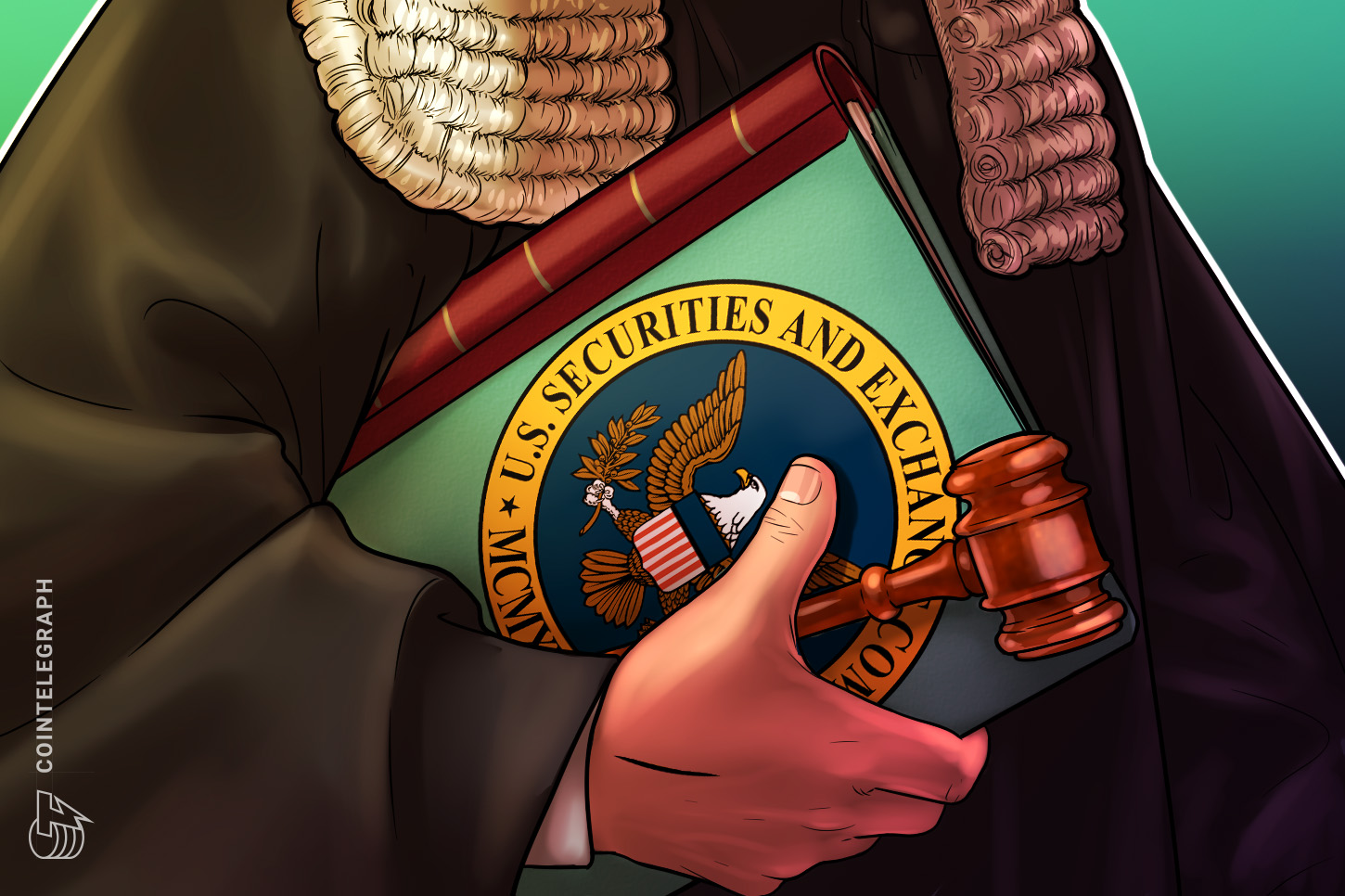
Mark Uyeda, who briefly served as acting chair of the U.S. Securities and Exchange Commission (SEC) before the confirmation of Paul Atkins, has revealed that the agency systematically dropped significant civil cases against cryptocurrency companies initiated under the previous administration. This strategic withdrawal, according to Uyeda, was a deliberate move to prepare the ground for a "180-degree change" in future rulemaking pertaining to digital assets, a shift intended to preserve the agency’s credibility in court. The revelations came during a Wednesday panel discussion at the Psaros Center for Financial Markets and Policy’s Financial Markets Quality Conference, where Uyeda elaborated on the rationale behind the SEC’s unexpected pivot in early 2025.
Uyeda explained that maintaining litigation positions directly contrary to an impending fundamental shift in commission interpretation would severely undermine the SEC’s standing and effectiveness in judicial proceedings. "I’m not about to have our litigators, even though they’re having cases that were authorized under the prior administration, stand up in court and have a commission interpretation be issued that is a 180-degree change from what they’d been arguing for that court," Uyeda stated, emphasizing the potential damage to the agency’s credibility. He further indicated that there had been "significant concerns" regarding the legal justification for many of the cases brought against crypto companies under the preceding regulatory regime.
A Sweeping Regulatory Reversal
The period between January and April 2025 saw Mark Uyeda at the helm as acting SEC chair, a pivotal time during which the commission notably ceased its lawsuits against prominent crypto industry players such as Kraken, Ripple Labs, and Coinbase. This series of dropped cases marked a dramatic departure from the aggressive enforcement posture that had characterized the SEC’s approach to digital assets for several years. The move was widely interpreted by industry observers and critics alike as a direct consequence of the shift in presidential administrations, with many characterizing it as a direct response to the crypto industry’s vocal support for President Donald Trump’s 2024 campaign. Trump, during his campaign, had publicly pledged to dismiss former SEC Chair Gary Gensler on his first day in office if elected, a promise that materialized with Gensler’s resignation the day Trump assumed the presidency.
The implications of such a comprehensive regulatory reversal are profound, signaling a potential new era for cryptocurrency innovation and integration within the U.S. financial system. For years, the digital asset industry had decried the lack of clear regulatory guidelines, often referring to the SEC’s approach as "regulation by enforcement." This often involved the agency classifying various cryptocurrencies as unregistered securities, applying the decades-old Howey Test—derived from a 1946 Supreme Court case involving orange groves—to novel digital asset structures. The industry frequently argued that this framework was ill-suited for the complexities of blockchain technology and decentralized finance, advocating instead for bespoke legislative solutions or clearer, forward-looking rulemaking.
Background and Chronology: The Enforcement-First Era
To fully appreciate the significance of the SEC’s policy shift, it is essential to understand the regulatory landscape that preceded it. Under former Chair Gary Gensler, appointed in April 2021, the SEC adopted an assertive "enforcement-first" strategy toward the cryptocurrency market. Gensler repeatedly articulated his belief that the vast majority of cryptocurrencies constituted unregistered securities and thus fell squarely under the SEC’s jurisdiction. He argued that crypto exchanges, lending platforms, and other intermediaries were operating outside the established investor protection framework.
Key enforcement actions under Gensler’s tenure include:
- December 2020: The SEC filed a lawsuit against Ripple Labs, Inc. and its executives, alleging that the sale of XRP, a digital asset, constituted an unregistered securities offering. This case became a landmark legal battle, drawing significant attention and sparking fierce debate over the classification of digital assets. The lawsuit had a chilling effect on XRP’s trading in the U.S., with many exchanges delisting the token.
- June 2023: The SEC initiated legal proceedings against Coinbase, Inc., one of the largest cryptocurrency exchanges in the U.S., alleging that it operated as an unregistered securities exchange, broker, and clearing agency. The lawsuit also claimed that Coinbase offered unregistered securities through its staking program.
- August 2023: Kraken, another prominent crypto exchange, settled charges with the SEC over its staking-as-a-service program, agreeing to pay $30 million in disgorgement, prejudgment interest, and civil penalties, and to cease offering staking services to U.S. customers. However, further enforcement actions against Kraken for operating an unregistered exchange were reportedly in the pipeline or had been initiated before the 2025 policy reversal.
- June 2023: The SEC also filed a major lawsuit against Binance and its CEO, Changpeng Zhao, alleging similar violations to Coinbase, including operating an unregistered exchange and offering unregistered securities. While the original article doesn’t explicitly mention Binance being dropped, the broader context suggests a systemic re-evaluation.
These actions, among numerous others, created an atmosphere of uncertainty and hostility for crypto businesses operating in the U.S., driving some innovation offshore and prompting intense lobbying efforts from the industry. The core of the SEC’s argument in these cases consistently revolved around the Howey Test, which determines whether an asset constitutes an "investment contract" and thus a security. The test requires an investment of money in a common enterprise with a reasonable expectation of profits to be derived from the entrepreneurial or managerial efforts of others. Crypto proponents argued that many digital assets, particularly those with decentralized networks, did not meet these criteria.
The Political Catalyst and Transition
The 2024 U.S. presidential election played a crucial role in shaping the current regulatory landscape. Donald Trump, seeking re-election, increasingly embraced a pro-crypto stance, positioning himself as a champion for the industry against what he characterized as overreaching government regulation. His promise to fire Gary Gensler on "day one" resonated strongly with the crypto community, which had become increasingly disillusioned with Gensler’s enforcement-heavy approach. The industry responded with significant political donations and vocal support for Trump’s campaign, viewing a change in administration as their best hope for regulatory clarity and a more permissive environment.
The transition unfolded precisely as predicted by many:
- November 2022: Mark Uyeda was appointed as a commissioner to the SEC.
- Late 2024: The U.S. Presidential Election concludes, with Donald Trump emerging victorious.
- January 2025: Donald Trump is inaugurated as President. Gary Gensler resigns from his position as SEC Chair on the same day, fulfilling Trump’s campaign promise. Mark Uyeda, as the senior-most commissioner not aligned with the outgoing administration’s policies, assumes the role of acting SEC Chair.
- Early 2025 (January-April): Under Uyeda’s interim leadership, the SEC initiates the process of dropping key civil cases against Kraken, Ripple Labs, Coinbase, and other crypto entities. This period marks the practical implementation of the "180-degree change" in regulatory strategy.
- April 2025: Paul Atkins is confirmed as the new permanent SEC Chair, succeeding Uyeda, who returns to his role as a commissioner.
- Wednesday, September 23, 2026: Mark Uyeda publicly discloses the reasons behind the dropped cases at the Psaros Center for Financial Markets and Policy’s Financial Markets Quality Conference, confirming the strategic shift.
This rapid sequence of events underscores the direct impact of political transitions on independent regulatory bodies and their policy directions.
Official Reactions and Industry Response
Uyeda’s candid explanation provides an unprecedented look into the internal deliberations of the SEC during a period of significant transition. His emphasis on maintaining agency credibility suggests a desire to align the SEC’s enforcement actions with its future regulatory framework, rather than pursuing cases that might soon be rendered legally untenable by new interpretations.
The crypto industry, predictably, reacted with a mix of relief and cautious optimism. While no direct statements from the specific companies mentioned (Kraken, Ripple, Coinbase) were provided in the original context of Uyeda’s remarks, the inference is clear:
- Ripple Labs: Having battled the SEC for years, the dropping of its case would be seen as a monumental victory, potentially paving the way for renewed growth and broader adoption of XRP in the U.S. market. The company and its supporters would likely express vindication, arguing that the SEC’s original claims were unfounded.
- Coinbase: As a publicly traded company facing significant legal headwinds, the cessation of the SEC’s lawsuit would remove a major cloud of uncertainty, potentially boosting investor confidence and allowing the exchange to focus on product development and market expansion within the U.S. They would likely reiterate their long-standing call for clear, comprehensive regulation.
- Kraken: While having previously settled with the SEC on staking, the dropping of any further enforcement actions related to operating an unregistered exchange would represent a significant reprieve, allowing them to operate with greater confidence in the U.S. market.
Legal experts and former SEC officials might offer varied perspectives. Some might praise the pragmatism of the new leadership, arguing that continuing with legally dubious cases would be a waste of taxpayer money and agency resources. Others might express concern about the perceived politicization of a regulatory body, suggesting that policy shifts driven by changes in administration could undermine the stability and independence of financial oversight. The abrupt shift also raises questions about the consistency of regulatory enforcement and whether it sends a message that aggressive litigation can be overturned by political will.
Broader Impact and Future Implications
The SEC’s "180-degree change" in its approach to cryptocurrency regulation carries extensive implications for the digital asset industry, financial markets, and the regulatory landscape in the United States.
- Enhanced Regulatory Certainty: The most immediate and significant impact is the potential for increased regulatory clarity. If the SEC follows through with its planned "180-degree change" in rulemaking, it could lead to the development of a tailored regulatory framework for digital assets, moving beyond the strict application of legacy securities laws. This would be a welcome development for an industry that has long sought clear guidance to foster innovation and legitimate business growth within the U.S.
- Market Rejuvenation and Innovation: With reduced legal uncertainty, U.S. crypto companies might experience a resurgence in investment, product development, and market activity. Companies that had previously considered relocating or scaling back U.S. operations due to regulatory pressure may now find the environment more conducive to growth. This could help solidify the U.S.’s position as a leader in blockchain and cryptocurrency innovation, competing more effectively with jurisdictions that have already established clearer frameworks.
- Redefined Role for the SEC: The shift could redefine the SEC’s role in digital asset oversight. Instead of primarily acting as an enforcer, the agency might adopt a more collaborative approach, working with industry participants to craft effective and appropriate rules. This could involve exploring new classifications for digital assets that don’t neatly fit into existing categories of securities, commodities, or currencies.
- Investor Protection Considerations: While the industry celebrates the reduced enforcement, the fundamental mandate of the SEC remains investor protection. The challenge for the new administration will be to balance innovation with robust safeguards against fraud, market manipulation, and other illicit activities. A "180-degree change" in rulemaking must ensure that new policies adequately address these concerns without stifling legitimate development.
- Leadership Vacuum and Future Direction: The current composition of the SEC leadership panel adds another layer of complexity. With Commissioner Hester Peirce’s expected departure in November, the agency will be left with only two of its five authorized members (Uyeda and Atkins). This reduced panel could impact the efficiency of decision-making and the ability to forge consensus on new rules. President Trump’s administration will face the critical task of nominating new commissioners, whose appointments will undoubtedly shape the long-term direction of the SEC’s crypto policy. The ideological alignment of these new appointees will be crucial in determining whether the "180-degree change" becomes a permanent fixture or merely a temporary deviation.
- Global Regulatory Influence: The U.S. has historically played a significant role in shaping global financial regulations. A clear, pro-innovation stance from the SEC could influence other major jurisdictions to adopt similar frameworks, potentially leading to greater international harmonization in crypto regulation. Conversely, a perception of regulatory instability or politicization could undermine confidence in U.S. leadership.
- Legal Precedent and Future Litigation: The dropping of these high-profile cases, particularly those involving the classification of digital assets, could set an informal precedent. While not a formal legal ruling, it signals a significant shift in the SEC’s prosecutorial appetite and potentially its legal interpretation, which could influence the defense strategies of other companies facing similar allegations or deter future enforcement actions based on the prior administration’s theories.
As the SEC embarks on this new chapter, the crypto industry will be closely watching for the concrete details of the promised "180-degree change" in rulemaking. The success of this new approach will ultimately be measured by its ability to foster innovation, protect investors, and provide the much-needed clarity that has eluded the digital asset market for so long. The coming months, particularly with new commissioner nominations on the horizon, will be crucial in defining the future trajectory of cryptocurrency regulation in the United States.