admin
admin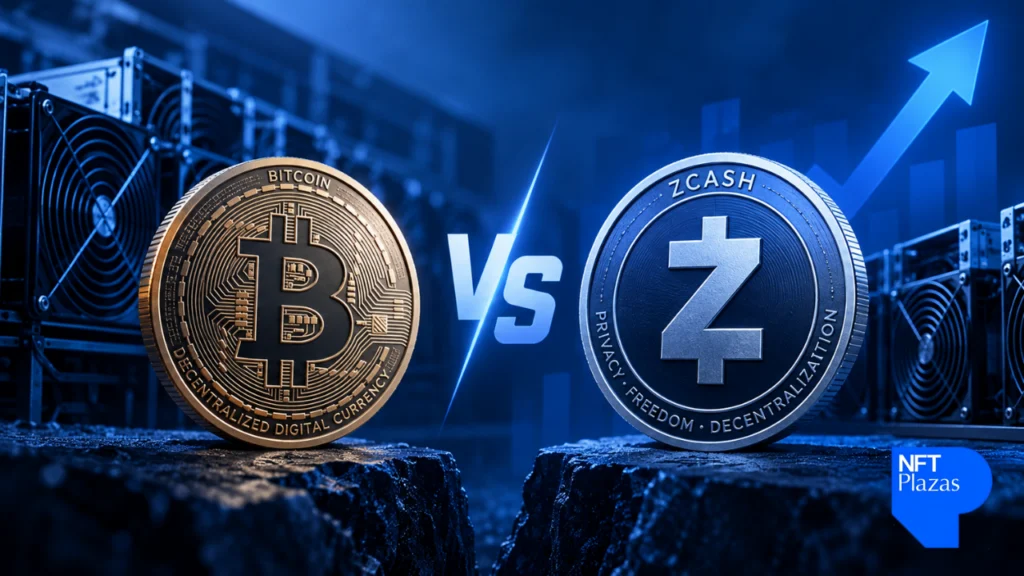
A groundbreaking new analysis from Grayscale Research indicates a significant shift in the cryptocurrency mining landscape, with Zcash (ZEC) mining emerging as substantially more profitable for individual operators compared to Bitcoin (BTC), despite Bitcoin’s continued dominance in overall industry scale and total reward distribution. The report, spearheaded by Grayscale Research director Zach Pandl, underscores a stark divergence in the economics of these two prominent proof-of-work (PoW) networks, signaling a potential recalibration of investment priorities for independent miners and highlighting the evolving dynamics of digital asset extraction.
The Shifting Landscape of Proof-of-Work Mining
Proof-of-Work, the foundational consensus mechanism for cryptocurrencies like Bitcoin and Zcash, involves miners expending computational effort to solve complex cryptographic puzzles. The first miner to find a solution adds a new block of transactions to the blockchain and is rewarded with newly minted coins and transaction fees. This energy-intensive process secures the network against malicious attacks and ensures the integrity of transactions. For years, Bitcoin has been the undisputed king of PoW mining, attracting massive investments in specialized hardware, known as Application-Specific Integrated Circuits (ASICs), and establishing a global, multi-billion dollar industry. Its sheer scale, robust network effect, and widespread adoption have traditionally made it the primary target for large-scale and individual mining operations alike. However, the latest findings suggest that while Bitcoin maintains its colossal footprint, other networks, particularly those experiencing significant price appreciation and unique technological advantages, can offer superior returns on an individual machine or energy consumption basis. This development challenges conventional wisdom, prompting a closer look at the factors driving profitability beyond mere market capitalization.
Grayscale’s Revelation: Efficiency Over Scale
Grayscale Research’s comprehensive study shines a spotlight on the often-overlooked metric of mining efficiency. While Bitcoin miners collectively generate an estimated $35 million in daily rewards, a figure dwarfing Zcash’s roughly $2 million, this aggregate comparison masks a crucial distinction. The report highlights that Zcash currently offers substantially higher returns per machine and per unit of electricity consumed. This nuance is particularly critical for individual and smaller-scale mining operations, where optimizing capital expenditure and operational costs, especially electricity, is paramount. The research firm, a leading digital asset manager known for its institutional-grade investment products, posits that this differential profitability is not merely anecdotal but is supported by a rigorous comparison of comparable hardware and energy inputs. "Our analysis indicates that while Bitcoin remains the behemoth in terms of total rewards, Zcash is currently offering a compelling economic advantage for miners focused on optimizing individual machine performance and energy efficiency," stated Zach Pandl, director of Grayscale Research, emphasizing the importance of granular data in assessing mining profitability. This perspective encourages a more sophisticated evaluation of mining opportunities beyond headline figures.

Deconstructing the Profitability Metrics: Per Machine and Per Megawatt-Hour
The core of Grayscale’s findings lies in the detailed breakdown of revenue generation. According to their estimates, a typical Zcash mining rig is presently generating approximately twice the daily revenue of a comparable Bitcoin mining machine. This direct comparison, controlling for hardware class and operational parameters, provides a compelling argument for Zcash’s current appeal. The advantage becomes even more pronounced when factoring in electricity consumption, a dominant operational cost for any mining venture. Zcash mining, under Grayscale’s assumptions of a $0.05 per kilowatt-hour electricity cost, full uptime, and excluding transaction-fee revenue, is estimated to produce roughly four times as much revenue per megawatt-hour as Bitcoin mining. To put this into perspective, the research firm noted that Zcash mining can, under current conditions, generate higher revenue per unit of electricity than some artificial intelligence and high-performance computing (HPC) cloud services. This comparison underscores the economic viability and energy efficiency of Zcash mining relative to other computationally intensive industries. While these figures represent revenue before all expenses, they provide a powerful indicator of gross profitability, suggesting that well-managed Zcash operations could yield significantly higher net profits under favorable conditions.
The Mechanics of Mining: Why Hardware Specialization Matters
It is crucial to understand that the perceived profitability advantage of Zcash does not imply a seamless transition for Bitcoin miners. The two networks employ fundamentally different mining algorithms, necessitating specialized hardware. Bitcoin relies on the SHA-256 algorithm, which is exclusively processed by SHA-256 ASICs, such as the Bitmain S23 Hydro, a model referenced in Grayscale’s analysis. In contrast, Zcash utilizes the Equihash algorithm, requiring distinct Equihash ASICs, like the Bitmain Z15 Pro used for comparison. This architectural divergence means that a Bitcoin miner cannot simply reconfigure their existing SHA-256 ASIC to mine Zcash, even if ZEC’s profitability skyrockets. Miners interested in Zcash must invest in new, dedicated Equihash hardware. This hardware specialization introduces a barrier to entry and exit, influencing capital expenditure decisions and the speed at which miners can respond to changing market dynamics. The Grayscale analysis meticulously accounts for this by comparing specific, comparable models of ASICs designed for their respective algorithms, ensuring an apples-to-apples comparison of potential revenue generation. Beyond hardware costs, other operational expenses like cooling infrastructure, facility maintenance, pool fees, and the ever-present factor of network difficulty adjustments—which dynamically scales based on total network hashrate—materially impact an operator’s final net profit, further complicating the decision-making process for prospective miners.
Zcash’s Historic Rally: Fueling the Mining Boom
The significant improvement in Zcash mining economics is intrinsically linked to the cryptocurrency’s dramatic price appreciation. ZEC recently surged to approximately $1,155, marking its highest price point in roughly nine years. This formidable rally has positioned Zcash as one of the strongest-performing large-cap cryptocurrencies in the current market cycle. For context, Zcash’s previous peak was during the major cryptocurrency bull run of late 2017 and early 2018, when many altcoins experienced parabolic growth. Its recent resurgence, pushing its market capitalization to an impressive $19.5 billion, signals renewed investor confidence and a potential shift in market sentiment towards privacy-focused digital assets. At one point, ZEC recorded a weekly gain of over 14%, starkly contrasting Bitcoin’s nearly 3% decline over the same period. This powerful price momentum directly translates into increased mining revenue. Grayscale’s report highlights that ZEC’s price gains have served as a powerful incentive for miners, leading to a substantial deployment of new computing power. Since the beginning of the year, the network’s total mining activity, measured by hashrate, has increased by more than 2.5 times, demonstrating the rapid responsiveness of the mining community to improved economic opportunities. This immediate and substantial increase in hashrate underscores the fluidity of capital and computational power within the crypto mining industry, always seeking the most profitable avenues.

The Interplay of Price, Hashrate, and Network Security
The relationship between Zcash’s price, mining profitability, hashrate, and network security forms a crucial feedback loop. When ZEC’s price rises, mining becomes more lucrative, attracting new participants and encouraging existing miners to expand their operations. This influx of computing power increases the network’s hashrate, which in turn strengthens the security of the Zcash blockchain. A higher hashrate makes it exponentially more difficult and expensive for any single entity to mount a 51% attack, where an attacker could potentially control the majority of the network’s computing power to manipulate transactions. As Zach Pandl aptly described, this relationship is potentially reinforcing: stronger mining economics not only provide direct financial benefits to operators but also bolster the fundamental security of the network, which can, in turn, help sustain investor interest and confidence. However, this dynamic also introduces a critical balancing act. While a higher hashrate is beneficial for security, it also increases network difficulty. As more miners join, the same finite pool of block rewards (newly minted ZEC and transaction fees) must be distributed among more participants, potentially reducing the individual profitability per machine over time, even if the price remains stable. This inherent competition is a constant factor in all proof-of-work networks, but its impact can be more pronounced in smaller networks like Zcash due to the relative size of their reward pools.
Institutional Endorsement: Grayscale’s ZCSH Fund Momentum
The current Zcash mining boom is unfolding concurrently with a notable surge in institutional interest, particularly evidenced by the success of Grayscale’s own Zcash investment product, ZCSH. This exchange-traded product (ETP) began trading on NYSE Arca on August 25, quickly becoming a significant indicator of institutional appetite for privacy-focused digital assets. Grayscale reported that ZCSH attracted approximately $179 million in net assets during its initial 11 trading days, propelling its total assets under management (AUM) beyond $700 million. This rapid accumulation of capital placed ZCSH among the top 1% of nearly 4,000 exchange-traded products by net asset growth and positioned it as the fastest-growing altcoin exchange-traded product by net assets, according to Grayscale’s internal data. The success of ZCSH signals a maturing market for alternative cryptocurrencies among institutional investors, who are increasingly looking beyond Bitcoin and Ethereum for diversification and exposure to specific use cases, such as privacy. This institutional validation can have a profound impact on Zcash’s market perception, liquidity, and long-term price stability. The confluence of rising institutional demand, robust price performance, and improving mining economics creates a highly favorable environment for Zcash, marking a stark contrast to its position earlier in the year and highlighting a potential shift in how institutional capital views the utility and value proposition of privacy coins.
The Catch: Sustainability in a Smaller Reward Pool
While the current individual profitability of Zcash mining is compelling, a critical question looms for prospective miners: can this advantage be sustained? The primary challenge lies in Zcash’s comparatively smaller daily mining reward pool. With approximately $2 million distributed across its network each day, this pool is a mere fraction of Bitcoin’s. This inherent limitation creates a significant "catch." As more miners, drawn by the current profitability, enter the Zcash network, the fixed daily reward pool must be divided among an ever-increasing amount of computing power. This dynamic, driven by rising hashrate and network difficulty adjustments, can rapidly dilute the amount of ZEC earned by each individual machine, even if the price of ZEC remains unchanged. The rapid 2.5-fold increase in Zcash mining activity observed this year is a testament to how quickly miners can respond to improved economics. This responsiveness, while validating the market’s efficiency, also means that the window of exceptionally high profitability might be transient. For individual miners, calculating the return on investment (ROI) for new hardware must factor in the potential for rapidly increasing competition and diminishing returns. While Bitcoin faces the same fundamental mechanism, its vastly larger mining ecosystem, coupled with a reward pool that is 17 times greater, offers a much larger buffer against rapid dilution of individual miner profits, operating on an entirely different scale. This inherent difference in scale is a crucial consideration for long-term mining strategies.

Broader Implications for the Crypto Mining Ecosystem
The Grayscale report on Zcash’s individual mining profitability carries broader implications for the entire cryptocurrency mining ecosystem. Firstly, it highlights a potential trend towards greater diversification in PoW mining. While Bitcoin will likely remain dominant in terms of aggregate value, the pursuit of higher individual returns could lead to increased investment in altcoin mining infrastructure, fostering a more robust and decentralized mining landscape across various networks. Secondly, Zcash’s superior revenue per megawatt-hour could reignite conversations around energy efficiency in crypto mining. In an era of increasing scrutiny over the environmental impact of PoW, a network demonstrating higher output per unit of energy consumed could attract environmentally conscious miners and investors, positioning it as a potentially "greener" alternative on a comparative basis. Thirdly, the resurgence of Zcash, coupled with strong institutional demand for its ETP, might signal a renewed focus on privacy coins. As digital surveillance increases and regulatory frameworks evolve, the demand for financial privacy tools could grow, driving further interest and investment into networks like Zcash that offer robust privacy features through technologies like zk-SNARKs (Zero-Knowledge Succinct Non-Interactive Argument of Knowledge). Finally, the report underscores the dynamic and competitive nature of the mining industry, where profitability is constantly shifting due to price volatility, technological advancements, and the entry and exit of participants. Miners must remain agile, constantly evaluating market conditions, hardware efficiency, and operational costs to maintain a competitive edge.
The Future Outlook: Navigating Volatility and Competition
The sustainability of Zcash’s current mining advantage hinges on several interconnected factors. The price of ZEC remains the primary driver; significant downward pressure on its value could quickly erode profitability, regardless of efficiency metrics. Secondly, the escalating network difficulty, a direct consequence of the rapidly increasing hashrate, will continue to challenge individual miner returns. As more powerful and efficient ASICs come online, older hardware will face obsolescence more quickly. Thirdly, electricity costs, which vary dramatically by region, will always be a critical determinant of net profitability. A miner operating in an area with high electricity prices may find that Zcash’s apparent advantage disappears once operational expenses are fully accounted for. The mining industry is also subject to regulatory changes, which could impact the legal and operational viability of mining in certain jurisdictions. Despite these challenges, the current data from Grayscale Research provides a compelling snapshot of a moment when Zcash offers a uniquely attractive proposition for those focused on maximizing efficiency per unit of capital and energy. The rapid growth in Zcash’s hashrate clearly indicates that miners are already responding vigorously to this perceived opportunity.
Conclusion: A New Benchmark for Mining Efficiency
Grayscale’s research does not suggest that Zcash has usurped Bitcoin’s overall dominance as a mining business. Bitcoin remains overwhelmingly larger in terms of total mining revenue, network infrastructure, and global market capitalization. Instead, the analysis meticulously highlights a different, yet equally vital, metric: the revenue an individual mining machine can generate relative to its electricity consumption. On this specific measure, Zcash currently possesses a clear and compelling advantage. Whether this advantage will endure is subject to the inherent volatility of cryptocurrency markets, the relentless competition among miners, and the ongoing evolution of network difficulty. For now, however, Grayscale’s conclusion is unambiguous: while Bitcoin continues to be the larger and more established mining network, Zcash is currently offering considerably better mining economics for individual machines and in terms of revenue generated per unit of electricity consumed, marking a significant development in the competitive world of proof-of-work cryptocurrency mining. This presents a new benchmark for evaluating mining efficiency and could reshape how independent operators approach their investment decisions in the digital asset space.