admin
admin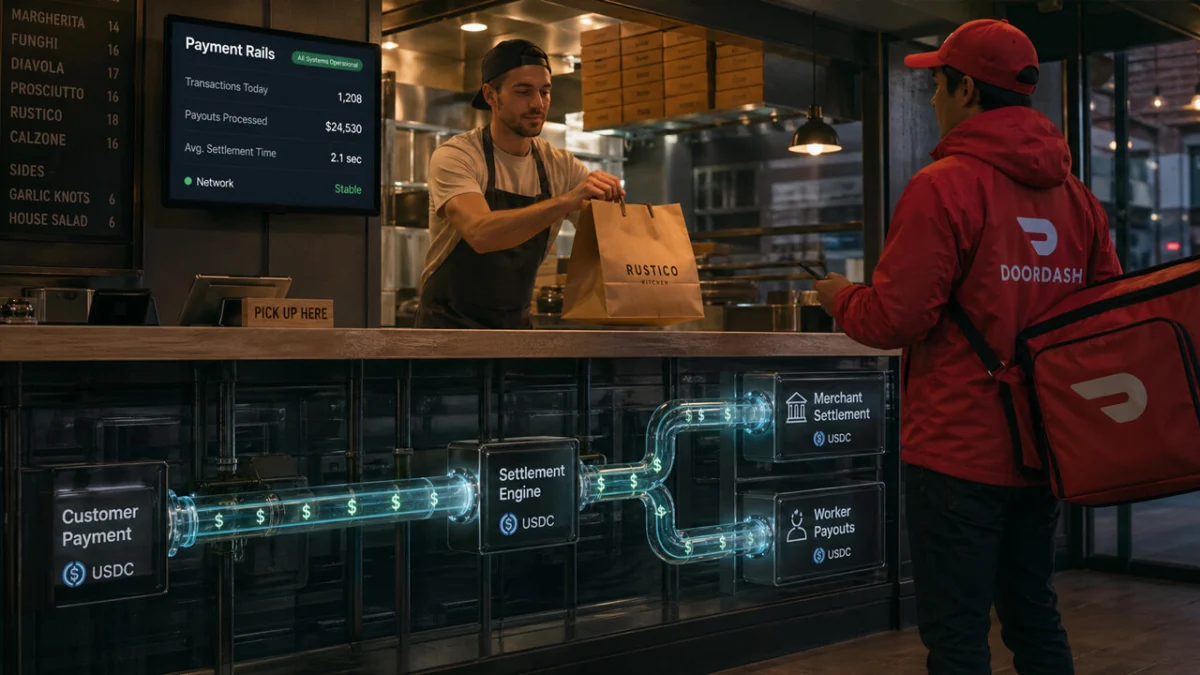
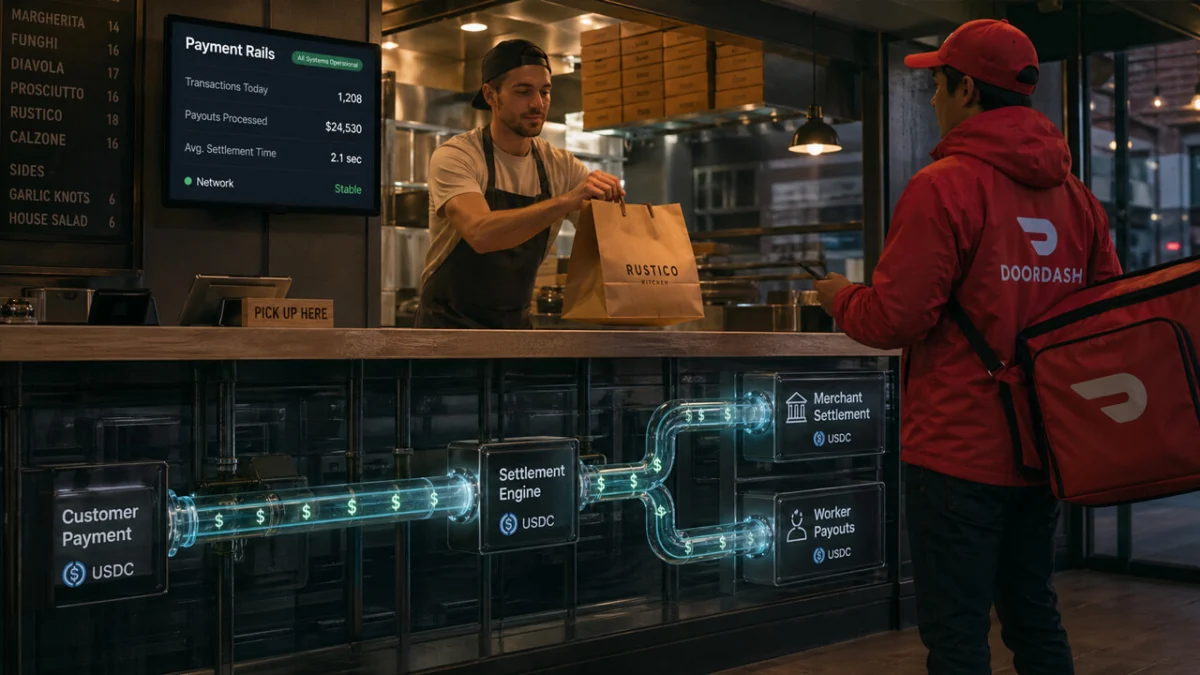
DoorDash, the leading food delivery platform in North America, has announced a strategic partnership with Tempo, a Stripe-backed blockchain infrastructure provider, to integrate stablecoin-powered payouts into its global marketplace operations. This move represents a significant shift in how one of the world’s largest gig economy platforms manages the complex flow of capital between customers, merchants, and delivery contractors, known as Dashers. By leveraging stablecoin technology, DoorDash aims to bypass the traditional hurdles of the legacy banking system, including multi-day settlement delays, high foreign exchange friction, and the rigid constraints of regional banking hours. The integration marks a pivotal moment for the cryptocurrency industry, signaling a transition from speculative digital assets to functional, backend infrastructure for mainstream enterprise commerce.
The partnership involves a consortium of financial and technology heavyweights, with Tempo confirming that DoorDash will join Stripe, Coastal Bank, and ARQ in introducing stablecoin-native payment flows. For DoorDash, which operates in more than 40 countries, the decision to adopt blockchain-based settlement is a pragmatic response to the operational challenges of maintaining a three-sided marketplace. In such an ecosystem, money must move in multiple directions simultaneously: customers pay at the point of checkout, merchants require timely settlement to manage inventory and payroll, and Dashers rely on rapid payouts to cover immediate expenses such as fuel and maintenance. The current financial architecture, built on fragmented regional rails and intermediary banks, often fails to meet the real-time demands of this high-velocity business model.
The Operational Logic of Stablecoin Integration
The primary driver behind DoorDash’s adoption of stablecoins is the inherent inefficiency of the traditional "payout problem." DoorDash co-founder Andy Fang has emphasized that the appeal of this technology lies in its ability to make payouts both faster and more affordable. In the delivery marketplace sector, the consumer experience is highly optimized, allowing an order to be placed with a few taps. However, the financial settlement behind that order remains tethered to a system characterized by banking cutoffs and jurisdictional delays that can stretch from several hours to several business days.
This "settlement gap" creates significant friction for the two most vulnerable participants in the DoorDash ecosystem: local merchants and independent contractors. For small and medium-sized businesses, slower settlement times directly impact working capital. When funds are locked in transit, merchants may struggle with liquidity planning, affecting their ability to purchase fresh inventory or meet payroll obligations. For Dashers, the delay between completing a delivery and accessing those earnings can be a source of financial stress, particularly during periods of economic volatility or rising living costs. DoorDash has previously acknowledged these pressures, implementing emergency measures such as gas relief programs for U.S. and Canadian Dashers in response to fluctuating fuel prices. The move toward stablecoin payouts is seen as a structural solution to these recurring liquidity issues.
The Role of Tempo and the Stripe-Paradigm Alliance
Tempo, the technological backbone of this initiative, was introduced last year as a payments-focused Layer 1 blockchain. Developed through a collaboration between the payments giant Stripe and the crypto-focused investment firm Paradigm, Tempo was designed specifically to address the limitations of existing blockchain networks when applied to enterprise-scale commerce. While traditional blockchains often struggle with volatile transaction fees and slow finality, Tempo’s architecture prioritizes high throughput and sub-second finality.
The design of Tempo reflects a specific thesis: for blockchain to be viable for companies like DoorDash, it must function as a seamless extension of existing financial plumbing. This includes "stablecoin-native" fees, which prevent the cost of moving money from fluctuating based on network congestion—a common issue on networks like Ethereum. The partner list for Tempo already includes a formidable array of global institutions, such as Deutsche Bank, Shopify, OpenAI, Revolut, and Visa. DoorDash’s entry into this ecosystem provides a high-volume, real-world test case for whether stablecoin rails can handle the operational complexity of a global logistics platform.
Chronology of Stripe’s Crypto Evolution and the Road to DoorDash
The integration of stablecoins into DoorDash’s payout system is the result of a multi-year evolution in how major payment processors view digital assets. Stripe, a key backer of Tempo, has had a fluctuating relationship with the crypto sector. In 2014, Stripe was one of the first major processors to support Bitcoin, only to end that support in 2018, citing the asset’s volatility and lack of utility as a medium of exchange.
However, the emergence of stablecoins—cryptocurrencies pegged to the value of a fiat currency like the U.S. Dollar—changed the calculus. In early 2024, Stripe announced its re-entry into the crypto space, focusing specifically on stablecoin payments. This pivot was followed by the unveiling of Tempo, signaling Stripe’s intent to build its own infrastructure rather than relying solely on third-party networks. The partnership with DoorDash represents the "last mile" of this strategy: moving from the development of the rails to the deployment of those rails within a massive, consumer-facing enterprise.
Data and Market Context: The Scale of the Opportunity
The scale of the transaction volume at stake is immense. Recent industry data indicates that stablecoins are already moving at a volume that rivals traditional payment networks. In the first quarter of 2024 alone, stablecoin transaction volume reached a staggering $28 trillion. While a significant portion of this volume (approximately 76%) is attributed to automated bots and exchange-related activities, the remaining "organic" volume represents a growing share of global value transfer.
DoorDash’s participation adds a new dimension to these figures. The company handles billions of dollars in gross order value annually across millions of transactions. By shifting even a fraction of these payouts to stablecoin rails, DoorDash can achieve significant cost savings at scale. Traditional cross-border transfers often involve fees ranging from 1% to 3%, alongside unfavorable exchange rate markups. In contrast, stablecoin transactions on optimized networks like Tempo can reduce these costs to a fraction of a cent per transaction, regardless of the geographic distance between the sender and the receiver.
Analysis of Implications for the Financial Industry
The DoorDash move reinforces a growing divide within the digital asset market. While Bitcoin continues to dominate the "store of value" and "macro hedge" narratives, stablecoins are carving out a distinct role as the transactional layer of the internet. This development suggests that the next wave of "mainstream" crypto adoption will not be driven by consumer speculation or retail trading apps, but by the invisible redesign of financial infrastructure.
For the broader financial industry, the message is clear: large-scale platforms no longer view stablecoins as a laboratory experiment. Instead, they see them as a practical tool for treasury management and payout reliability. If DoorDash successfully scales this integration, it will likely prompt competitors in the ride-sharing and delivery sectors—such as Uber and Instacart—to evaluate similar blockchain-based settlement strategies.
Furthermore, this shift places pressure on traditional banking institutions to modernize their own cross-border settlement systems. The "banking cutoff" and the "T+2" settlement cycle are increasingly at odds with the "always-on" nature of the digital economy. Stablecoins provide a 24/7/365 alternative that does not stop for weekends or holidays, offering a level of predictability that traditional rails cannot currently match.
Technical Uncertainty and Future Outlook
Despite the clear strategic direction, several technical questions remain. DoorDash has not yet published a comprehensive breakdown of which specific payment flows will be the first to move to the Tempo blockchain. It is expected that the initial rollout may focus on high-friction areas, such as cross-border payouts to international merchants, before expanding to domestic Dasher earnings.
There is also the question of "hybridity." Many enterprise blockchain systems currently operate in a blended state, where the blockchain handles the movement of value, but traditional banks and compliance providers manage the "on-ramps" and "off-ramps" (the conversion of fiat to stablecoin and vice versa). The success of DoorDash’s initiative will depend on how effectively these two worlds—the regulated banking sector and the programmable blockchain sector—can interoperate.
The broader implication of the DoorDash-Tempo partnership is that crypto’s most significant impact may be felt through systems that the end-user never actually sees. Most Dashers and merchants do not care about the underlying technology; they care about the speed and cost of their money. If stablecoins can deliver a superior experience by simply being "better plumbing," then the debate over their legitimacy will effectively be settled by the market’s demand for efficiency.
DoorDash’s move into the stablecoin space indicates that the redesign of global financial plumbing is well underway. The real measure of adoption in the coming years will not be found in the price of a token, but in the reliability and speed of the payouts received by millions of workers and businesses worldwide. Through its partnership with Tempo and Stripe, DoorDash is positioning itself at the forefront of this transition, betting that the future of commerce is built on digital, instant, and borderless rails.