admin
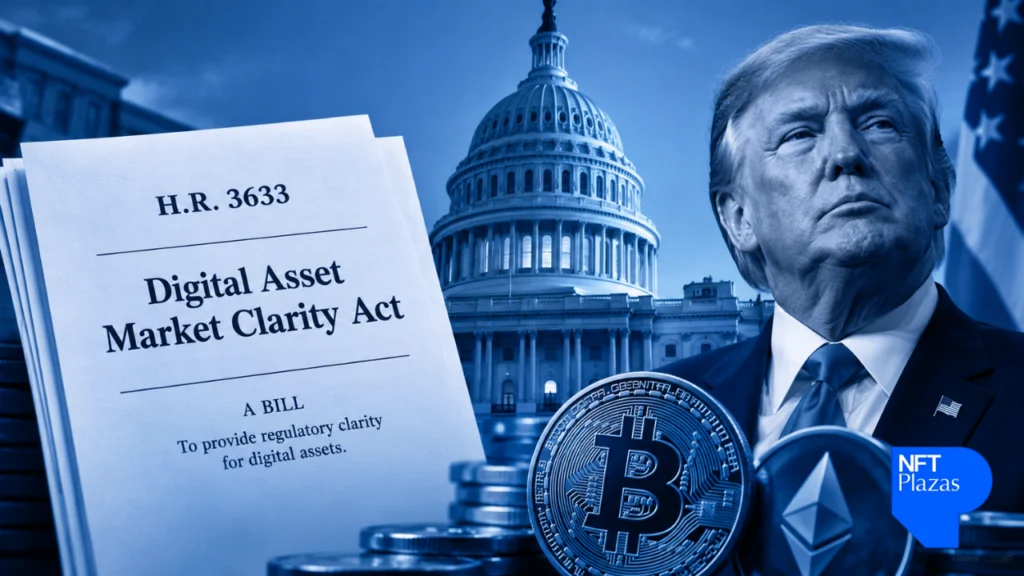
adminThe highly anticipated Digital Asset Market Clarity (CLARITY) Act, a legislative effort aimed at establishing a comprehensive regulatory framework for digital assets in the United States, faced a significant setback this week as a cloture motion in the US Senate failed to garner the necessary votes. After a year of development and advocacy, the motion received only 49 votes in favor and 50 against, falling short of the 60 votes required to advance the bill for a final vote. This legislative stall, however, coincides with a flurry of activity from regulatory bodies and other congressional committees, signaling a fragmented but persistent push to address the burgeoning digital asset landscape.
The CLARITY Act’s Stalled Journey and Uncertain Future
The Senate vote on the CLARITY Act on [Insert Date if known, otherwise state "this week"] marked a pivotal moment for the cryptocurrency industry, which has long sought clear guidelines from federal lawmakers. The bill, intended to define the roles of various regulatory agencies and provide certainty for digital asset businesses, encountered bipartisan hurdles despite its perceived importance. A notable detail emerged regarding the "no" vote cast by Republican Senator Thom Tillis. Far from signaling outright opposition, Senator Tillis confirmed he strategically switched his vote at the last minute to allow him to call for a new vote in the future, a procedural maneuver aimed at keeping the legislation alive.
Despite this glimmer of hope, the immediate prospects for the CLARITY Act remain dim. Political analysts and legislative experts suggest that the path forward is significantly narrowing. Congressman Shri Thanedar, a Democrat who supported CLARITY in the House, articulated the primary challenge: time. "There are only 20 legislative days left in this Congress, all of them after the midterms, making odds of a 2026 compromise, unfortunately, very low," Thanedar stated, highlighting the tight legislative calendar. This sentiment was echoed by NEAR chief legal officer Abhishek Vaidyanathan, who pointed out that the House had already canceled two sitting weeks, and the Senate’s state work period was commencing on October 5. Vaidyanathan concluded, "Now that cloture failed, the next Congress is the likely next opportunity to address crypto market structure."
Further complicating matters, seven Democratic senators who voted against the cloture motion claimed they "remain committed" to passing the bill, albeit at an unspecified point in the future. Senator Angela Alsobrooks remarked, "We were ready to strike a deal today and in discussions right up until the vote. Republican leadership shut it down at the very last minute," indicating persistent political divisions that hinder consensus. The failure to advance CLARITY underscores the deep partisan rifts and complex negotiations required to pass significant legislation in the current political climate, particularly concerning a novel and rapidly evolving sector like digital assets.
Regulatory Agencies Step In: SEC and CFTC Initiatives

In the absence of clear legislative direction from Congress, US regulatory bodies are actively stepping in to fill the perceived void, issuing new rules and proposing frameworks for digital asset operations. This proactive stance was anticipated by industry leaders, with Ripple CEO Brad Garlinghouse predicting that "US regulators will continue to work hard to issue rules to fill the legislative gap" following the CLARITY Act’s initial setback. His prediction proved accurate, with significant announcements from both the Securities and Exchange Commission (SEC) and the Commodity Futures Trading Commission (CFTC) just days later.
SEC’s Tokenized Stock Exemption:
Just two days after the CLARITY Act’s Senate defeat, the US Securities and Exchange Commission (SEC) announced a temporary, five-year exemption designed to allow limited trading of tokenized US stocks on decentralized public blockchains. This "Innovation Exemption" provides a pathway for trading tokenized assets using automated market makers (AMMs) and exempts qualifying entities from having to register as traditional securities exchanges. This move is a significant development for the burgeoning decentralized finance (DeFi) sector, potentially paving the way for more mainstream financial assets to be traded on blockchain rails.
However, the SEC’s new rules come with crucial limitations. The exemption explicitly excludes "synthetic" stock tokens – those that do not provide holders with all the same rights as traditional stocks. This distinction has immediate implications for platforms that have issued such tokens, including prominent players like xStocks and Robinhood, whose existing synthetic stock token offerings are likely to fall outside the scope of this exemption. The SEC’s approach reflects a cautious attempt to foster innovation while maintaining investor protection, a delicate balance in the rapidly evolving digital asset space.
CFTC’s Expanded Reach and Proposed Rules:
Concurrently, the Commodity Futures Trading Commission (CFTC) has also been busy expanding its regulatory footprint within the crypto ecosystem. The agency announced regulatory relief for "passive software" providers, which include crypto wallets and other applications that connect users to regulated derivatives firms and exchanges. Through a "no-action position," the CFTC stated it would not recommend enforcement actions against qualifying providers or their personnel for failing to register as introducing brokers or associated persons when facilitating trading with CFTC-registered entities. This measure is expected to lower the barrier to entry for many crypto platforms, enabling them to offer easier access to regulated derivatives products, such as perpetual contracts and prediction markets, to a broader user base.
Beyond this relief, the CFTC has submitted draft crypto rules to the White House for review, titled "Regulation Crypto Asset Transactions and Regulation Crypto Asset Markets." While currently in the "prerule" stage, meaning they have not yet been formally proposed, these drafts signal the CFTC’s intent to establish a comprehensive framework for crypto markets under its jurisdiction. This proactive step indicates the agency’s commitment to defining its role and providing regulatory clarity, particularly for assets deemed commodities.
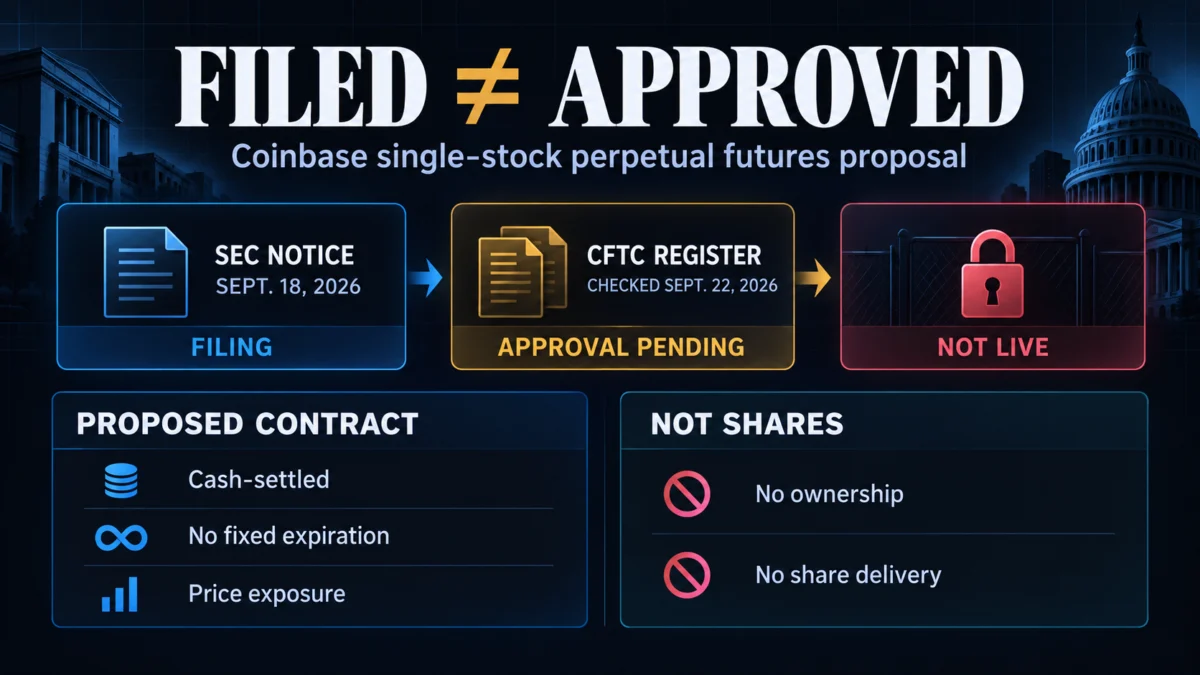
Further underscoring the growing interest in regulated crypto derivatives, both Coinbase and Kalshi filed separate, but very similar, applications with the CFTC this week. Both firms are seeking to offer 24/5 perpetual futures trading on individual US stocks to the US market. These filings highlight a strong industry demand for regulated, innovative financial products that blend traditional equity markets with the efficiency and accessibility of crypto derivatives.
Congressional Progress Beyond CLARITY: Bitcoin Reserve and Tax Reforms

While the CLARITY Act faces an uphill battle, other legislative initiatives related to digital assets are making headway in the US Congress, demonstrating a multi-faceted approach to integrating cryptocurrencies into the existing financial and legal frameworks.
Strategic Bitcoin Reserve:
The American Reserve Modernization Act of 2026 achieved a significant milestone this week, passing the US House Committee on Financial Services. This legislation aims to formalize an existing executive order by establishing a Strategic Bitcoin Reserve in law. Additionally, it proposes the creation of a Digital Asset Stockpile, which would hold other forfeited cryptocurrencies within the Department of the Treasury. This move would embed Bitcoin and other digital assets into the nation’s strategic financial reserves, potentially signaling a long-term governmental recognition and utilization of these assets.
The proposed legislation includes several key provisions: it mandates all federal agencies to conduct a full audit of the digital assets they currently hold and requires them to provide quarterly "proof of reserve" reports. This transparency mechanism aims to build trust and accountability in governmental digital asset holdings. Furthermore, the bill directs a study into budget-neutral acquisition strategies for purchasing additional Bitcoin to bolster the reserve. Bitcoin Policy Institute executive director Connor Brown lauded this development, calling it a "genuinely historic step for Bitcoin policy," emphasizing its potential long-term impact on the integration of Bitcoin into federal financial strategy.
Digital Asset Tax Certainty:
In a separate but equally important development, the US House Ways and Means Committee also passed the Digital Asset Tax Certainty Act with strong bipartisan support. This legislation is designed to reshape the federal tax treatment of digital assets, aiming to provide much-needed clarity and simplify tax compliance for individuals and businesses engaging with cryptocurrencies. The current tax landscape for digital assets is often complex and ambiguous, leading to confusion and potential compliance issues. This act seeks to address these challenges, fostering a more predictable and equitable tax environment for the crypto industry.
Cybersecurity Concerns: The Revolut Data Breach
Amidst these legislative and regulatory movements, the critical issue of cybersecurity and data privacy in the digital asset space was starkly highlighted by the Revolut data breach. The theft of sensitive customer data, including passports and Know Your Customer (KYC) selfies, from the financial technology firm took a bizarre turn when a second hacker demanded a $3 million ransom.
Operating under the pseudonym "IAmNotAVillain," the actor publicly demanded 6,000 Monero (a privacy-focused cryptocurrency) from Revolut within a 24-hour ultimatum, threatening to sell the stolen customer records to criminal groups if the demand was not met. This incident followed an earlier demand by a group calling itself "Revolut Smilik," which had demanded 10,000 Bitcoin, valued at approximately $780 million, for the same data. IAmNotAVillain suggested that the earlier, significantly larger demand came from a former associate who possessed only a small sample of the compromised data.

The Revolut data breach serves as a stark reminder of the inherent risks associated with centralized storage of sensitive personal identification data, a common practice for KYC compliance across the financial sector. The incident underscores the urgent need for enhanced security measures and potentially for adopting privacy-preserving technologies, such as zero-knowledge proofs, which could allow companies to verify customer identities without retaining vast troves of personal documents.
Market Performance and Analyst Outlook
Despite the legislative uncertainties and security concerns, the broader cryptocurrency market demonstrated resilience and positive momentum this week. Bitcoin (BTC) saw a notable increase of 5.9%, trading at $81,185. Ethereum (ETH) followed suit with a 6.6% gain, reaching $2,639, while XRP (XRP) climbed 5.4% to $1.40. The total cryptocurrency market capitalization, according to CoinMarketCap, stood at a robust $2.78 trillion, reflecting sustained investor interest.
Among the top 100 cryptocurrencies, several altcoins posted significant gains. NEAR Protocol (NEAR) emerged as the top performer with an impressive 76.4% gain, followed by Arbitrum (ARB) with 64.3%, and Ethena (ENA) with 61.6%. Conversely, some assets experienced declines, with Stable (STABLE) down 11.6%, Pi (PI) down 11.3%, and SPX6900 (SPX) down 1.8%.
Arbitrum’s Bullish Forecast:
A notable prediction this week came from Standard Chartered, a reputable global banking and financial services company, which issued a highly bullish forecast for the layer-2 network Arbitrum (ARB). Geoff Kendrick, Standard Chartered’s global head of digital assets research, projected that Arbitrum’s price could reach as high as $10 by 2030. From its current levels, this would represent an astonishing roughly 70-fold increase, significantly outpacing the bank’s projected returns for Bitcoin and Ether over the same period.
Kendrick attributed this optimistic outlook to Arbitrum’s robust economics, particularly the network’s model of receiving 10% of the net protocol revenue generated by companies building on its platform. Robinhood Chain, a new Ethereum Layer-2 testnet for tokenized assets, was highlighted as a prime example of this revenue generation. Its launch in July is expected to push Arbitrum’s September revenue to $5 million, a five-fold increase from before Robinhood Chain’s integration. Kendrick acknowledged potential risks to this projection, including a slower-than-expected pace of asset tokenization and increased competition from alternative blockchain networks, but maintained a strong positive long-term view for ARB.
Emerging Threats and Methodological Challenges

Beyond market dynamics, the digital asset ecosystem continues to grapple with evolving threats and fundamental methodological challenges that warrant careful attention.
State-Sponsored On-Chain Malware:
A report by blockchain analytics firm Chainalysis revealed a concerning 420% surge in on-chain malware activity over the past 12 months. State-linked hackers, accounting for approximately two-thirds of this new activity each quarter, are increasingly utilizing public blockchains to store malware instructions or infrastructure information. Chainalysis identified North Korea and Iran-linked operators among the state actors employing this technique. The firm also connected previously unattributed activity across various blockchains, including Tron, Aptos, and BNB Smart Chain (BSC), to UNC5342, a North Korea-linked group tracked by Google Threat Intelligence. The primary motivation for using public blockchains, according to Chainalysis, is to enhance the durability of malware campaigns, as the stored information remains accessible even after domains, servers, or code repositories are taken down. This represents a sophisticated and persistent threat to the integrity of the digital ecosystem.
Bitcoin Transaction Measurement Discrepancies:
On a more foundational level, researchers at the Bank for International Settlements (BIS) published a paper highlighting a significant methodological challenge in estimating Bitcoin on-chain transfer values. The study found that estimates can vary by as much as sixfold, depending on the measurement methods employed. This substantial gap reflects differences in how various approaches treat "change outputs" – amounts returned to the sender in a transaction – and other forms of transfers back to the originating wallet. The measurement problem also extends to Bitcoin’s market capitalization, where the conventional measure has at times been up to four times higher than "realized capitalization," which values each coin at the price when it last moved. These discrepancies underscore the complexity of accurately assessing fundamental metrics in decentralized networks and call for standardized methodologies to ensure consistent and reliable data.
Crypto-Related Financial Crime:
Finally, a stark reminder of the enduring risks of financial crime within the crypto space came from Hong Kong. A former bank official, Lam Chun-yin, 32, who served as a customer relationship manager at China Construction Bank (Asia), was sentenced to four years in prison. Lam was found guilty of falsely authenticating letters of credit totaling over $1.6 billion and received more than $470,000 in cryptocurrency bribes for his illicit activities. The case, reported by The Standard, emphasizes the ongoing vulnerability of traditional financial systems to infiltration by individuals seeking to exploit digital assets for illicit gains, highlighting the need for robust compliance and anti-money laundering measures across both traditional and crypto financial sectors.
In conclusion, the digital asset landscape continues to evolve rapidly, characterized by both legislative hurdles and proactive regulatory responses. While the CLARITY Act’s immediate future remains uncertain, the US government’s engagement with digital assets is clearly broadening, with congressional committees advancing legislation on Bitcoin reserves and tax reforms, and regulatory bodies like the SEC and CFTC issuing new guidelines. Concurrently, the industry faces persistent challenges ranging from sophisticated state-sponsored cyberattacks and fundamental data measurement complexities to ongoing financial crime, all while the market demonstrates robust growth and innovation. The coming months are poised to be critical in shaping the regulatory and operational future of digital assets in the United States and globally.