admin
admin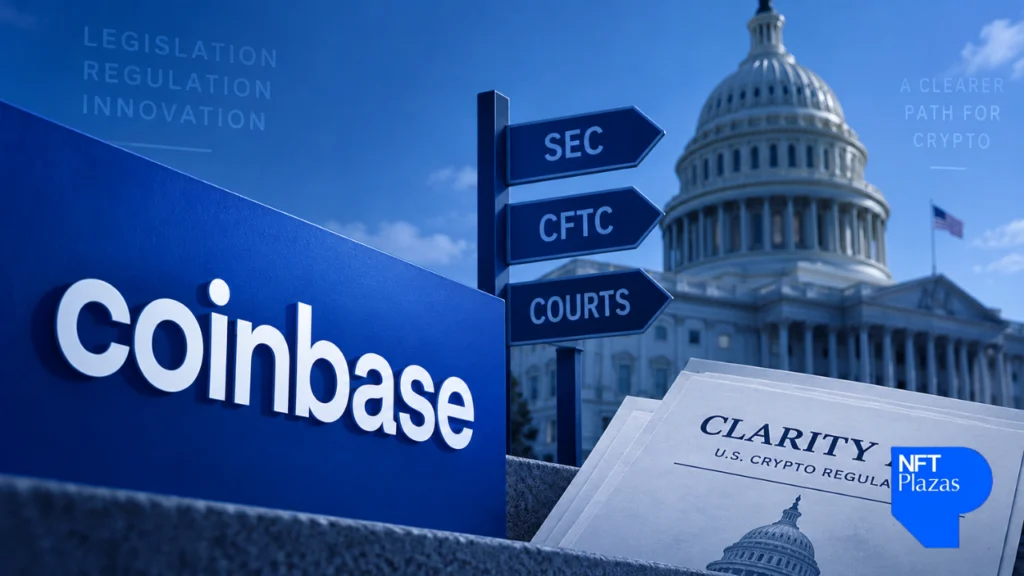
Coinbase, a leading cryptocurrency exchange, is proactively strategizing for a future where the anticipated U.S. crypto market-structure bill, known as the CLARITY Act, might not pass Congress. Despite this potential legislative hurdle, the company firmly intends to accelerate its plans for introducing new products and services, asserting that its growth trajectory is not solely reliant on a single piece of legislation. This resilient stance underscores a broader industry pivot towards adaptive regulatory engagement, recognizing diverse avenues for establishing operational certainty in the nascent digital asset landscape.
Alesia Haas, Coinbase’s Chief Financial Officer, articulated the company’s perspective during an interview with Yahoo Finance at the Goldman Sachs Communacopia & Technology Conference. Haas outlined three distinct pathways to achieving regulatory clarity: legislative action by Congress, rulemaking by federal agencies, and resolution through the courts. This comprehensive approach reflects a deep understanding of the intricate U.S. regulatory ecosystem and a readiness to navigate it through various means. "There was always three paths to getting Clarity," Haas stated, emphasizing that even if congressional efforts falter, alternative routes via the Securities and Exchange Commission (SEC) and the Commodity Futures Trading Commission (CFTC) remain viable. She pointed to what she perceived as recent efforts by officials within these agencies to advance crypto regulation through administrative rulemaking, signaling a potential shift towards agency-led guidance.
The timing of these comments is particularly poignant, coming just days before a critical Senate cloture vote scheduled for September 15. This procedural vote could significantly influence the CLARITY Act’s prospects for moving forward this year, determining whether the legislation gains the necessary momentum or stalls indefinitely. The stakes are undeniably high for an industry that has long contended that regulatory ambiguity in the United States stifles investment, innovation, and product development, pushing businesses and capital to more accommodating jurisdictions globally.
The Legislative Crucible: The CLARITY Act at a Crossroads
The CLARITY Act represents a significant legislative endeavor aimed at establishing a comprehensive federal framework for the burgeoning digital-asset market. At its core, the bill seeks to delineate clearer jurisdictional boundaries between the SEC and the CFTC, two powerful federal regulators whose overlapping purviews have often created confusion and uncertainty for crypto businesses. Furthermore, it aims to provide explicit rules governing which digital assets qualify as securities and which are considered commodities, a distinction that has been a central point of contention in numerous legal and enforcement actions. The absence of such clear guidelines has been a persistent source of frustration for companies like Coinbase, which must navigate a complex regulatory environment without explicit directives.
The upcoming Senate cloture vote on September 15 is not a final vote on the bill itself but a crucial procedural step. It requires 60 votes to invoke cloture, effectively limiting debate and allowing the legislation to proceed to a final vote. Achieving this supermajority in a politically polarized Congress is often a formidable challenge, especially for novel and complex legislation like crypto market-structure bills. Should the CLARITY Act fail to clear this hurdle, its passage during the current congressional session would become highly improbable, potentially pushing the next serious opportunity for comprehensive reform years into the future.
Senator Cynthia Lummis (R-WY), a staunch advocate and co-sponsor of the CLARITY Act, has been vocal about the urgency of legislative action. She has cautioned that a failure to advance market-structure legislation in the current Congress could have dire consequences, warning that such a setback would delay critical reforms and potentially cede leadership in the digital asset space to other nations. Her concerns echo those across the industry, highlighting the perceived competitive disadvantage faced by U.S. companies due to regulatory inertia.
Coinbase’s Adaptive Strategy: Beyond Congressional Impasse

For Coinbase, however, a legislative setback would not trigger a retreat from its ambitious product roadmap. Emilie Choi, Coinbase’s President and Chief Operating Officer, affirmed this resilience in the same interview, stating, "We never have to roll back our ambitions." Choi elaborated that Coinbase has meticulously constructed its strategy around existing regulatory and compliance frameworks, demonstrating its capability to launch products within the current, albeit complex, legal landscape. The primary difference, she suggested, would be the pace of market development and adoption. "I think it’s more about the acceleration of adoption and how quickly money comes off the sidelines for Clarity," Choi explained, underscoring that while legislative clarity would provide a significant boost, its absence would not halt the company’s progress, merely moderate its speed.
This adaptable approach is integral to Coinbase’s broader strategic vision: transforming into an "Everything Exchange." This model extends far beyond traditional cryptocurrency trading, encompassing a wide array of financial products and services such as payments, tokenized assets, and various decentralized finance (DeFi) offerings. Clearer U.S. regulation would undoubtedly facilitate the introduction of these innovative products to American customers and, crucially, encourage institutional investors—who often demand robust regulatory certainty—to deploy substantial capital into digital assets.
Coinbase CEO Brian Armstrong has consistently maintained an optimistic outlook regarding the potential for legislative clarity. In recent public statements, he expressed confidence in the CLARITY Act’s eventual passage, arguing that definitive rules could unlock a tidal wave of institutional investment. Armstrong has also articulated a bold long-term vision for the crypto market, including a projection of Bitcoin reaching $400,000 by 2030, reflecting his deep conviction in the asset class’s future.
He frequently cites the GENIUS Act, the stablecoin legislation passed in the previous year, as a compelling example of how regulatory clarity can dramatically accelerate corporate adoption. Armstrong noted that following the GENIUS Act’s passage, over 150 large companies integrated stablecoins within a mere three months. He anticipates a similar catalytic effect from the CLARITY Act, particularly for emerging product categories such as tokenized equities, which represent a significant frontier for integrating traditional finance with blockchain technology.
Agency Rulemaking: The Alternative Regulatory Path
Coinbase’s proposed fallback strategy relies heavily on the regulatory initiatives undertaken by the SEC and CFTC. Alesia Haas specifically commended efforts by officials within these agencies for pursuing rulemaking that could furnish greater clarity without waiting for Congress to enact comprehensive legislation. This approach acknowledges that while statutory law provides the most durable framework, agencies possess significant authority to issue rules and guidance under their existing mandates.
The CFTC, for instance, has indicated its willingness to explore how its current statutory authority could be leveraged to establish a clearer regulatory framework for crypto markets, particularly if the CLARITY Act remains stalled. This could involve using existing powers related to derivatives and commodities to provide guidance on market surveillance, consumer protection, and registration requirements for certain digital asset platforms. Similarly, the SEC has been actively working on various aspects of crypto regulation under its current leadership, including enforcement actions, investor protection initiatives, and exploring pathways for digital asset securities.
However, relying on agency-level rules presents both advantages and disadvantages. On the one hand, agency rules can often be introduced or modified more swiftly than congressional legislation, potentially offering a quicker route to some form of clarity. This agility can be crucial in a rapidly evolving sector like digital assets. On the other hand, agency rules are generally less durable than federal statutes. They can be revised, rescinded, or reinterpreted by future administrations or different regulatory leadership, leading to a degree of uncertainty that comprehensive legislation would ideally eliminate. This inherent impermanence means that while agency rules can provide immediate guidance, they may not offer the long-term stability and predictability that many in the industry seek.
The Judicial Path: Litigation as a Strategic Lever

Haas also highlighted litigation as the third potential route to clarity, a path Coinbase has already tread. The company has direct experience navigating the courts in its pursuit of regulatory certainty, notably through its ongoing legal battles with the SEC. These legal challenges, such as the SEC’s Wells Notice to Coinbase and the subsequent lawsuit concerning the exchange’s staking products, exemplify how judicial processes can force regulatory issues to a head and, in some cases, establish precedents that shape the regulatory landscape.
While often adversarial and protracted, litigation can compel regulators to articulate their interpretations of existing laws more clearly and can result in court rulings that provide binding legal clarity on specific aspects of digital asset regulation. Such outcomes, even if not comprehensive, can offer critical guidance for companies operating in the space, informing their product development and operational compliance strategies. This path, though costly and time-consuming, underscores Coinbase’s willingness to exhaust all available avenues to achieve a predictable operating environment.
Economic Stakes and Broader Implications
The implications of the CLARITY Act’s fate, and Coinbase’s adaptive strategy, extend far beyond the company itself. Regulatory uncertainty in the U.S. has been widely cited as a significant impediment to investment and innovation, potentially causing the country to lag behind other jurisdictions that have moved more decisively to establish clear frameworks. The European Union, for example, has enacted the Markets in Crypto-Assets (MiCA) regulation, providing a harmonized framework across its member states. Other nations, including the UK, Singapore, and the UAE, are also actively developing comprehensive regulatory regimes designed to attract and foster digital asset innovation.
Should the U.S. fail to pass comprehensive legislation, there is a risk that institutional capital and technological talent could increasingly flow to these more accommodating environments. This "money off the sidelines" phenomenon, as described by Emilie Choi, could mean missed opportunities for job creation, economic growth, and maintaining the U.S.’s competitive edge in a strategically important technological sector.
For Coinbase, the ability to operate within a clear, predictable regulatory framework is crucial for its long-term market position and global competitiveness. While its "Everything Exchange" model is designed to thrive under various conditions, optimal growth and widespread adoption in the U.S. market hinge on reducing regulatory friction. The company’s commitment to expanding its offerings, including tokenized assets and advanced financial products, depends heavily on a clear understanding of what is permissible and under whose oversight.
The September 15 cloture vote, therefore, remains a crucial barometer for the industry’s legislative aspirations. Even with Coinbase’s robust backup plans, comprehensive federal legislation would offer a more holistic and enduring framework than a patchwork of agency rules and court rulings. It would establish definitive jurisdiction, streamline compliance, and provide the certainty necessary to unlock significant institutional investment and foster mainstream adoption of digital assets.
In conclusion, Coinbase’s strategic preparations reflect a sophisticated understanding of the complex regulatory environment in the United States. The exchange is effectively bracing for two primary outcomes: successful congressional legislation if lawmakers can secure enough votes, or a continued push through the SEC, CFTC, and the courts if the legislative path remains blocked. Either way, Coinbase’s message to its investors, customers, and the broader market is unequivocal: its U.S. expansion plans and ambitious product roadmap are not tethered to the fate of a single piece of legislation. While the CLARITY Act could significantly accelerate these plans, Coinbase is demonstrably unwilling to wait indefinitely for Washington to provide the regulatory certainty it actively seeks, underscoring its resilience and long-term vision in the evolving digital economy.