admin
admin
Global cybersecurity concerns have escalated dramatically with a Chainalysis report revealing a staggering 420% surge in onchain malware activity this year, predominantly driven by state-linked hackers from North Korea and Iran. These entities are now responsible for approximately two-thirds of all new malicious operations that leverage public blockchains to store malware instructions and infrastructure data. This alarming trend coincides with a complex and diverse set of developments across Asia’s crypto sphere, from India’s innovative tokenized bond pilot and Vietnam’s growing regulatory framework to Hong Kong’s strategic maneuvers to become a leading digital asset hub amidst global regulatory shifts.
The Rising Tide of State-Sponsored Onchain Malware
The Chainalysis report underscores a significant evolution in cyber warfare tactics, where nation-states are increasingly exploiting the decentralized and immutable nature of public blockchains for illicit activities. Unlike traditional methods that rely on vulnerable domains or centralized servers, storing malware components on a blockchain ensures their persistence and accessibility even if conventional infrastructure is dismantled. This makes detection and mitigation substantially more challenging for cybersecurity firms and law enforcement agencies worldwide.
North Korea, in particular, has been identified as a major perpetrator. The report specifically names UNC5342, a North Korea-linked group, as responsible for previously unattributed onchain malware activity spanning multiple prominent blockchains, including Tron, Aptos, and BNB Smart Chain. This highlights the sophisticated and multi-platform approach these actors employ to maximize their reach and resilience. The tactic is not entirely new; Chainalysis noted that as early as 2025, North Korean hackers utilized a similar technique dubbed "EtherHiding" to embed crypto-stealing code directly within smart contracts, demonstrating a long-standing strategic intent to weaponize blockchain technology.
The motivation behind these state-sponsored attacks is multifaceted, primarily driven by economic sanctions and the desperate need for foreign currency to fund their illicit weapons programs. For North Korea, cybercrime has become a critical revenue stream, with groups like Lazarus Group having previously been implicated in multi-million dollar cryptocurrency heists targeting exchanges and DeFi protocols. Iran, facing its own set of international sanctions, is also increasingly turning to cyber operations to circumvent financial restrictions and exert geopolitical influence. The 420% increase in onchain malware activity represents not just a numerical spike but a qualitative shift in the sophistication and strategic importance of these cyber campaigns for rogue states. Cybersecurity experts infer that the sheer volume and complexity of these attacks necessitate a more robust, internationally coordinated defense mechanism, beyond traditional internet security protocols, to safeguard the integrity of blockchain networks and the wider digital economy.
North Korea’s Elaborate Scheme: Infiltrating US Companies with Foreign Talent
Beyond direct malware deployment, North Korea is employing highly deceptive social engineering tactics to infiltrate Western corporations, particularly in the United States. A recent NBC report revealed that the Democratic People’s Republic of Korea (DPRK) is now leveraging remote workers from third countries, including Iran and Lebanon, to bypass stringent hiring processes. These foreign individuals, often unaware of the ultimate beneficiary, are used to successfully navigate job interviews for remote positions within US companies. Once the position is secured, North Korean operatives take over, gaining access to corporate networks, sensitive data, and potentially valuable intellectual property.
This elaborate scheme serves the same overarching objective: to illicitly obtain funds and technology to finance Pyongyang’s weapons of mass destruction programs, circumventing international sanctions. The use of third-country nationals adds layers of deniability and complexity for investigators, making it difficult to trace the ultimate beneficiaries back to North Korea. Cybersecurity analysts and government officials have long warned about North Korea’s persistent efforts to exploit vulnerabilities in global supply chains and remote work environments. This new tactic represents an evolution in their modus operandi, shifting from direct hacking attempts to a more insidious form of corporate espionage and financial extraction through identity deception. The implications for US companies are profound, necessitating enhanced vigilance in remote hiring practices, more rigorous background checks, and advanced threat detection systems capable of identifying unusual network activity originating from seemingly legitimate employee accounts.

South Korea Cracks Down on Polymarket Users, Citing Illegal Gambling
In South Korea, the regulatory environment for cryptocurrencies continues to tighten, particularly concerning decentralized finance (DeFi) platforms. Authorities have reportedly referred users of Polymarket, a popular decentralized prediction market, to prosecutors, alleging that their transactions constitute illegal gambling under South Korea’s Criminal Act. The core of the legal argument centers on the premise that users stake assets on outcomes that cannot be predicted with certainty, thereby falling under the definition of gambling activities, which are heavily restricted in the country.
South Korea has historically maintained a conservative stance on gambling, with strict laws governing casinos and sports betting. This legal interpretation extends to novel platforms like Polymarket, despite their decentralized nature and often educational or informational use cases in other jurisdictions. The move sends a clear message to the nascent DeFi sector within South Korea: innovation must align with existing legal frameworks, particularly those pertaining to financial activities and consumer protection. While the exact number of users referred to prosecutors remains undisclosed, the action underscores the government’s commitment to enforcing its regulations, potentially creating a chilling effect on the adoption and development of prediction markets and similar DeFi protocols in the country. Legal experts in South Korea suggest that this could be a precedent-setting case, prompting a re-evaluation of how decentralized applications are classified and regulated under traditional financial laws, and highlighting the ongoing tension between technological innovation and established legal norms.
Hong Kong Seizes Strategic Window Amidst US Regulatory Stumbles
Hong Kong is actively positioning itself as a leading global digital asset hub, a strategy seemingly bolstered by recent regulatory setbacks in the United States. Crypto industry insiders, including Allen Ding, director of Bitfire Research, and Shawn Yan, founder of Cregis Technology, are urging Hong Kong policymakers to "seize the critical strategic window" opened by the failure of the CLARITY vote in the US. The CLARITY Act, a proposed US crypto bill, aimed to provide a comprehensive regulatory framework for digital assets but ultimately failed to pass, prolonging regulatory uncertainty in the American market.
This legislative impasse in the US provides a crucial opportunity for Hong Kong to accelerate its own progressive crypto regulatory agenda. The city has already made significant strides, introducing licensing regimes for virtual asset service providers and allowing retail investors to trade major cryptocurrencies. Experts argue that by establishing clear, robust, and forward-thinking regulations, Hong Kong can attract a significant portion of the global crypto industry seeking stable and predictable operating environments. Shawn Yan emphasized the need for Hong Kong to focus on "building infrastructure that can operate across regulatory boundaries, rather than waiting for any single jurisdiction to define the market for everyone." This proactive approach is seen as vital for the city to compete with other aspiring crypto hubs and to cement its status as an international financial center in the digital age. The government’s recent efforts, including a supportive stance from the Securities and Futures Commission (SFC), indicate a strong commitment to capitalizing on this perceived advantage.
In parallel with this broader strategic push, Metaplanet, a company that recently pivoted to a Bitcoin-centric treasury strategy, has announced plans for a Hong Kong subsidiary. This move comes after a week of controversy surrounding its executive stock pool plan, which initially proposed handing over as much as 20% of its fully diluted shares to executives. Following significant backlash, Metaplanet has now slashed the Series 10 stock pool by 41%, reducing the number of potential shares underlying the rights from 319.464 million to 188.19 million and resetting the conversion ratio to its pre-September 2025 international share offering level. This adjustment extinguishes over $220 million in warrant value and is projected to increase the company’s Bitcoin per fully diluted share by approximately 8.8%. This decisive action to address corporate governance concerns, coupled with its strategic focus on Bitcoin and expansion into Hong Kong, signals Metaplanet’s intent to align with institutional-grade standards while leveraging Hong Kong’s burgeoning crypto ecosystem.
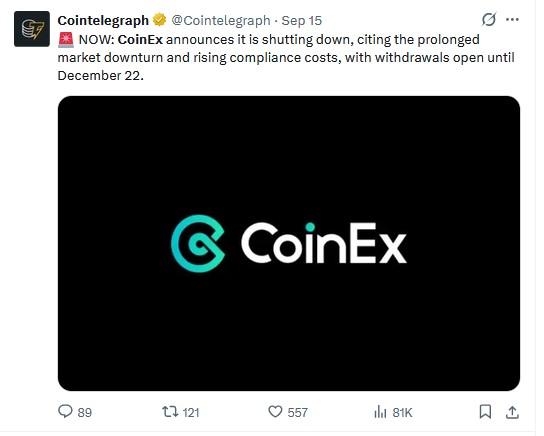
However, the Hong Kong crypto landscape also witnessed a significant departure. CoinEx, a Hong Kong-founded exchange, announced its decision to cease operations after nine years. The exchange cited a combination of factors, including falling trading volumes and liquidity during the ongoing bear market, alongside rising regulatory and compliance costs. CoinEx will maintain withdrawal services until December 22, providing users ample time to retrieve their assets. This closure serves as a stark reminder of the intense pressures and inherent volatility within the cryptocurrency exchange sector, where only the most resilient and compliant platforms can survive protracted market downturns and increasingly stringent global regulations. The departure of CoinEx, a long-standing player, underscores the competitive and challenging environment that even established exchanges face, highlighting the need for robust business models and adaptability.
India’s Ambitious Leap into Digital Finance: Tokenized Bonds and Regulatory Clarity

India is making significant strides in integrating digital assets into its traditional financial infrastructure, launching a groundbreaking tokenized corporate bond pilot project. Spearheaded by the Securities and Exchange Board of India (SEBI) and the Reserve Bank of India (RBI), the pilot saw three companies issue a combined 10.25 billion rupees (approximately $107 million) through the new market infrastructure. This initiative, known as Demat 2.0, enables corporate bonds to be issued and held as digital tokens on a distributed ledger maintained by the country’s statutory depositories. The system seamlessly connects to the RBI’s wholesale central bank digital currency (CBDC) through its Unified Market Interface, demonstrating a holistic approach to digital financial innovation.
The tokenized bond pilot represents a significant step towards modernizing India’s capital markets, promising enhanced efficiency, transparency, and potentially reduced settlement times and costs. By leveraging blockchain technology for bond issuance and settlement, India aims to streamline the entire lifecycle of corporate debt, from primary issuance to secondary trading. This initiative also positions India at the forefront of exploring practical applications for wholesale CBDCs, integrating them directly into institutional financial transactions. The successful launch of Demat 2.0 indicates a strong regulatory will to embrace distributed ledger technology for traditional financial instruments, potentially paving the way for broader adoption of tokenized securities across various asset classes in the future.
Complementing these technological advancements, India’s Parliamentary Standing Committee on Finance has concluded its year-long hearings on cryptocurrency policy. The government is expected to issue its response next week, prior to the committee’s final report submission. This comprehensive review process, involving extensive consultations with stakeholders from across the industry and regulatory bodies, is anticipated to lay the groundwork for a more definitive and comprehensive cryptocurrency regulatory framework for India. For years, the Indian crypto market has operated under a cloud of uncertainty, with past discussions even floating the idea of an outright ban. The conclusion of this parliamentary review signals a potential shift towards a more regulated, rather than restrictive, approach, which could unlock significant growth opportunities for the domestic crypto industry and attract foreign investment.
Simultaneously, India’s Enforcement Directorate (ED) is intensifying its focus on combating economic crimes involving cryptocurrencies. The ED aims to finalize economic crime investigations within an ambitious 18-month timeframe and is actively beefing up its capabilities to track and prosecute crimes in the crypto space. This includes enhancing forensic tools, training personnel in blockchain analytics, and collaborating with international law enforcement agencies. The ED’s renewed emphasis underscores the Indian government’s dual approach: fostering innovation in digital finance while simultaneously ensuring robust measures against money laundering, fraud, and other illicit activities facilitated by cryptocurrencies. The increased scrutiny from the ED will necessitate heightened compliance efforts from crypto businesses operating in India, ensuring adherence to Anti-Money Laundering (AML) and Counter-Financing of Terrorism (CFT) regulations.
Vietnam Emerges as a Key Player in Asia’s Crypto Landscape
Vietnam is rapidly solidifying its position as an emerging hub for cryptocurrency and blockchain development, characterized by strategic partnerships and a proactive regulatory approach. Bitcoin Suisse, a prominent Swiss crypto financial services provider, has announced plans to relocate up to half of its Swiss jobs to Bratislava and Vietnam. Founded in Zug in 2013, Bitcoin Suisse offers a range of services including crypto trading, custody, staking, and lending. The establishment of a new center in Vietnam, specifically designated for many back-office and administrative roles, underscores the country’s growing appeal as a cost-effective and skilled talent pool for the global crypto industry. This move is indicative of a broader trend where Western crypto firms are looking to leverage Asia’s burgeoning tech talent and favorable economic conditions.
In parallel, Vietnamese regulators are actively developing a comprehensive supervisory mechanism for crypto asset service providers and investor transactions. This initiative is being built with guidance from the Financial Action Task Force (FATF), the global standard-setter for AML/CFT. By aligning its regulatory framework with international best practices, Vietnam aims to enhance the legitimacy and security of its domestic crypto market, fostering a more trusted environment for both businesses and investors. The development of clear monitoring mechanisms is crucial for preventing illicit financial flows and protecting consumers, ensuring that Vietnam’s embrace of crypto innovation is balanced with robust risk management.
Further cementing its commitment to digital finance, Binance, the world’s largest cryptocurrency exchange, has signed a Memorandum of Understanding (MOU) to collaborate on the development of the Vietnam International Finance Center in Ho Chi Minh City. This strategic partnership signifies a major endorsement of Vietnam’s potential as a future financial hub. Binance’s involvement will likely bring invaluable expertise, technology, and global network connections to the project, accelerating the development of a modern, crypto-friendly financial ecosystem within the city. The collaboration with such a prominent global player highlights Vietnam’s ambition to integrate blockchain technology and digital assets into its long-term economic development strategy, potentially attracting further foreign investment and fostering local innovation.
Singapore’s Institutional Crypto Integration and Legal Precedents
Singapore continues to reinforce its reputation as a leading global financial center that embraces responsible crypto innovation. The Singapore Exchange (SGX) has achieved a significant milestone by becoming the first major Asian traditional finance (TradFi) exchange to receive approval from the US Commodities Futures Trading Commission (CFTC) to offer Bitcoin and Ethereum perpetual futures to US institutions. This regulatory green light allows US institutional investors to access crypto derivatives through a highly regulated and established exchange like SGX, bridging the gap between traditional finance and the digital asset economy. The approval underscores SGX’s robust regulatory compliance and its strategic vision to cater to growing institutional demand for crypto exposure within a secure and regulated environment. This move further solidifies Singapore’s position as a preferred jurisdiction for institutional-grade crypto services.
The city-state’s legal system is also adapting to the complexities of digital assets. Singapore’s High Court recently offered crucial guidance for valuing crypto assets in claims, establishing a precedent that departs from traditional "breach-date" damage assessment principles. According to law firm Reed Smith, the court’s decision suggests that it is "unlikely to allow claimants to delay mitigation for years and then seek damages at a higher present-day market price." This guidance addresses the inherent volatility of crypto assets, providing greater clarity for dispute resolution and ensuring that claimants act promptly to mitigate losses rather than speculating on future price appreciation. This legal precedent contributes significantly to the development of robust jurisprudence around digital assets, offering greater certainty for investors and businesses operating in the crypto space.
However, the rapid growth of the crypto economy also highlights associated risks. Six Malaysian men were sentenced in Singapore to hefty sentences, including up to 12 years and 11 months in jail, plus 24 strokes of the cane, over a 2024 armed robbery. The heist involved crypto, cash, and luxury items, underscoring the physical security risks that can accompany the possession of valuable digital assets. This incident serves as a stark reminder that despite the digital nature of cryptocurrencies, their real-world value can attract traditional criminal elements, necessitating comprehensive security measures for individuals and businesses alike.
Thailand and Malaysia Navigate Stablecoin Regulation and Sharia Compliance
In Southeast Asia, regulatory frameworks continue to evolve to address specific aspects of the crypto market. Thailand’s Securities and Exchange Commission (SEC) has proposed new stablecoin regulations that would prohibit users from transferring more than 5 million baht (approximately $151,000) per day. This proposed cap aims to mitigate risks associated with stablecoins, such as potential for illicit financial flows, financial stability concerns, and consumer protection. While designed to provide regulatory clarity, such a limit could impact large-scale institutional stablecoin transactions and potentially restrict certain DeFi activities within the country. The move reflects a cautious approach to integrating stablecoins into the broader financial system, prioritizing stability and control.
Meanwhile, Malaysia is distinguishing itself as one of the more crypto-friendly Islamic nations. According to Fitch Ratings, Malaysia stands out among Muslim-majority countries for its progressive stance on digital assets. The local Securities Commission has officially declared Bitcoin, Ethereum, Ripple, and Stellar as sharia-compliant. This declaration signifies that these cryptocurrencies adhere to Islamic finance principles, which prohibit interest (riba), excessive speculation (gharar), and investments in industries deemed unethical. By providing sharia compliance certification, Malaysia aims to attract a significant portion of the global Islamic finance market, which is increasingly exploring digital asset opportunities. This unique positioning could foster the development of sharia-compliant crypto products and services, further diversifying Malaysia’s financial landscape and strengthening its role in the global Islamic economy.
The diverse array of developments across Asia, from state-sponsored cyber threats to pioneering regulatory initiatives, illustrates the continent’s pivotal role in shaping the future of the global cryptocurrency and blockchain ecosystem. As nations grapple with both the opportunities and challenges presented by digital assets, their collective experiences will undoubtedly influence international policy, technological innovation, and market dynamics for years to come.