admin
admin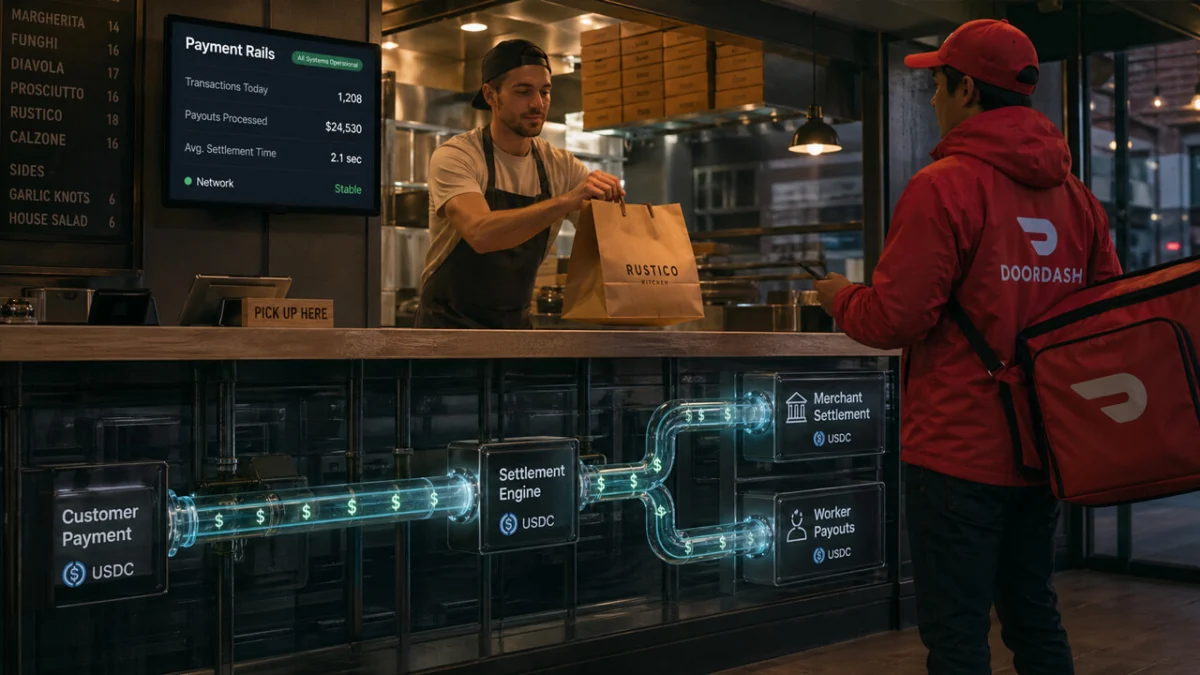
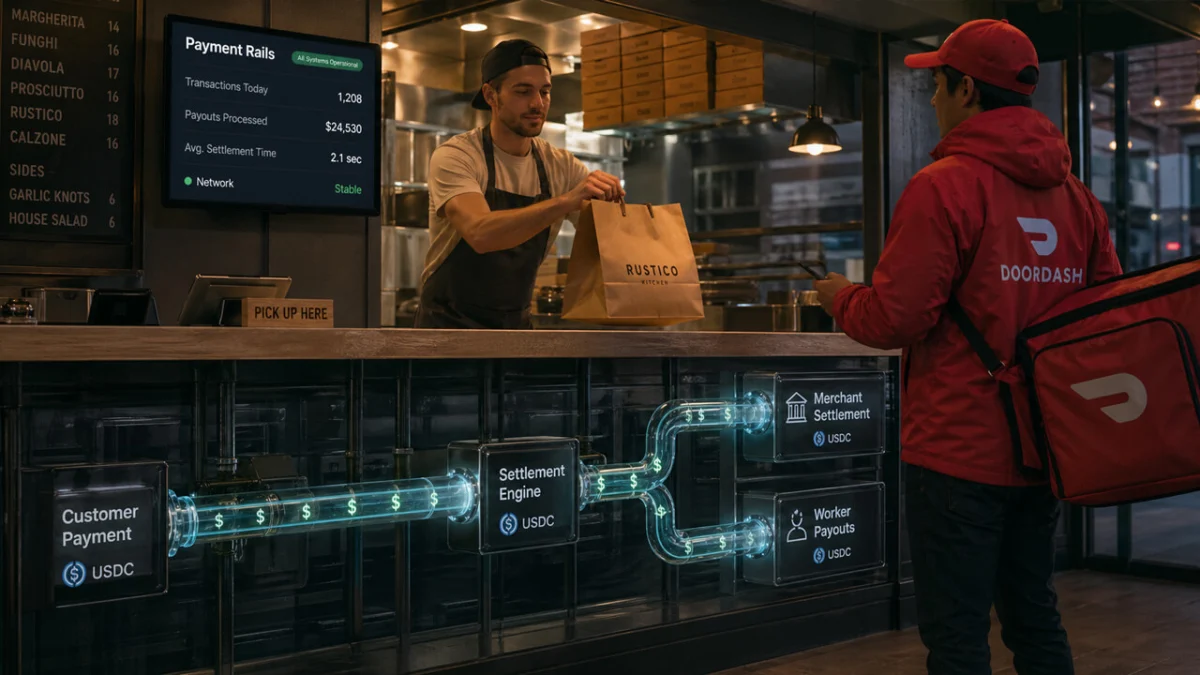
DoorDash, the leading logistics and food delivery platform, has officially announced a strategic partnership with Tempo, a blockchain infrastructure provider backed by Stripe and Paradigm, to integrate stablecoin-powered payouts into its global marketplace. This move signals one of the most significant implementations of blockchain technology within a mainstream consumer enterprise to date, aiming to address the inherent inefficiencies of traditional cross-border financial rails. As a company operating in more than 40 countries, DoorDash manages a complex web of financial flows involving millions of customers, hundreds of thousands of merchants, and a vast fleet of independent contractors known as "Dashers." The integration of stablecoins is designed to bypass the traditional banking bottlenecks that frequently delay the movement of funds from the point of sale to the wallets of those performing the labor and providing the goods.
The adoption of stablecoin rails by a high-volume marketplace like DoorDash represents a pivot in the cryptocurrency narrative, shifting focus from speculative assets to functional backend infrastructure. For years, the primary hurdle for stablecoins has been whether large-scale platforms would view them as a practical alternative to established fiat systems. By embedding these digital assets into its core payout architecture, DoorDash is betting that blockchain technology can solve real-world operational problems related to settlement speed, foreign exchange friction, and payout reliability.
The Operational Imperative for Faster Settlement
The delivery marketplace model is characterized by extreme temporal compression on the consumer side and significant lag on the financial backend. While a customer can place an order and receive a delivery within thirty minutes, the underlying capital often takes days to clear. This discrepancy creates a "liquidity gap" that affects all participants in the DoorDash ecosystem. For merchants, particularly small businesses, delayed settlement impacts working capital, complicating payroll, inventory management, and short-term liquidity planning. For Dashers, many of whom rely on immediate access to earnings to cover daily expenses like fuel and maintenance, waiting for banking cycles to conclude can create genuine financial hardship.
DoorDash co-founder Andy Fang has highlighted that the appeal of stablecoin integration lies in making payouts both faster and more affordable. The current financial system is a fragmented patchwork of regional rails, banking cutoffs, and intermediary fees. In a cross-border context, these delays are exacerbated by currency conversion and international compliance checks that can stretch settlement times from hours into several business days. By utilizing a stablecoin-native infrastructure, DoorDash intends to provide a more uniform experience across its international jurisdictions, reducing the reliance on legacy banking schedules that do not align with the 24/7 nature of the gig economy.
The pressure to improve payout conditions has been mounting. Recently, DoorDash introduced gas price relief measures for Dashers in the United States and a parallel support program in Canada to combat rising living costs. While these are direct subsidies, the ability to provide instant, low-cost access to earned wages via stablecoins acts as a structural improvement to the worker experience, potentially reducing churn and increasing platform loyalty.
Technical Foundation: The Tempo Layer 1 Blockchain
The infrastructure enabling this shift is Tempo, a Layer 1 blockchain specifically engineered for payment flows. Developed through a collaboration between the fintech giant Stripe and the crypto-focused venture firm Paradigm, Tempo was introduced last year with the explicit goal of serving enterprise-scale payment needs. Unlike general-purpose blockchains that may suffer from high congestion or unpredictable gas fees, Tempo is designed for high throughput and sub-second finality.
The partnership list for Tempo extends beyond DoorDash, including heavyweights such as Deutsche Bank, Shopify, OpenAI, Revolut, and Visa. This coalition suggests a coordinated effort among major financial and technology players to establish a new standard for internet-native commerce. The technical design choices of Tempo—specifically its stablecoin-native fee structure—are tailored to ensure that transaction costs remain predictable and low, even during periods of high network activity. This is a critical requirement for a company like DoorDash, which processes millions of micro-transactions daily where even a few cents in additional fees can aggregate into millions of dollars in lost margin.
The involvement of Coastal Bank and ARQ in the introduction of these stablecoin payments further underscores the hybrid nature of this evolution. Rather than operating in a regulatory vacuum, the initiative is being built in conjunction with licensed financial institutions, ensuring that the move toward blockchain-based settlement remains compliant with existing anti-money laundering (AML) and know-your-customer (KYC) frameworks.
Chronology of Development and Strategic Alignment
The road to this integration has been paved by a series of strategic moves by Stripe, which has recently re-emerged as a major proponent of crypto-integrated commerce. After stepping back from Bitcoin payments years ago due to volatility and technical constraints, Stripe has spent the last 24 months rebuilding its crypto suite with a focus on stablecoins like USDC.
- Late 2023: Stripe and Paradigm reveal the development of Tempo, aiming to bridge the gap between traditional fintech and decentralized finance (DeFi).
- Early 2024: Stripe releases a series of technical whitepapers and strategy guides focused on "stablecoin payout strategies," explicitly arguing that businesses should use these tools to expand reach and cut costs.
- Mid-2024: DoorDash identifies payment friction as a key operational bottleneck during its global expansion and begins exploring the Tempo integration.
- Current Phase: DoorDash, alongside Coastal Bank and ARQ, begins the rollout of stablecoin-powered payout options for select segments of its marketplace.
This timeline reflects a move away from the "move fast and break things" ethos of early crypto projects toward a more measured, infrastructure-heavy approach favored by enterprise corporations.
Supporting Data: The Scale of the Stablecoin Economy
The logic behind DoorDash’s move is supported by staggering figures regarding stablecoin usage. Recent data indicates that approximately $28 trillion in stablecoin transaction volume was recorded in the first quarter of the year alone. While a significant portion of this volume—estimated by some analysts at upwards of 76%—is driven by automated systems and bots shuffling liquidity between exchanges, the sheer scale demonstrates the robustness of the technology as a value-transfer mechanism.
Furthermore, traditional cross-border payment methods remain prohibitively expensive for many. According to World Bank data, the global average cost of sending remittances remains around 6%, a figure that stablecoin rails can theoretically reduce to less than 1%. For a global marketplace like DoorDash, which handles cross-border transactions across 40 countries, the cumulative savings from reduced foreign exchange (FX) friction and intermediary banking fees are substantial.
Stakeholder Reactions and Industry Implications
While DoorDash has not yet released a full technical breakdown of which specific flows will be moved to the blockchain first, the industry reaction has been one of cautious optimism. Analysts suggest that the initial rollout will likely focus on "earned wage access" for Dashers and "accelerated settlement" for merchants.
Industry experts note that the success of this initiative will be measured by its invisibility. For the average Dasher or merchant, the underlying technology—whether it is a database at a central bank or a block on the Tempo chain—is irrelevant. The metrics that matter are speed and cost. If DoorDash can successfully hide the complexity of the blockchain while delivering the benefits of instant liquidity, it sets a blueprint for other platforms like Uber, Airbnb, or Amazon to follow.
However, challenges remain. The "last mile" of the transaction—converting stablecoins into local fiat currency that can be spent at a grocery store or gas station—still requires robust off-ramps. Many enterprise crypto systems currently rely on a blended structure where the blockchain handles the "middle mile" of the transfer, while traditional banks and compliance providers manage the entry and exit points.
Analysis: The Future of Financial Plumbing
The DoorDash integration of stablecoins via Tempo marks a transition from the "consumer-facing" era of crypto to the "infrastructure" era. In the previous cycle, the goal was to get consumers to download crypto wallets and buy tokens. In this new phase, the goal is to upgrade the financial plumbing of the world so that consumers benefit from crypto without ever needing to understand it.
The strongest implication of this move is that stablecoins have found their "killer app": settlement infrastructure for internet-native commerce. While Bitcoin serves as a macro hedge and a store of value, stablecoins are becoming the transactional layer that carries working money across the globe.
By solving the payout problem, DoorDash is addressing a universal pain point in the digital economy. As more large-scale platforms integrate these rails, the distinction between "crypto" and "fintech" will continue to blur. The real measure of adoption will not be a surge in token prices, but a subtle, widespread redesign of the systems that govern how we work, how we trade, and how we get paid. DoorDash’s adoption of Tempo suggests that this redesign is no longer a theoretical exercise but a functional reality for millions of users in the global gig economy.