admin
admin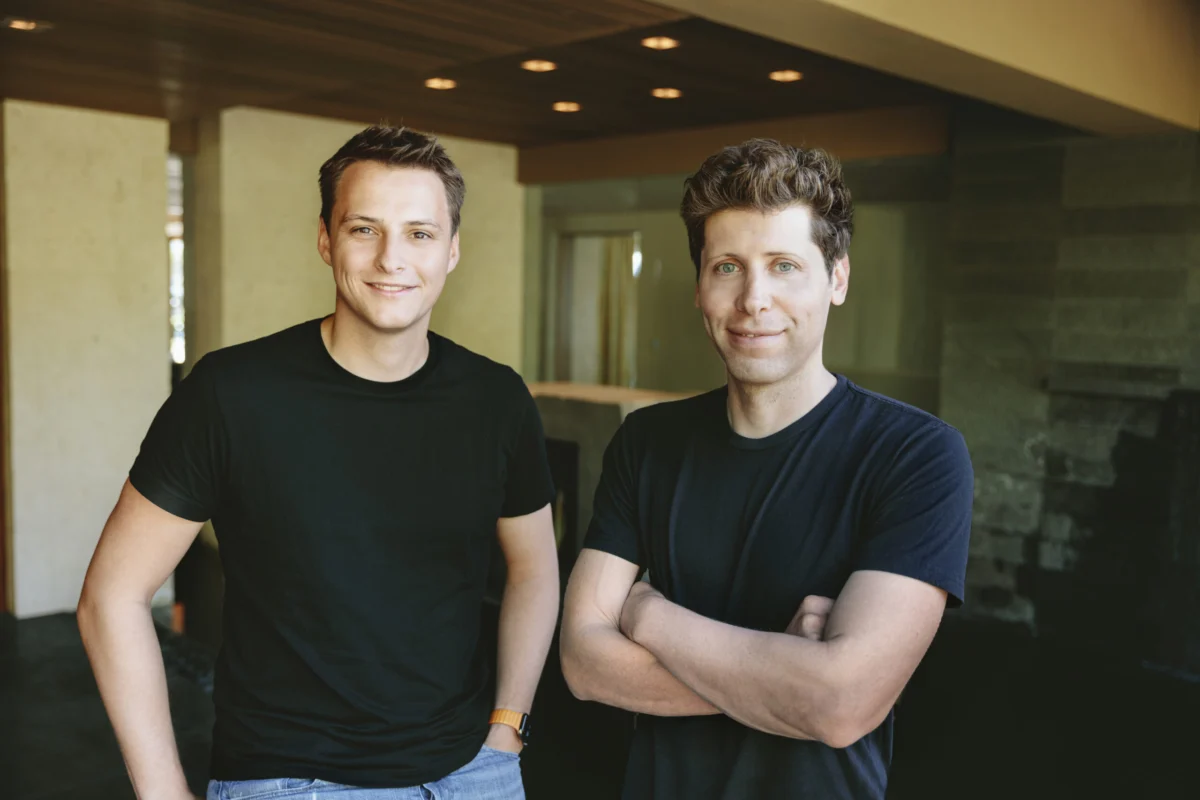
World, the digital identity and cryptocurrency initiative co-founded by OpenAI Chief Executive Officer Sam Altman, has successfully secured $52.5 million in new capital through a strategic sale of its native WLD tokens. This capital infusion, directed toward the World Foundation, marks a significant milestone for the project as it seeks to fortify its infrastructure and expand its global footprint amidst a rapidly evolving artificial intelligence landscape. The sale was structured with a mandatory 12-month lockup period, a move designed to ensure that participating investors maintain a long-term vested interest in the project’s ecosystem and the utility of the WLD token.
The funding round was led by Pantera Capital, a prominent venture capital firm specializing in digital assets and blockchain technology. Other notable participants included Eightco Holdings, Bain Capital Crypto, Susquehanna Crypto, and Selini Capital. According to an official statement from the company, the year-long lockup reflects a "long-term commitment to World’s continued growth and utility," signaling institutional confidence in the project’s ability to solve the growing problem of digital identity in an age of ubiquitous artificial intelligence.
Strategic Financial Structuring and the World Foundation
The proceeds from this token sale are designated for the World Foundation, an exempted limited guarantee foundation based in the Cayman Islands. This entity serves as the non-profit steward of the World network, tasked with managing the protocol’s decentralization and supporting the growth of its user base. By housing the funds within a foundation, the project aims to separate the governance of the protocol from the commercial interests of Tools for Humanity (TFH), the San Francisco-based technology company that oversees the project’s day-to-day operations and hardware development.
Tools for Humanity is led by CEO and co-founder Alex Blania, who has been the public face of the project alongside Altman. The relationship between TFH and the World Foundation is central to the project’s long-term vision of becoming a public utility. While TFH builds the software and the physical "Orb" devices, the World Foundation is responsible for the broader ecosystem, including the distribution of tokens and the management of the World ID system.
The Evolution of World: From Worldcoin to Global Identity
The project, which initially launched under the name Worldcoin, underwent a significant rebranding to "World" earlier this year. This transition was part of a strategic pivot to distance the project from the broader volatility and negative sentiment associated with the cryptocurrency sector following several high-profile industry collapses. Despite the name change, the core mission remains unchanged: to create a global, decentralized "proof of human" network.
The fundamental premise of World is that as AI agents become more sophisticated, the ability to distinguish between human users and automated bots will become a critical component of the digital economy. World seeks to provide a "World ID," a digital passport that allows users to prove their humanity online without revealing their private personal data. This is achieved through the use of zero-knowledge proofs, a cryptographic method that verifies a statement is true without revealing the underlying information.
The Technology Behind the Orb and Proof of Personhood
At the heart of the World ecosystem is the "Orb," a custom-made biometric imaging device. To obtain the highest level of verification within the World system, a user must visit an Orb location to have their iris scanned. The device captures high-resolution images of the iris and converts the unique patterns into a cryptographic hash, or "IrisCode." Once this code is generated, the original images are deleted by default, according to the company’s privacy protocols.
The resulting World ID is then linked to the user’s mobile app, which serves as a digital wallet. This ID can be used to sign into various platforms, ensuring that the account holder is a unique biological human. Currently, Orbs are deployed in major cities across the globe, often housed in dedicated World offices or through partnerships with third-party retailers. The company has faced the logistical challenge of scaling this physical hardware network, which is significantly more complex than scaling a purely software-based platform.
Chronology of Development and Market Challenges
Since its inception in 2019, World has navigated a complex path marked by rapid technological advancement and significant regulatory scrutiny.
- 2019–2021: Stealth Phase and Prototyping. The project was founded by Altman, Blania, and Max Novendstern, focusing on the development of the biometric hardware and the initial tokenomics of WLD.
- May 2023: Series C Funding. Tools for Humanity raised $115 million in a Series C round led by Blockchain Capital, with participation from a16z crypto and Bain Capital Crypto.
- July 2023: Global Launch. The WLD token was officially launched on major exchanges (excluding the United States due to regulatory uncertainty), and Orb deployments were accelerated globally.
- April 2024: World ID 2.0 and Partnerships. The project announced "World ID 2.0," an upgraded version of its identity protocol, and revealed integrations with platforms such as Zoom, DocuSign, and Tinder. These partnerships allow users to verify their identity on these platforms using their World ID. (Note: Initial reports of a partnership with Ticketmaster were later corrected by the company as inaccurate.)
- June 2024: Workforce Adjustments. Tools for Humanity conducted a round of layoffs, affecting a portion of its staff as the company sought to streamline operations and focus on core scaling priorities.
- Late 2024: Strategic Token Sale. The recent $52.5 million sale provides the necessary runway to continue expansion despite the earlier workforce reductions.
Regulatory Scrutiny and Privacy Concerns
World’s reliance on biometric data has made it a lightning rod for privacy advocates and government regulators. Several countries have launched investigations into the project’s data collection practices. In Kenya, operations were suspended for several months over concerns regarding the legality of biometric harvesting and the adequacy of data protection measures. Similar inquiries have been initiated by data protection authorities in Spain, Germany, and Hong Kong.
The company has consistently maintained that it adheres to strict privacy standards, emphasizing that it does not store biometric data unless a user explicitly opts in for "Data Custody" to help improve the algorithm. Furthermore, the company argues that World ID is actually a privacy-enhancing technology, as it allows for verification without the need for traditional "Know Your Customer" (KYC) documents like passports or driver’s licenses, which contain far more sensitive personal information.
Market Context and Competitive Landscape
The $52.5 million capital raise comes at a time when the digital identity market is becoming increasingly crowded. Tech giants like Apple and Google are integrating digital IDs into their mobile operating systems, while decentralized identity (DID) projects are gaining traction within the Web3 space. However, World’s unique approach—combining physical biometric verification with a proprietary cryptocurrency—sets it apart from traditional software-based solutions.
The WLD token serves multiple purposes within the ecosystem. It is used as an incentive for users to join the network (often referred to as a "humanity airdrop") and is intended to function as a governance token, allowing holders to vote on the future direction of the protocol. For investors like Pantera Capital, the value proposition lies in the potential for World to become the foundational layer for identity in the "AI-first" internet.
Analysis of Implications and Future Outlook
The success of the latest funding round suggests that institutional investors are looking past the project’s regulatory hurdles and focusing on the broader macroeconomic trend of AI-driven automation. If AI continues to proliferate, the demand for a reliable "Proof of Personhood" could shift from a niche technical requirement to a global necessity for social media, financial services, and democratic processes.
However, the path forward for World remains fraught with challenges. The project must overcome the "cold start" problem of building a physical network of Orbs while simultaneously convincing skeptical governments that its biometric data handling is secure. The 12-month lockup on the recent token sale provides a temporary shield against market volatility, but the long-term viability of the WLD token will depend on its actual utility within the integrated apps like Zoom and Tinder.
As the World Foundation utilizes the $52.5 million to expand, the focus will likely shift toward increasing the density of Orb locations and refining the user experience. The project’s ability to scale effectively will serve as a litmus test for whether decentralized, biometric-based identity systems can achieve mass adoption, or if the privacy concerns and logistical hurdles prove too great to overcome. For now, the backing of Sam Altman and a cohort of top-tier venture capital firms ensures that World remains a central player in the global conversation regarding the intersection of human identity and artificial intelligence.