admin
admin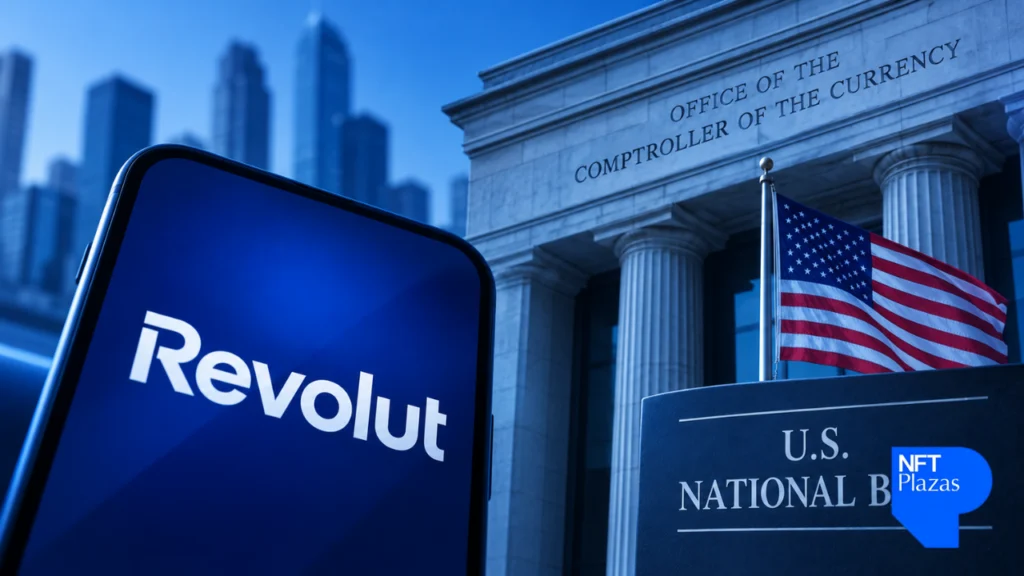
British fintech giant Revolut has been granted conditional approval by the U.S. Office of the Comptroller of the Currency (OCC) for a national bank charter, marking a pivotal moment in the company’s ambitious strategy to establish a fully operational banking presence in the United States. This significant regulatory milestone, announced on Thursday, propels Revolut closer to its objective of launching its own U.S. banking operation by the first half of 2027, transforming its American footprint from a partnership-dependent model to that of a direct financial institution. While the OCC’s nod is a critical first step, Revolut still requires subsequent approvals from the Federal Deposit Insurance Corporation (FDIC) and the Federal Reserve before it can commence full-fledged banking services.
A Strategic Leap into America’s Financial Heartland
The conditional approval underscores Revolut’s unwavering commitment to penetrate and capture a substantial share of the highly competitive U.S. financial services market. Cetin Duransoy, Revolut’s U.S. CEO, expressed confidence in securing the remaining necessary approvals as the company meticulously prepares for its launch. The proposed Revolut Bank US will be strategically headquartered in Stamford, Connecticut, with the fintech committing a substantial initial capital injection of approximately $95 million. This financial commitment signals the seriousness of Revolut’s intent and its readiness to meet the stringent capital requirements associated with operating a national bank in the United States.
Nik Storonsky, co-founder and CEO of Revolut, emphasized the profound importance of this development, stating, "Conditional OCC approval is an important first step towards establishing the proposed Revolut Bank US." He further elaborated that this approval lays a crucial foundation for Revolut to build within the world’s largest financial market, enabling the company to introduce its comprehensive suite of financial services directly to American consumers. This move is not merely an expansion but a fundamental shift in Revolut’s operational paradigm within the U.S., moving away from its previous reliance on third-party banking partners.
Revolut’s Global Trajectory: From Fintech Disruptor to Regulated Bank
Founded in 2015 by Nikolay Storonsky and Vlad Yatsenko, Revolut quickly emerged as a prominent player in the global fintech landscape. Initially gaining traction through its innovative smartphone-based financial services, which primarily focused on seamless currency exchange and international money transfers, the company rapidly diversified its offerings. Over the years, Revolut expanded into a broader spectrum of banking and financial products, including budgeting tools, cryptocurrency trading, stock investing, and travel insurance, catering to a burgeoning customer base that values convenience, transparency, and digital-first experiences.
The company’s journey reflects a broader trend within the fintech industry: a strategic pivot from operating as unregulated financial technology providers to becoming fully licensed and regulated banks. This transition is driven by several compelling factors, including the desire for greater operational control, enhanced revenue streams, reduced dependence on external partners, and, critically, the ability to offer more robust and secure services directly to customers, often accompanied by deposit protection schemes.
Before this OCC approval, Revolut’s presence in the U.S. market was largely facilitated through strategic partnerships with existing licensed banks. These collaborations allowed Revolut to offer certain services, such as debit cards and FDIC-insured deposits, to its American customers without holding its own banking charter. While effective in establishing an initial foothold, this partnership model inherently limited Revolut’s autonomy, product breadth, and profit margins. A national bank charter liberates Revolut from these constraints, allowing it to integrate more of its core services directly under its own regulatory umbrella and brand.
The Proposed U.S. Bank: Services, Innovation, and Competitive Edge
The upcoming Revolut Bank US is slated to offer a comprehensive array of traditional banking products and innovative digital services designed to appeal to a wide demographic. Expected offerings include checking accounts, installment loans, credit cards, and foreign exchange services, which have historically been a cornerstone of Revolut’s global appeal. These services will directly compete with those offered by established U.S. retail banks, marking a significant escalation in the competitive landscape.
Beyond conventional banking, Duransoy also hinted at Revolut’s intentions to launch a stablecoin in the U.S. market. While specific details regarding this planned digital asset remain undisclosed, this ambition signals Revolut’s commitment to integrating emerging financial technologies into its regulated banking framework. The introduction of a stablecoin could position Revolut at the forefront of digital asset innovation within a regulated environment, catering to a growing segment of consumers interested in cryptocurrencies and blockchain-based financial solutions. This move is particularly noteworthy given the evolving regulatory landscape surrounding digital assets in the United States, suggesting Revolut is prepared to navigate complex legal and compliance challenges.
Operationally, the new U.S. bank is expected to commence with a team of approximately 160 employees, a figure likely to grow as the bank scales its operations. Revolut also plans to leverage its existing extensive operations in Europe and Latin America to support its multicurrency services, an area where the company has demonstrated significant strength and appeal among international customers and frequent travelers. This global interconnectedness will allow Revolut to offer seamless cross-border financial solutions, a key differentiator in a market where international transactions can often be cumbersome and costly.
Broader Strategic Transformation and Global Expansion
The U.S. expansion is not an isolated event but a critical component of Revolut’s broader global transformation. The company is actively transitioning from being merely a digital financial-services platform to a fully regulated banking group, strategically securing banking licenses in several major markets worldwide. This consistent global strategy underscores Revolut’s long-term vision of building an integrated international banking network that provides a unified, digital-first experience across diverse jurisdictions.
In a landmark achievement in March, Revolut secured a full banking license in the United Kingdom, its home market. This license empowered Revolut to offer lending products directly to customers and compete more effectively with established retail banks, while also providing customers with enhanced banking protections, including deposit insurance. Following this, the company received a full banking license in France just last month, enabling its French bank to operate alongside its Lithuanian subsidiary as two robust banking hubs within the European Union. These licenses are instrumental in allowing Revolut to deepen its relationships with customers, expand its product offerings, and solidify its position as a credible and secure financial institution.
With over 80 million customers worldwide and an ambitious target of reaching 100 million customers across 100 countries, Revolut’s rapid growth has propelled its valuation significantly. A secondary share sale in July previously valued Revolut at approximately $115 billion, reflecting investor confidence in its growth trajectory and disruptive potential. The U.S. market, with its vast consumer base and high digital adoption rates, represents an indispensable frontier for achieving these ambitious growth targets.
Navigating the Complexities of Regulatory Scrutiny
While the OCC approval is a monumental achievement, it is crucial to recognize that it is conditional. This means Revolut must satisfy a series of additional requirements and benchmarks before the charter becomes fully effective. The subsequent approvals from the FDIC and Federal Reserve will involve equally rigorous assessments, focusing on capital adequacy, risk management, consumer protection, and compliance frameworks.
Revolut’s expansion into regulated banking has not been without its challenges, particularly concerning regulatory compliance. The fintech has faced scrutiny in recent years regarding its ability to meet stringent requirements related to fraud prevention and anti-money-laundering (AML) controls. These issues are especially critical as Revolut transitions into a regulated banking entity, where the demands for safeguarding customer funds, responsible lending practices, and robust compliance infrastructure are significantly higher. Regulators will meticulously examine Revolut’s internal controls, governance structures, and technological capabilities to ensure they are robust enough to manage the risks inherent in direct banking operations.
The remaining hurdles will be closely monitored by industry observers and regulators alike as Revolut proceeds with building its U.S. banking infrastructure, committing the necessary capital, and assembling its local workforce. The OCC decision, however, unequivocally signals a profound shift in Revolut’s American ambitions, moving from a model of providing services through partner banks to laying the groundwork for operating its own U.S. national bank. This strategic pivot allows Revolut to have greater control over its banking products, reduce its dependence on third-party partners, and directly compete with established American financial institutions across a broad spectrum of services, including deposits, lending, payments, and credit.
Future Outlook: IPO Aspirations and a Transformed Global Strategy
The U.S. banking expansion is intrinsically linked to Revolut’s long-term growth strategy and potential public market debut. Nik Storonsky indicated in April that an initial public offering (IPO) was at least two years away, suggesting that the fintech remains laser-focused on expanding its business and completing its international banking rollout before venturing into public markets. Securing full banking licenses in key markets like the U.S. is a critical precursor to an IPO, as it demonstrates regulatory maturity, sustainable revenue models, and a broader, more stable operational foundation.
If Revolut successfully secures the remaining regulatory approvals and launches its U.S. bank as planned in 2027, this American operation is poised to become a central pillar of the company’s global strategy. With an existing global customer base exceeding 80 million, Revolut is betting that its proven digital-first model, coupled with its inherent strengths in cross-border financial services, can effectively translate into a formidable presence within the highly competitive and lucrative U.S. banking market. This move represents not just an expansion of services but a profound evolution of Revolut into a truly global, regulated banking powerhouse, poised to redefine financial services for the digital age. The successful integration of its U.S. operations will be a testament to Revolut’s ability to adapt, innovate, and thrive within the world’s most scrutinized financial landscapes.