admin
admin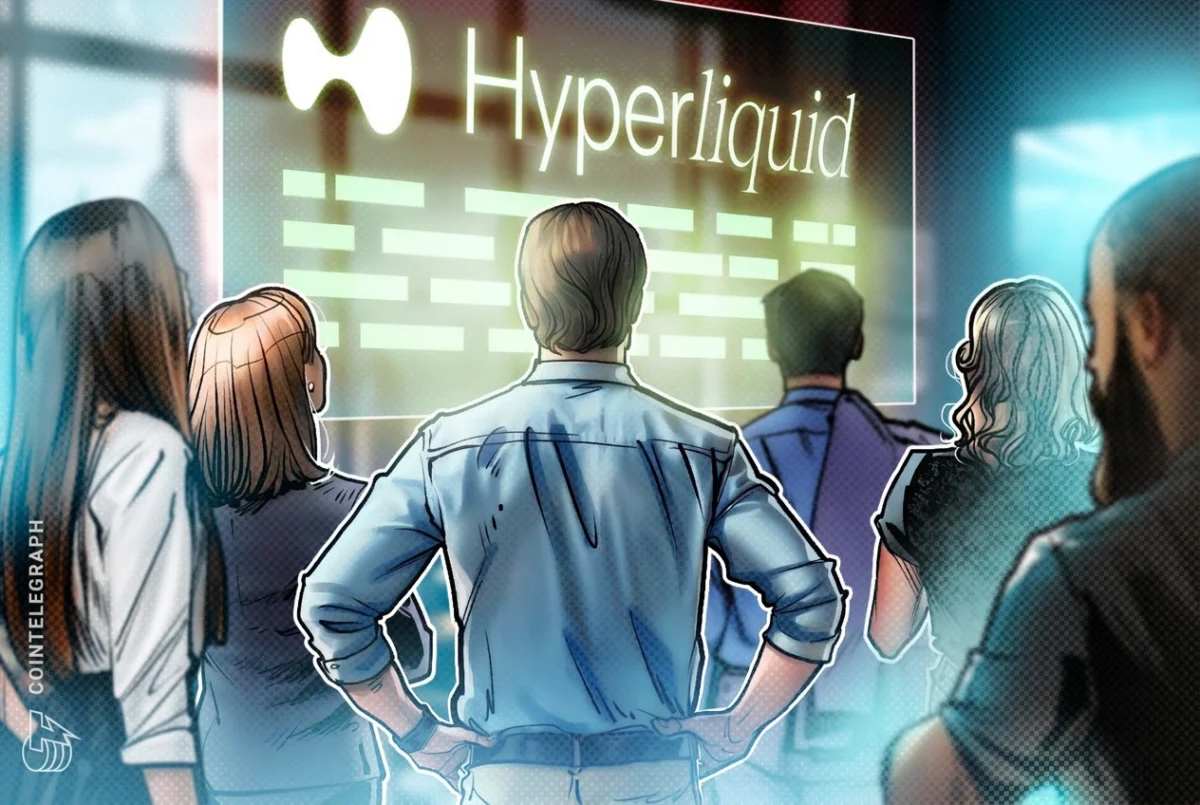
Ran Neuner, the influential founder of Crypto Banter, has issued a significant warning regarding the future of Hyperliquid, identifying escalating regulatory scrutiny as the most formidable challenge facing the leading decentralized perpetual futures exchange. Speaking on Cointelegraph’s Chain Reaction podcast, Neuner articulated a clear progression in the regulatory landscape, asserting that governments, having begun to establish frameworks for centralized crypto exchanges, are now poised to direct their attention towards decentralized platforms. This forecast comes as Hyperliquid, a Layer-1 blockchain, continues to dominate its sector with staggering trading volumes, while its native HYPE token experiences a remarkable surge, partly fueled by recent indications of a potential compliant pathway into the United States.
Neuner’s apprehension stems from the inherent ambiguity surrounding how regulatory bodies will approach decentralized exchanges (DEXs). "The biggest issue is that we don’t know how regulators are going to treat the decentralized exchanges," Neuner stated, underscoring the critical uncertainty that could reshape the DeFi landscape. He elaborated on the current phase of regulatory development, noting, "The governments have just started to regulate centralized exchanges. There’s MiCA licensing, et cetera, et cetera. And I think that when that’s done, they come in for the decentralized exchanges." This sentiment reflects a growing consensus within the crypto industry that the relative regulatory ‘grace period’ enjoyed by DEXs may be drawing to a close, particularly as these platforms mature and attract significant capital flows.
The Evolving Regulatory Landscape: From CEXs to DEXs
The journey towards comprehensive cryptocurrency regulation has been marked by a gradual but persistent expansion of scope. Initially, regulators worldwide focused primarily on centralized exchanges (CEXs) due to their clear legal entities, identifiable operators, and conventional corporate structures, which facilitate the implementation of Know Your Customer (KYC) and Anti-Money Laundering (AML) policies. Landmark legislative efforts such as the European Union’s Markets in Crypto-Assets (MiCA) regulation exemplify this trend. MiCA, which is progressively coming into full effect, aims to establish a harmonized regulatory framework across EU member states for crypto-asset service providers (CASPs), covering areas from licensing and operational requirements to market abuse prevention and consumer protection. Its introduction marks a pivotal moment, providing a clear legal basis for CEXs to operate within the EU, but also setting a precedent for stringent oversight.
However, the decentralized nature of DEXs presents a unique set of challenges for traditional regulatory frameworks. Unlike CEXs, DEXs often operate through smart contracts on a blockchain, with no single controlling entity, central order book, or identifiable ‘issuer’ in the conventional sense. This distributed architecture makes it difficult to apply existing rules designed for centralized financial intermediaries. Questions abound regarding who would be held responsible for compliance – the protocol developers, liquidity providers, front-end interface providers, or even the users themselves? Regulatory bodies globally, including the U.S. Securities and Exchange Commission (SEC) and the Commodity Futures Trading Commission (CFTC), have expressed concerns about the potential for illicit activities, market manipulation, and lack of investor protection in the largely unregulated DeFi space. As CEXs become more compliant, the spotlight inevitably shifts to DEXs, which could become attractive conduits for activities seeking to evade these new, stricter rules.
Hyperliquid’s Market Dominance and the Power of Network Effects

Despite the looming regulatory shadows, Hyperliquid stands as a formidable player in the decentralized finance ecosystem. As a Layer-1 blockchain designed for high-performance trading, it is best known for its decentralized perpetual futures exchange, which has ascended to a leadership position within the sector. According to data from DeFiLlama, Hyperliquid boasts an impressive trading volume of approximately $223 billion over the past 30 days, a figure that not only underscores its operational efficiency but also its significant user adoption and deep liquidity. This level of activity places it firmly at the forefront of DEXs specializing in derivatives, rivaling even some smaller centralized platforms in terms of raw trading throughput.
Neuner’s analysis of Hyperliquid’s resilience against competition offers a compelling counterpoint to his regulatory concerns. He posited that Hyperliquid’s strength lies not merely in its technological prowess, but in the powerful phenomenon of network effects. "You can’t copy a network," Neuner asserted, drawing an analogy to ride-sharing giants. "There can be a thousand competitors to Uber. How many of them are going to succeed? Hardly any." This principle, he argued, applies equally to trading platforms. In financial markets, users are naturally drawn to exchanges with the deepest liquidity. Deep liquidity translates into tighter bid-ask spreads, lower slippage for large orders, and greater ease of entering and exiting positions, all of which enhance the trading experience.
This dynamic creates a self-reinforcing loop: more users attract more liquidity, which in turn attracts even more users, further cementing the platform’s dominant position. "When something is a network, naturally users will flock to the busiest or the best node," Neuner explained. For Hyperliquid, this means that even if a competitor were to replicate its underlying technology, it would face an uphill battle in dislodging the entrenched user base and liquidity pool that Hyperliquid has cultivated. The trust, efficiency, and market depth built over time become insurmountable barriers to entry for newcomers, illustrating why market leadership in network-effect-driven industries is often highly concentrated. This intrinsic strength positions Hyperliquid favorably against mere technological rivals, making regulation the primary external threat rather than competitive innovation.
Hyperliquid Eyes Compliant US Path Amidst HYPE Token Rally
Adding another layer of complexity and optimism to Hyperliquid’s narrative are recent developments concerning its potential access to the highly coveted U.S. market. Despite Neuner’s significant concerns over regulatory hurdles, signals from high-ranking U.S. officials have suggested that Hyperliquid might be able to carve out a compliant path into the country. In August, then-President Donald Trump publicly stated that CFTC Chair Michael Selig was actively working to facilitate Hyperliquid’s entry into the U.S. in a "fully compliant and legal fashion." This unexpected announcement sent ripples through the crypto market, particularly impacting Hyperliquid’s native token.
Following Trump’s remarks, the HYPE token experienced a notable surge, jumping approximately 20% within a 24-hour period, trading around $70. This immediate market reaction underscored the profound impact that even an informal suggestion of regulatory clarity and market access can have on crypto asset valuations. However, as of the August announcement, concrete details regarding this proposed pathway remained elusive. Neither the CFTC nor Hyperliquid had released a formal proposal outlining how U.S. access would work, whether a formal application had been submitted, or when a compliant service might realistically launch. This lack of specific information leaves much to speculation and highlights the significant complexities involved in integrating a decentralized protocol into a highly regulated jurisdiction like the United States.
The challenges of achieving "fully compliant and legal" status for a DEX in the U.S. are manifold. The CFTC primarily regulates derivatives markets, which perpetual futures certainly fall under. For a traditional entity to offer such products in the U.S., it would typically need to register as a Designated Contract Market (DCM) or a Swap Execution Facility (SEF), subjecting it to stringent rules regarding market surveillance, financial stability, and customer protection. How a decentralized protocol, by its very design lacking a central legal entity, could meet these requirements remains a central question. Potential models could involve a centralized "wrapper" entity that provides a compliant front-end interface, implements KYC/AML for U.S. users, and perhaps even restricts access to the underlying decentralized protocol based on geographic location. Such an approach would, however, introduce a degree of centralization that might run counter to the core ethos of DeFi.

HYPE Token Performance and Broader Market Dynamics
Beyond the immediate impact of the U.S. compliance narrative, the HYPE token has demonstrated remarkable strength throughout the year. As of Friday, HYPE was trading around $82, representing an astonishing year-to-date increase of over 220%, according to data from CoinGecko. This impressive performance has propelled its market capitalization to approximately $18.2 billion, with a fully diluted valuation (FDV) reaching roughly $78.4 billion. These figures not only reflect the growing investor confidence in Hyperliquid’s technology and market position but also signal broader positive sentiment within the cryptocurrency market, particularly for innovative DeFi protocols.
The rally in HYPE can be attributed to several converging factors. Firstly, Hyperliquid’s sustained leadership in the perpetual futures DEX sector validates its product-market fit and operational efficiency. High trading volumes, deep liquidity, and a robust user experience naturally attract capital and attention. Secondly, the overall bullish trend in the broader crypto market throughout the year has likely provided a tailwind for many altcoins, including HYPE. Investor interest in high-growth DeFi projects remains strong, especially those demonstrating clear utility and market dominance. Thirdly, the aforementioned prospect of U.S. market access, even if still conceptual, acts as a significant catalyst, opening up a vast pool of potential users and capital. Lastly, the HYPE token often plays a crucial role in the Hyperliquid ecosystem, potentially offering governance rights, staking rewards, or fee discounts, further enhancing its utility and demand among network participants. The combination of strong fundamentals, strategic market positioning, and external catalysts has created a powerful upward momentum for the token.
Broader Implications for DeFi and the Future of Finance
The ongoing saga of Hyperliquid, caught between its decentralized innovation and the looming specter of regulation, encapsulates a broader, pivotal moment for the entire decentralized finance industry. The efforts to regulate CEXs, followed by the predicted focus on DEXs, highlight the inherent tension between the permissionless, borderless, and pseudonymous nature of DeFi and the traditional financial system’s emphasis on control, oversight, and accountability.
Should regulators successfully impose frameworks on DEXs, it could significantly alter the landscape of decentralized finance. While some argue that such regulation is necessary for mainstream adoption, institutional participation, and consumer protection, others fear it could stifle innovation, compromise the core tenets of decentralization, and potentially drive activity to truly anonymous, harder-to-monitor platforms. The "compliant pathway" for Hyperliquid in the U.S., if successfully implemented, could serve as a blueprint for other DEXs seeking to operate legitimately within regulated markets. Conversely, a failure to find such a path, or the imposition of overly burdensome regulations, could lead to a bifurcation of the DeFi world: one part attempting to conform to traditional finance, and another retreating further into the shadows of pure decentralization.
The implications extend beyond just the crypto sector. As DeFi protocols like Hyperliquid demonstrate the power of automated, transparent, and efficient financial services, they challenge the traditional intermediaries that have long dominated global finance. The regulatory response to DEXs will ultimately shape how this innovation is either integrated into or constrained by existing financial structures. It will test the adaptability of legal frameworks and define the boundaries of financial freedom and control in the digital age. The journey of Hyperliquid, therefore, is not just about a single platform or token; it is a microcosm of the larger struggle to reconcile the disruptive potential of decentralized technology with the imperatives of national and global financial governance. The coming years will undoubtedly reveal whether this leading DEX can navigate the regulatory gauntlet while maintaining its decentralized essence and market dominance.