Dwi Wanna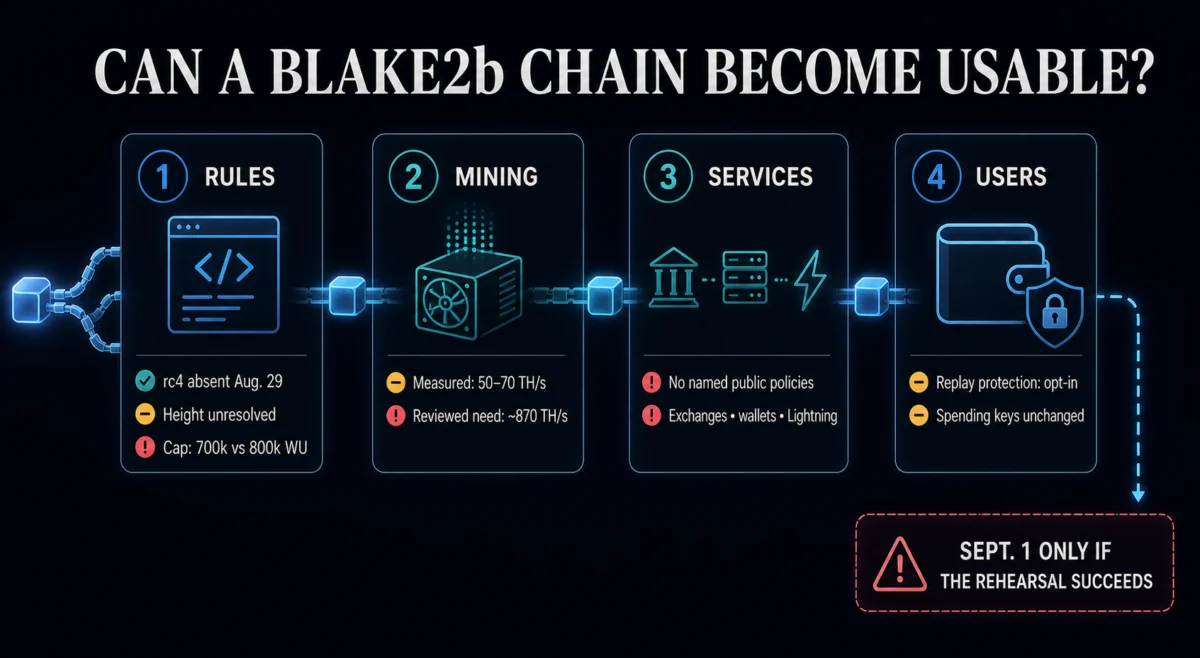
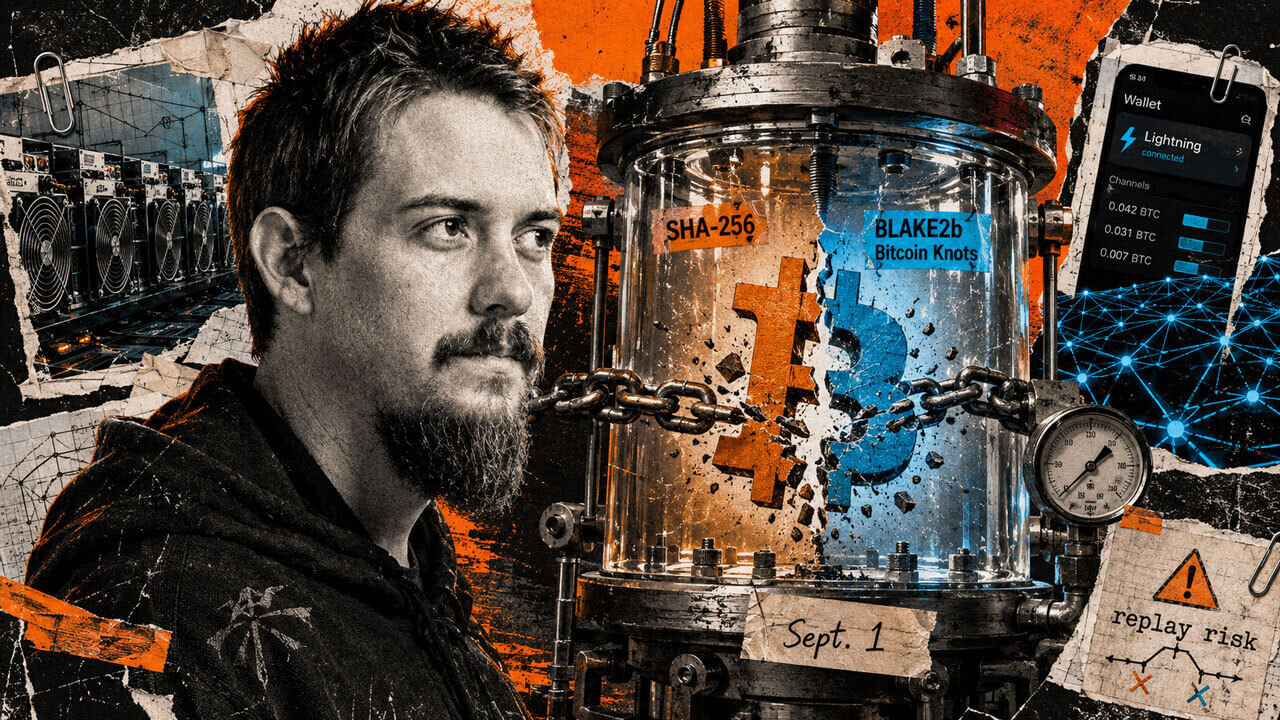
The Bitcoin Knots development team, led by long-time Bitcoin Core contributor Luke Dashjr, is finalizing preparations for a critical Sunday rehearsal of a network fork that would see the protocol abandon its traditional SHA-256d proof-of-work algorithm in favor of BLAKE2b. This aggressive technical pivot comes in the wake of a failed attempt to establish a breakaway chain under the BIP-110 proposal, which stalled earlier this month due to a lack of miner participation. On August 29, Dashjr issued a formal advisory to SHA-2 miners, instructing them to cease operations on the proposed breakaway network ahead of a scheduled August 30 test meant to validate the transition to BLAKE2b.
The proposed transition represents one of the most significant architectural departures in the history of Bitcoin-related software. By moving to BLAKE2b, Bitcoin Knots aims to decouple itself from the massive industrial SHA-256d mining infrastructure that currently secures the primary Bitcoin network. The strategic intent is to create a sovereign chain that is immune to the influence of the dominant mining pools, which proponents of the fork argue have become a centralized force capable of vetoing protocol upgrades or enforcing policies—such as the processing of "spam" transactions like Ordinals and Inscriptions—that some developers find objectionable.
The Failure of BIP-110 and the Shift to BLAKE2b
The impetus for this weekend’s rehearsal is the recent collapse of the BIP-110 enforcement chain. Approximately three weeks ago, a segment of the Bitcoin Knots community attempted to enforce a set of rules that would have restricted certain types of data on the blockchain. However, the resulting chain split was short-lived. Despite the software’s intent to create a new ledger, it remained dependent on the same SHA-256d mining hardware used by the main Bitcoin network.
This dependence proved fatal. In what has been described as a "silent miner boycott," the vast majority of hash rate remained on the dominant chain, leaving the BIP-110 branch with insufficient computational power to maintain regular block intervals. The breakaway chain produced only two blocks before stalling indefinitely. The shift to BLAKE2b is a direct response to this failure. By changing the proof-of-work algorithm entirely, the Bitcoin Knots project seeks to bypass the SHA-256d miners altogether, instead courting a different class of hardware operators.
BLAKE2b is a cryptographic hashing function that is already utilized by several other digital assets, most notably the Sia network. By adopting this algorithm, the Knots breakaway chain hopes to utilize existing hardware, such as Bitmain’s Antminer A3 and various Goldshell SC series models, which were originally manufactured for Sia mining. This move is designed to ensure that the new chain has a dedicated, albeit smaller, mining constituency that does not have to choose between mining the main Bitcoin chain and the Knots fork.
Technical Chronology and the Sunday Rehearsal
The timeline for the transition is tight, reflecting a sense of urgency among the project’s coordinators. According to communications from Dashjr, the release of Bitcoin Knots 29.4.1rc4 is intended to establish the "final SHA-2 block" on the test network before the hard switch to BLAKE2b occurs.
- August 29: Formal notification sent to miners to prepare for the SHA-2 shutdown on the breakaway branch.
- August 30: Execution of the BLAKE2b transition test.
- September 1: Proposed "Mainnet" launch of the final 29.4.1 release, provided the rehearsal does not encounter catastrophic bugs.
However, the path to this transition is fraught with technical uncertainties. As of late August 29, the official GitHub repository for Bitcoin Knots did not yet list the "rc4" build or a finalized 29.4.1 version. Furthermore, several pull requests related to the proof-of-work change remained in an "open" status, suggesting that the code governing the transition is still being refined in real-time. If the Sunday rehearsal reveals significant flaws, the project will be forced to issue a new release candidate and reset the chain to the last known SHA-2 block, further delaying the launch.
The Hash Rate Deficit and Difficulty Adjustment
One of the most pressing concerns for the viability of the BLAKE2b fork is the projected hash rate required to maintain the network. In the Bitcoin protocol, blocks are intended to be produced every ten minutes. This interval is regulated by a difficulty adjustment algorithm.
Technical reviewers analyzing the open-source implementation have noted a potential discrepancy between the available hardware and the network’s initial parameters. Based on current code configurations, it is estimated that the network would require approximately 870 terahashes per second (TH/s) of BLAKE2b computational power to maintain the standard 10-minute block interval. In contrast, recent measurements of the "Testnet4" environment, where the code is currently being vetted, showed an available capacity of only 50 to 70 TH/s.
While these figures are based on unfinished code and may be adjusted before the final launch, they highlight a significant "commitment gap." Unlike the main Bitcoin network, which boasts hundreds of exahashes of security, the BLAKE2b fork will begin its life in a highly vulnerable state. Without a massive and immediate influx of hardware from the Sia mining community or other BLAKE2b-compatible operators, the new chain risks the same stagnation that killed the BIP-110 attempt.
Infrastructure and Ecosystem Resistance
Even if the technical hurdle of block production is cleared, the Bitcoin Knots fork faces a daunting challenge in terms of economic adoption. For a blockchain to function as a medium of exchange or a store of value, it requires a robust ecosystem of supporting infrastructure, including exchanges, wallet providers, custodians, and block explorers.
To date, no major cryptocurrency exchange (such as Coinbase or Binance) or significant hardware wallet manufacturer (such as Ledger or Trezor) has publicly committed to supporting the BLAKE2b-based Bitcoin Knots chain. The lack of exchange support is particularly critical; without a marketplace to trade the new tokens, the economic incentive for miners to spend electricity securing the chain is virtually non-existent.
The project’s FAQ advises exchanges to pause all deposits and withdrawals during the split and to monitor which chain achieves dominance. However, the radical change in the block header format complicates this request. The BLAKE2b proposal increases the block header size from the traditional 80 bytes used by Bitcoin since its inception to 164 bytes. This change effectively "breaks" compatibility with Electrum-style light wallets and existing SPV (Simple Payment Verification) clients, which are hardcoded to expect 80-byte headers.
Luke Dashjr has stated that ensuring light-client compatibility is currently outside the scope of the Bitcoin Knots project. This means that users wishing to interact with the new chain would likely be required to run a full node, significantly raising the barrier to entry for average users and further isolating the network from the broader Bitcoin economy.
Replay Protection and Security Risks
A primary concern in any chain split is "replay risk." Because the BLAKE2b fork will inherit the entire transaction history of the Bitcoin blockchain up to the point of the split, any coins held by users on the main chain will also exist on the new Knots chain. Without robust, mandatory replay protection, a transaction intended for one chain could be "replayed" on the other, leading to the accidental loss of funds.
The Bitcoin Knots team has proposed a solution known as SIGHASH_UNIFIED. This is an opt-in signing mode that allows users to specify which chain they intend to transact on. While this provides a mechanism for directional replay protection, it is not automatic. Users who are unaware of the fork or who use wallets that do not support the new signing mode remain vulnerable. This risk often leads exchanges to remain cautious, frequently opting to ignore minority forks entirely rather than deal with the security and support overhead required to protect their customers.
Broader Implications for Bitcoin Governance
The move toward a BLAKE2b fork is more than just a technical experiment; it is a manifestation of a long-standing philosophical divide within the Bitcoin community. The Bitcoin Knots client has historically been more aggressive than Bitcoin Core in its approach to "spam" filtration. Dashjr and his supporters argue that the use of the Bitcoin blockchain for non-monetary data—such as NFT-like Ordinals—is an abuse of the system that bloats the ledger and drives up costs for legitimate users.
By attempting a hard fork with a changed proof-of-work algorithm, the Knots project is testing the ultimate "nuclear option" in blockchain governance. It is an attempt to prove that a minority of developers and users can successfully exit an ecosystem they believe has been compromised by its mining class.
The success or failure of this Sunday’s rehearsal will serve as a bellwether for the future of Bitcoin forks. If the BLAKE2b chain fails to produce blocks or attract miners, it may signal that the era of significant Bitcoin chain splits has passed, cemented by the overwhelming network effects of the primary SHA-256d chain. Conversely, if a stable, mining-supported BLAKE2b chain emerges, it could create a permanent "alternative Bitcoin" that serves as a sanctuary for those who prioritize a specific vision of the protocol’s purity over market dominance.
As the weekend approaches, the cryptocurrency industry will be watching the Bitcoin Knots GitHub and node monitors closely. The immediate goal is technical stability; the long-term goal is economic survival. Whether BLAKE2b can provide the foundation for a sustainable new ledger remains an open question that only the successful production of blocks can begin to answer.